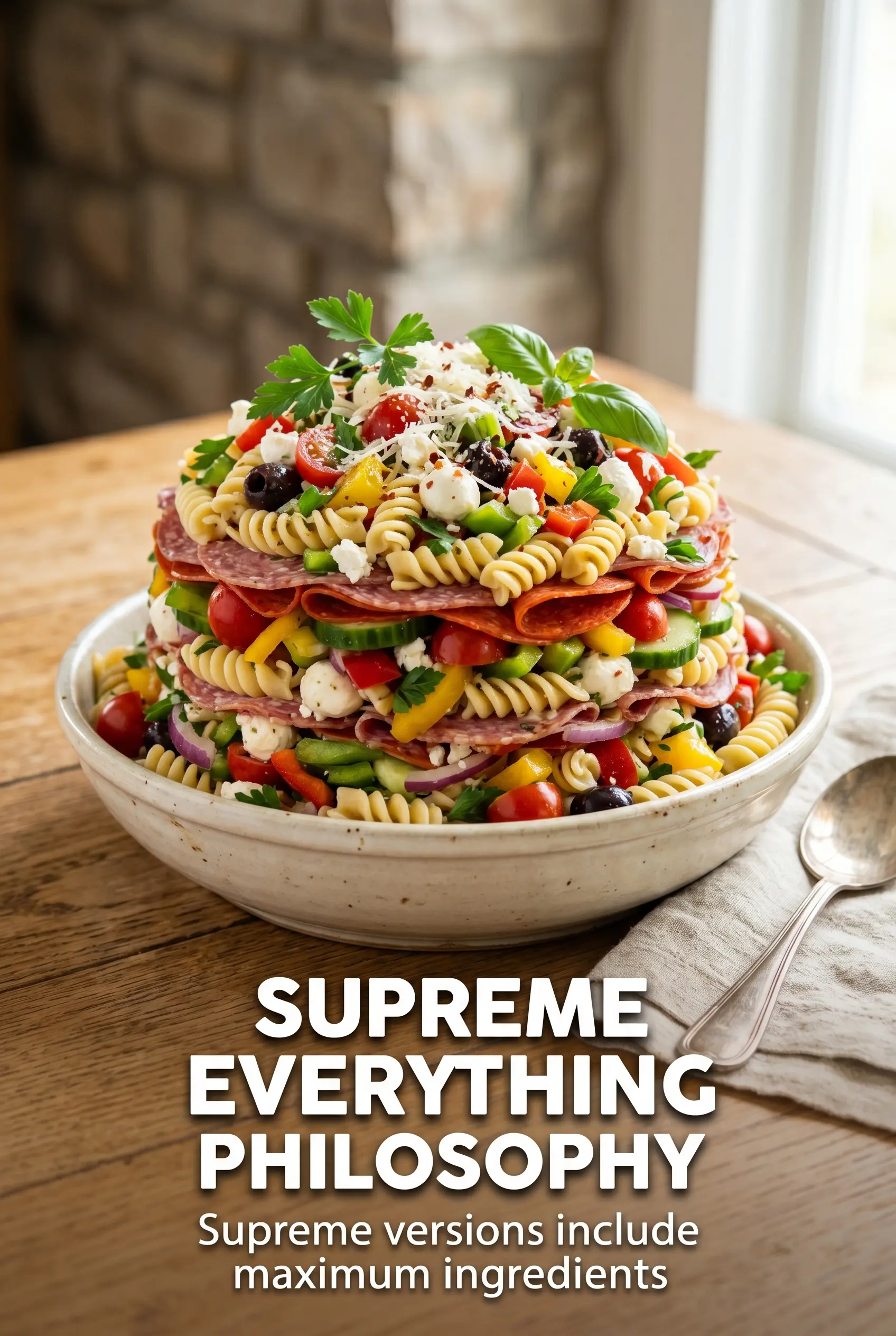
Supreme pasta salad earns its keep because every forkful lands with a little crunch, a little chew, and a cold, creamy finish that holds up on a crowded table. The rotini grabs the dressing, the salami and pepperoni bring that savory edge, and the vegetables keep the bowl from tasting heavy. It’s the kind of side dish people hover over after the main food is gone.
The trick is balance. Rinsing the pasta under cold water stops the cooking and keeps the salad from turning gummy, and chilling it gives the dressing time to sink into the noodles instead of sitting on top. The Parmesan and Italian seasoning deepen the dressing without making it muddy, while the mozzarella stays soft and milky instead of disappearing into the mix.
Below, I’ll walk through the part that matters most: how to keep the pasta springy, how long the salad needs to rest, and the substitutions that still keep it tasting full and layered.
The dressing soaked in after a couple hours and the pasta stayed springy instead of getting soggy. I brought this to a cookout and the bowl was scraped clean before the burgers were even done.
Save this loaded supreme pasta salad for potlucks, cookouts, and any night you need a cold side dish that tastes even better after it chills.
The Pasta Salad Mistake That Makes Everything Taste Flat
Most pasta salads fall apart for one of two reasons: the pasta is still warm when the dressing goes in, or the mix is too timid with salt and acid. Warm pasta drinks up dressing fast, then turns soft and dull by the time the salad hits the table. This version avoids that by cooling the pasta fully before it meets the vegetables, cheese, and meats, then letting the whole bowl rest long enough for the seasoning to settle in.
The other trap is chopping everything too small. Supreme pasta salad works because each bite has shape: a cube of mozzarella, a slice of olive, a bit of pepperoni, a piece of pepper. That mix keeps the salad from eating like one blended texture. It should look abundant in the bowl, not chopped into confetti.
What Each Ingredient Is Actually Doing In This Bowl
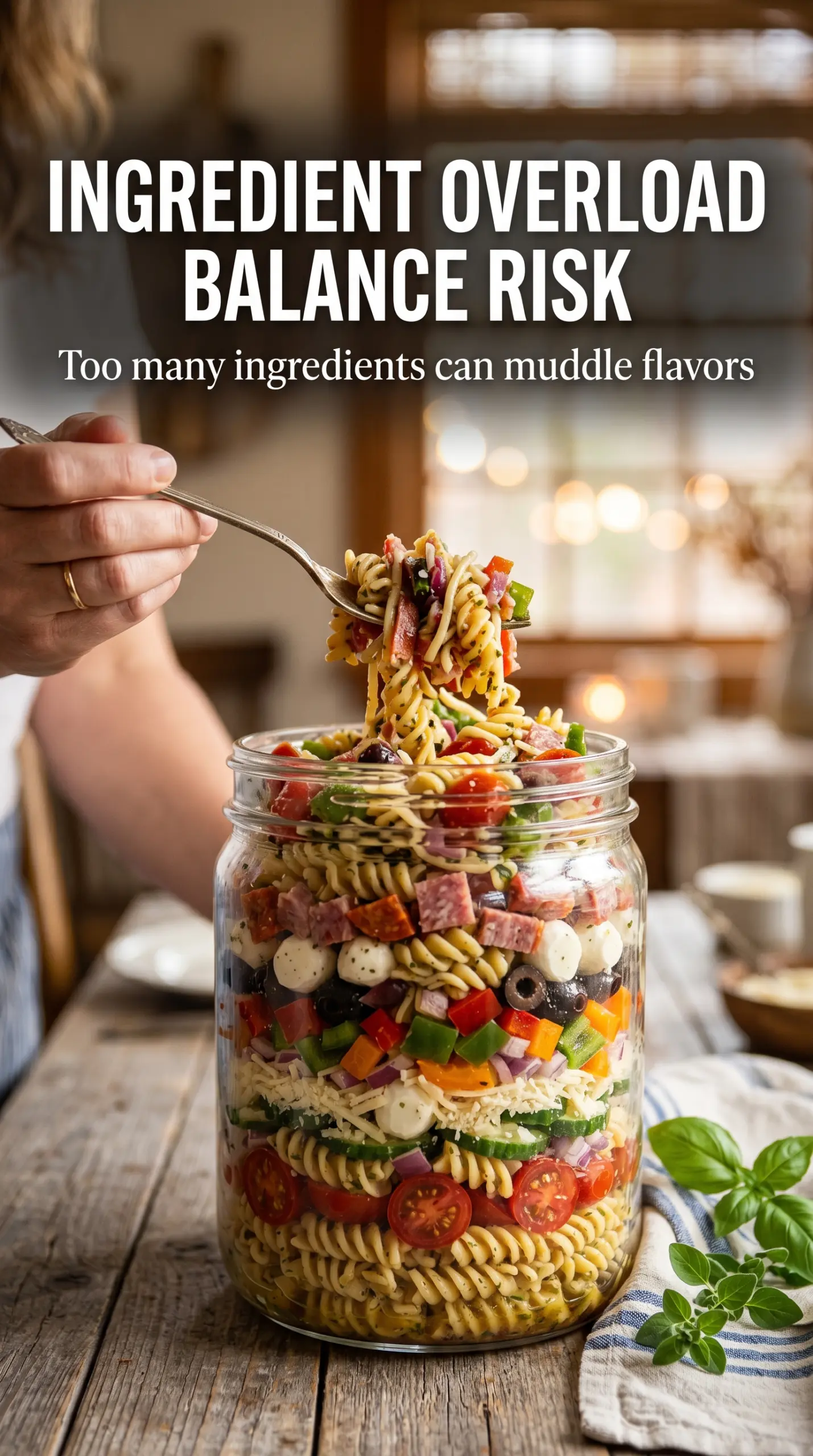
- Tri-color rotini — The spirals catch the dressing in every ridge and give the salad enough structure to hold up after chilling. Short pasta with grooves matters here; smooth pasta won’t carry the same amount of dressing.
- Salami and pepperoni — These do the heavy lifting for the savory, salty side of the salad. Cubing the salami and quartering the pepperoni keeps them distinct, so you get little bursts of flavor instead of an all-meat blur.
- Mozzarella — Use block mozzarella and cube it yourself if you can. The pre-shredded kind doesn’t give the same soft, milky bite and tends to disappear into the dressing.
- Italian dressing — This is the backbone of the salad, so use one you actually like eating straight from the bottle. If yours tastes sharp, a little extra Parmesan smooths it out; if it’s thin, let the salad rest longer so the pasta can absorb more of it.
- Cherry tomatoes, cucumber, bell pepper, and red onion — These bring crunch, freshness, and color. Dice them evenly so they mingle instead of sinking to the bottom of the bowl.
- Parmesan and Italian seasoning — Parmesan adds a salty, nutty edge that makes the dressing taste fuller. Italian seasoning helps the salad read as seasoned all the way through, not just sauced on top.
Building The Bowl So It Stays Cold, Creamy, And Crisp
Cooking The Pasta Just Past Tender
Cook the rotini until it’s just tender with a little bite left in the center. If you take it too far, it softens again as it chills and the whole salad turns mushy. Drain it well, then rinse under cold water until the pasta is no longer warm to the touch. That rinse also washes off surface starch, which keeps the dressing from turning thick and pasty.
Layering In The Mix-Ins
Add the meats, cheese, and vegetables to a large bowl before the dressing goes in. This helps the heavier pieces distribute evenly instead of sticking together in one corner. Toss gently once the dressing is added, because rough mixing can break the mozzarella and bruise the tomatoes. A wide bowl gives you room to coat everything without crushing the texture.
Letting The Dressing Sink In
Refrigerate the salad for at least 2 hours, and give it a toss once or twice while it chills. The first mix coats the surface; the rest time lets the pasta absorb the seasoning and the dressing settle into the spirals. If it looks a little dry after chilling, add a splash more Italian dressing right before serving. Pasta salad often needs that last bit because cold pasta drinks up more dressing than you expect.
Make It Meat-Free Without Losing The Big Salad Feel
Skip the salami and pepperoni and add chickpeas, extra mozzarella, and a handful of artichoke hearts. You’ll lose some of the smoky cured-meat flavor, but the salad stays filling and layered, especially if you season the chickpeas lightly with Italian seasoning before mixing them in.
Gluten-Free Pasta That Still Holds Up
Use a sturdy gluten-free rotini made from corn, rice, or a blend that keeps its shape when chilled. Cook it just to al dente and rinse it well, because gluten-free pasta can go from firm to fragile fast. Toss a little extra dressing with it after chilling if it looks dry.
A Lighter Dressing Finish
If you want the salad less heavy, replace half the Italian dressing with a mix of olive oil and red wine vinegar plus a little extra Parmesan. The result is brighter and less creamy on the palate, but it still clings to the rotini and keeps the bowl from tasting flat.
Make-Ahead For A Crowd
You can make this the day before serving. Hold back a small splash of dressing and the Parmesan until the final toss, because pasta salad always looks a little tighter after a night in the fridge. That last refresh brings back the shine and keeps the salad from tasting stale.
Storage and Reheating
- Refrigerator: 3 to 4 days. The vegetables soften a little over time, but the flavor stays good.
- Freezer: Don’t freeze it. The mayonnaise-free dressing is fine, but the vegetables and cheese lose their texture once thawed.
- Reheating: This salad is meant to be served cold. If it comes straight from the fridge, let it sit out for 10 to 15 minutes and stir in a spoonful of dressing to wake it up.
Answers To The Questions Worth Asking
Supreme Pasta Salad
Ingredients
Equipment
Method
- Cook the tri-color rotini pasta according to package directions, then drain and rinse with cold water to stop the cooking.
- Spread the rinsed pasta on a sheet pan to cool for a few minutes while you prep the remaining ingredients so it doesn’t steam the salad.
- Combine the pasta, salami, pepperoni, mozzarella, cherry tomatoes, cucumber, black olives, green bell pepper, and red onion in a large bowl.
- Add Italian dressing, Parmesan cheese, and Italian seasoning, then toss until every piece is coated.
- Season with salt and pepper and toss again so seasoning is evenly distributed.
- Refrigerate for at least 2 hours, tossing occasionally to keep the dressing coating consistent.
- Before serving, taste and add more Italian dressing if needed to loosen the mixture and boost flavor.