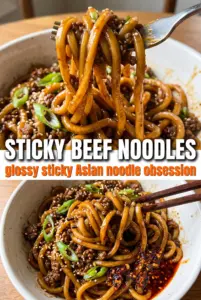
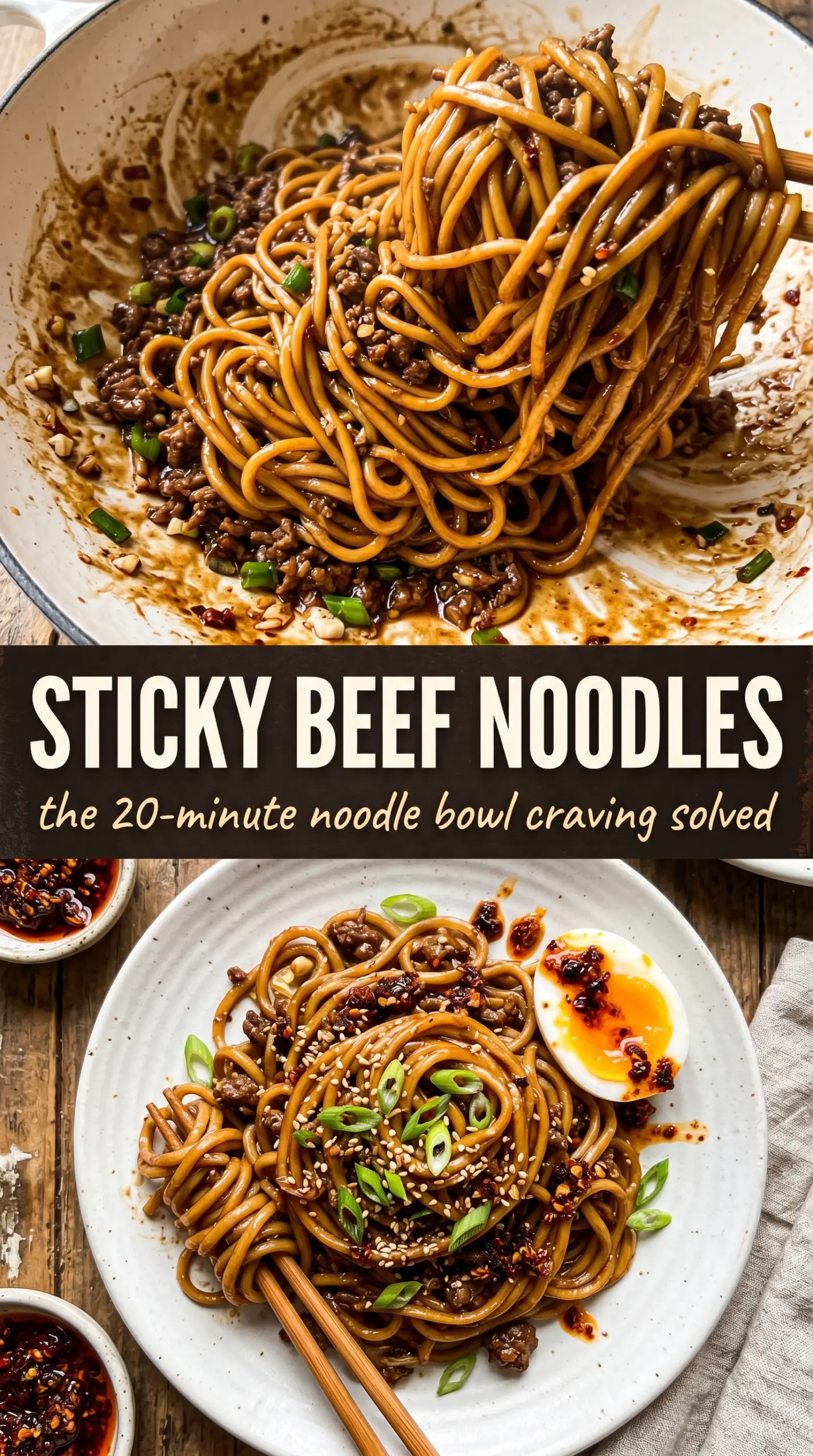
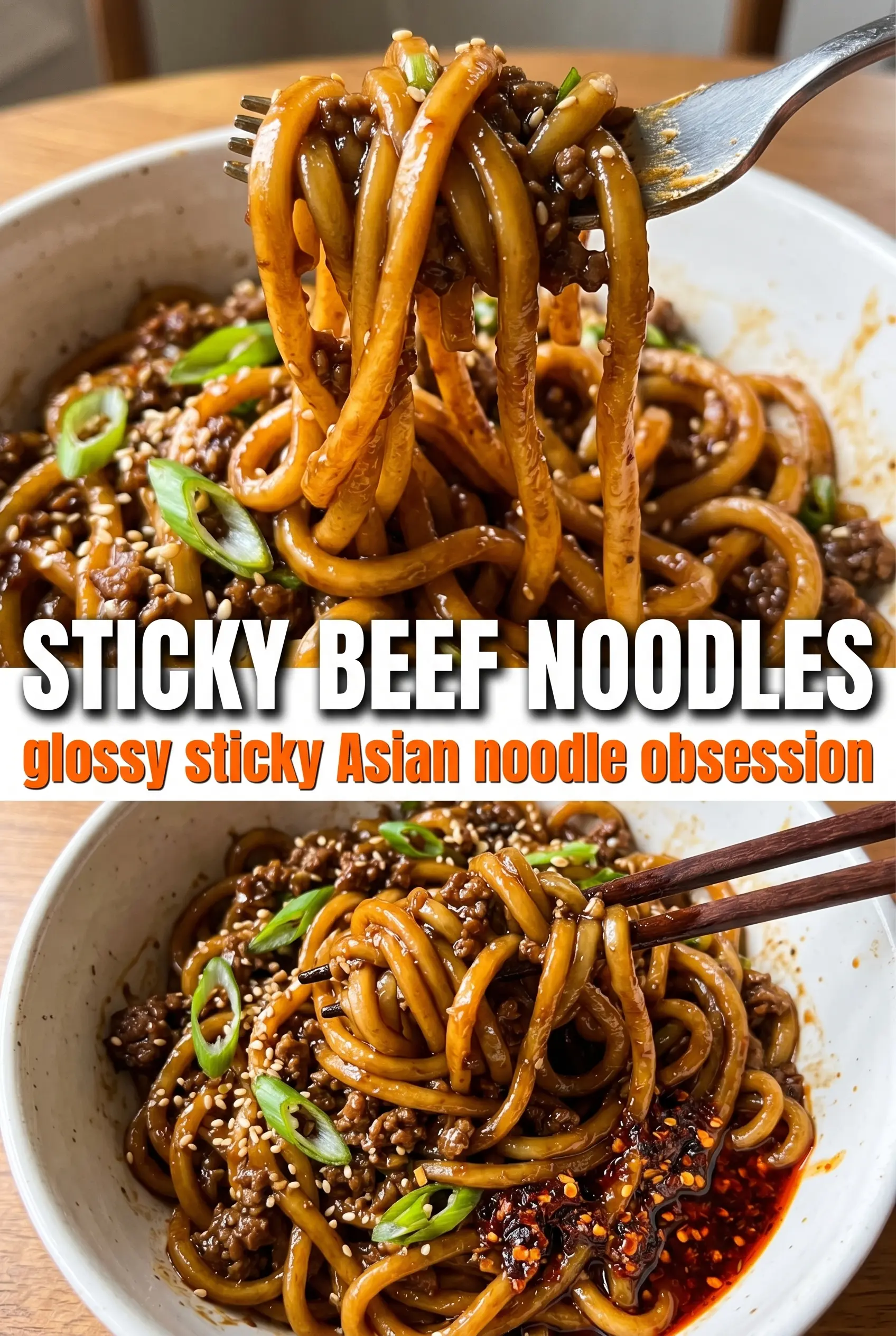
Sticky beef noodles hit that sweet spot between takeout comfort and pantry dinner practicality. The sauce clings to every strand, the beef stays savory and browned, and the whole bowl comes together with the kind of glossy finish that makes you keep twirling just one more bite. Wide noodles work best here because they hold onto the sauce instead of letting it slide straight to the bottom of the bowl.
The trick is getting the beef properly browned before the sauce goes in. That little bit of caramelization gives the sauce depth, especially once the brown sugar, soy sauce, oyster sauce, and hoisin reduce together in the hot pan. Cornstarch in the sauce helps it tighten fast, so you get that sticky, glossy coating without needing to simmer forever.
Below, I’ve included the exact cues I watch for when the sauce is ready, plus a few smart swaps if you need to use a different noodle or keep the dish a little lighter. It’s the kind of dinner that looks like it took more work than it did.
The sauce turned glossy and thick in just a couple minutes, and it coated the noodles instead of pooling at the bottom. My husband went back for a second bowl before I’d even sat down.
Sticky Beef Noodles with that glossy soy-garlic sauce deserves a spot in your weeknight rotation.
The Part That Keeps the Sauce Glossy Instead of Gummy
The biggest mistake with sticky noodles is letting the sauce turn into paste before the noodles go in. You want it thick enough to coat a spoon, but still loose enough to move around the pan. That usually happens fast, especially once cornstarch and sugar meet a hot wok, so keep the heat high and stay close.
Ground beef needs a hard sear before anything else joins the pan. If it steams, the sauce ends up flat and a little greasy. Break the meat into smaller crumbles, let it sit long enough to brown on the first side, then stir it apart and drain off excess fat before adding garlic and ginger. That keeps the finished bowl sticky, not slick.
What Each Ingredient Is Actually Doing in This Bowl
- Ground beef — Use regular ground beef here, not extra-lean if you can help it. A little fat helps the meat brown and gives the sauce body. If your beef is very lean, add a teaspoon of oil back into the pan after draining so the sauce doesn’t taste dry.
- Wide noodles — Udon, lo mein, or linguine all work because they give the sauce something to grab onto. Thin noodles can work in a pinch, but they don’t hold the glaze as well and tend to clump faster.
- Soy sauce, oyster sauce, and hoisin — This is the backbone of the dish. Soy sauce brings salt, oyster sauce adds deep savoriness, and hoisin adds sweetness and body. If you skip oyster sauce, the sauce loses some of its restaurant-style depth, so I’d only swap it for more hoisin in an emergency.
- Brown sugar — This is what helps the sauce turn sticky instead of merely salty. It also balances the garlic and ginger. Dark brown sugar gives a slightly richer finish, but light brown sugar works just fine.
- Cornstarch — This is the quick thickener that gives you that clingy coating. Whisk it into the sauce before it hits the pan so it dissolves evenly. If you add it dry, you’ll get little lumps instead of a smooth glaze.
- Ginger and garlic — These need just 30 seconds in the hot pan. Any longer and the garlic can scorch, which makes the whole dish taste bitter. Fresh ginger matters here; the dried kind won’t give the same bright bite.
Building the Sticky Noodle Sauce in the Right Order
Brown the Beef First
Heat the oil until it shimmers, then add the beef and leave it alone long enough to get some color before breaking it up. You’re listening for a steady sizzle, not a wet hiss. If the pan is crowded or the beef is stirred constantly, it will steam instead of brown. Drain off the fat once the meat is cooked through, but leave the browned bits in the pan — that’s where a lot of the flavor lives.
Wake Up the Garlic and Ginger
Add the garlic and ginger straight into the hot beef and stir for about 30 seconds, just until they smell sharp and fragrant. You’re not cooking them until soft; you’re just taking the raw edge off. If the garlic starts to brown hard, the heat is too high or the pan sat empty too long after draining.
Let the Sauce Tighten Before the Noodles Go In
Pour in the mixed sauce and toss constantly as it simmers. Within about 2 minutes, it should darken slightly, bubble in slow thick bursts, and coat the beef in a shiny glaze. This is the point where people usually walk away too soon or keep cooking too long. Add the noodles as soon as the sauce looks sticky and reduced, because once the noodles are in, they’ll keep soaking up liquid.
Toss Until Every Strand Is Coated
Add the drained noodles and toss until the sauce clings to every strand instead of sitting in the bottom of the pan. If the noodles look dry, add a splash of hot water rather than more sauce; extra sauce can make the bowl salty and muddy. Finish with green onions and sesame seeds while the noodles are still hot so the garnish softens just enough to smell fresh.
Three Ways to Bend This Recipe Without Breaking It
Make It Gluten-Free
Use tamari or a certified gluten-free soy sauce and swap the noodles for gluten-free rice noodles or a gluten-free wheat-free noodle you trust. Keep an eye on the sauce because some gluten-free noodles soften faster and can turn mushy if they sit too long in the pan.
Swap the Beef for Ground Turkey
Ground turkey works well, but it needs a little help. Add an extra teaspoon of oil and let it brown properly so the finished bowl doesn’t taste too lean. The sauce stays the same, though you may want a pinch more salt at the end because turkey is milder than beef.
Make It Vegetarian
Use crumbled extra-firm tofu or a plant-based ground and brown it well before adding the sauce. Since you lose some of the beefy depth, don’t skip the oyster sauce substitute if you need one; use vegetarian oyster sauce or a mushroom sauce to keep the umami where it belongs.
Storage and Reheating
- Refrigerator: Store leftovers in an airtight container for up to 4 days. The noodles will absorb more sauce as they sit, so they’ll look a little tighter the next day.
- Freezer: It freezes, but the noodle texture softens after thawing. For the best result, freeze the beef and sauce separately from freshly cooked noodles.
- Reheating: Reheat gently in a skillet over medium-low heat with a splash of water to loosen the sauce. The common mistake is blasting it in the microwave until the noodles dry out and the sauce gets clumpy.
Questions I Get Asked About This Recipe
Sticky Beef Noodles
Ingredients
Equipment
Method
- Cook wide noodles according to package directions, then drain. While they’re still hot, toss with a little sesame oil to prevent sticking and keep strands glossy.
- Whisk soy sauce, brown sugar, oyster sauce, hoisin sauce, sesame oil, rice vinegar, sriracha, and cornstarch until smooth. Set the bowl aside so the sauce is ready to pour.
- Heat vegetable oil in a wok or skillet over high heat. Add ground beef and brown for 5–8 minutes, breaking it apart until no pink remains.
- Drain any excess fat from the pan. Keep the browned beef hot for the next step.
- Add garlic and fresh ginger and cook for 30 seconds until fragrant. Stir constantly so the aromatics don’t burn.
- Pour the sticky sauce over the beef and toss to coat. Simmer for 2 minutes, stirring, until the sauce thickens and turns darker and glossier.
- Add noodles to the pan and toss until every strand is coated in the sticky sauce. Cook for 1–2 minutes just to heat through and help the sauce cling.
- Transfer to bowls and garnish with green onions and sesame seeds. Serve immediately while the sauce looks thick and glossy on the noodles.