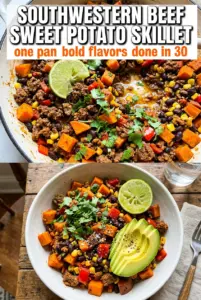
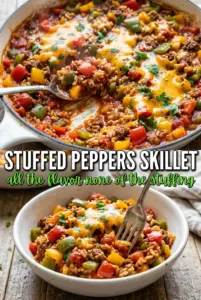
All the flavors of classic stuffed peppers land on the table in one skillet, and that’s what makes this version stick. You get browned beef, tender peppers, tomato-rich rice, and a cap of melted mozzarella without boiling peppers, stuffing shells, or waiting around for a casserole to bake. The whole dish tastes like it took far more effort than it did.
The key is building the filling in stages so nothing turns soft and muddy. The beef gets a proper brown first, the peppers cook just long enough to lose their raw bite, and the rice goes in cooked so it absorbs the sauce instead of turning gummy. A short simmer ties everything together and thickens the tomatoes into a spoonable sauce instead of leaving the skillet watery.
Below, I’ve included the small details that keep the texture right, plus the swaps I’d use when I want to stretch it, lighten it up, or work with what’s already in the pantry.
The rice soaked up the tomato sauce without getting mushy, and the mozzarella melted into a perfect top layer. I loved that the peppers still had a little bite instead of turning soft.
Love the one-skillet stuffed peppers? Save this skillet version for a fast beef-and-rice dinner with melted mozzarella on top.
The Trick to Keeping Stuffed Pepper Skillet from Turning Watery
The biggest failure point in a dish like this is steam. Bell peppers and tomatoes both release moisture, and if you rush the simmer or crowd the pan, you end up with soup instead of a thick skillet dinner. The fix is simple: brown the beef first, cook off the raw onion moisture, and give the finished mixture time to bubble until the sauce clings to the rice instead of pooling around it.
Using cooked rice matters here too. Uncooked rice would need extra liquid and longer cooking, which would soften the peppers too much before the grain is tender. Pre-cooked rice turns this into a true weeknight shortcut because it soaks up the tomato sauce fast and gives the skillet that stuffed-pepper texture without dragging out the cook time.
What Each Ingredient Is Actually Doing in This Recipe
- Primary ingredient (the star) — Quality matters most. Choose the best you can find.
- Cooking medium (oil, butter, or broth) — This carries flavors and prevents dryness.
- Seasonings (salt, pepper, spices, herbs) — Layer flavors so nothing overpowers. Build depth gradually.
- Aromatics (garlic, onion, herbs) — Cook with fat to bloom flavors. Become the foundation.
- Supporting ingredients — Complement the main ingredient without overpowering it.
- Sauce or liquid (if applicable) — Brings flavors together. Balance richness with acid.
- Acid (lemon, vinegar, wine, or other) — Brightens and prevents flat-tasting results.
- Final finish (garnish, glaze, or sauce) — Prevents one-dimensional taste and adds visual appeal.
What the Rice, Sauce, and Cheese Are Doing Here
- Ground beef — This gives the skillet its savory base and enough fat to carry the seasoning. Lean beef works fine, but if you use anything much leaner than 90/10, keep an eye on the pan so the vegetables don’t dry out while cooking.
- Bell peppers — Mixed colors bring sweetness and a little freshness that stands up to the tomato sauce. Dice them evenly so they soften at the same pace; large chunks stay crisp while the rest of the skillet moves on.
- Cooked white rice — This is what makes the dish feel like stuffed peppers instead of beefy tomato sauce. Day-old rice is ideal because it holds its shape, but freshly cooked rice works if it’s not wet or clumped.
- Diced tomatoes and tomato sauce — The combination gives you both texture and body. If you only use diced tomatoes, the skillet stays looser; if you only use sauce, it loses the little pops of tomato that make the filling taste complete.
- Mozzarella — It melts into a soft, stretchy top layer that pulls the whole skillet together. Part-skim melts nicely, but a freshly shredded block gives you the smoothest finish because it doesn’t carry the anti-caking coating that bagged cheese often has.
Building the Skillet in the Right Order
Brown the beef before anything else
Cook the beef with the onion over medium-high heat until the meat has real color and the onion looks translucent and glossy. If the pan is crowded or the heat is too low, the beef steams and the whole dish tastes flat. Once the fat is drained, the garlic only needs about 30 seconds; any longer and it can turn bitter before the peppers even go in.
Soften the peppers without losing their bite
Add the diced peppers and cook them just until they start to bend at the edges but still hold shape. Four minutes is enough in most skillets. You want them tender enough to eat easily, not collapsed into the sauce, because they’ll keep softening during the simmer.
Let the sauce thicken around the rice
Stir in the cooked rice, tomatoes, tomato sauce, seasoning, Worcestershire, salt, and pepper, then simmer until the liquid looks reduced and glossy. The mixture should mound slightly when stirred, not spread like broth. If it still looks loose after 10 minutes, keep cooking uncovered for another minute or two; that last bit of evaporation is what gives you the stuffed-pepper texture.
Melt the cheese with the lid on
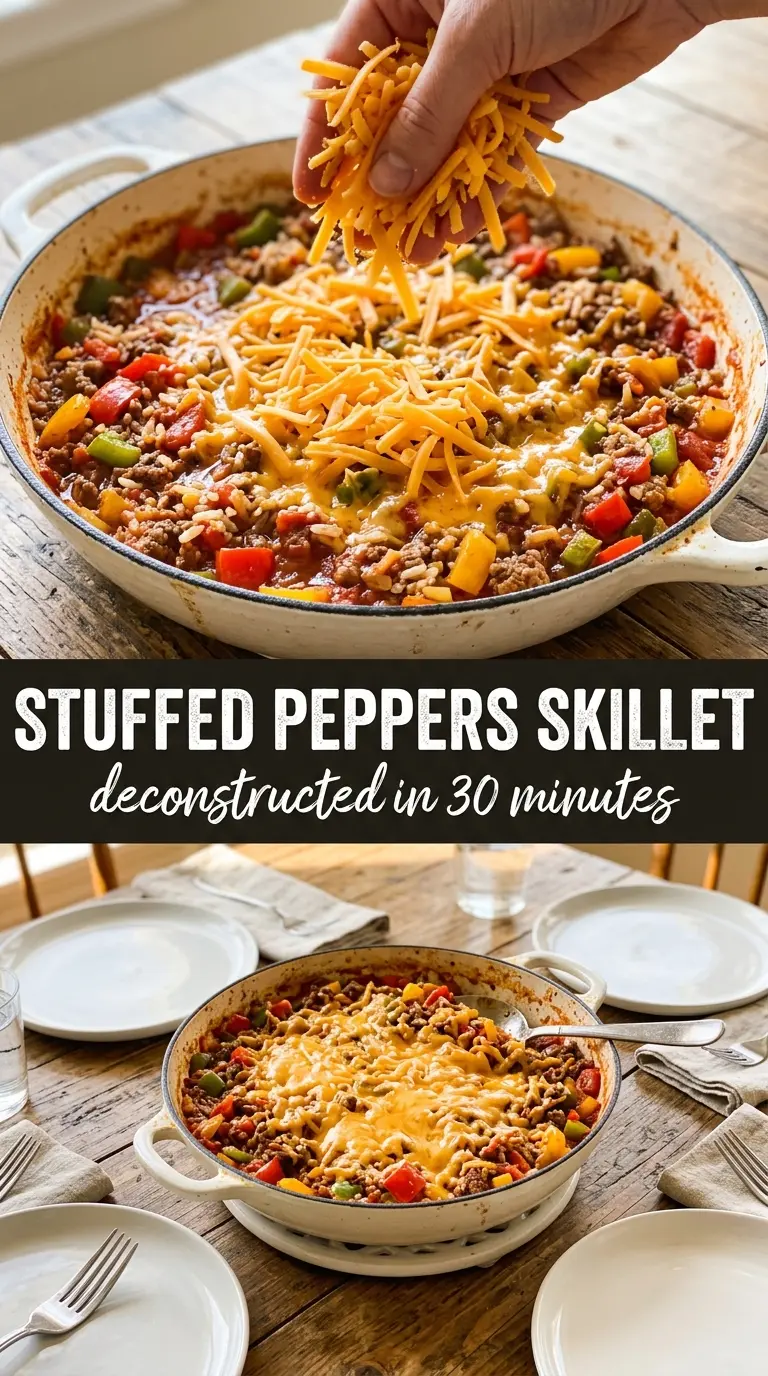
Scatter the mozzarella over the top, cover the skillet, and let the trapped heat melt it into a soft blanket. Don’t stir it in or you’ll lose the clean, cheesy top layer. Once the cheese has melted and looks stretchy at the edges, serve it right away while the sauce is still hot and the rice hasn’t had time to tighten up.
How to Adapt This for Different Kitchens and Appetites
Make It Dairy-Free
Skip the mozzarella or use a dairy-free shred that melts well. The skillet still tastes complete without cheese because the tomato, beef, and peppers do the heavy lifting, but you’ll lose the stretchy finish on top.
Use Ground Turkey Instead of Beef
Ground turkey works well if you want a lighter skillet, but it needs a little help because it’s leaner and milder. Add a touch more olive oil when browning and don’t skimp on salt or Worcestershire, or the filling can taste too soft and one-note.
Swap in Brown Rice
Brown rice gives the skillet a nuttier bite and a little more chew. Use it only if it’s already cooked and warm, since undercooked brown rice won’t soften in time and will make the dish feel underdone.
Storage and Reheating
- Refrigerator: Store leftovers in an airtight container for 3 to 4 days. The rice will absorb more sauce as it sits, so the texture gets a little thicker by day two.
- Freezer: This freezes well for up to 2 months. Cool it completely first, then pack it in portions so it reheats evenly without overcooking the peppers.
- Reheating: Warm it covered on the stovetop over low heat with a splash of water or tomato sauce. The common mistake is blasting it in the microwave until the rice dries out and the cheese turns rubbery.
Questions I Get Asked About This Recipe
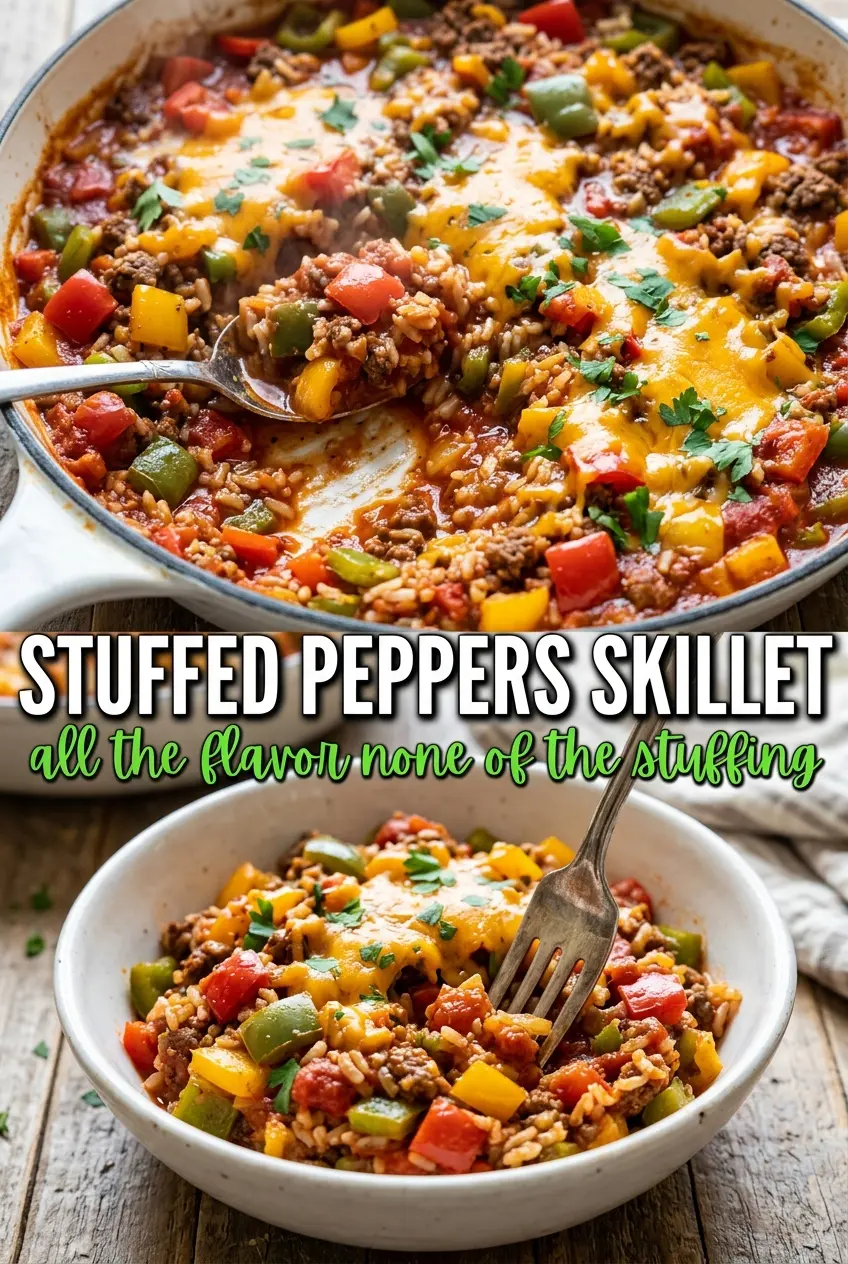
Stuffed Peppers Skillet
Ingredients
Equipment
Method
- Heat a large skillet over medium-high heat and brown the ground beef with the diced onion, stirring, until the beef is no longer pink. Drain excess fat, then add the minced garlic and cook 30 seconds until fragrant, keeping the sizzle steady.
- Add the diced bell peppers to the skillet and cook for 4 minutes, stirring occasionally, until slightly softened and glossy around the edges. The mixture should still look bright and colorful rather than fully mushy.
- Stir in the cooked white rice, diced tomatoes, tomato sauce, Italian seasoning, Worcestershire sauce, salt, and pepper. Mix thoroughly so the rice is coated and the sauce starts bubbling through the mixture.
- Simmer for 8–10 minutes, stirring occasionally, until the sauce thickens and everything melds together. Watch for a thicker, spoonable consistency that clings to the rice and beef.
- Sprinkle the shredded mozzarella evenly over the top, cover the skillet, and heat for 2–3 minutes until melted. Let it settle for 30 seconds before serving directly from the skillet.