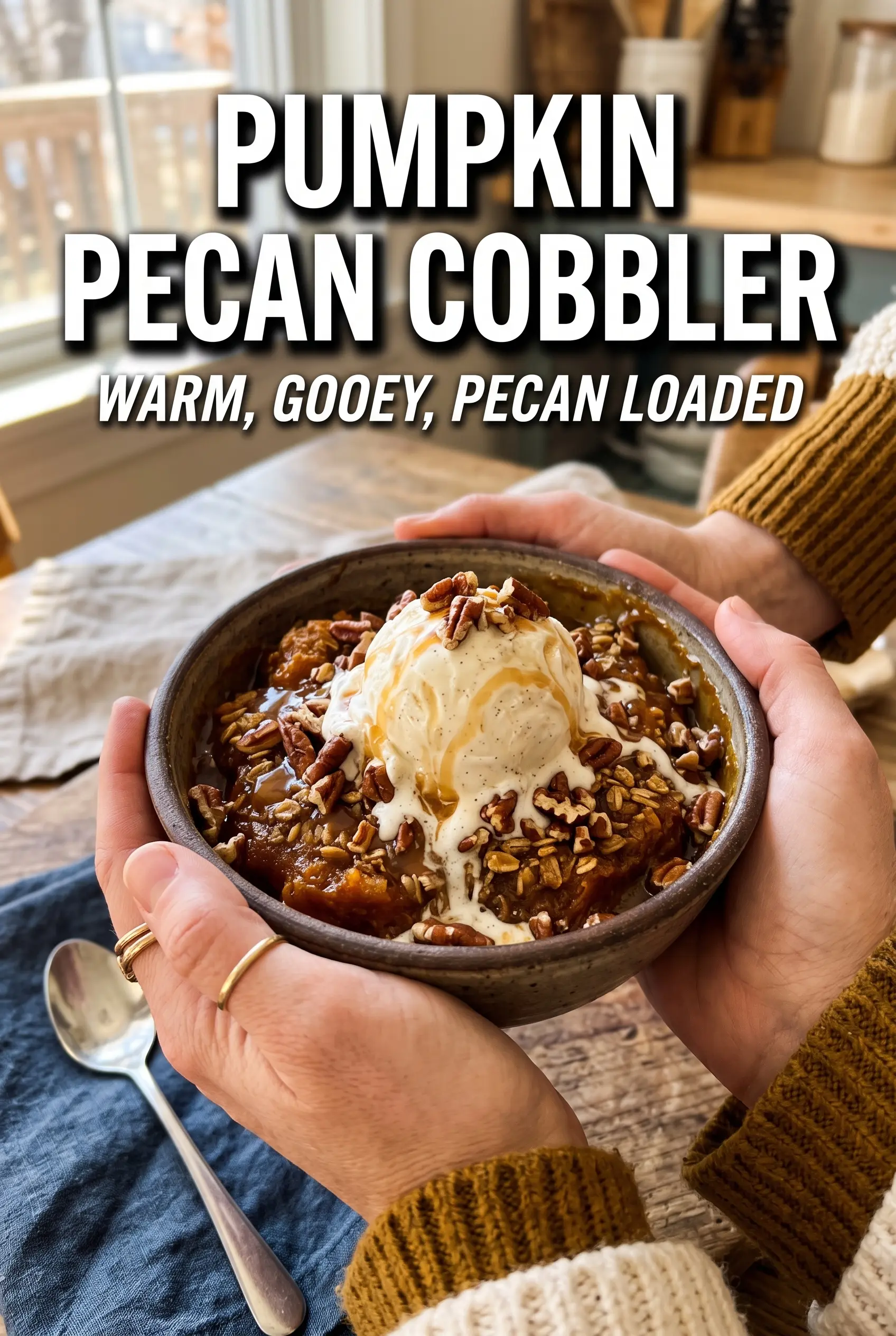
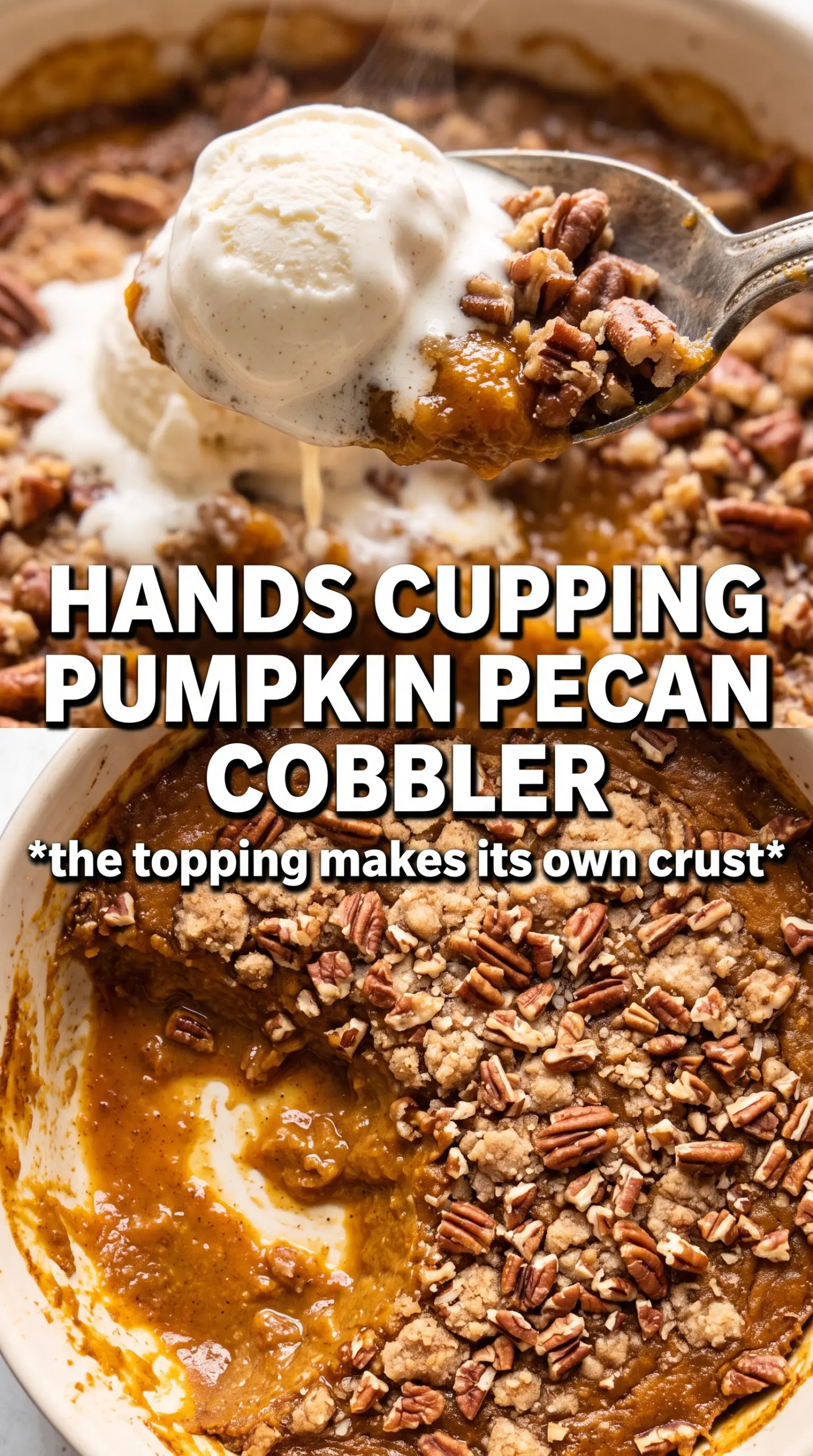
Pumpkin pecan cobbler bakes up with a tender spice-kissed top and a warm caramel-pumpkin sauce hiding underneath, which is exactly why it disappears fast once it hits the table. The pecans toast as the cobbler bakes, giving each spoonful a little crunch against the soft crumb and the glossy sauce underneath. Served warm with vanilla ice cream, it lands somewhere between a pudding cake and a self-saucing dessert, and that contrast is what makes it memorable.
The trick is in the layering. The batter stays fairly thick, so it can hold the pecans and support the sugar topping, then the hot water goes over everything without stirring, which creates the sauce as it bakes instead of mixing into the batter. Use pumpkin puree, not pumpkin pie filling, or the sweetness and spice level will throw the whole dessert off. The water also needs to be very hot so the sugar starts dissolving right away and sinks into that caramel layer instead of sitting grainy on top.
Below, I’ve included the part that matters most: how to avoid a gummy center, how to know when it’s baked through, and what to do if you want to swap the nuts or make it ahead.
The sauce formed right under the cobbler just like you said, and the pecans stayed on top with a little crunch. Mine was done in 43 minutes and the center set up beautifully.
Save this pumpkin pecan cobbler for the nights when you want a warm self-saucing dessert with toasted pecans and vanilla ice cream.
The Reason the Sauce Forms Under the Cobbler Instead of on Top
This dessert works because the batter and the sauce ingredients are built to separate in the oven. The batter is thick enough to stay where you spread it, but once the hot water hits the brown sugar layer, the sugar and moisture travel downward through the batter as it bakes. That’s what creates the caramel sauce underneath instead of a watery mess on top.
The biggest mistake is stirring after the water goes in. Once you mix everything together, you lose the layers that make this cobbler special and end up with a pumpkin cake that tastes fine but doesn’t have that spoonable sauce. The other thing that matters is oven heat. If the oven runs too cool, the center stays loose and the sauce never sets into that glossy, pourable texture.
- Pumpkin puree gives the cobbler body and that earthy pumpkin flavor. Pumpkin pie filling isn’t the same thing and will make the dessert overly sweet and spiced.
- Very hot water is what starts the sauce. Lukewarm water won’t dissolve the sugar fast enough, so the topping can stay grainy.
- Pecans add texture and keep the dessert from feeling one-note. Roughly chopping them gives you a mix of fine bits and bigger pieces that toast well.
What Each Ingredient Is Doing in the Pan
- All-purpose flour gives the batter just enough structure to hold the topping and bake into a tender layer. Cake flour makes it a little too delicate for this style of cobbler.
- Baking powder lifts the batter so it doesn’t bake up dense under the sauce.
- Pumpkin pie spice and cinnamon reinforce each other here. If you only have one or the other, use cinnamon plus a pinch of nutmeg and ginger, but the full blend gives the warmest result.
- Butter needs to be melted, not browned, so it blends smoothly into the batter and stays rich without adding extra moisture.
- Milk loosens the batter just enough to spread evenly. Whole milk gives the best texture, but 2% works fine.
Building the Layers So the Cobbler Bakes, Then Sauces
Mix the Batter Until It Just Comes Together
Whisk the dry ingredients first so the baking powder and spices are evenly distributed, then stir in the pumpkin, melted butter, milk, and vanilla until you have a thick, spreadable batter. It should look more like a soft quick-bread batter than a pourable cake batter. If it seems too stiff, the pumpkin may have been packed down or the flour measured heavy, and a tablespoon of milk can loosen it.
Scatter the Pecans Before the Sugar Layer
Spread the batter evenly into the buttered dish, then scatter the chopped pecans over the top. The pecans should sit across the surface, not sink into the batter, because they need direct contact with the heat to toast. If you press them down, they’ll disappear into the base and lose that crunchy top layer.
Pour the Hot Water and Walk Away
Mix the brown sugar, granulated sugar, and cinnamon, then sprinkle it evenly over the pecans and batter. Pour the hot water slowly over the back of a spoon or over the surface in a thin stream so you don’t blast a hole through the batter. Do not stir. That layer separation is the whole point, and once the pan goes into the oven, the sauce begins forming underneath on its own.
Watch for the Center to Set, Not Dry Out
Bake until the edges are bubbling and the center looks just set, with a slight jiggle when you tap the pan. Forty minutes is a good starting point, but many ovens need the full 45 minutes. If the middle still looks wet and sloshy, give it a few more minutes; if you wait until it looks completely firm, it’s usually overbaked and the sauce loses some of its silkiness.
How to Adapt It for Different Tables and Different Pantries
Dairy-Free Pumpkin Pecan Cobbler
Use a neutral plant-based milk and a dairy-free butter substitute in the batter. The texture stays close to the original, though the flavor will be a touch less rich, so don’t skip the vanilla and spices.
Gluten-Free Version With a 1:1 Flour Blend
Swap in a good 1:1 gluten-free baking flour. The cobbler will be a little more delicate, but the sauce still forms underneath as long as you keep the batter thick and bake until the center sets.
Walnuts Instead of Pecans
Walnuts work if that’s what you have, but they bring a sharper, slightly more bitter edge than pecans. Chop them a little finer so the larger pieces don’t dominate each spoonful.
Storage and Reheating
- Refrigerator: Store covered for up to 4 days. The sauce will thicken and the topping will soften as it sits.
- Freezer: It freezes fairly well in portions for up to 2 months, but the texture is softer after thawing. Wrap tightly and thaw in the refrigerator before reheating.
- Reheating: Warm individual portions in the microwave or reheat the whole dish covered in a 300F oven until hot. The common mistake is blasting it at high heat, which dries out the top before the sauce warms through.