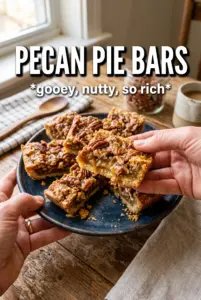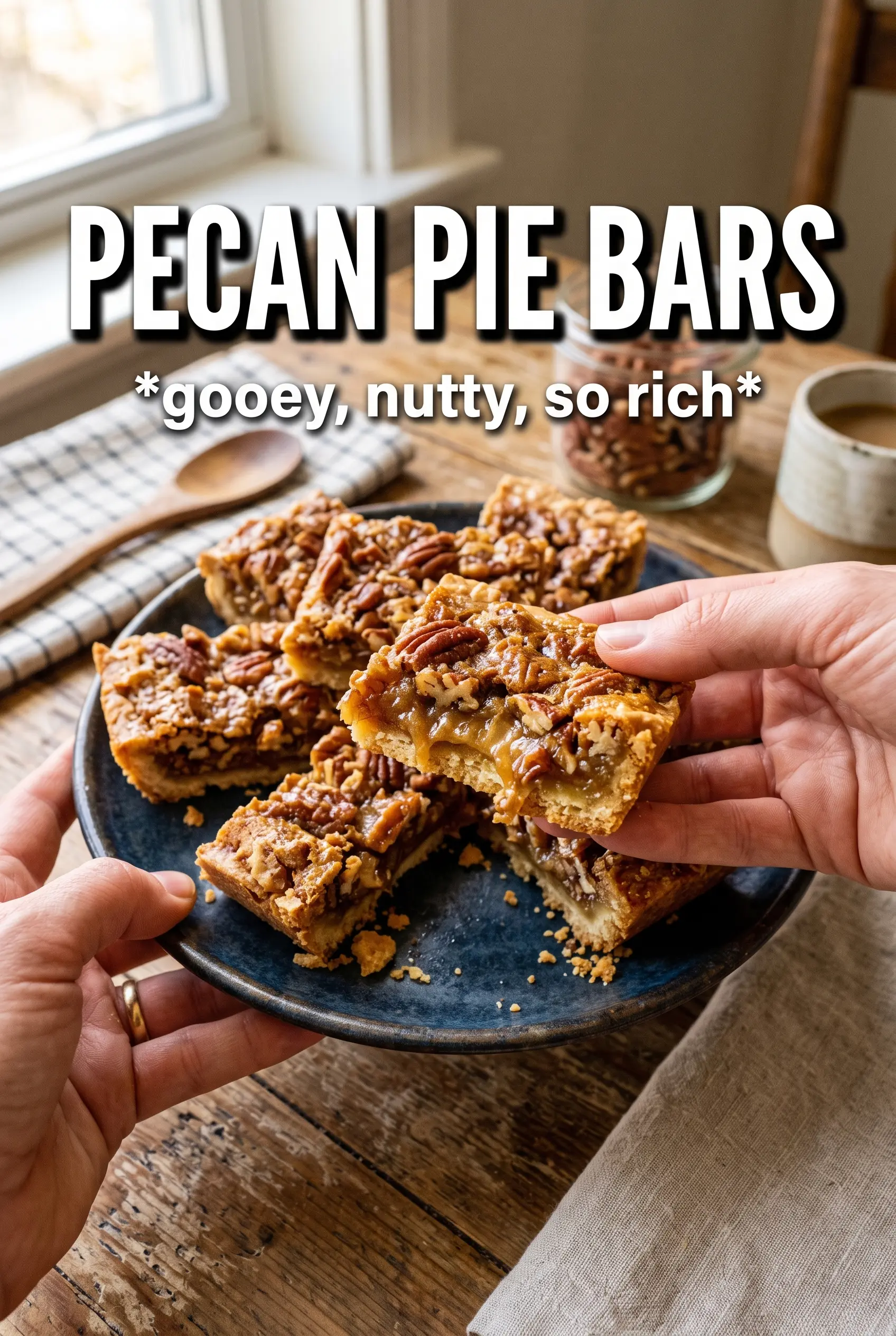
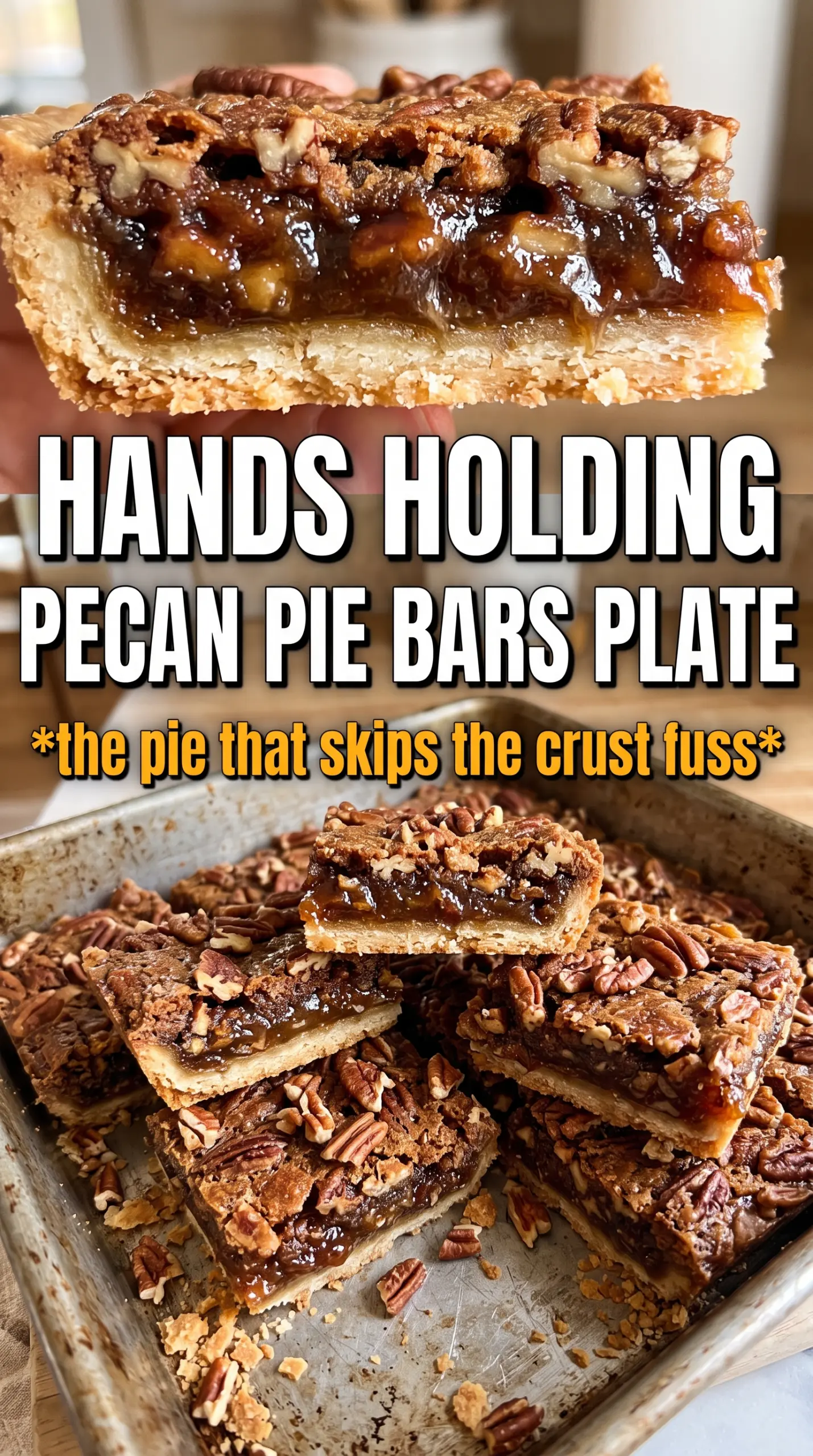
Buttery shortbread, sticky pecan caramel, and that clean little hit of flaky salt on top make these pecan pie bars the kind of dessert people quietly hover around until the pan is nearly gone. You get all the deep, toasty pecan pie flavor without rolling dough or wrestling with a slice that falls apart on the plate. The crust stays sturdy, the filling sets up glossy and rich, and every square cuts into neat layers that hold together beautifully.
The trick is using a shortbread base that bakes just enough before the filling goes on. That gives the bars structure and keeps the bottom from turning soft under the caramel. The filling also needs a full boil for a couple of minutes so the butter, sugar, honey, and cream thicken into something that sets instead of staying loose and sticky in a bad way.
Below, I’ve included the detail that matters most: how to know when the filling is done, plus the small ingredient choices that make these bars slice cleanly and taste like the best part of pecan pie.
The shortbread held its shape perfectly and the pecan filling set up glossy instead of gooey. I baked them the night before, and they sliced into clean bars the next day with no crumble at all.
Love the sticky pecan topping and buttery shortbread layers? Save these pecan pie bars for the dessert table, holiday trays, or any time you want pie flavor without the fuss.
The Part Most Pecan Bars Get Wrong: The Crust Has to Bake Before the Filling Goes On
The shortbread layer is not just a base here. It’s the structure that keeps these bars from collapsing into a sticky mess when you slice them. If you pour the pecan filling onto raw dough, the bottom stays soft and the bars never cut as cleanly, no matter how long you chill them. Baking the crust first sets the butter, lightly dries the surface, and gives the filling something sturdy to cling to.
Press the dough firmly and evenly into the pan. Loose packing means uneven baking, and uneven baking means some bars are crumbly while others turn dense. You want a thin, even layer that looks pale gold at the edges and still feels tender in the middle when it comes out for the first bake.
- Cornstarch — This is what gives the crust that short, tender snap instead of a bready cookie texture. It’s not there to thicken the filling; it keeps the base delicate.
- Cold butter — Cold butter cuts into the flour mixture in little pockets, which bakes into a more tender crust. Soft butter blends in too fast and can make the base greasy.
- Powdered sugar — It dissolves into the dough more smoothly than granulated sugar and helps the crust bake up fine and sandy, not crunchy.
What Each Ingredient Is Actually Doing in the Pecan Filling
- Brown sugar — This brings the deep caramel note and helps the filling set. Packed brown sugar matters here because a loose measure makes the filling thinner than it should be.
- Honey — Honey keeps the filling glossy and gives it that soft, chewy bite you want in a bar. Corn syrup can work in a pinch, but honey adds a fuller flavor and a slightly firmer finish once cooled.
- Heavy cream — Cream smooths the filling and helps it bubble into a unified caramel. Milk won’t give the same richness, and the filling can taste flatter.
- Whole pecans — Use whole pecans if you want those dramatic, bakery-style layers on top. Halves or pieces work, but they change the look and the bite; pieces spread more evenly, while whole nuts give a cleaner, chunkier finish.
- Flaky sea salt — This is the small finish that keeps the bars from tasting one-note. A light sprinkle after baking sharpens the caramel and makes the pecans taste even toastier.
Building the Filling So It Sets Without Turning Grainy
Make the Caramel Base First
Melt the butter, brown sugar, honey, and cream together over medium heat until the mixture looks smooth and starts to bubble across the surface. The goal is a full boil, not just steam around the edges. If the heat is too low, the sugar won’t dissolve evenly and the filling can turn gritty later. If it starts splattering hard, lower the heat slightly, but don’t skip the boil.
Give It the Full Two Minutes
Once it boils, cook it for two minutes before pulling it off the heat. That timing matters because it concentrates the mixture enough to set in the oven and again as it cools. Stir in the salt, vanilla, and pecans off the heat so the caramel stays smooth. If you add the nuts too early, they can soak up too much heat and the filling gets thicker than you want before it even reaches the pan.
Bake Until the Center Is Set but Still Slightly Soft
Pour the filling over the hot crust and spread it all the way to the corners. Bake until the top looks glossy and the center no longer sloshes when you nudge the pan. It may still have a little give in the middle, and that’s right; it firms up as it cools. If you overbake it, the sugar can harden too much and the bars slice with a crackly, brittle top instead of a chewy one.
How to Adapt These Bars for Different Tables and Different Pantries
Gluten-Free Version
Swap the all-purpose flour for a 1:1 gluten-free baking blend that includes xanthan gum. The crust will be a little more delicate, so press it firmly into the pan and let the bars cool completely before slicing. The filling doesn’t need any changes.
Maple Pecan Bars
Replace the honey with pure maple syrup for a deeper, woodsy sweetness. The filling will be a touch softer and less floral, but the flavor leans more like classic pecan pie and pairs beautifully with the buttery crust.
Nutty Mix-In Swap
Replace up to 1 cup of the pecans with chopped walnuts for a slightly earthier flavor and a less uniform topping. I wouldn’t swap all of them unless you want the bars to taste noticeably different; pecans are what give these their classic buttery sweetness.
Storage and Reheating
- Refrigerator: Store in an airtight container for up to 5 days. The filling will firm up more in the fridge, which makes the bars slice even cleaner.
- Freezer: These freeze well. Wrap individual bars tightly and freeze for up to 2 months, then thaw overnight in the fridge.
- Reheating: These are best served at room temperature, not warmed. If you heat them, the filling softens too much and can slide from the crust when you cut them.