Golden pumpkin cornbread lands right in that sweet spot between tender and sturdy: crumbly enough to serve alongside soup or chili, but soft enough to eat warm with a thick swipe of butter. The pumpkin gives it a deeper color and a little extra moisture, while the cornmeal keeps the texture honest and rustic instead of turning it into pumpkin cake.
The balance matters here. A full cup of pumpkin puree can make cornbread heavy if the batter is overmixed or underbaked, so this version keeps the liquid ingredients in check and leans on buttermilk for lift and tang. Brown sugar and maple syrup round out the flavor without making it cloying, and the pumpkin pie spice stays in the background where it belongs.
Below, you’ll find the little things that make this cornbread bake up evenly in an 8×8 pan or cast iron skillet, plus a few swaps that still keep the crumb soft and the top lightly bronzed.
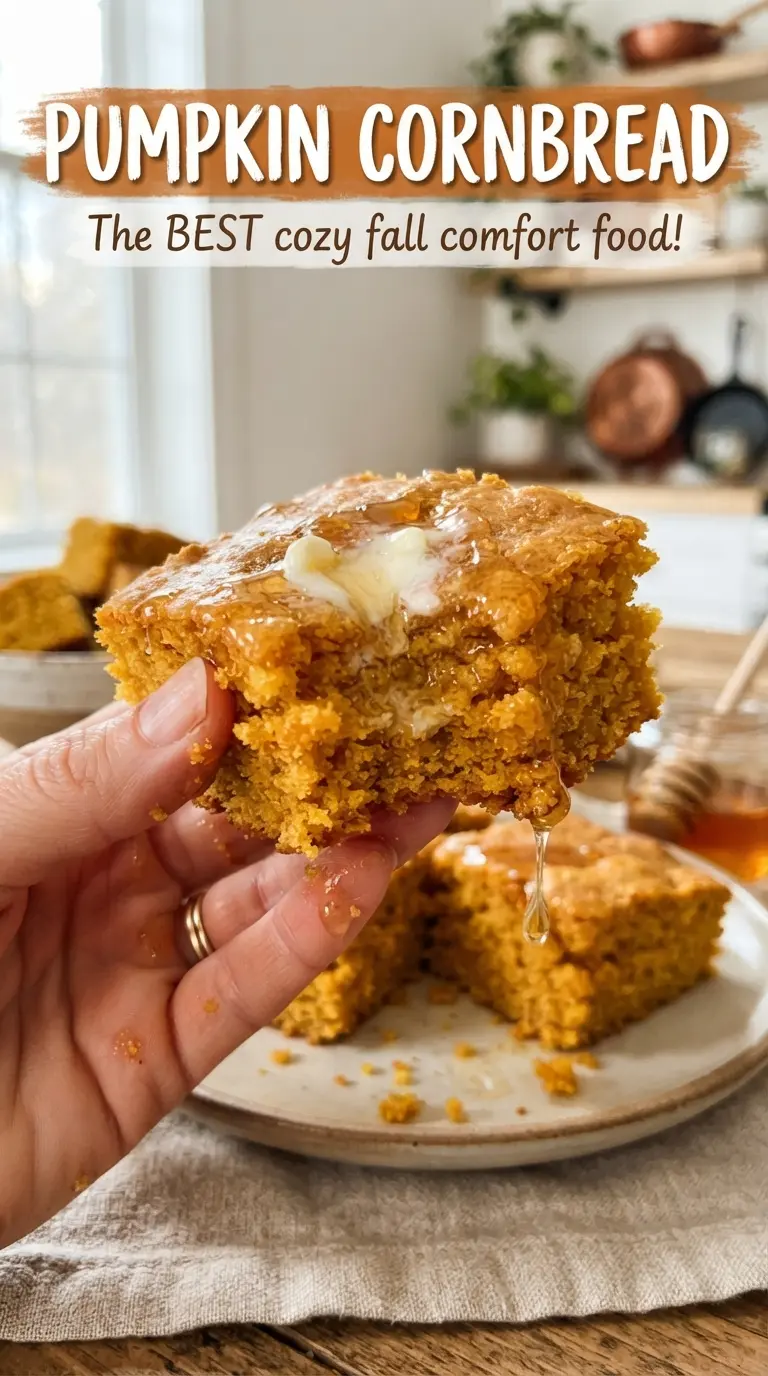
The edges came out crisp and the middle stayed moist without getting gummy. I baked it in cast iron and the maple butter on top was the best part.
Keep this pumpkin cornbread recipe handy for warm slices with maple butter, soups, and skillet suppers.
The Mistake That Turns Pumpkin Cornbread Dense Instead of Tender
Most pumpkin cornbread goes wrong in the mixing bowl, not the oven. Once the wet ingredients hit the dry, the batter only needs a few turns until the flour disappears. If you keep stirring, the gluten in the flour tightens up and the crumb turns bready and tough instead of soft and lightly cakey.
Temperature matters too. The oven needs to be fully hot before the pan goes in, because the baking powder starts working as soon as the wet ingredients are mixed together. A fast, steady bake at 400F gives the cornbread lift at the edges and keeps the center from sinking as it sets.
- Pumpkin puree — This adds moisture, color, and a mellow earthiness. Use plain pumpkin puree, not pumpkin pie filling, or the batter will be too sweet and spiced.
- Buttermilk — The tang helps balance the sugar and gives the batter enough acidity to work with the baking powder. If you don’t have it, use whole milk plus 1 teaspoon lemon juice or vinegar, then let it sit for 5 minutes.
- Brown sugar and maple syrup — These keep the sweetness warm and rounded instead of sharp. Brown sugar brings depth, while maple syrup adds a soft finish without making the bread taste like dessert.
- Butter — Melted butter carries flavor through the batter and helps the top bake up with a tender, rich finish. Neutral oil works in a pinch, but you’ll lose that buttery edge that makes this one feel homemade.
What Each Ingredient Is Actually Doing in the Batter
- Yellow cornmeal — This is what keeps the texture grounded and gives the bread its classic cornbread bite. Fine or medium grind both work; coarse cornmeal makes a grittier loaf.
- All-purpose flour — The flour holds everything together and softens the crumb so the pumpkin doesn’t make it too fragile. I wouldn’t swap all of it for cornmeal, or you’ll lose structure.
- Eggs — They bind the batter and help the center set without drying out. Room-temperature eggs mix in more smoothly, but cold eggs won’t ruin the recipe.
- Maple syrup — This is subtle, but it rounds out the pumpkin and brown sugar with a little woodsy sweetness. Honey works too, though it nudges the flavor in a different direction.
Mixing the Batter and Baking It at the Right Moment
Whisk the dry ingredients first
Start with the cornmeal, flour, brown sugar, baking powder, salt, and pumpkin pie spice in one bowl. Whisking them together now keeps the baking powder and spice evenly distributed, so you don’t end up with one salty corner or a bite that tastes like pure cinnamon. If the brown sugar has clumps, break them up with your fingers before adding the wet ingredients.
Stir the wet ingredients until smooth
In the second bowl, whisk the pumpkin, eggs, buttermilk, melted butter, and maple syrup until the mixture looks even and glossy. The butter should be melted, not hot, or it can curdle the eggs and seize up when it hits the cold pumpkin. If the butter is warm, let it sit for a minute before mixing it in.
Combine just until the flour disappears
Pour the wet mixture into the dry ingredients and stir only until you no longer see dry flour. A few small lumps are fine. Overmixing is the fastest way to turn this from tender cornbread into something springy and tight. Spread the batter into the prepared pan right away so the baking powder keeps working in the oven instead of the bowl.
Bake until the center sets
Bake at 400F for 22 to 25 minutes, until the top is golden and a toothpick comes out clean or with just a few moist crumbs. If the top browns before the center is done, your oven runs hot, and it helps to check it a few minutes early. Let the cornbread rest for at least 10 minutes before slicing so it finishes setting and doesn’t crumble apart.
How to Adapt This Pumpkin Cornbread for a Different Pan, a Dairy-Free Batch, or a Sweeter Finish
Cast iron skillet version
Bake the batter in a well-greased 10-inch cast iron skillet if you want darker edges and a crisper bottom. The skillet holds heat better than an 8×8 pan, so the cornbread gets a little more structure around the edges and releases with a deeper crust.
Dairy-free version
Swap the buttermilk for unsweetened non-dairy milk mixed with 1 teaspoon lemon juice or vinegar, and replace the butter with melted coconut oil or a neutral oil. You’ll lose a little of the classic buttery flavor, but the crumb still stays moist and the pumpkin keeps the texture soft.
Less sweet side-dish style
Cut the brown sugar to 1/4 cup and leave the maple syrup in place, or reduce both if you want it closer to classic savory cornbread. The texture stays the same, but the pumpkin and corn flavor come forward more cleanly, which is better next to chili or roast chicken.
Storage and Reheating
- Refrigerator: Store in an airtight container for up to 4 days. The crumb firms up a little in the fridge, but it stays moist.
- Freezer: Freeze slices tightly wrapped for up to 2 months. Thaw at room temperature before reheating so the center doesn’t dry out.
- Reheating: Warm slices in a 300F oven for 8 to 10 minutes or toast them gently in a skillet. The biggest mistake is blasting it in the microwave too long, which makes the edges tough and the middle rubbery.
Answers to the Questions Worth Asking
Pumpkin Cornbread
Ingredients
Equipment
Method
- Preheat the oven to 400F, then grease an 8x8-inch pan or a 10-inch cast iron skillet for easy release and even browning.
- Whisk yellow cornmeal, all-purpose flour, brown sugar, baking powder, salt, and pumpkin pie spice until evenly distributed and no dry streaks remain.
- Whisk pumpkin puree, large eggs, buttermilk, melted butter, and maple syrup until smooth and glossy.
- Stir the wet mixture into the dry just until combined to keep the cornbread tender and prevent overmixing.
- Spread the batter into the prepared pan, then bake 22-25 minutes at 400F until golden and a toothpick comes out clean.
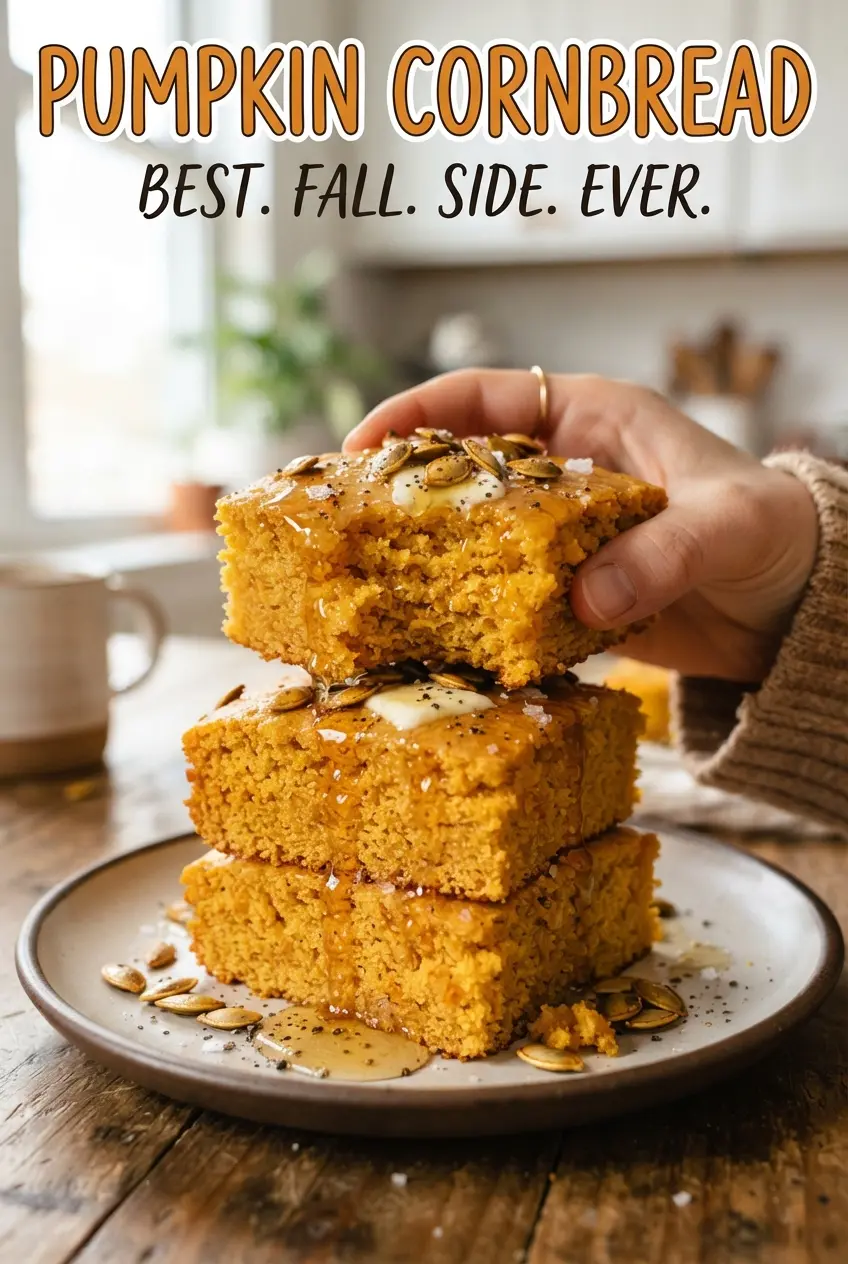
- Serve warm straight from the pan with butter melting on top for a rich, maple-accented finish.