Cranberry maple roast chicken earns its place at the center of the table because the skin turns lacquered and crisp while the pan fills with tart berries, sweet onion, and a glossy sauce that tastes far more complex than the ingredient list suggests. The chicken roasts up deeply golden, and the cranberry maple glaze settles into the skin without turning sticky-sweet or cloying.
What makes this version work is the timing. The chicken gets a full roast before the glaze goes on, which gives the skin time to dry and brown properly. Then the maple-Dijon mixture goes in late, so it can reduce into a shiny finish instead of burning in the oven. The orange and garlic inside the cavity perfume the meat from the inside out, while the cranberries burst right in the pan and turn the drippings into a bright sauce.
Below, I’ll show you the one step that keeps the skin crisp, what the cranberry pan sauce is doing while the bird rests, and a few smart ways to adapt the recipe if you need a different size bird or want to shift the sweetness.
The glaze turned glossy instead of burning, and the cranberries in the pan sauce gave it this bright little pop that kept every bite from feeling too sweet.
Save this cranberry maple roast chicken for the next time you want crisp skin, tart-sweet pan sauce, and a roast chicken that feels special without extra work.
The Trick to Keeping the Skin Crisp After the Glaze Goes On
Roast chicken gets disappointing when the glaze goes on too early. Sugar in the maple syrup is the first thing to burn, which is how you end up with dark spots before the bird is cooked through. The first 50 minutes are all about building color and rendering the skin, and only then does the maple-Dijon mixture come into play.
That second roast is short enough to set the glaze without letting it scorch. The cranberries and broth also matter here because they create steam and sauce in the pan, which keeps the drippings from turning into hard, blackened bits. You still get a bronzed bird, but the finish stays glossy instead of bitter.
What the Butter, Orange, and Dijon Are Really Doing
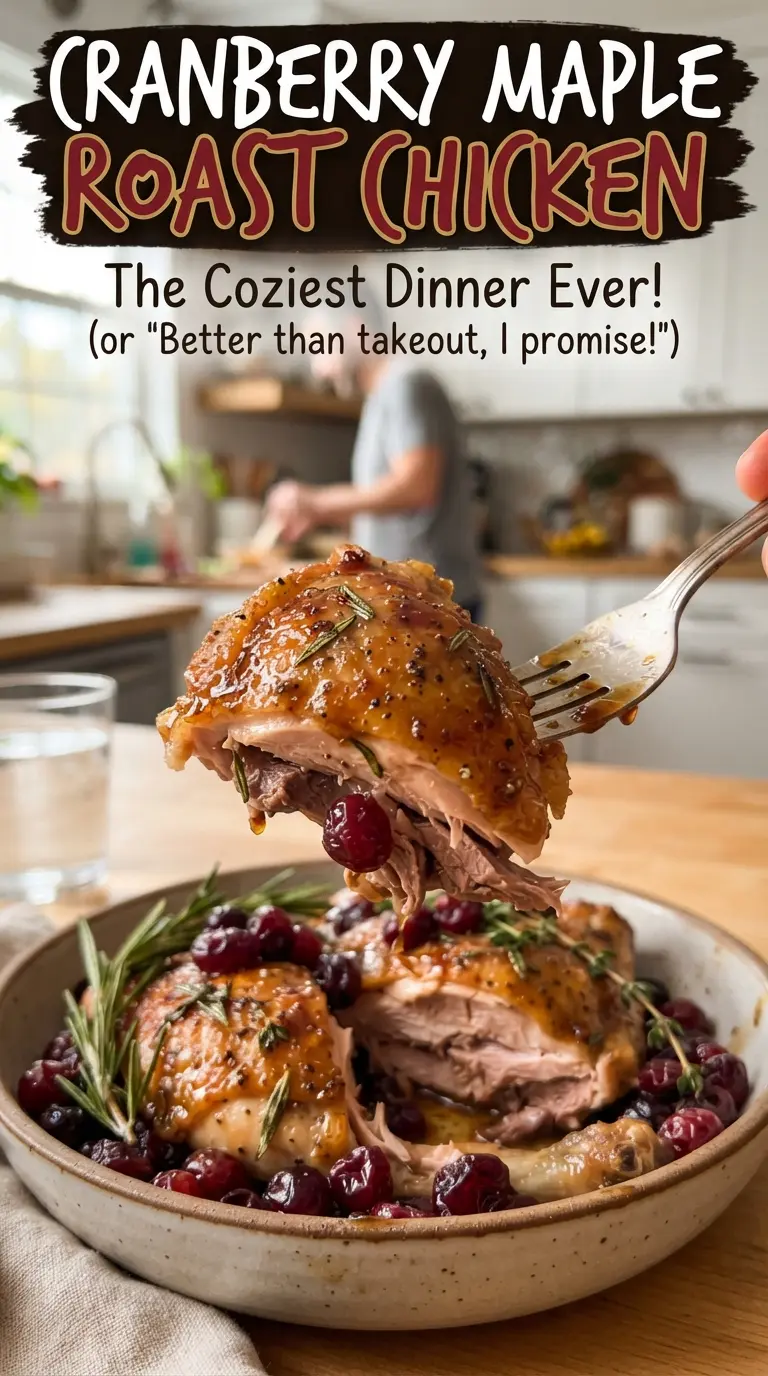
- Butter — Softened butter rubbed under and over the skin gives the breast meat a little insulation and helps the rosemary cling. Salted or unsalted both work; if you use salted butter, keep the added seasoning as written.
- Fresh rosemary — This is one place where fresh matters. Dried rosemary can taste dusty and harsh against the maple glaze, while fresh rosemary perfumes the fat and stays balanced.
- Orange — The halves tucked into the cavity add fragrance more than juice. Lemon can work in a pinch, but orange gives the chicken a rounder sweetness that fits the cranberries better.
- Dijon mustard — Dijon keeps the glaze from reading flat. It sharpens the maple syrup and helps the sauce cling to the skin instead of sliding off.
- Fresh cranberries — Frozen cranberries can stand in without thawing, and they’ll still burst in the pan. Don’t swap in dried cranberries; they won’t break down into sauce and the dish loses its tart edge.
- Chicken broth — This loosens the pan drippings just enough to spoon over the carved meat. Water works in a pinch, but broth gives the sauce more depth and keeps it from tasting thin.
Roasting the Bird in Two Acts
Seasoning Under and Over the Skin
Pat the chicken dry first. Moisture on the skin is the enemy of browning, and a dry surface gives the salt and pepper a better chance to season the meat evenly. Work the butter with rosemary under the skin over the breast and thighs, then spread the rest over the outside so the skin starts the roast with fat already in place. If the skin tears a little while you’re separating it, don’t panic; keep going and distribute the butter as evenly as you can.
The First Roast Builds the Color
Set the chicken in a hot 425°F oven and leave it alone for the first 50 minutes. This is where the skin firms up and starts to bronze, and it’s the part that gives the final bird its texture. If your oven runs cool, the chicken may need a few extra minutes before glazing, but wait until the skin has visible color before moving on. You’re looking for rendered fat around the edges and a skin that looks taut, not pale and flabby.
Glazing and Finishing the Pan Sauce
Whisk the maple syrup and Dijon together, then brush on half and add the cranberries and broth to the pan. The berries should sit around the chicken, not bury it, so the skin stays exposed to heat. During the final roast, brush on the remaining glaze once the first coat has set and the cranberries start to pop. The chicken is done when the thigh hits 165°F and the juices run clear; pull it before the glaze goes dark brown.
Resting Before You Carve
Let the chicken rest for 15 minutes before carving. That pause keeps the juices in the meat instead of running onto the cutting board. While it rests, spoon the cranberries and pan juices over low heat if needed to help them loosen, then carve and finish with the sauce right before serving. If you cut too soon, the breast meat will dry out and the juices will flood the pan instead of staying in the slices.
How to Adapt the Glaze, Fruit, and Bird Size
Make it dairy-free
Swap the butter for olive oil or a plant-based butter. Olive oil gives you a slightly cleaner, less rich roast chicken, while plant-based butter keeps the same spreading texture under the skin.
Use a different sweetener
Honey can replace the maple syrup in equal measure, but it will caramelize a little faster and taste floral instead of woodsy. If you go this route, watch the glaze closely during the final 25 minutes so it doesn’t darken too quickly.
Make it with a smaller chicken
A 3 1/2- to 4-pound chicken will cook faster, so start checking temperature earlier and shorten the second roast. Keep the glaze timing the same: brown the bird first, then glaze near the end so the skin stays crisp.
Storage and Reheating
- Refrigerator: Store carved chicken and pan sauce separately for up to 4 days. The skin softens in the fridge, but the meat stays juicy.
- Freezer: The cooked chicken freezes well for up to 2 months if you wrap it tightly and keep the sauce in a separate container. Freeze the sauce only if you don’t mind the cranberries breaking down a bit more when thawed.
- Reheating: Reheat covered in a 300°F oven with a spoonful of broth or pan juices until warmed through. High heat dries the breast meat out fast and turns the glaze sticky in the wrong way.
Answers to the Questions Worth Asking
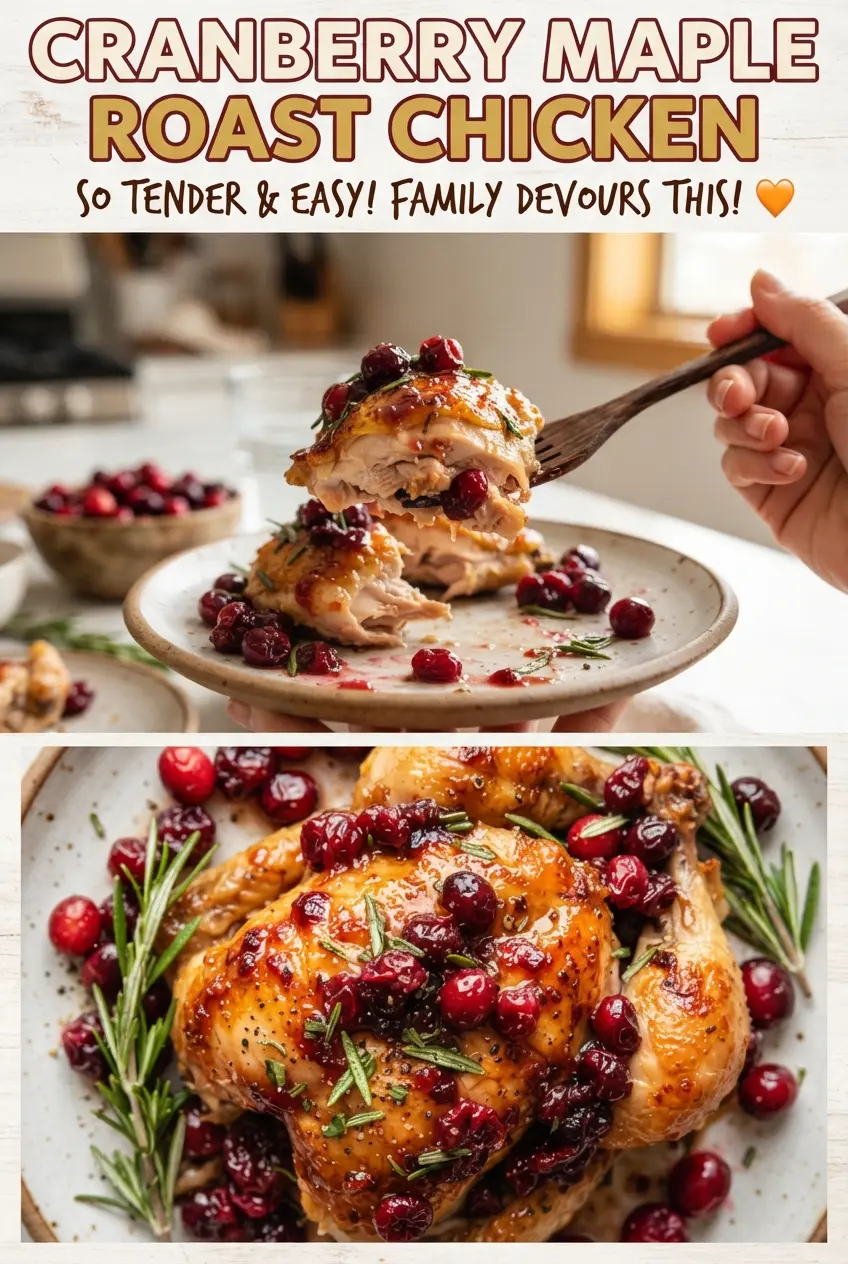
Cranberry Maple Roast Chicken
Ingredients
Equipment
Method
- Preheat the oven to 425F. Set a roasting pan on the middle rack so it’s ready to take the chicken.
- Pat the chicken dry, then season the cavity and the skin with salt and black pepper. Rub the softened butter mixed with chopped rosemary under and over the skin so it coats evenly.
- Stuff the cavity with the orange halves and the halved garlic, then place the chicken in a roasting pan with the onion wedges around it. Tuck the aromatics securely so they stay in place while roasting.
- Roast for 50 minutes. Look for early browning on the skin and a hot, active sizzle around the chicken.
- Whisk together the maple syrup and Dijon mustard, then brush half of the glaze over the chicken. Add the cranberries and chicken broth to the pan so the fruit can start breaking down.
- Roast for 25-30 minutes more, brushing with the remaining glaze as it cooks. Continue until the thigh reaches 165F and the skin looks lacquered golden.
- Rest the chicken for 15 minutes before carving. This helps the juices set so the meat stays tender.
- Carve the chicken and spoon the cranberry pan sauce over the top. Serve right away while the sauce is warm and glossy.