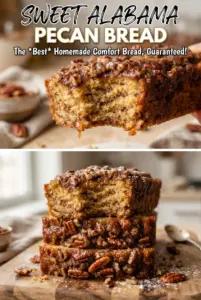
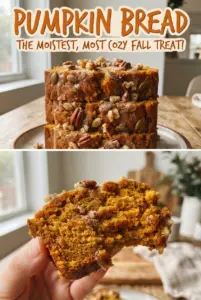
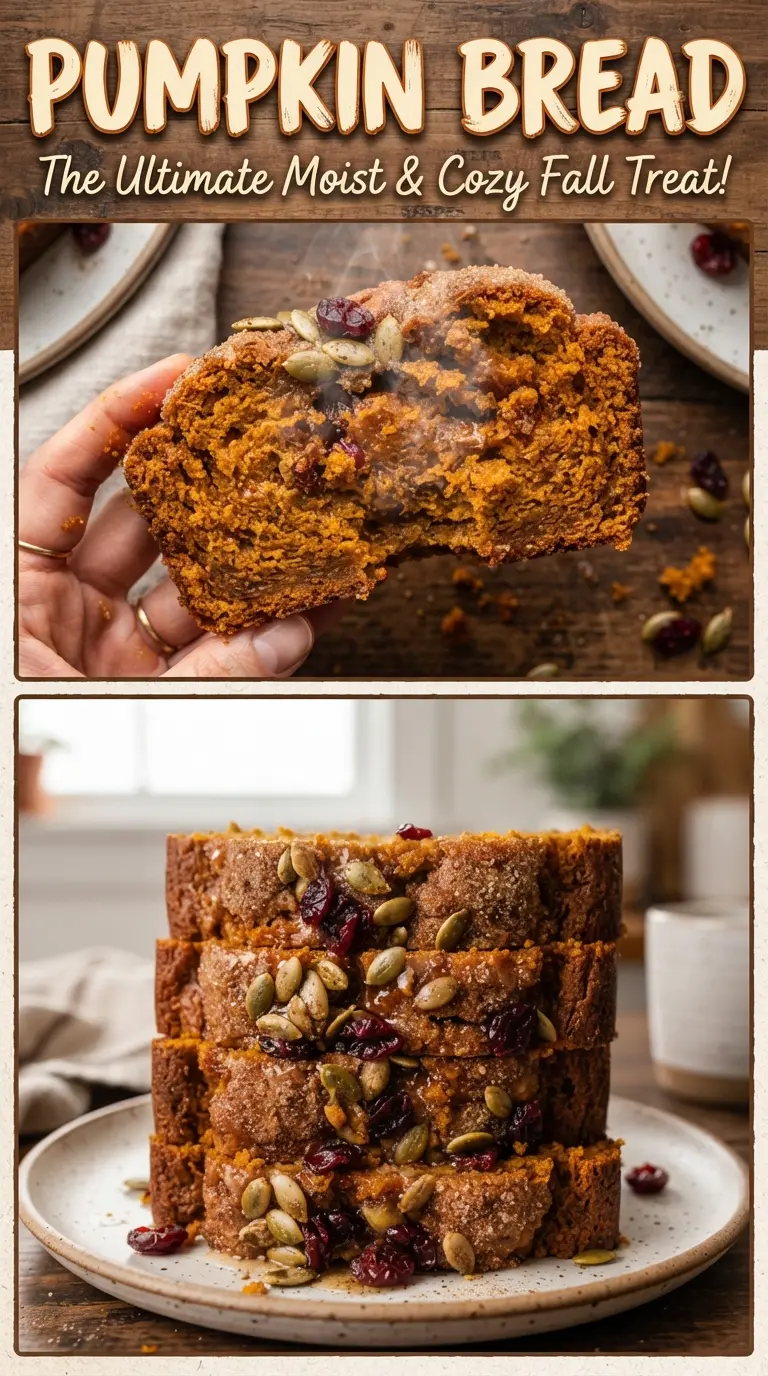
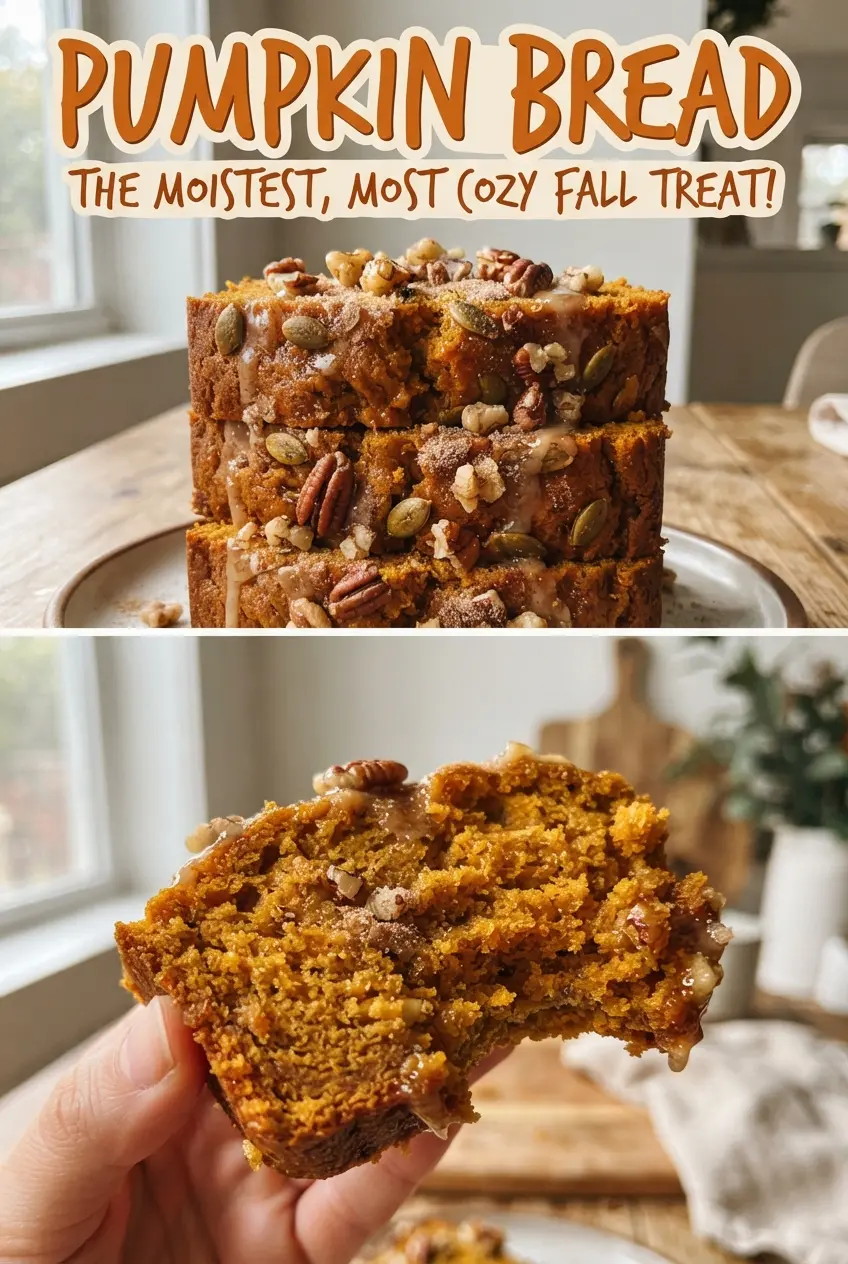
Pumpkin bread earns its keep when the loaf comes out tall, deeply orange, and moist enough to slice cleanly without crumbling. The top should crack into a thin sugared crust while the inside stays soft and tender, with cinnamon and pumpkin pie spice running through every bite. This version does that without turning heavy or wet, which is where a lot of pumpkin loaves go wrong.
The trick is in the balance. Pumpkin puree brings moisture, but the oil keeps that moisture from baking out and drying the crumb, and the mix of brown sugar and granulated sugar gives both depth and a clean sweetness. The batter also stays simple on purpose: no mixer, no extra bowl tricks, just a quick whisk-and-fold method that keeps the loaf from getting tough.
Below, I’ve included the small details that matter most — the reason the loaf domes properly, why the sugar goes on top, and how to tell the center is baked through without overbaking the edges.
The loaf was incredibly moist and the sugar on top baked into that crackly little crust I always hope for. Mine needed the full 60 minutes, and the center still sliced beautifully once it cooled.
Love a thick slice of pumpkin bread with a crackly sugar top? Save this loaf for the next time you want a moist, warmly spiced bake that slices like a dream.
The Difference Between Moist Pumpkin Bread and a Dense Loaf
Most pumpkin bread turns heavy because the batter gets worked too much or the loaf is pulled too early and left gummy in the center. This recipe avoids both problems by keeping the mixing gentle and the ingredient ratios balanced enough to support a tall, even bake. The flour gives structure, but the pumpkin and oil keep the crumb soft, so the loaf stays plush instead of cakey.
The other key detail is the topping. That one tablespoon of granulated sugar on top isn’t decoration; it helps form a thin, lightly crisp lid that contrasts with the tender interior. If you skip it, the bread still tastes good, but you lose the best texture in the whole loaf.
- Pumpkin puree — Use pure pumpkin, not pumpkin pie filling. Pie filling already has sugar and spices added, which throws off the flavor and can make the loaf too sweet and soft.
- Vegetable oil — Oil keeps the bread moist for days. Melted butter adds flavor, but it also firms up more as the loaf cools, so the texture won’t stay as soft.
- Brown sugar — This gives the bread a deeper, almost caramel note and helps it stay tender. Dark brown sugar works too if that’s what you have.
- Milk — It loosens the batter just enough for an even crumb. Whole milk is best, but any milk you keep on hand will work here.
What Each Ingredient Is Actually Doing in This Recipe
- Primary ingredient (the star) — Quality matters most. Choose the best you can find.
- Cooking medium (oil, butter, or broth) — This carries flavors and prevents dryness.
- Seasonings (salt, pepper, spices, herbs) — Layer flavors so nothing overpowers. Build depth gradually.
- Aromatics (garlic, onion, herbs) — Cook with fat to bloom flavors. Become the foundation.
- Supporting ingredients — Complement the main ingredient without overpowering it.
- Sauce or liquid (if applicable) — Brings flavors together. Balance richness with acid.
- Acid (lemon, vinegar, wine, or other) — Brightens and prevents flat-tasting results.
- Final finish (garnish, glaze, or sauce) — Prevents one-dimensional taste and adds visual appeal.
Mix the Batter Lightly, Then Let the Oven Do the Work
Whisk the dry ingredients first
Whisk the flour, baking soda, salt, pumpkin pie spice, and cinnamon until the color looks even throughout. This keeps the spices from clumping and helps the baking soda distribute evenly, which matters for the loaf’s rise. If the soda is streaky in the batter, you’ll get uneven pockets and a slightly bitter edge in spots.
Build the wet mixture until smooth
In a second bowl, whisk the pumpkin puree, oil, eggs, brown sugar, granulated sugar, milk, and vanilla until the mixture looks glossy and uniform. The sugar should mostly dissolve into the wet ingredients, which helps the loaf bake up fine-crumbed instead of gritty. Don’t rush this part, but don’t beat air into it either.
Fold only until the flour disappears
Add the dry ingredients to the wet and fold just until you stop seeing flour streaks. A few small lumps are fine. If you keep stirring after the batter comes together, the loaf can bake up tough and slightly tunneled in the middle, which is the opposite of what you want in pumpkin bread.
Watch for the clean toothpick, not the clock alone
Pour the batter into the prepared pan, sprinkle the top with sugar, and bake until a toothpick comes out clean from the center, usually 55 to 65 minutes. The loaf should be domed and the center should spring back lightly when touched. If the top browns before the middle is done, lay a loose piece of foil over it for the last stretch of baking.
How to Adjust This Pumpkin Bread Without Losing the Tender Crumb
Make it dairy-free
Swap the milk for an equal amount of unsweetened almond milk, oat milk, or another neutral non-dairy milk. The loaf still bakes up soft because the moisture is coming mostly from the pumpkin and oil, so you won’t lose much in texture.
Add-ins that work without upsetting the batter
Fold in up to 3/4 cup of chocolate chips, chopped toasted walnuts, or pecans at the end. Keep the amount modest so the loaf still rises cleanly and slices well; too many add-ins make the center dense and the top less even.
Use melted butter instead of oil
You can replace the oil with an equal amount of melted butter if you want a richer flavor. The loaf will still be moist, but it will set a little firmer as it cools, especially after chilling, so the crumb won’t stay quite as soft as the oil version.
Storage and Reheating
- Refrigerator: Store covered for up to 5 days. The loaf stays moist, though the crumb firms up a bit in the fridge.
- Freezer: Pumpkin bread freezes well. Wrap the fully cooled loaf or individual slices tightly in plastic, then foil, and freeze for up to 3 months.
- Reheating: Warm slices in a 300F oven for about 8 minutes or microwave briefly in 10-second bursts. Don’t overheat it or the bread turns dry around the edges before the center is warm.
Answers to the Questions Worth Asking
Pumpkin Bread
Ingredients
Equipment
Method
- Preheat the oven to 350°F, then grease and line a 9x5-inch loaf pan.
- Set the loaf pan aside while you mix the dry ingredients.
- Whisk all-purpose flour, baking soda, salt, pumpkin pie spice, and ground cinnamon until evenly combined.
- Whisk pumpkin puree, vegetable oil, eggs, brown sugar, granulated sugar, milk, and vanilla extract until smooth.
- Fold the dry ingredients into the wet just until no flour streaks remain.
- Pour the batter into the prepared pan and sprinkle with 1 tablespoon granulated sugar for the topping.
- Bake for 55-65 minutes at 350°F until a toothpick comes out clean.
- Cool the loaf in the pan for 15 minutes to help it set.
- Transfer to a rack and cool before slicing so the crumb holds together.