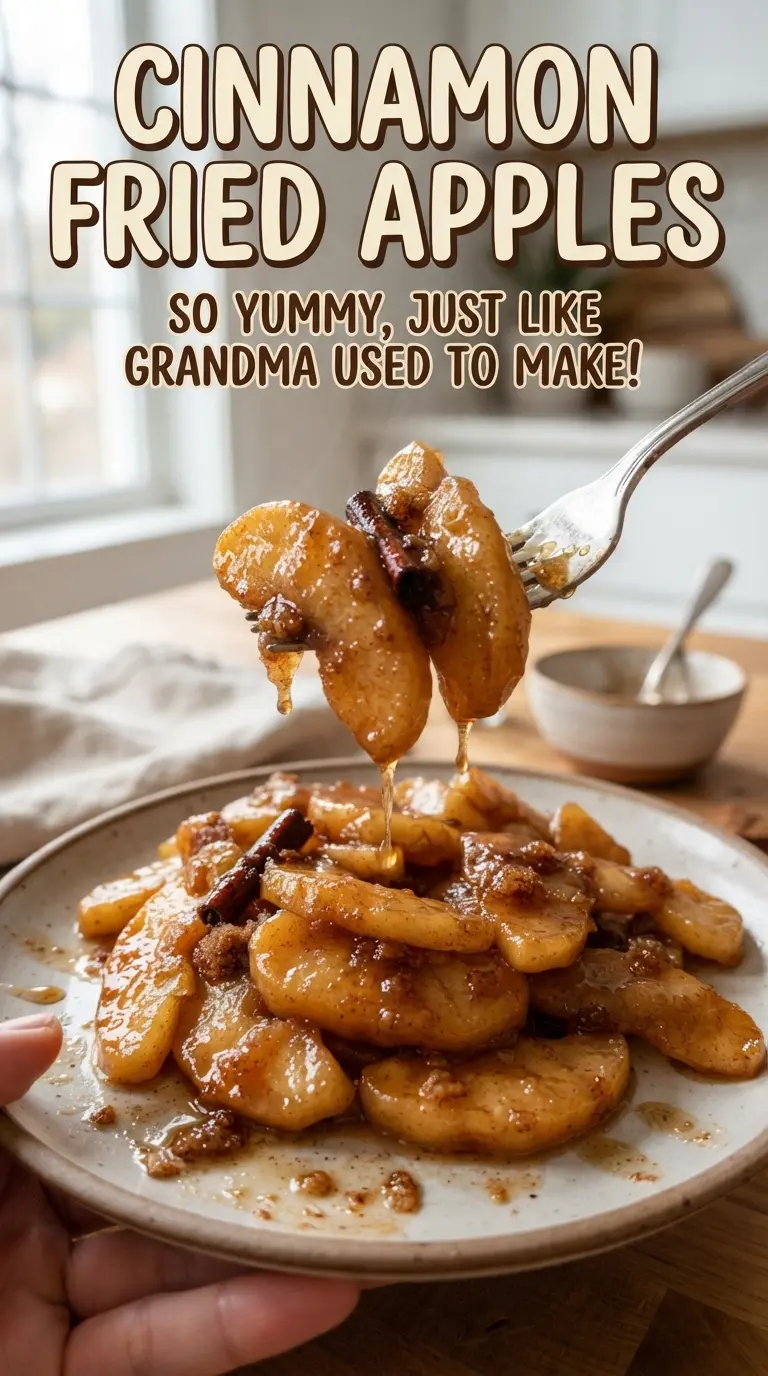
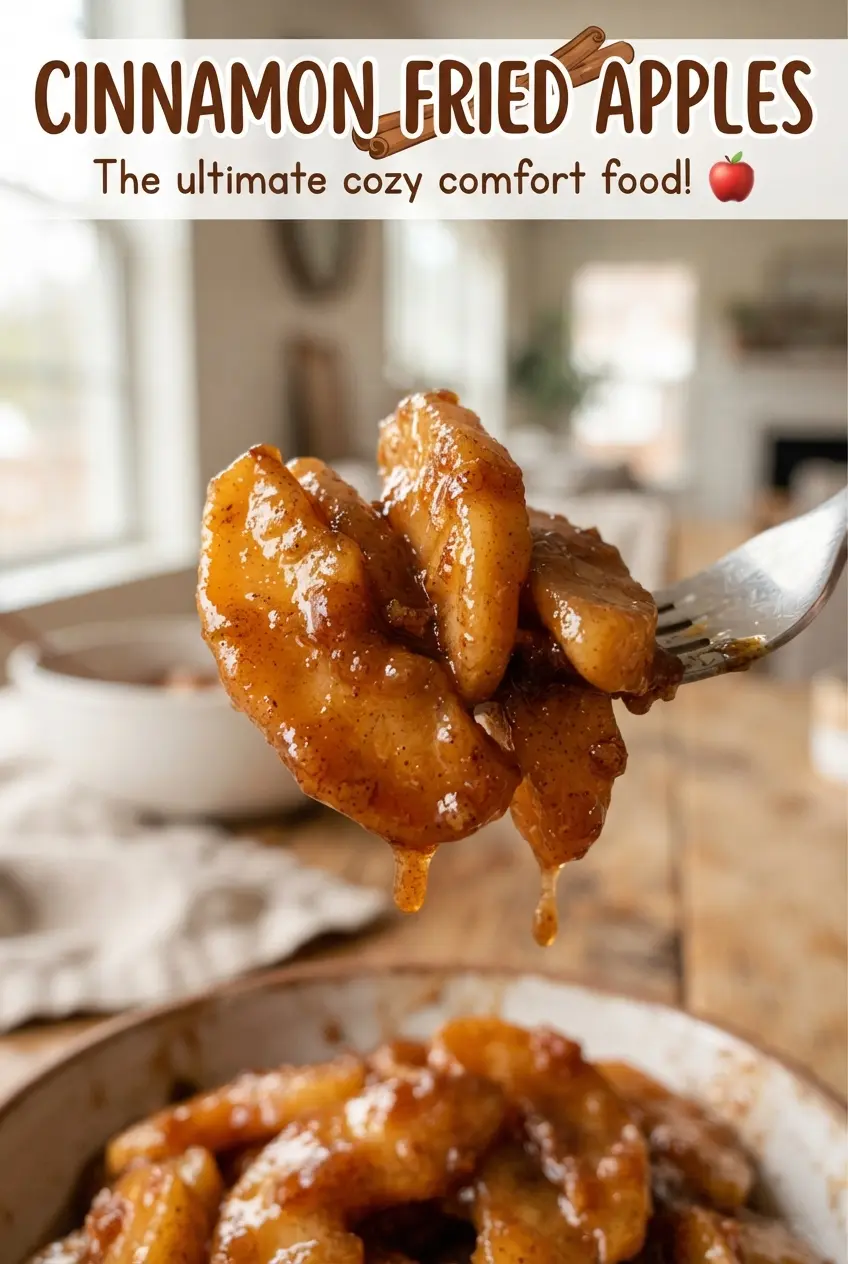
Cinnamon fried apples turn soft at the edges, glossy in the pan, and just sweet enough to taste like dessert without losing their place on the plate. The best versions keep a little structure in the apples while the sauce clings in a shiny cinnamon-brown sugar coat that begs for a spoon. Served warm, they land somewhere between a side dish and a topping, which is why they disappear fast.
What makes this version work is the balance: enough butter to carry the spices, enough brown sugar to build a syrup, and just enough cornstarch to thicken the juices without turning them gummy. I like firm apples such as Honeycrisp or Granny Smith because they soften without collapsing into applesauce. The cover-and-cook step matters here, since it helps the apples steam until tender before the sauce gets its final glossy finish.
Below you’ll find the small details that keep the apples from getting mushy, plus a few ways to adjust the sweetness or swap ingredients when your pantry is missing something.
The apples stayed tender but didn’t fall apart, and the sauce thickened into that perfect glossy coating after just a couple minutes. I served them over pork chops and my husband asked if we could have them again the next night.
Cinnamon fried apples with that glossy brown sugar sauce are perfect for pork chops, biscuits, ice cream, or straight from the skillet.
The Trick to Keeping Fried Apples Tender, Not Mushy
The common mistake with fried apples is rushing the heat and letting the fruit break down before the sauce has time to develop. Firm apples hold their shape better, but the real safeguard is controlling the simmer: the apples need a covered stretch to soften gently, not a hard boil that turns the edges ragged. Once the cornstarch goes in, the sauce should thicken in a few minutes and coat the back of a spoon instead of looking watery or cloudy.
If the pan is crowded, the apples steam unevenly and some slices stay firm while others collapse. A large skillet gives the fruit enough room to cook in a single layer or close to it, which helps the butter and sugar glaze each slice instead of pooling underneath. That even coating is what makes the final dish taste rich instead of loose and syrupy.
What Each Ingredient Is Doing in the Skillet
- Firm apples — Honeycrisp gives you sweetness and a juicy bite, while Granny Smith brings sharper flavor and holds up a little longer. Softer apples work for applesauce, but they won’t keep the slices intact here.
- Butter — This carries the cinnamon and helps the sugar melt into a smooth glaze. Use real butter if you can; margarine can leave the sauce tasting flatter and less rounded.
- Brown sugar — Packed brown sugar melts into the syrup and gives the sauce its molasses-backed depth. Dark brown sugar makes it richer; light brown sugar keeps it gentler.
- Cinnamon and nutmeg — Cinnamon is the main note, while nutmeg adds warmth in the background. Don’t overdo the nutmeg or it takes over the whole pan.
- Cornstarch — This is what turns the cooking liquid into a glossy sauce instead of thin syrup. Whisk it with water first so it disperses evenly and doesn’t clump in the skillet.
- Vanilla extract — Stirring it in at the end keeps the flavor warm and fragrant instead of cooked off. Add it after the heat is lowered or turned off for the best payoff.
Building the Sauce in the Right Order
Melting the Butter and Coating the Apples
Start by melting the butter over medium heat until it foams and the pan smells nutty but not browned. Add the apples, sugar, cinnamon, nutmeg, and salt right away so every slice picks up the spice mixture before the fruit starts releasing a lot of juice. Stir gently; aggressive stirring can break the slices before they’ve had a chance to soften.
Covered Cooking for Tender Slices
Cover the skillet and let the apples cook for 8 to 10 minutes, stirring once or twice so the bottom doesn’t catch. You’re looking for apples that are bendy at the edges but still hold their shape in the center. If the heat is too high, the sugar can scorch before the apples soften, so keep the burner at a steady medium and lift the lid only long enough to stir.
Thickening to a Glossy Finish
Whisk the cornstarch with water until the mixture looks completely smooth, then pour it into the skillet in a thin stream. Stir as it simmers for 2 to 3 minutes; the sauce should go from thin and cloudy to shiny and spoon-coating. If it stays loose, give it another minute before judging it, because cornstarch needs a full simmer to activate.
Adding the Vanilla at the End
Stir in the vanilla once the sauce has thickened and the pan is off the heat or nearly there. That keeps the vanilla from tasting dull. Serve the apples warm while the sauce is still fluid enough to spoon over biscuits, pork, oatmeal, or ice cream.
Three Ways to Adapt Cinnamon Fried Apples Without Losing the Good Part
Dairy-Free Version
Use a plant-based butter with a neutral flavor and solid fat content. The apples will still glaze well, though the sauce won’t have quite the same round, buttery finish.
Less Sweet, More Tart
Use all Granny Smith apples and cut the brown sugar back by 2 tablespoons. You’ll get a sharper, more brunch-friendly skillet apple that works especially well beside savory mains.
Gluten-Free and Naturally Thickened
This recipe is already gluten-free as written, so the main thing is keeping the cornstarch slurry smooth before it hits the hot pan. If you swap in arrowroot, use the same amount but don’t boil it hard or the sauce can turn thin again.
Storage and Reheating
- Refrigerator: Store in an airtight container for up to 4 days. The sauce thickens as it chills, and the apples soften a little more.
- Freezer: Freezing isn’t ideal because the apples turn mushy after thawing. If you must freeze them, cool completely and freeze flat in a sealed container for up to 1 month.
- Reheating: Warm gently in a skillet over low heat with a splash of water if needed. The usual mistake is microwaving them too long, which pushes the apples from tender to collapsed fast.
Questions I Get Asked About This Recipe
Cinnamon Fried Apples
Ingredients
Equipment
Method
- Melt the butter in a large skillet over medium heat, until fully melted and shimmering. Keep the surface glossy so the apples coat evenly.
- Add the apples, brown sugar, cinnamon, nutmeg, and salt, then stir to coat every slice. Visual cue: the apples should look evenly dusted and the sugar should start to cling.
- Cover and cook for 8-10 minutes over medium heat, stirring occasionally, until the apples are just tender. Visual cue: fork-tender edges with slices that still hold their shape.
- Whisk the cornstarch with the water until smooth, then pour the slurry into the skillet. Keep stirring right away so no lumps form.
- Simmer for 2-3 minutes, stirring occasionally, until the sauce thickens and turns glossy. Visual cue: the syrup should coat the spoon and look slightly glossy.
- Stir in the vanilla extract, then serve the apples warm. Visual cue: the sauce looks darker and clings to the apple slices when lifted with a spoon.