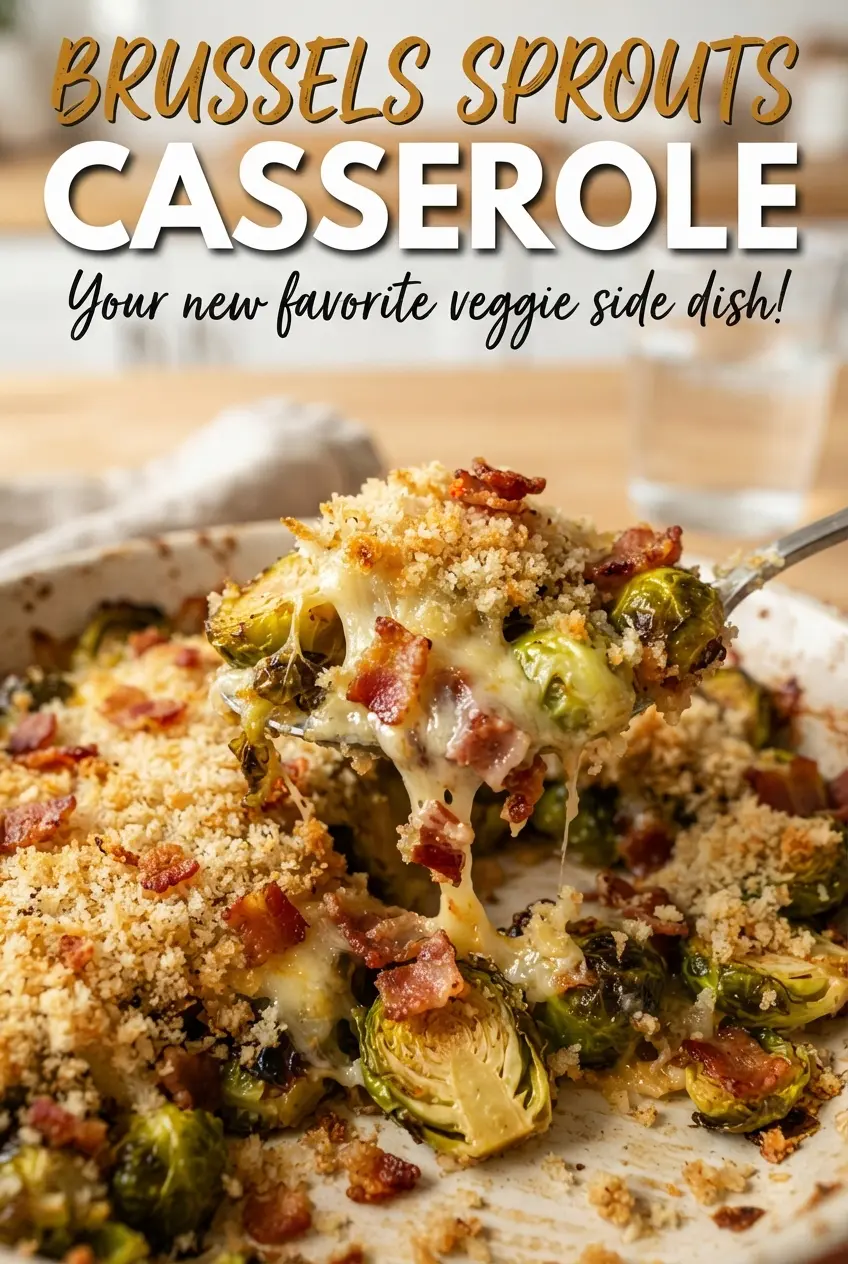
Brussels sprouts casserole lands in that sweet spot between cozy and sharp-edged: tender sprouts, a creamy cheese sauce, crisp bacon, and a browned panko top that cracks when your spoon goes through it. It’s the kind of side dish that disappears fast because it eats like the best part of a gratin, but still gives you enough vegetable backbone to keep it from feeling heavy.
The trick here is blanching the sprouts before they go into the oven. That short boil takes the raw bite out and starts the cooking evenly, so the casserole finishes with sprouts that are tender without turning mushy in the sauce. The sauce itself stays smooth because the milk and cream are thickened first before the cheese goes in; that keeps the Gruyère from seizing or turning grainy.
Below, I’ll walk through the part that matters most: keeping the sauce creamy, not broken, and getting the topping browned before the Brussels sprouts overcook. I’ve also included a few smart swaps if you want to skip the bacon or need to work with a different cheese.
The Brussels stayed tender but still held their shape, and the sauce thickened up beautifully without getting greasy. I made it for Sunday dinner and the crispy panko-bacon top was the first thing gone.
Save this Brussels sprouts casserole for the nights when you want crisp bacon, creamy Gruyère, and a golden panko topping all in one dish.
The Step Most Brussels Sprouts Casseroles Skip
Blanching the sprouts before baking is what keeps this casserole from tasting like a pan of overcooked brassicas hiding under cheese. Brussels sprouts need enough heat to soften their centers, but if they spend the full bake raw in a thick sauce, the outside can turn olive and soft before the middle is ready. Four minutes in boiling salted water takes the edge off without wiping out their structure.
The other place people go wrong is the sauce. If the milk and cream go in and the heat stays too high, the flour can turn lumpy and the cheese can tighten into little threads instead of melting smoothly. A calm simmer is what you want: small bubbles at the edge, a sauce that coats the back of a spoon, and cheese added off the hottest part of the heat.
Why Gruyère, Bacon, and Panko Pull Their Weight

- Brussels sprouts — Fresh sprouts matter here because they hold their shape better than frozen. Trim the ends, halve them evenly, and don’t skip the blanching step if you want a tender bite instead of a harsh, undercooked center.
- Gruyère — This is the cheese that gives the sauce its nutty depth and that long, melty pull in the finished casserole. Pre-shredded cheese works in a pinch, but freshly shredded melts more smoothly because it doesn’t carry the anti-caking starch that can make sauces feel a little flat.
- Heavy cream and whole milk — The mix gives you enough richness without making the casserole cloying. Using all cream makes the sauce heavier than it needs to be, while all milk can taste thin once it bakes.
- Bacon drippings — One tablespoon is enough to carry the smoky flavor into the sauce base. If you use more than that, the casserole can taste greasy instead of balanced.
- Panko — Panko browns faster and stays crisper than fine breadcrumbs. It’s the difference between a topping that stays light and one that sinks into the cheese sauce.
Building the Sauce So It Stays Creamy in the Oven
Cooking the Bacon and Starting the Base
Cook the bacon until crisp before you touch the sauce. You want the fat rendered and the pieces browned, not limp, because the bacon finishes in the oven and needs enough structure to stay pleasant against the soft casserole. Reserve just one tablespoon of drippings; any more and the sauce can turn heavy and slick instead of creamy.
Making the Roux
Melt the butter with the drippings, then stir in the garlic and flour and cook for about a minute. That short cook takes the raw flour taste away and gives the sauce a little nutty base, but don’t let it brown deeply or the finished color will look muddy. The mixture should smell warm and toasted, not browned like pie crust.
Adding the Dairy
Whisk in the milk and cream slowly so the roux can absorb the liquid without forming lumps. Once the sauce is smooth, let it simmer until it coats the spoon and leaves a clean line when you run your finger through it. If it still looks thin in the pan, it will stay loose in the oven, so wait for that slight body before adding the cheese.
Melting in the Cheese and Finishing the Bake
Take the pan off the hottest part of the burner before adding the Gruyère and Parmesan. Cheese melts best into a warm sauce, not a boiling one; high heat is what makes it grainy or stringy. Fold in the sprouts and half the bacon, then bake until the edges bubble and the panko turns a deep golden brown. If the top is browned before the center bubbles, the oven was too hot or the dish was too shallow.
How to Adapt This Casserole Without Losing the Good Part
Make It Without Bacon
Leave out the bacon and swap the drippings for an extra tablespoon of butter. You’ll lose the smoky edge, so add a pinch of smoked paprika to the sauce if you want that same savory depth. The casserole will be a little cleaner and more vegetable-forward, which works well alongside roasted meats.
Gluten-Free Version
Use a 1:1 gluten-free flour blend for the roux and replace the panko with gluten-free breadcrumbs or crushed rice crackers. The sauce will still thicken the same way, but the topping may brown a little faster, so keep an eye on it during the last 10 minutes.
Swap the Cheese
Fontina gives you a milder, extra-creamy casserole, while sharp white cheddar makes the flavor louder and a little less nutty. If you use cheddar, keep some Gruyère in the mix if you can; cheddar alone can turn the dish more familiar and less rounded.
Make It Ahead
Assemble the casserole up to a day in advance, but wait to add the panko until just before baking so it stays crisp. If it comes straight from the fridge, add a few extra minutes in the oven and cover loosely for the first part of the bake if the top is browning too fast.
Storage and Reheating
- Refrigerator: Store covered for up to 4 days. The topping softens, but the flavor gets even better by the next day.
- Freezer: It freezes well after baking, though the sauce may lose a little of its silky texture. Cool completely, wrap tightly, and freeze for up to 2 months.
- Reheating: Rewarm covered in a 350F oven until hot in the center, then uncover for the last few minutes to crisp the top. The mistake is blasting it in the microwave, which makes the sprouts loose and the sauce split.
Questions I Get Asked About This Casserole
Brussels Sprouts Casserole
Ingredients
Equipment
Method
- Preheat oven to 400F and set out a baking dish.
- Bring a pot of boiling salted water to a boil, then blanch Brussels sprouts for 4 minutes.
- Drain Brussels sprouts thoroughly and set aside.
- Cook bacon in a Dutch oven until crisp, then remove bacon and reserve 1 tablespoon drippings.
- Melt butter with the drippings, add garlic and all-purpose flour, and cook for 1 minute.
- Whisk in whole milk and heavy cream, then simmer until thickened.
- Stir in 1 cup shredded Gruyere, grated Parmesan, salt, and black pepper until smooth.
- Fold Brussels sprouts and half the bacon into the sauce, then pour into a baking dish.
- Top with remaining shredded Gruyere, remaining bacon, and panko breadcrumbs.
- Bake for 20-25 minutes at 400F until bubbly and golden.