Pork chops under a thick garlic parmesan crust come out with the kind of contrast that keeps this dinner in regular rotation: a crisp, browned top, a savory cheesy edge, and juicy meat that stays tender instead of drying out. The coating isn’t just sprinkled on and hoped for. It gets pressed on firmly, which is what gives you that proper crust instead of a patchy layer that slides off halfway through baking.
The mayo and Dijon do quiet but important work here. They act like glue, but they also help the pork cook more evenly and keep the seasoning anchored right where you want it. Parmesan brings the salty, nutty backbone, while panko keeps the crust from turning dense or greasy. Bake these hot enough and the topping turns deep golden before the pork has a chance to overcook.
Below you’ll find the small details that make this recipe dependable, from how to press the coating so it sticks to what to change if your pork chops are thinner or thicker than mine.
The crust browned up beautifully in the oven and stayed on the pork chops instead of sliding off. I used the lemon at the end like suggested and it made the parmesan taste even better.
Pin these baked garlic parmesan pork chops for the nights when you want a crisp crust, juicy pork, and almost no cleanup.
The Coating Won’t Stick Unless You Give It Something to Grip
The mistake most people make with crusted pork chops is treating the coating like a dry rub. Dry crumbs on dry meat slide right off once the chops hit the pan or the baking sheet. The mayo and Dijon fix that by creating a tacky layer that grabs onto the parmesan and panko, and the firm press at the end is what locks the crust in place before it goes into the oven.
Heat matters too. A 425°F oven gives the panko enough heat to toast while the pork cooks through fast enough to stay juicy. If you bake these too low, the coating dries out before it browns and the meat starts losing moisture before the crust earns its color.
What Each Ingredient Is Actually Doing Here
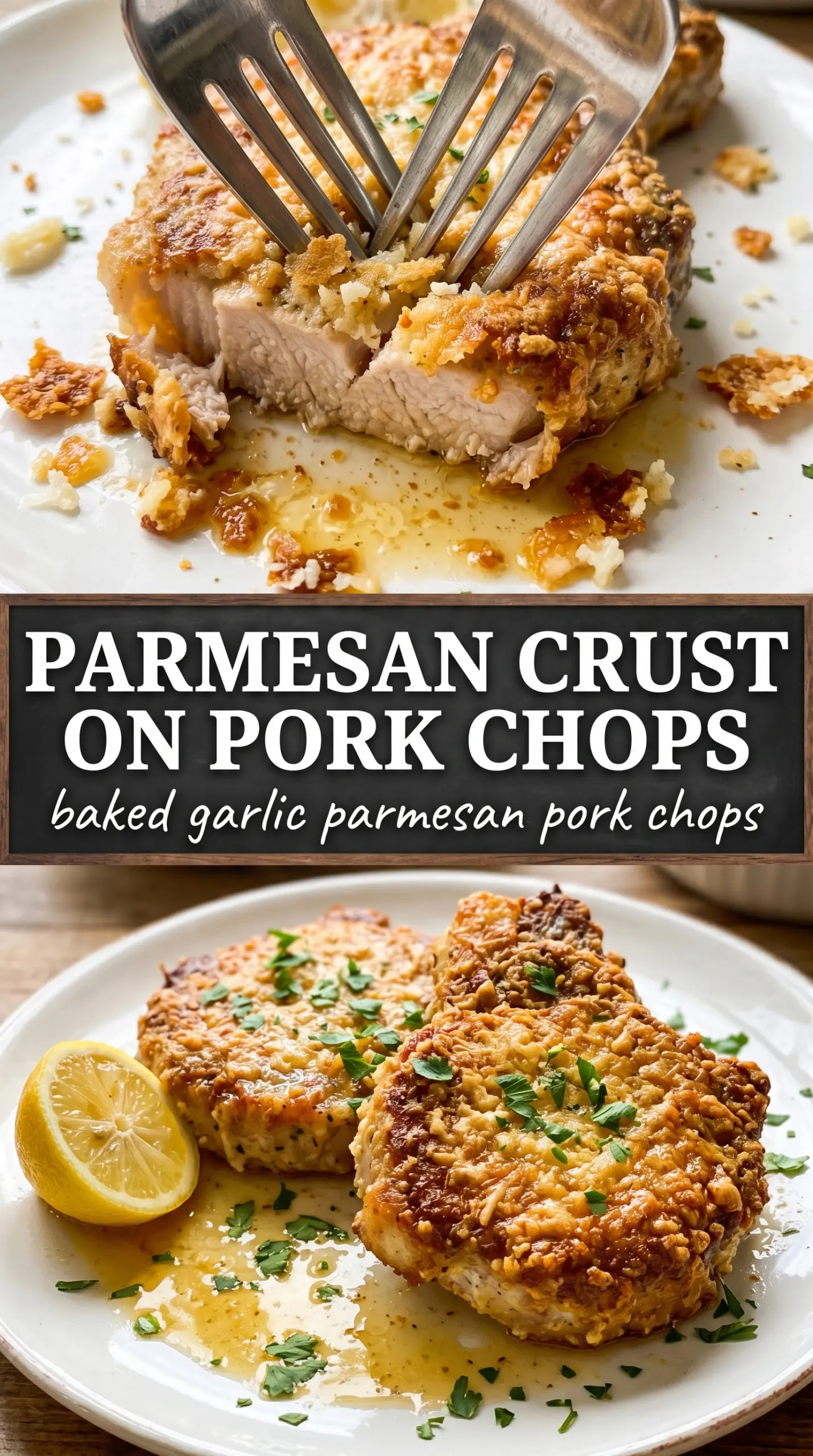
- Boneless pork chops — A 1-inch chop gives you enough time for the crust to brown before the meat overcooks. Thinner chops can work, but they’ll need less time and are much easier to dry out. If yours are very thick, use a thermometer and trust 145°F in the center, then rest them.
- Mayonnaise — This is the moisture and adhesion layer. It doesn’t taste like mayo once baked, but it helps the crust brown and keeps the pork from tasting lean or chalky. Sour cream can stand in, but it sets a little looser and doesn’t brown quite the same way.
- Dijon mustard — Dijon adds sharpness that cuts through the parmesan and keeps the coating from tasting flat. Yellow mustard won’t give the same depth. If you skip it, the crust still works, but it tastes a little one-note.
- Parmesan cheese — Use finely grated parmesan so it melts into the crust instead of clumping. The pre-grated shelf-stable kind works in a pinch, but freshly grated parmesan browns better and tastes cleaner. This is the ingredient that gives the coating its salty, nutty finish.
- Panko breadcrumbs — Panko keeps the crust light and crisp. Regular breadcrumbs will make a denser topping, and crushed crackers will brown faster but lose the clean parmesan flavor. If you need gluten-free, use gluten-free panko and press it on the same way.
- Garlic and Italian seasoning — Fresh minced garlic brings the strongest punch, while the powder and herbs spread that flavor through the whole crust. Don’t use only garlic powder here; the fresh garlic is what makes the topping taste baked, not dusty.
The Press-and-Bake Method That Keeps the Crust Crisp
Mix the Binder First
Stir the mayonnaise and Dijon together until smooth, then coat both sides of each pork chop in a thin, even layer. You don’t want puddles. Too much binder makes the crust slide and turn soft at the edges. A thin coating gives the parmesan mixture something to cling to without weighing it down.
Pack On the Parmesan Crust
Mix the parmesan, panko, garlic, Italian seasoning, garlic powder, salt, and pepper in one bowl, then press it firmly onto the pork chops with your hands. Press, don’t scatter. That pressure matters because it helps the crumbs set into the binder before the oven heat starts moving them around. If a few spots look bare, patch them before baking instead of hoping the topping will spread itself.
Bake Until the Top Is Deep Gold
Line the pan with parchment so the cheese doesn’t weld itself to the tray, then bake until the crust is deep golden and the pork reads 145°F in the center. If the crust is browning too fast before the pork is done, move the pan down one rack for the last few minutes. Let the chops rest for 3 minutes before serving so the juices settle back into the meat instead of running onto the board.
How to Adapt These Pork Chops Without Losing the Crunch
Make It Gluten-Free
Swap in gluten-free panko and keep everything else the same. The texture stays light and crisp, which matters more here than the exact brand of breadcrumb. Don’t use almond flour as a straight replacement unless you want a softer, less shattery crust.
Use Thin Pork Chops
Thin chops work, but they need a shorter bake and a closer eye. Start checking several minutes early so the crust doesn’t over-darken while the meat dries out. A quick-read thermometer is the difference between juicy and tough here.
Add a Little Heat
A pinch of red pepper flakes or a little cayenne in the crust gives the parmesan a sharper edge. Keep the amount small because the cheese and garlic already bring plenty of flavor. Too much heat hides the nutty crust instead of supporting it.
Storage and Reheating
- Refrigerator: Store leftovers in an airtight container for up to 3 days. The crust softens a little, but the flavor stays strong.
- Freezer: These freeze best after baking and cooling completely. Wrap each chop tightly and freeze for up to 2 months, though the crust will lose some crunch when thawed.
- Reheating: Warm in a 375°F oven or air fryer until heated through. Skip the microwave if you want the crust to stay crisp; it turns the coating soft and steamy.
Questions I Get Asked About This Recipe
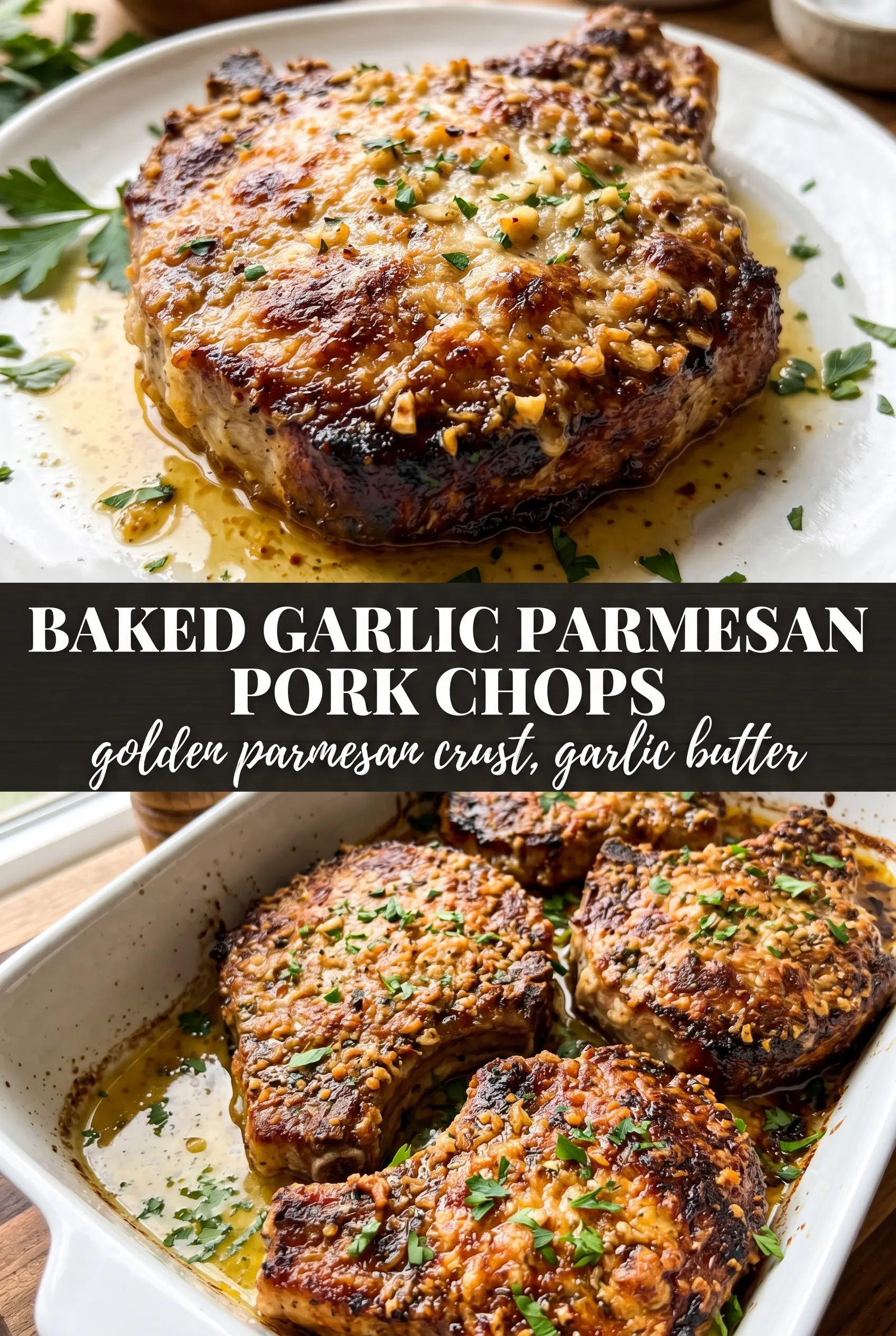
Baked Garlic Parmesan Pork Chops
Ingredients
Equipment
Method
- Preheat oven to 425°F and line a baking sheet with parchment so the pork chops bake with an even, crisping crust.
- Mix mayonnaise and Dijon and spread over both sides of each pork chop to create a sticky base for the parmesan crust.
- In a bowl, combine parmesan, panko, minced garlic, Italian seasoning, garlic powder, salt, and pepper until evenly distributed.
- Press the parmesan mixture firmly onto both sides of each pork chop so the crust adheres thickly.
- Bake at 425°F for 18–22 minutes, until the crust is deep golden and the pork reaches 145°F internally as it bakes.
- Rest for 3 minutes to help the juices set, then garnish with fresh parsley and serve with lemon wedges.