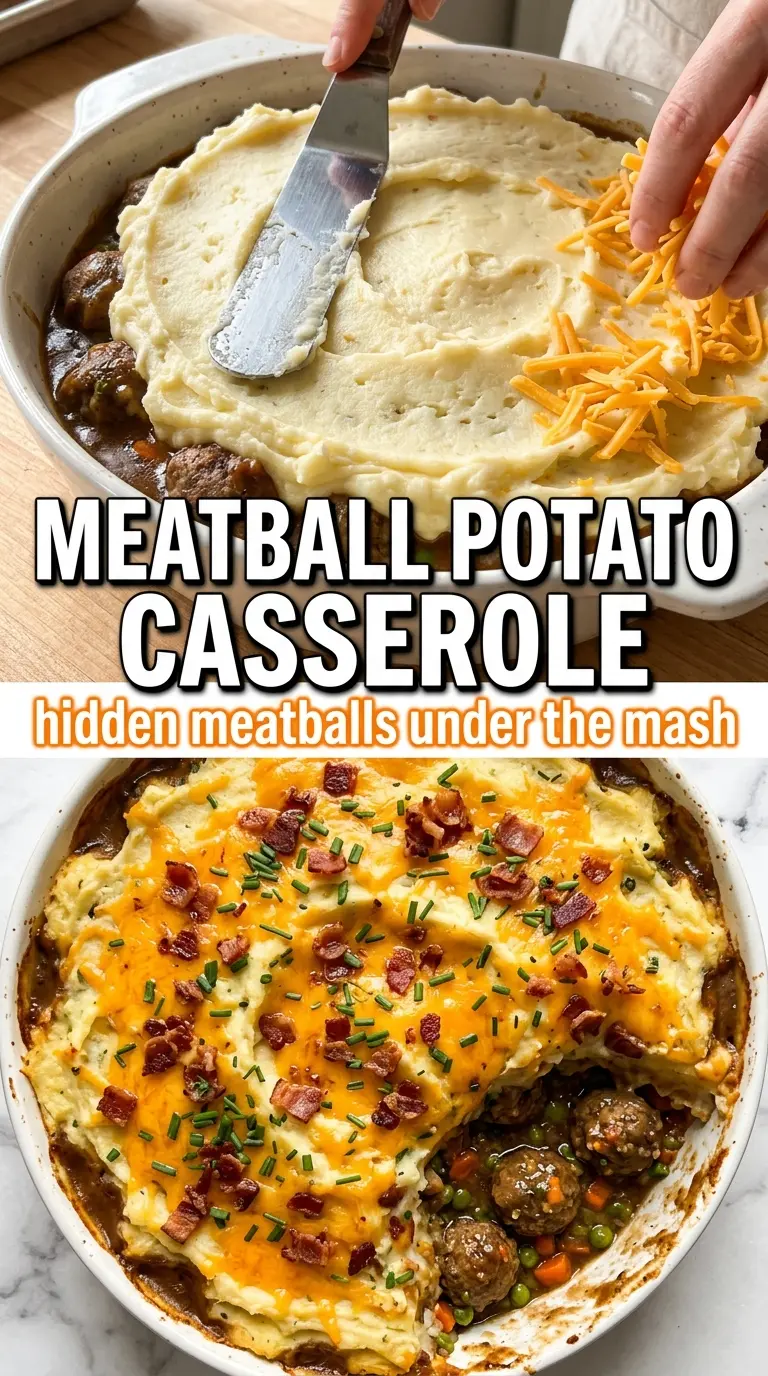
Loaded mashed potato and meatball casserole hits that sweet spot between comfort food and a smart weeknight dinner. The potatoes bake up rich and creamy, the meatballs stay tender, and the whole pan finishes with a cheesy top that goes golden at the edges while the bacon and chives keep it from feeling heavy. Every scoop gives you a little bit of everything in one bite.
What makes this version work is the contrast in texture. The meatballs are browned first so they hold their shape and bring some savory depth before they ever go into the casserole. The mashed potatoes are built with warm milk, sour cream, and some of the cheese and bacon folded right in, which keeps the base lush instead of stiff or dry after baking.
Below, I’ve included the parts that matter most: how to keep the potatoes from turning gluey, how to keep the meatballs juicy, and the swaps that still give you a proper casserole without losing that loaded baked-potato feel.
The meatballs stayed juicy and the potatoes baked up fluffy instead of dense. I loved that the bacon and cheddar were mixed into the mash, not just sprinkled on top.
Loaded mashed potato and meatball casserole saves beautifully for a hearty make-ahead dinner when you want one pan with real comfort-food payoff.
The Part That Keeps the Potatoes Light Instead of Dense
The most common failure in a mashed potato casserole is treating the potatoes like they’re just a vehicle for butter and cheese. Once you start overworking them, they go past fluffy and into sticky. Yukon golds help here because they stay naturally creamy, but they still need a light hand once the milk and sour cream go in.
The other thing that matters is balance. The potatoes need enough richness to bake well, but not so much that they turn greasy after thirty minutes in the oven. Folding in some of the cheddar, bacon, and green onions before baking gives the casserole flavor all the way through, while leaving some cheese for the top keeps that browned finish people expect from a proper bake.
What Each Ingredient Is Actually Doing in This Recipe
- Primary ingredient (the star) — Quality matters most. Choose the best you can find.
- Cooking medium (oil, butter, or broth) — This carries flavors and prevents dryness.
- Seasonings (salt, pepper, spices, herbs) — Layer flavors so nothing overpowers. Build depth gradually.
- Aromatics (garlic, onion, herbs) — Cook with fat to bloom flavors. Become the foundation.
- Supporting ingredients — Complement the main ingredient without overpowering it.
- Sauce or liquid (if applicable) — Brings flavors together. Balance richness with acid.
- Acid (lemon, vinegar, wine, or other) — Brightens and prevents flat-tasting results.
- Final finish (garnish, glaze, or sauce) — Prevents one-dimensional taste and adds visual appeal.
What the Meatballs Need to Stay Juicy in the Bake
- Ground beef — An 80/20 blend works best because it brings enough fat to keep the meatballs tender after they bake twice, once on the sheet pan and again in the casserole. Leaner beef can work, but the texture gets drier and less forgiving.
- Breadcrumbs and egg — These hold the meatballs together without making them heavy. If you need a gluten-free version, use gluten-free breadcrumbs in the same amount; the binding still works, and the meatballs keep their shape.
- Yukon gold potatoes — These are worth using instead of russets if you want a smoother, naturally buttery mash. Russets work in a pinch, but they need gentler mixing because they break down faster and can turn pasty.
- Sour cream, warm milk, and butter — This trio gives the mash its loaded baked-potato character. Warm milk matters because cold milk tightens the potatoes and cools the mixture down before it hits the oven.
- Cheddar, bacon, and green onions — Use a sharp cheddar if you want the flavor to come through the richness of the potatoes. The bacon should be fully cooked and crisp before crumbling, or it softens too much in the casserole.
Building the Casserole So the Top Browns and the Middle Stays Creamy
Browning the Meatballs First
Mix the meatball ingredients just until combined, then roll them into even 1.5-inch balls. They should feel cohesive but not packed tight. Bake them on a sheet pan until browned and set on the outside; they don’t need to cook all the way through because they’ll finish in the casserole. If you skip this first bake, the meatballs can release too much fat into the potatoes and leave the whole pan greasy.
Making the Potato Base
Mash the potatoes with the butter, sour cream, warm milk, half the cheddar, half the bacon, and half the green onions until the texture is smooth and thick but still spoonable. Stop as soon as the mixture looks even. If you keep mashing after everything is incorporated, the potatoes can turn gluey, especially if they’ve cooled too much before mixing.
Assembling and Baking the Pan
Spread the potatoes into a greased 9×13 baking dish and press the browned meatballs in evenly so every serving gets a fair amount. Sprinkle the remaining cheddar over the top and bake until the cheese is melted, bubbling, and golden in spots. If the casserole sits too long before baking, the potatoes can firm up and make it harder for the meatballs to nest in cleanly, so assemble it close to bake time when possible.
Finishing With the Bacon and Chives
Add the remaining bacon and green onions after baking so they stay crisp and bright. That last handful of fresh green onion wakes up the whole dish and keeps the top from tasting flat. If you put all of the bacon on before baking, much of its texture disappears into the cheese instead of giving you those salty, crunchy bites on top.
Three Ways to Adjust This Without Losing the Casserole Feel
Make it gluten-free without changing the texture
Swap the breadcrumbs for a gluten-free version in the same amount. The meatballs still bind well because the egg is doing part of the work, and the finished texture stays tender instead of crumbly.
Use ground turkey for a lighter casserole
Ground turkey works, but it needs the full amount of seasoning and a little extra care because it dries out faster than beef. If you go this route, don’t skip the cheddar in the potatoes — it helps carry the casserole so the meatballs don’t taste too lean.
Skip the bacon and keep it vegetarian-friendly
For a vegetarian version, replace the meatballs with sturdy plant-based meatballs and leave out the bacon. The casserole still works because the potatoes bring the richness, but you’ll want to use a well-seasoned meatless meatball so the dish doesn’t taste one-note.
Storage and Reheating
- Refrigerator: Store covered for up to 4 days. The potatoes will firm up a bit, but the flavor holds well.
- Freezer: This freezes better than most potato casseroles if you cool it completely first and wrap it tightly. Freeze in portions for easier reheating, since a full pan takes longer to heat evenly.
- Reheating: Reheat covered in a 325°F oven until hot through. The common mistake is blasting it at a high temperature, which dries the meatballs before the center is warm.
Questions I Get Asked About This Recipe
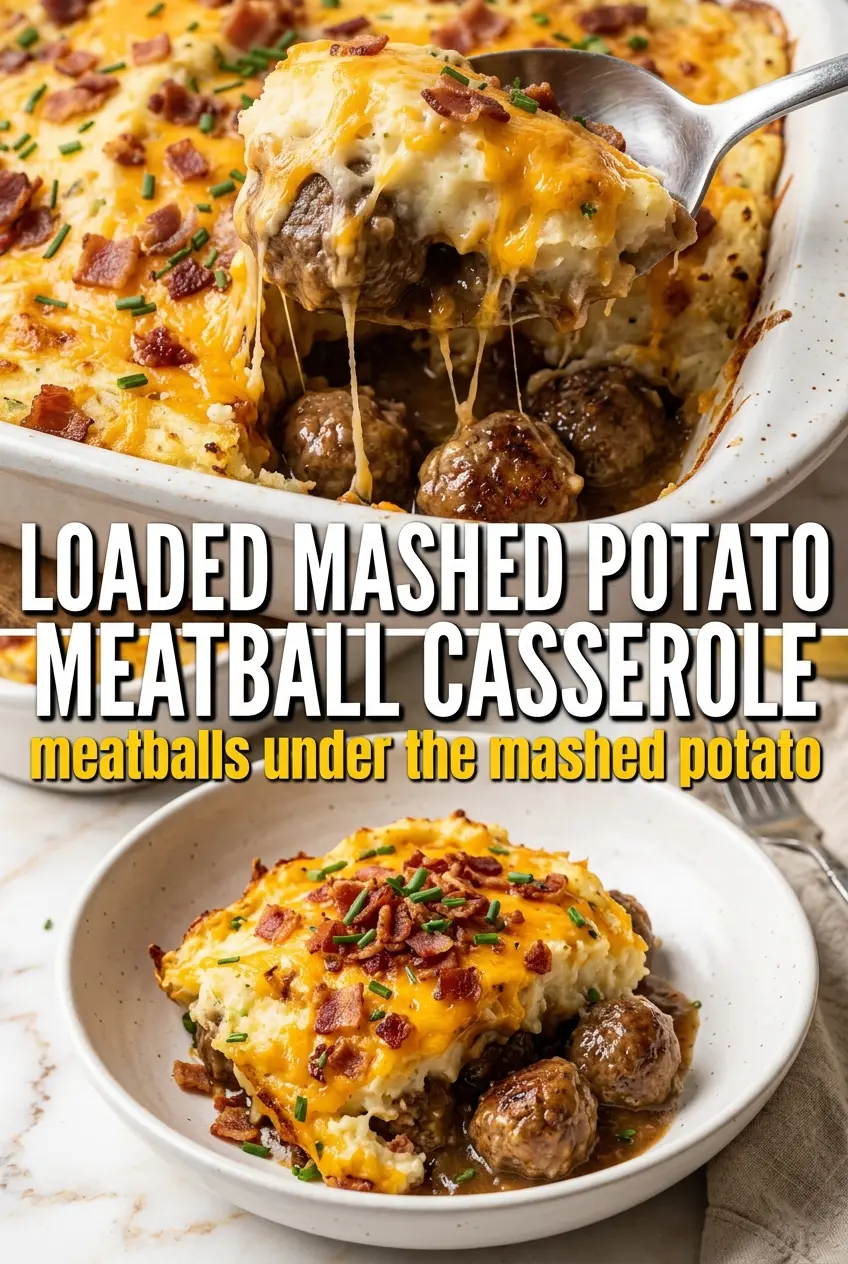
Loaded Mashed Potato and Meatball Casserole
Ingredients
Equipment
Method
- Preheat your oven to 375°F for the casserole bake later.
- Mix the ground beef, breadcrumbs, egg, garlic, Worcestershire sauce, and salt and pepper to taste, then form into 1.5-inch balls.
- Bake the meatballs on a sheet pan at 400°F for 15 minutes, until browned.
- Mash the Yukon gold potatoes with butter, sour cream, warm milk, half the cheddar, half the bacon, half the green onions, salt, and pepper until smooth.
- Spread the mashed potatoes in a greased 9x13 baking dish.
- Press the baked meatballs into the mashed potatoes evenly.
- Top with the remaining cheddar and bake at 375°F for 20–25 minutes, until the cheese is melted and golden.
- Garnish with the remaining bacon and green onions before serving.