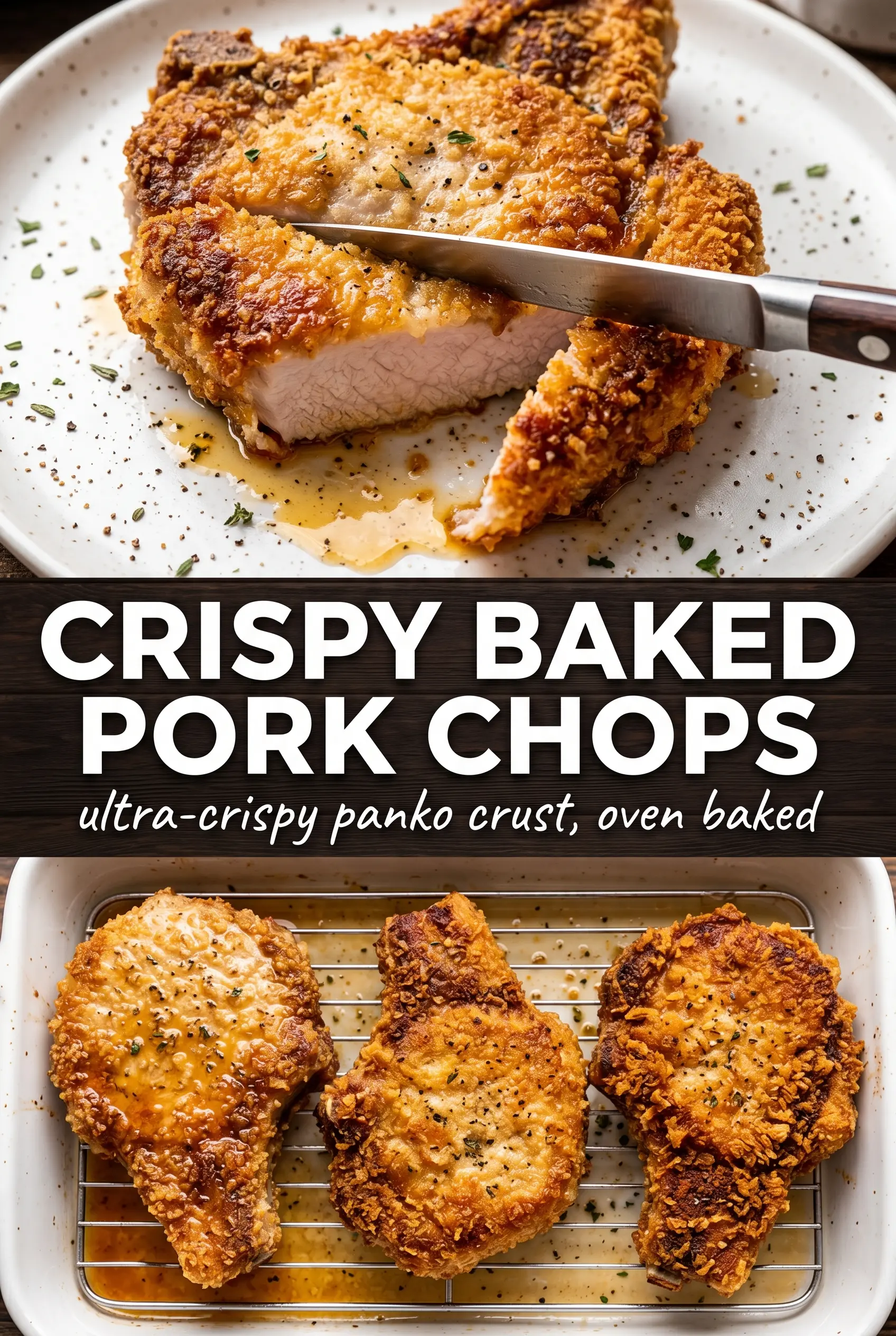
Crispy baked pork chops need a crust that stays put and turns deeply golden before the meat dries out, and panko is what makes that happen. The coating bakes up light and jagged instead of dense, so every bite has that shattery crunch people expect from fried pork chops without the skillet full of oil.
The trick is in the order and the heat. Flour gives the egg something to grip, the egg gives the panko something to cling to, and the wire rack keeps the bottom from steaming on the pan. A generous mist of olive oil helps the crumbs toast instead of sitting pale and dusty in the oven.
Below, I’ve included the one detail that matters most for getting the crust crisp all the way around, plus the best way to adjust the recipe if your chops are thicker, thinner, or need to be gluten-free.
The coating came out crunchy all the way around, even on the bottom, and the chops stayed juicy at 145. I’ve made baked breaded pork before, but the wire rack and olive oil spray made a huge difference.
Crispy Baked Pork Chops with panko crunch and juicy centers are worth bookmarking for busy nights.
The reason panko stays crisp instead of turning soggy
Most breaded pork chops go soft because they sit directly on a hot pan, where the bottom crust steams instead of fries. The wire rack changes that. Air can move around the chops, so the coating dries and browns from every side instead of trapping moisture underneath.
The other piece that matters is the oil spray. Panko has a dry, airy structure, and a light coat of oil helps those flakes toast into a crackly crust. If you skip that step, the crumbs can look pale even when the pork is cooked through.
- Wire rack — This is what keeps the bottoms crisp. A baking sheet alone will give you a softer underside.
- Panko breadcrumbs — Regular breadcrumbs won’t give the same jagged crunch. Panko bakes up lighter and more textured.
- Boneless chops, 3/4-inch thick — That thickness gives you time to brown the crust before the meat overcooks. Thinner chops need a shorter bake; thicker ones may need an extra minute or two.
What each ingredient is actually doing here

- Pork chops — Boneless chops are easiest here because they cook evenly and quickly. If yours are cut thinner than 3/4 inch, reduce the bake time and start checking early so the crust doesn’t darken before the center reaches temperature.
- Flour, egg, panko — This three-part breading is what locks the coating on. Flour dries the surface, egg acts like glue, and panko gives you the crunch.
- Garlic powder, smoked paprika, Italian seasoning — These season the crust itself, not just the meat underneath. Smoked paprika gives the coating a deeper color and a little warmth without tasting smoky in an overpowering way.
- Olive oil spray — This is the difference between toasted crumbs and a dry, powdery crust. Use enough to lightly coat the entire surface, especially any spots that still look pale after breading.
- Lemon wedges — The acid cuts through the richness and wakes up the crust. I always serve them on the side, because a squeeze at the table keeps the coating crisp.
Getting the crust browned before the pork dries out
Set up a clean breading station
Line up the flour, egg, and panko in separate shallow dishes before you start coating. Season the flour well with salt and pepper so the seasoning reaches the meat instead of sitting only on the outside crumb layer. If the breading bowls are crowded or shallow, the coating gets patchy and clumps where it shouldn’t.
Press the panko on with intent
After the pork goes through flour and egg, press the panko firmly onto both sides with your hand. Don’t just dip and lift; panko needs pressure to stick in a thick, even layer. If you see bald spots, tap on more crumbs and press again before the chops go to the tray.
Bake on the rack until the crust turns deep gold
Place the chops on the wire rack, then spray both sides generously with olive oil. Bake at 425°F until the coating is deep golden brown and the center reads 145°F, usually 18 to 20 minutes for 3/4-inch chops. If the top looks ready but the pork is still short of temperature, give it another minute or two; pulling it early leaves you with pale breading and undercooked meat.
Let the chops hit the plate right away
These are at their crispiest the moment they leave the oven. Resting them too long on the rack can still be fine for a couple minutes, but don’t cover them or stack them, because trapped steam softens the crust fast. Serve with lemon wedges while the coating is still audibly crisp.
How to adapt crispy baked pork chops without losing the crunch
Gluten-free version with a crisp crust
Swap the all-purpose flour for a gluten-free flour blend and use gluten-free panko. The technique stays the same, but don’t skip the rack and oil spray, because gluten-free crumbs can look dry before they brown. You’ll still get a crunchy finish if you press the coating on well.
Thicker pork chops
If your chops are closer to 1 inch thick, keep the oven at 425°F but expect a few extra minutes in the oven. Use an instant-read thermometer instead of guessing, because a thicker chop can brown beautifully on the outside while still needing more time in the center.
Dairy-free and pantry-friendly
This recipe is already dairy-free as written, which makes it easy to keep on rotation. If you’re out of Italian seasoning, use extra garlic powder with a pinch of dried oregano and thyme. The flavor shifts a little, but the crust still tastes balanced and savory.
Storage and Reheating
- Refrigerator: Store leftovers in an airtight container for up to 3 days. The crust softens a little, but it will crisp back up in the oven better than in the microwave.
- Freezer: You can freeze cooked chops, but the crust won’t stay as crisp. Wrap them individually, freeze, and reheat from frozen in the oven for the best texture.
- Reheating: Warm at 375°F on a wire rack set over a baking sheet until heated through. The common mistake is microwaving them, which turns the coating limp and pulls moisture into the breading.
Questions I get asked about this recipe
Crispy Baked Pork Chops
Ingredients
Equipment
Method
- Preheat the oven to 425°F and place a wire rack over a baking sheet so air can circulate under the pork.
- Set up three dishes: one with flour seasoned with salt and pepper, one with beaten eggs, and one with panko mixed with garlic powder, smoked paprika, and Italian seasoning.
- Coat the pork chops in the seasoned flour, shaking off excess so the crumbs adhere evenly.
- Dip the floured chops into the beaten eggs, letting any excess drip off for a thin, even coating.
- Press the panko mixture firmly onto both sides so the crust stays thick and crunchy.
- Place the breaded chops on the wire rack and spray generously with olive oil on both sides to promote deep browning.
- Bake 18–20 minutes until the crust is deep golden brown and the pork reaches 145°F, turning the tray once during baking if needed for even color.
- Serve immediately with lemon wedges so the hot, crisp coating stays crunchy.