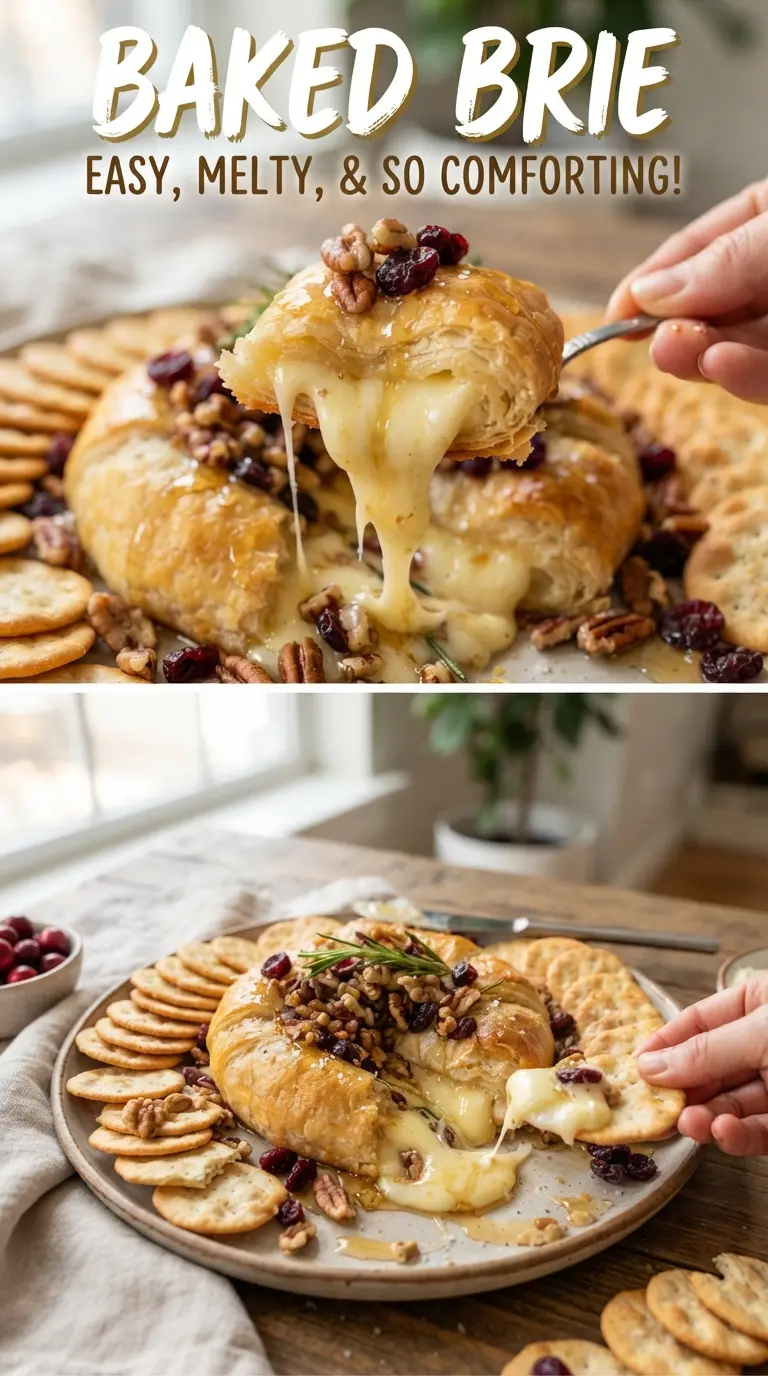
Golden puff pastry wrapped around warm brie is the kind of appetizer that disappears fast because the contrast is just right: crisp, buttery layers on the outside and soft, molten cheese inside. The jam turns the brie into something a little sweet and a little tangy, and the pecans add enough crunch to keep each bite interesting.
This version works because the brie is enclosed before it goes into the oven, which keeps the cheese from running everywhere before the pastry has time to brown. The egg wash gives the crust that deep glossy finish, and a short rest after baking is what keeps the cheese thick enough to scoop instead of instantly flooding the plate.
Below, I’ve included the small details that matter most: how to keep the pastry sealed, how to avoid a soggy bottom, and a few easy variations if you want to change the jam or make it a little more savory.
The pastry came out deeply golden and the brie held together until we cut into it. The raspberry jam and pecans were such a good combo, and the 10-minute rest kept it from turning into a cheese puddle.
Save this baked brie with raspberry jam and puff pastry for the kind of appetizer that comes out crisp, molten, and polished enough for guests.
The Trick to Keeping the Brie Inside the Pastry
The biggest mistake with baked brie is overfilling it or undersealing it. Jam softens and bubbles as it heats, and if the seams aren’t pressed together firmly, the pastry opens before the cheese has a chance to settle. Trim only what you need, then press the edges together and place the whole package seam-side down before baking. That gives you the best shot at a neat cut and a clean ooze instead of a runaway cheese spill.
Another small detail matters here: the pastry should be cold when it goes into the oven. If it warms up too much while you assemble it, the butter in the dough starts to melt early and the layers lose their lift. A chilled, well-sealed package gives you that crisp shell around the soft center.
What the Puff Pastry, Jam, and Nuts Are Each Doing Here
- Puff pastry — This is what makes the brie feel special. It bakes up into crisp, flaky layers that hold the cheese together and give you something sturdy enough to slice and serve. Thawed store-bought pastry works well here, and there’s no benefit to using a fancy substitute unless it also bakes up with similar lift.
- Brie — Use a wheel that feels soft but not collapsing. A ripe brie melts smoothly; an under-ripe one can stay a little stiff in the center. You can leave the rind on because it helps the cheese hold its shape and melts into the filling without any extra work.
- Jam — Raspberry brings brightness, while fig adds a deeper, more mellow sweetness. This is the ingredient that cuts through the richness of the cheese, so use one with enough flavor to stand up to the pastry. If the jam is very thick, warm it for a few seconds so it spreads without tearing the cheese.
- Pecans and brown sugar — The nuts add crunch, and the brown sugar helps the top caramelize slightly under the pastry. If you want to skip the pecans, the brie will still bake well, but you’ll lose some texture. Chopped walnuts work too if that’s what you have.
Assembling and Baking It Until the Pastry Turns Deep Gold
Rolling and Filling
Roll the puff pastry just enough to smooth the folds and give yourself a little more surface area, then place the brie in the center. Spread the jam over the top, scatter on the pecans and brown sugar, and keep the filling in the middle so it doesn’t leak out at the seams. If the jam runs all the way to the edge, the pastry can slide open and brown unevenly.
Wrapping and Sealing
Bring the pastry up and over the brie, trimming away bulky excess if needed. Press the seams together firmly, then turn the whole bundle seam-side down on the baking sheet. That step matters because gravity helps hold the seal in place while the pastry sets in the oven.
Brushing and Baking
Brush the outside with egg wash until the surface is evenly coated, including the corners and seams. Bake at 400F until the pastry is a deep golden brown and feels crisp all over, usually 22 to 25 minutes. If the top is browning too quickly before the pastry feels done, tent it loosely with foil for the last few minutes rather than pulling it early.
Resting and Serving
Give it a 10-minute rest before cutting. Right out of the oven, the cheese is too loose and will pour out before anyone can dip a cracker in it. After a short rest, it softens to the perfect spoonable texture while the pastry stays crisp enough to hold its shape.
How to Adapt This Baked Brie for Different Crowds and Diets
Fig Jam and Walnut Version
Swap the raspberry jam for fig jam and use chopped walnuts instead of pecans. The result is a deeper, more savory-sweet brie with a slightly earthier finish that feels a little more grown-up on a cheese board.
Dairy-Free Workaround
Use a plant-based soft cheese wheel that melts well and stays contained when baked. The texture won’t be as luxurious as brie, but the pastry, jam, and nut topping still give you a polished appetizer with the same sweet-savory balance.
Gluten-Free Version
Use a gluten-free puff pastry if you can find one and keep the rest of the method the same. Bake it on parchment and watch closely near the end, since gluten-free pastry can brown faster at the edges before the center is fully crisp.
Make-Ahead for a Party
Assemble the wrapped brie a few hours ahead, then refrigerate it until you’re ready to bake. Brush on the egg wash right before it goes in the oven so the pastry browns evenly instead of drying out in the fridge.
Storage and Reheating
- Refrigerator: Store leftovers in an airtight container for up to 3 days. The pastry will soften, but it still tastes good reheated.
- Freezer: I don’t recommend freezing after baking because the cheese texture turns grainy and the pastry loses its crispness.
- Reheating: Warm leftovers in a 325F oven until the pastry is hot and the center is soft again. Skip the microwave if you want to keep the crust from turning soggy.
Questions I Get Asked About This Recipe

Baked Brie in Puff Pastry
Ingredients
Equipment
Method
- Preheat the oven to 400°F and line a sheet pan with parchment. This ensures the pastry bakes evenly right away.
- Roll the puff pastry slightly and place the brie in the center. Keep the brie centered so the pastry can seal cleanly.
- Spread the jam over the brie, then sprinkle with chopped pecans and brown sugar. Cover the top so the filling stays flavorful as it melts.
- Fold the pastry up over the brie, trimming excess and pressing the seams to seal. Leave no gaps to prevent cheese from leaking out.
- Flip the brie seam-side down onto the baking sheet, then brush with the egg wash. Use a light coating for a glossy, golden crust.
- Bake at 400°F for 22 to 25 minutes, until deep golden brown. Look for puffing and a rich color at the seams and edges.
- Rest for 10 minutes so the cheese sets slightly. The molten center will thicken just enough for easier cutting.
- Garnish with fresh rosemary and serve with crackers and apple slices. Serve warm so the cheese remains creamy.