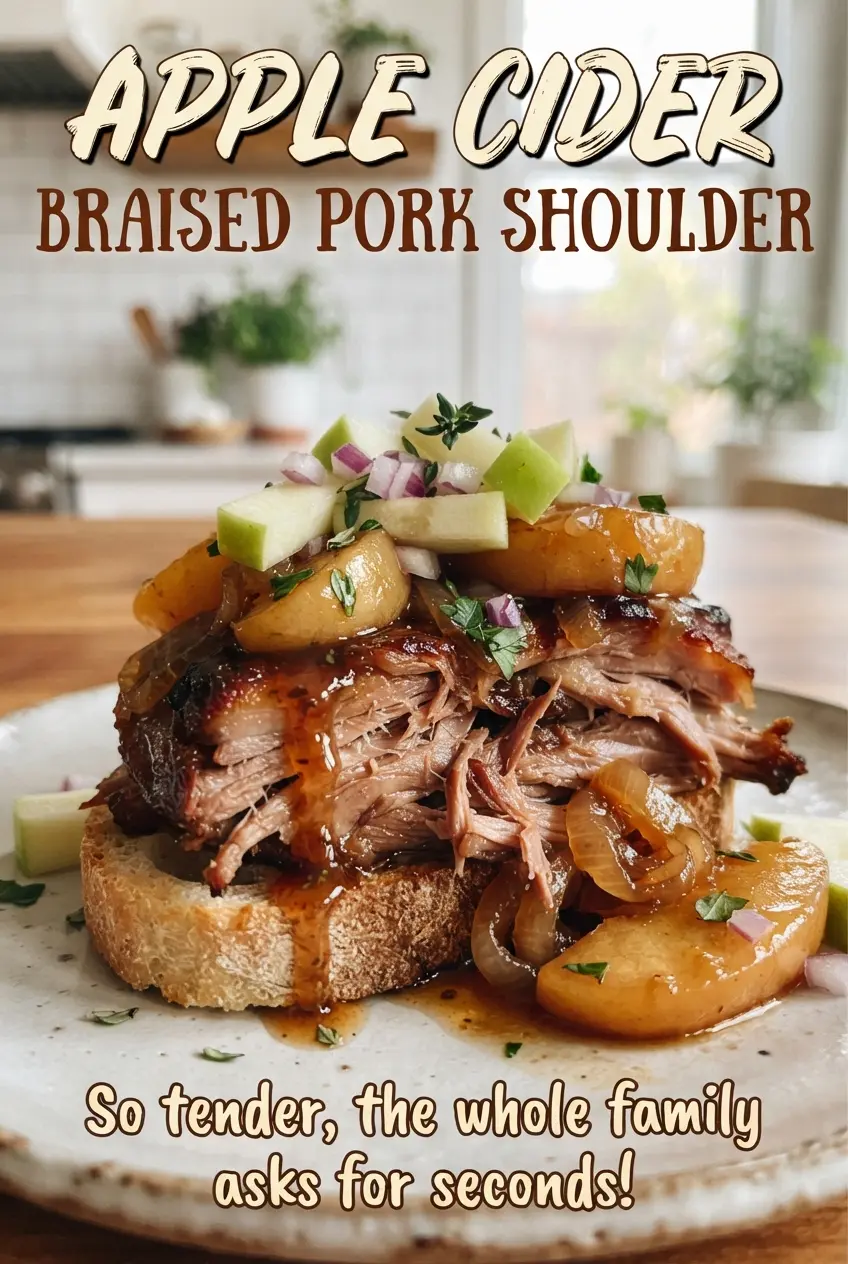
Apple cider braised pork shoulder turns a tough, inexpensive cut into spoon-tender meat with a glossy, savory-sweet sauce that tastes like it cooked all day in the best possible way. The pork shreds into big, juicy pieces, the apples soften just enough to hold their shape, and the onions melt into the braising liquid until everything tastes round and deep.
What makes this version work is the balance in the pot. The cider brings sweetness and fruit, but Dijon, vinegar, and chicken broth keep it from turning cloying. Searing the pork first matters too, because those browned bits give the braising liquid the backbone it needs. By the time the pork finishes, the sauce has picked up both richness and brightness.
Below, I’ve included the little details that matter most: when to add the apples so they don’t collapse, how to reduce the sauce without drying out the meat, and a few useful swaps if you want to work with what’s already in your kitchen.
The pork was fall-apart tender and the cider sauce reduced into something rich instead of watery. I added the apples at the end like you said, and they kept their shape perfectly without turning mushy.
Love a braise that turns pantry staples into fork-tender pork and glossy apple cider sauce? Save this one for the next Dutch oven dinner.
The Step That Keeps Braised Pork Tender Instead of Dry
Boneless pork shoulder is forgiving, but it still needs the right handling to turn silky instead of stringy. The biggest mistake is rushing the braise or skipping the sear. A deep brown crust on the pork gives the sauce a roasted flavor, and the long covered cook time breaks down the connective tissue without squeezing the meat dry.
- The first braise under the lid is about patience, not speed. Keep the oven at 325°F and let the pork stay covered for the full 2 1/2 hours before adding the apples.
- The apples go in late on purpose. If they cook the whole time, they collapse into sauce instead of giving you those soft wedges that still look like apples on the plate.
- Reducing the liquid after shredding is what keeps the dish from tasting thin. Once the pork comes out, simmer the sauce on the stove until it coats a spoon.
What Each Ingredient Is Actually Doing in the Pot
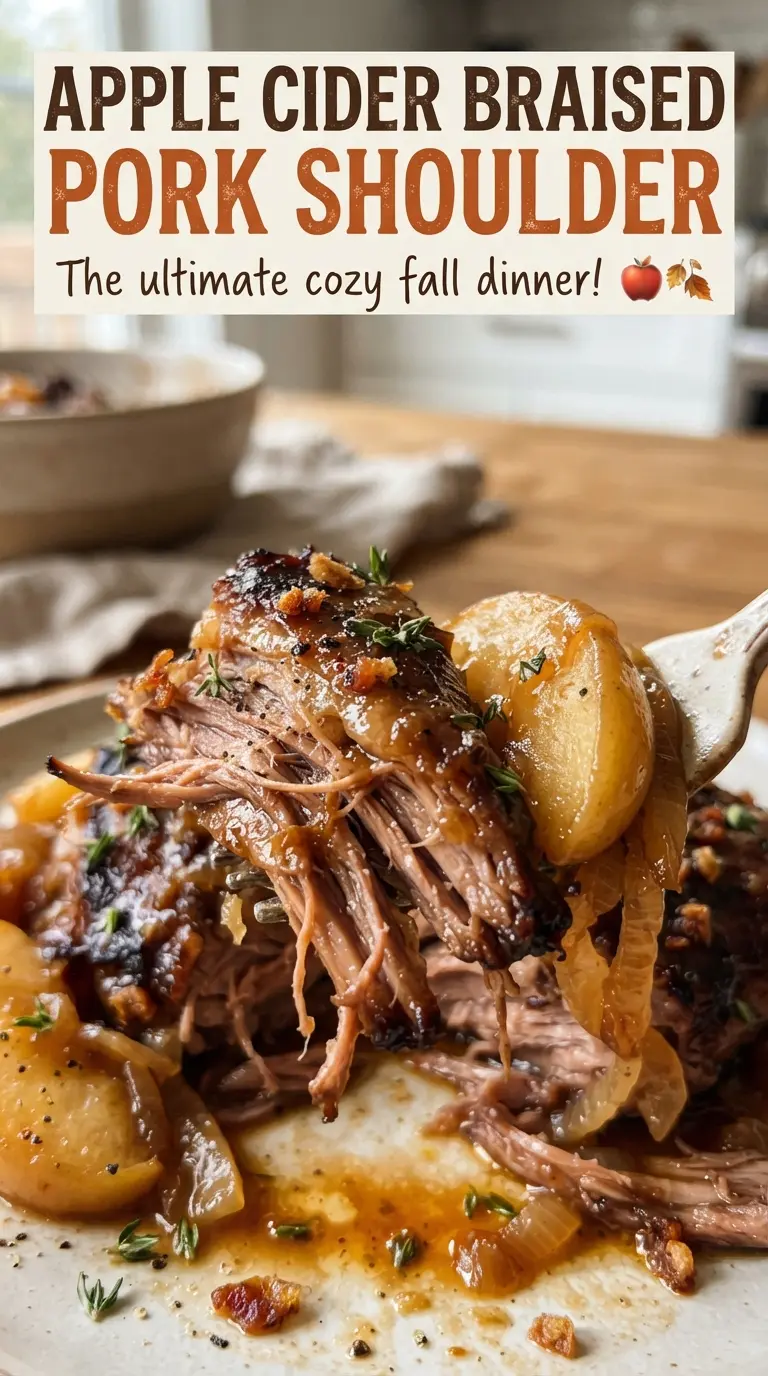
- Pork shoulder — This cut has enough fat and connective tissue to braise into tender shreds. A leaner roast won’t give you the same texture, and it can dry out before the sauce finishes.
- Apple cider — Use actual cider, not cider vinegar or apple juice if you can help it. Cider gives the sauce body and a mellow apple flavor that feels round instead of sharp.
- Dijon mustard and apple cider vinegar — These keep the braise balanced. They cut through the richness of the pork and stop the cider from reading as sweet.
- Apples — Choose a firm apple that holds shape during cooking. Soft apples turn to sauce too fast, while a sturdier variety stays intact and soaks up the braising liquid.
- Fresh thyme and rosemary — Dried herbs can work in a pinch, but fresh herbs perfume the whole pot in a way that feels cleaner and more layered. If you use dried, cut the amount down and add them with the liquid so they have time to rehydrate.
Building the Braise So the Sauce Stays Deep and Balanced
Season and Brown the Pork
Pat the pork dry before seasoning it so the surface can brown instead of steam. The salt, pepper, and smoked paprika should cling in a thin, even layer. When the oil is hot, the meat should sizzle as soon as it hits the pot. Let each side develop a dark crust before turning it; if it sticks at first, it usually needs another minute.
Cook the Onions Until They Turn Sweet
The sliced onion needs enough time to soften and pick up color from the browned pork bits at the bottom of the Dutch oven. Stir it until it turns glossy and starts to pick up a little gold at the edges, then add the garlic just long enough to smell fragrant. If the garlic goes in too early, it can scorch and leave a bitter edge in the finished sauce.
Build the Braising Liquid
Pour in the cider, broth, vinegar, Dijon, and brown sugar, then scrape the pot clean with a wooden spoon. That’s where the flavor is hiding. The liquid should look slightly cloudy and smell sharp, sweet, and savory all at once. Once the pork goes back in, the liquid should come partway up the meat, not drown it completely.
Finish Low and Slow
Cover the pot and braise until the pork yields easily to a fork. When you add the apples for the last 45 minutes, they’ll soften without collapsing. Shred the pork into large pieces rather than fine strands, then simmer the sauce uncovered until it thickens a little and clings to the meat. If the sauce looks thin at first, don’t panic; it usually needs a few minutes of steady simmering to tighten up.
How to Adapt This Braise for Different Kitchens and Different Needs
Make It Gluten-Free Without Losing Body
This recipe is naturally gluten-free as written, so the only thing to watch is your broth and Dijon. Some brands sneak in additives, so check the labels if you cook for someone sensitive. The texture stays the same because the sauce thickens through reduction, not flour.
Use Pork Butt or a Bone-In Shoulder
Pork butt works the same way as boneless shoulder and usually shreds beautifully. If you use bone-in, leave the timing flexible and cook until the meat pulls apart easily around the bone. The bone adds a little extra flavor, but it also makes portioning slower when you’re serving a crowd.
Make It a Little Less Sweet
If you like a sharper braise, cut the brown sugar in half and add an extra teaspoon of vinegar at the end. The sauce will taste less round on its own, but it becomes brighter and a little more savory once it reduces around the pork and onions.
Storage and Reheating
- Refrigerator: Store in an airtight container for up to 4 days. The pork gets even more flavorful after a night in the fridge.
- Freezer: It freezes well for up to 3 months. Cool it completely first, then freeze the pork and sauce together in portions for easier thawing.
- Reheating: Warm it gently on the stove over low heat with a splash of broth or cider if needed. High heat can dry out the shredded pork and make the sauce taste flat.