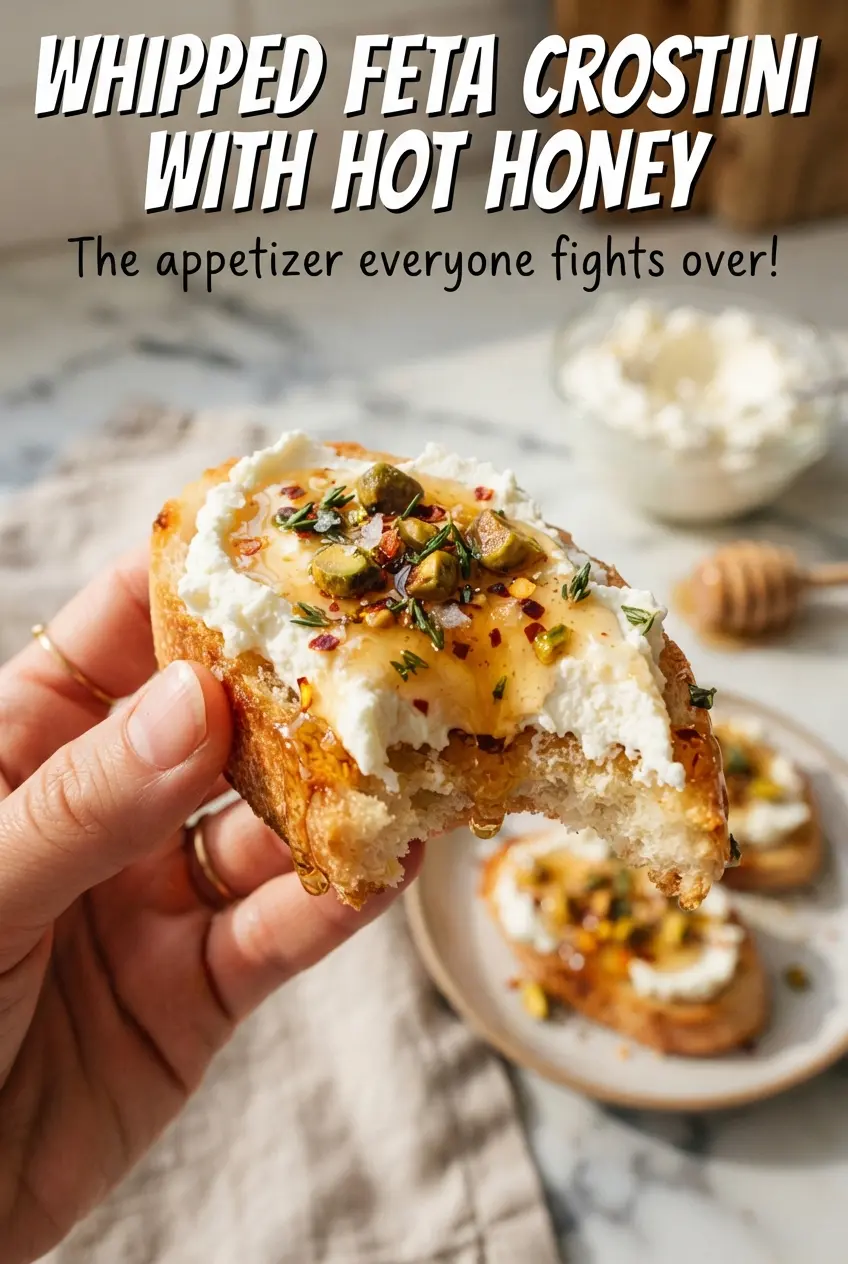
Whipped feta crostini with hot honey hits the table with the kind of contrast people remember: crisp toasted bread, cool tangy cheese, and a sticky-sweet finish that wakes everything up. The feta stays plush and airy instead of heavy, which means each bite feels bright and sharp, not dense or one-note. It’s the appetizer I reach for when I want something fast that still looks like I planned ahead.
The trick is balancing the feta with enough cream cheese and yogurt to smooth out the salt without muting it. A quick spin in the food processor gives you that cloudlike texture, and lemon zest keeps the whole spread from tasting flat. The hot honey goes on last, after the crostini are topped, so it pools into the ridges and drips down the sides instead of soaking the bread too early.
Below, I’ve added the little details that matter: how to keep the toast crisp, which swap works if you only have plain honey, and what to do if you want to make the spread ahead without losing that fresh whipped texture.
The whipped feta came out light and smooth, and the hot honey stayed on top instead of making the crostini soggy. I made a double batch for book club and every slice disappeared fast.
Save these whipped feta crostini with hot honey for your next appetizer spread — crisp baguette, fluffy feta, and that sticky sweet heat.
The Reason the Feta Stays Fluffy Instead of Grainy
Whipped feta can go from airy to pasty fast if the mix is too cold or too dry. The cream cheese gives it body, but the yogurt is what loosens the mixture enough to turn it silky without making it runny. If you dump everything into the processor straight from the fridge, the feta tends to stay a little sandy and the texture never fully smooths out.
Let the cream cheese soften first. That small bit of patience changes the whole result. The lemon zest matters here too, because feta needs something bright to lift all that salt. Without it, the topping tastes heavy instead of balanced.
What Each Ingredient Is Doing on the Crostini

- Feta — This is the backbone of the spread. Use a block if you can, then crumble it yourself, because pre-crumbled feta is often drier and won’t whip as smoothly.
- Cream cheese — This softens feta’s sharp edges and gives the topping that thick, spreadable texture. Full-fat works best here; low-fat versions can turn loose and a little thin.
- Greek yogurt — Just enough to loosen the mixture and add a fresh tang. If you don’t have it, use a spoonful of sour cream, but expect a slightly richer, less tangy finish.
- Lemon zest — This keeps the topping bright. Don’t swap in juice unless you need to; too much liquid can make the spread slack.
- Baguette — A sturdy baguette slices cleanly and holds the topping without collapsing. Cut on the bias for more surface area and a better ratio of crunch to cheese.
- Hot honey — This is the finish that makes the whole bite sing. If yours is thick, warm it for a few seconds so it drizzles cleanly.
Building the Toast and Topping It at the Right Moment
Toasting the Baguette
Brush the baguette slices lightly with olive oil, then bake them until the edges are golden and the centers feel dry to the touch. You want crispness, not hard shells. If the bread starts to brown too deeply before it dries out, the oven is too hot or the slices are too thick. A proper crostini should snap lightly when you bite it, then yield to the creamy topping.
Whipping the Cheese
Blend the feta, cream cheese, Greek yogurt, and lemon zest until the mixture turns pale and fluffy, scraping down the sides as needed. Stop as soon as it looks smooth; over-processing can warm the mixture and make it loose. If it still looks grainy, the cream cheese wasn’t soft enough, so keep blending in short bursts until the texture evens out.
Finishing with Honey
Spread the whipped feta in a thick layer, then drizzle on the hot honey right before serving. That timing keeps the toast crisp and gives you those glossy trails of honey that catch on the edges. Finish with red pepper flakes and thyme for heat and a little herbal lift. If the honey is poured too early, the bread softens fast and you lose the best part of the crunch.
Three Ways to Adapt These Crostini Without Losing the Point
Make It Dairy-Free
Use a dairy-free feta and a plain, unsweetened plant-based cream cheese. The texture will still be spreadable, but it won’t have quite the same salty tang or richness, so add a tiny pinch more lemon zest to brighten it up.
Swap the Hot Honey
If you only have regular honey, stir in a pinch of red pepper flakes and let it sit for a few minutes before drizzling. You’ll get the same sweet-heat effect, though the spice will be a little more rustic and less rounded than a bottled hot honey.
Use Gluten-Free Bread
A sturdy gluten-free baguette works well as long as it toasts up firm enough to hold the topping. Watch it closely in the oven, because gluten-free bread can go from pale to dry faster than wheat bread. The goal is a crisp base that doesn’t crumble under the feta.
Storage and Reheating
- Refrigerator: Store the whipped feta for up to 4 days in an airtight container. The crostini are best made fresh, because the bread softens once topped.
- Freezer: The whipped feta doesn’t freeze well; the texture turns grainy after thawing. Bake the bread fresh instead of trying to freeze assembled crostini.
- Reheating: Re-crisp the bread in a 375°F oven for 2 to 3 minutes if needed, then top it after warming. Don’t microwave assembled crostini or the bread will go limp.
Questions I Get Asked About This Recipe
Whipped Feta Crostini with Hot Honey
Ingredients
Equipment
Method
- Preheat the oven to 400F. Brush the baguette slices with olive oil and arrange them on a sheet pan.
- Bake for 6-8 minutes, until golden and crisp, with a visible toasted edge and lightly browned surface.
- Blend the feta, cream cheese, Greek yogurt, and lemon zest in a food processor until fluffy and smooth.
- Spread a thick layer of whipped feta on each crostini so the topping holds its shape.
- Drizzle with hot honey and top with red pepper flakes and fresh thyme, creating a glistening finish.