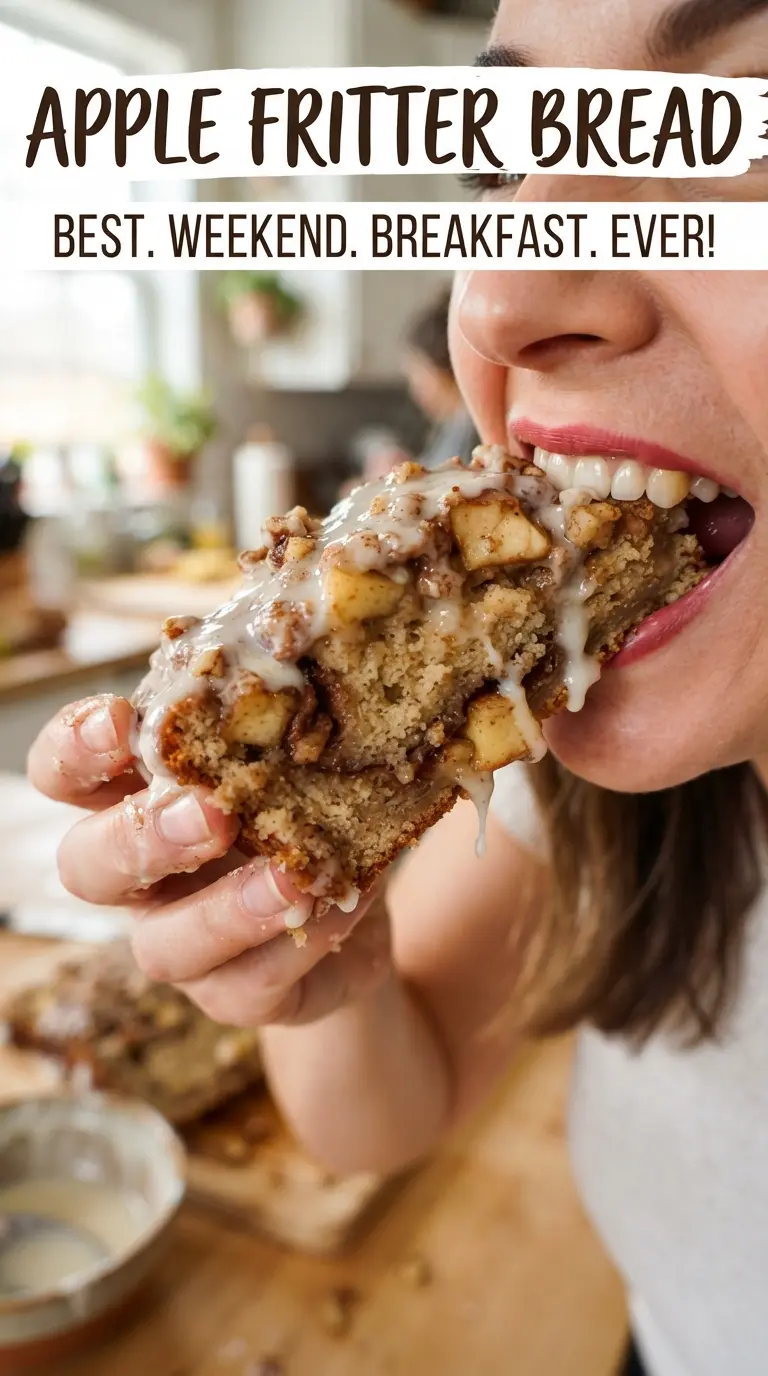
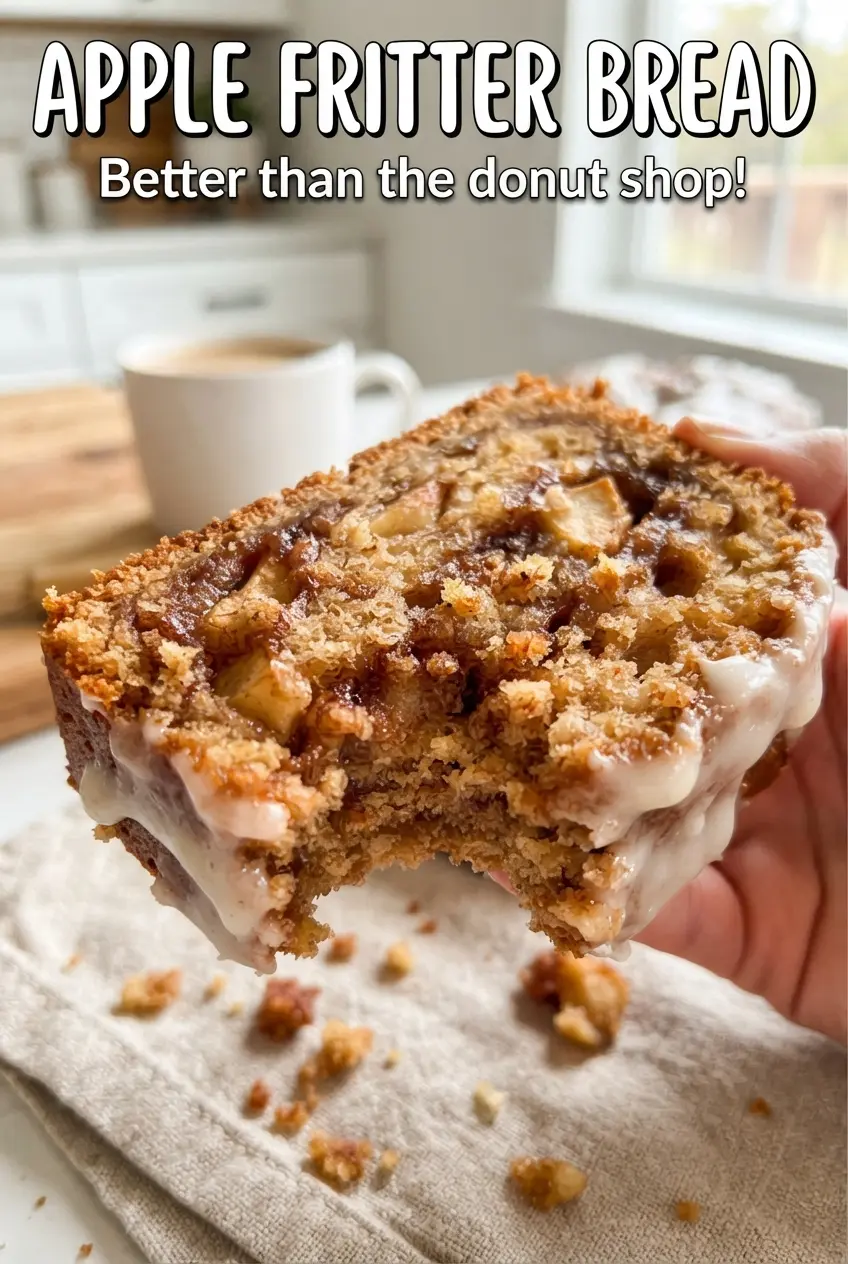
Apple fritter bread bakes up with a tender crumb, pockets of soft cinnamon apples, and those caramelized ribbons of brown sugar that make each slice taste like the bakery version of an apple fritter without the fuss of frying. The top gets a little crackly under the glaze, while the middle stays plush and moist if you don’t overmix the batter.
This version works because the apples are coated with cinnamon sugar before they ever hit the loaf pan. That keeps the fruit from tasting flat and helps create those sweet, syrupy pockets as the bread bakes. The batter itself is straightforward, but the layering matters: alternating batter, apples, and cinnamon sugar gives you the swirls and texture contrast that make this loaf worth repeating.
Below, I’ll walk you through the one step that keeps the loaf from baking up dense, plus the small swap I reach for when the apples are extra juicy. The glaze is simple, but the timing on when you add it makes a difference, too.
The cinnamon sugar sank into the apples and the loaf came out incredibly moist. I was worried it would be dry, but the swirl stayed distinct and the glaze set up beautifully after cooling.
Love the cinnamon-swirled apple layers? Save this Apple Fritter Bread for the days when you want a bakery-style loaf with a thick vanilla glaze.
The Part That Keeps Apple Fritter Bread From Baking Up Heavy
The biggest mistake with apple quick breads is packing in too much fruit or overworking the batter once the flour goes in. That gives you a loaf that looks promising in the pan and then turns dense in the center. Here, the batter is thick enough to hold the apple layers in place, but it still needs a light hand once the dry ingredients go in.
Swirling with a knife instead of stirring the whole pan matters, too. You want visible ribbons, not a muddy batter. The apples soften as they bake, and the cinnamon sugar melts into little pockets that taste richer than a plain chopped apple mixture.
- Apples — A firm baking apple holds its shape best, so you get chunks instead of applesauce. If yours are very juicy, pat them dry after chopping so the loaf doesn’t get soggy near the center.
- Brown sugar and cinnamon — This is what gives the bread that fritter-style filling. The brown sugar melts into the apples and creates the sticky, spiced layers you want.
- Butter — Softened butter creams with the sugar and gives the loaf its tender crumb. Cold butter won’t trap enough air, and melted butter changes the texture too much for this style of bread.
- Milk — Added alternately with the dry ingredients, milk loosens the batter without thinning it out. Whole milk gives the richest result, but 2% works fine.
- Powdered sugar — This makes the glaze smooth and fast. Sift it if it’s lumpy, or the drizzle won’t look clean on top of the loaf.
What Each Ingredient Is Actually Doing in This Recipe
- Primary ingredient (the star) — Quality matters most. Choose the best you can find.
- Cooking medium (oil, butter, or broth) — This carries flavors and prevents dryness.
- Seasonings (salt, pepper, spices, herbs) — Layer flavors so nothing overpowers. Build depth gradually.
- Aromatics (garlic, onion, herbs) — Cook with fat to bloom flavors. Become the foundation.
- Supporting ingredients — Complement the main ingredient without overpowering it.
- Sauce or liquid (if applicable) — Brings flavors together. Balance richness with acid.
- Acid (lemon, vinegar, wine, or other) — Brightens and prevents flat-tasting results.
- Final finish (garnish, glaze, or sauce) — Prevents one-dimensional taste and adds visual appeal.
Building the Swirls So the Loaf Bakes Evenly
Creaming the Base
Beat the butter and granulated sugar until the mixture looks pale and fluffy, not just combined. That step builds the light texture in the finished loaf. Add the eggs one at a time so the batter stays smooth instead of looking curdled, and stir in the vanilla after the eggs go in.
Keeping the Batter Tender
Whisk the flour, baking powder, and salt separately, then add the dry ingredients to the butter mixture alternately with the milk. Stop mixing as soon as the flour disappears. If you keep going, the bread turns tight and dry instead of soft and cakey.
Layering the Apples and Cinnamon Sugar
Spread half the batter in the pan, then add half the apples and half the cinnamon sugar. Repeat with the remaining batter, apples, and sugar. The knife swirl should be gentle, just enough to move the cinnamon sugar through the batter without collapsing the layers into one heavy stripe.
Knowing When It’s Done
Bake until a toothpick inserted in the center comes out clean or with a few moist crumbs, usually 50 to 55 minutes. If the top is browning too quickly, tent it loosely with foil for the last 10 to 15 minutes. Let the loaf rest before glazing so the sugar topping doesn’t melt into the bread.
How to Adapt This Loaf When You Want a Different Finish
Use pears instead of apples
Ripe but firm pears work if that’s what you have, but they bake softer and release more juice than apples. Chop them a little larger so they don’t disappear into the loaf, and expect a more delicate, almost custardy texture.
Make it dairy-free
Use a plant-based butter that’s meant for baking and swap in an unsweetened non-dairy milk. The loaf still rises well, though the crumb will be a touch less rich and the glaze may need a little less liquid because non-dairy milk can thin faster.
Add chopped nuts for more crunch
Fold in up to 1/2 cup of chopped pecans or walnuts with the apples. They give the loaf a firmer bite and echo the nutty caramel notes in the brown sugar, but too many will crowd the crumb.
Storage and Reheating
- Refrigerator: Keep covered for up to 4 days. The loaf stays moist, but the glaze softens a little after the first day.
- Freezer: Freeze slices tightly wrapped for up to 2 months. Thaw at room temperature so the crumb doesn’t turn gummy.
- Reheating: Warm slices in the microwave for 10 to 15 seconds or in a low oven. Don’t overheat it, or the glaze melts away and the bread dries out at the edges.
Questions I Get Asked About This Recipe
Apple Fritter Bread
Ingredients
Equipment
Method
- Preheat the oven to 350F. Grease and line a 9x5-inch loaf pan.
- Mix the brown sugar with the ground cinnamon. Toss the chopped apples with 2 tablespoons of the cinnamon sugar.
- Beat the softened butter and granulated sugar until fluffy. Beat in the eggs and vanilla extract until smooth.
- Whisk the all-purpose flour, baking powder, and salt together. Add to the batter alternately with the milk, mixing just until combined.
- Spread half the batter in the loaf pan. Top with half the apples and half of the remaining cinnamon sugar.
- Spread the remaining batter over the apples. Add the rest of the apples and the remaining cinnamon sugar in an even layer.
- Swirl gently with a knife to create cinnamon-brown sugar ribbons through the loaf. Bake for 50-55 minutes, until a toothpick comes out clean.
- Cool the loaf for 15 minutes before glazing. Whisk the powdered sugar with enough milk to make a thick drizzle.
- Drizzle the vanilla glaze over the warm loaf. Let it sit briefly so the glaze sets before slicing.