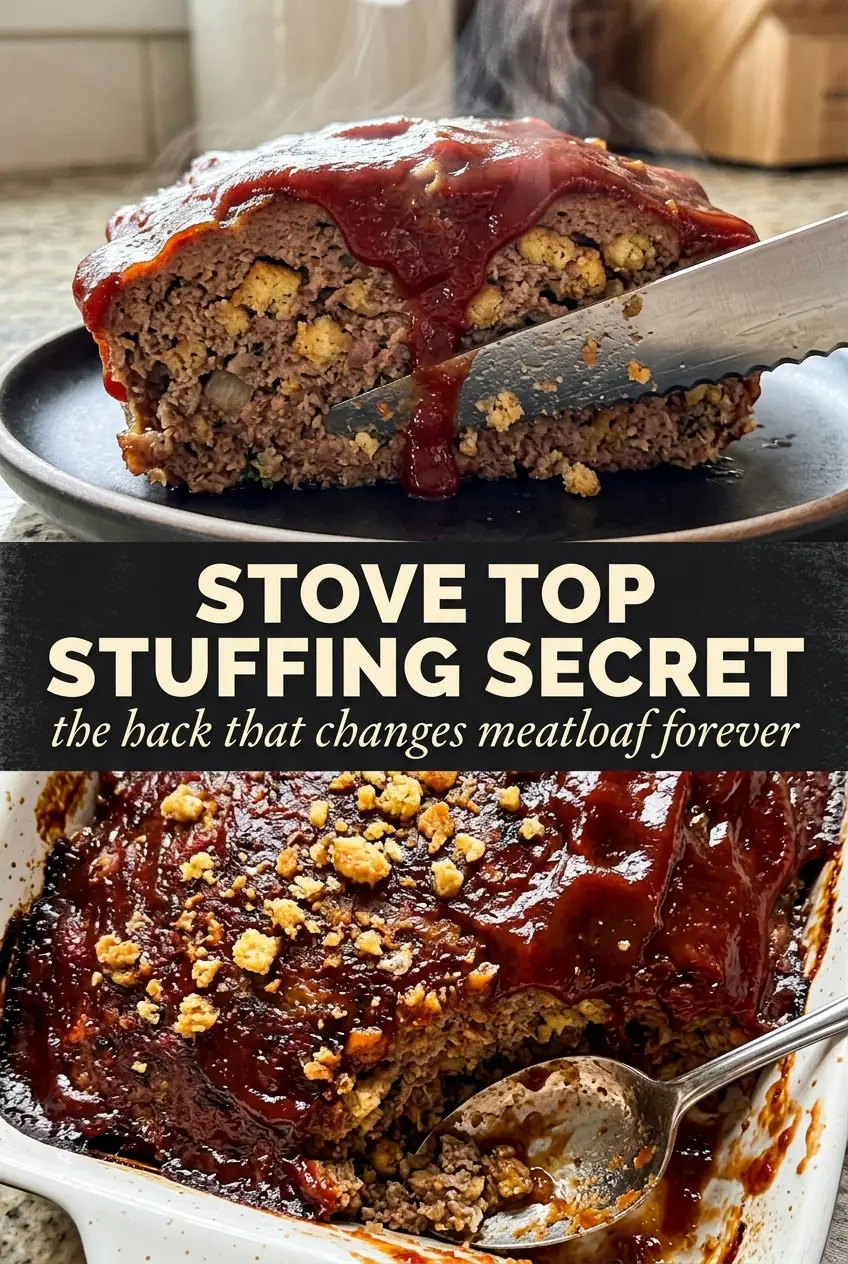
Stove Top stuffing meatloaf bakes up tender, sliceable, and full of seasoning without needing a long ingredient list. The stuffing mix does the heavy lifting here, bringing bread, herbs, and salt all at once, so the loaf stays moist and tastes like it had a lot more work put into it than it did. The ketchup glaze turns sticky and caramelized on top, which gives each slice a little sweet-tangy finish against the savory beef.
The trick is letting the stuffing soak before it ever meets the meat. That short rest keeps the crumbs from stealing moisture from the beef while the loaf bakes. Grated onion matters too, because it melts into the mixture instead of leaving sharp chunks behind. The result is a meatloaf that holds together cleanly, but still eats soft and juicy.
Below, I’ve included the exact point where the glaze should go on, plus the small handling details that keep this from turning dense. If you’ve ever had meatloaf come out dry or crumbly, this version fixes both problems without making the process fussy.
The stuffing kept the loaf incredibly moist, and the glaze got sticky and caramelized right on time. My husband asked if I could put this in the regular dinner rotation.
Like this Stove Top stuffing meatloaf? Save it for the nights when you want a moist loaf, a sticky ketchup glaze, and almost no chopping.
The Part Most Meatloaves Get Wrong: The Binder Needs Time to Soak
Stuffing mix is doing the job that breadcrumbs and dried herbs usually do, but it still needs a minute with the liquid before it goes into the beef. If you mix it in dry, it keeps pulling moisture from the meat as it bakes, and that’s how a loaf ends up tight and crumbly instead of tender. Five minutes is enough for the cubes to soften and start acting like a proper binder.
The other place people lose texture is overmixing. Once the soaked stuffing hits the bowl, work it just until everything is evenly combined. If you keep stirring past that point, the beef gets paste-like and the finished slices feel dense instead of juicy.
- Soaked stuffing mix — This brings seasoning, structure, and a built-in bread base. Any Stove Top flavor works, and each one changes the finished loaf a little, but the method stays the same.
- Grated onion — Grating is better than chopping here because the onion disappears into the meat and melts while baking. If you only have a food processor, pulse it just enough to get a fine paste, not onion puree.
- Milk and water — The combination softens the stuffing without making it soggy. Water alone works in a pinch, but milk gives the loaf a rounder, softer texture.
- Worcestershire sauce — This deepens the beef flavor and adds a little savory edge that keeps the stuffing from tasting flat. There isn’t a substitute that brings the same thing, so it’s worth keeping in.
What Each Ingredient Is Actually Doing in This Meatloaf or Meatballs
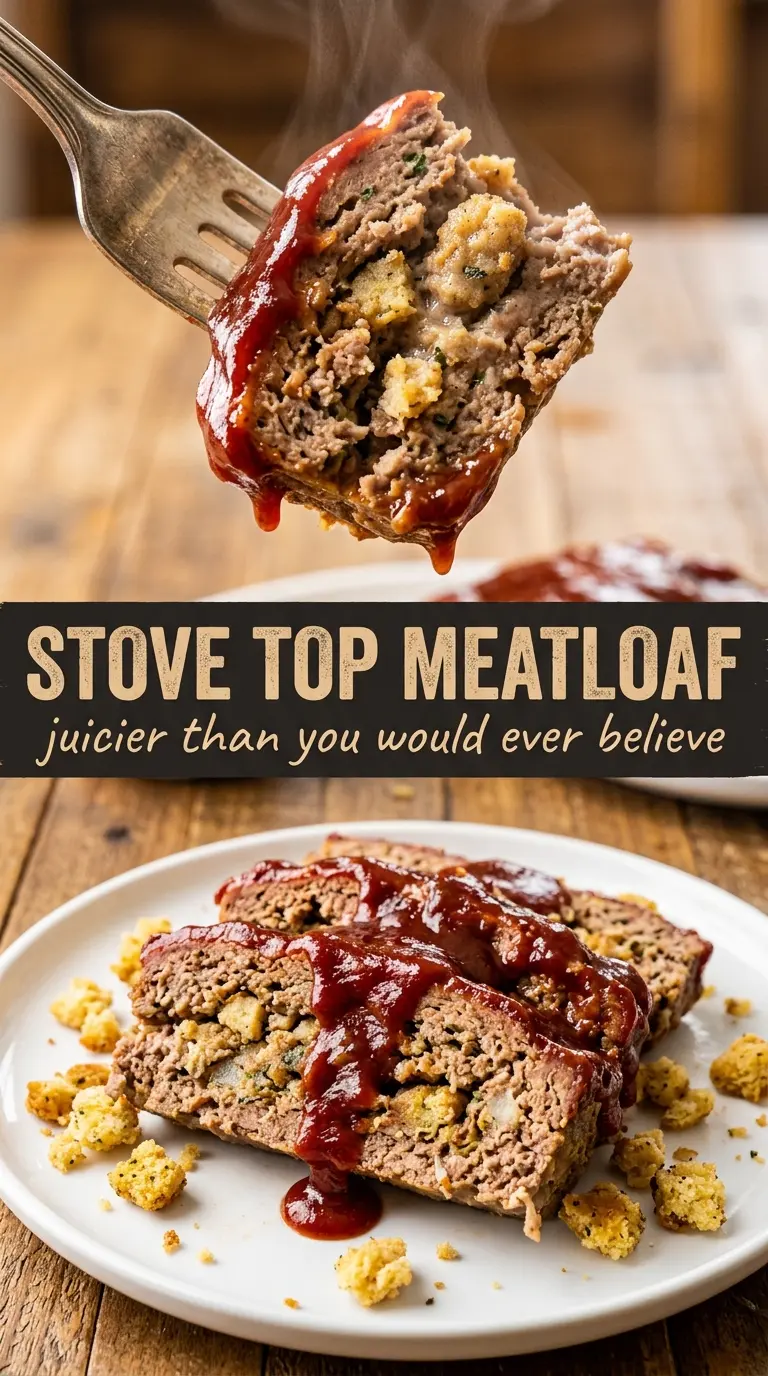
- Ground meat (the protein foundation) — Use 80/20 so it stays moist. Handle gently to keep texture tender instead of dense.
- Breadcrumbs or fillers (the binder) — These hold the meat together without making it dense. Soak in milk first so they add moisture.
- Egg (the structural binding agent) — This holds everything together during cooking. One egg per pound of meat is the right ratio.
- Onion and aromatics (the base flavor) — Mince finely so they distribute evenly. Raw onion softens as it cooks and becomes part of the texture.
- Seasonings (salt, pepper, Worcestershire, spices) — Build flavor boldly. The meat mixture carries the entire flavor profile.
- Milk or liquid (the moisture keeper) — This keeps the meatloaf tender instead of dense and dry. Don’t skip this step.
- Glaze or sauce (ketchup-based or other) — This adds sweetness, moisture, and flavor to the exterior. Apply strategically so it caramelizes.
- Resting time (the final step) — Let the meatloaf rest 10 minutes so it sets and slices cleanly. Cutting too soon makes it fall apart.
Building the Loaf So the Center Stays Juicy and the Glaze Stays Sticky
Soften the Stuffing First
Stir the stuffing mix with the water and milk, then let it sit until the crumbs are evenly moistened and no dry pockets remain. That pause is not wasted time; it keeps the stuffing from acting like a sponge inside the meatloaf. If the mixture still looks dusty after five minutes, add just a teaspoon or two more liquid.
Mix the Meat Gently
Add the beef, soaked stuffing, eggs, grated onion, Worcestershire, salt, and pepper to a large bowl. Use your hands or a fork and stop as soon as the mixture looks uniform. The biggest failure here is squeezing and kneading the meat like dough, which compacts it and leaves you with a firm, heavy loaf.
Press and Glaze
Pack the mixture into a greased 9×5 loaf pan and smooth the top so the glaze has a flat surface to cling to. Stir the ketchup, brown sugar, and mustard together until smooth, then spread half over the loaf before baking. The first layer sets up and starts to lacquer the top, while the second layer at the 45-minute mark builds that sticky finish without burning.
Bake Until Just Done
Bake at 350°F until the center reaches 160°F, which usually takes 55 to 65 minutes. Pull it when the thermometer reads correctly in the thickest part, not at the edge of the pan, because the outer portion always cooks faster. Let it rest for 10 minutes before slicing so the juices settle back into the loaf instead of running out onto the cutting board.
How to Adapt This When You Need a Different Version
Use gluten-free stuffing mix
A gluten-free stuffing mix works well here as long as it has the same dry-to-liquid behavior as the original. Watch the soak closely, because some GF mixes soften faster and can turn mushy if you leave them sitting too long.
Swap in ground turkey
Ground turkey works, but it needs the full amount of stuffing and the milk to stay moist. The flavor will be milder than beef, so don’t skip the Worcestershire or the glaze, or the loaf can taste flat.
Make it dairy-free
Replace the milk with unsweetened oat milk or just use water if that’s what you have. The loaf will still hold together and stay tender, though the flavor will be a touch less rich.
Change the glaze
If you like a tangier finish, add a splash of apple cider vinegar to the glaze. If you want it sweeter, increase the brown sugar slightly, but don’t overload it or the top will brown too quickly before the loaf finishes baking.
Storage and Reheating
- Refrigerator: Keep leftovers covered for up to 4 days. The texture firms up a little as it chills, which makes it great for sandwiches.
- Freezer: This freezes well. Wrap slices tightly or freeze the whole cooled loaf, then thaw overnight in the refrigerator before reheating.
- Reheating: Warm slices covered in a 300°F oven with a spoonful of water or a little extra glaze so they don’t dry out. Microwaving works for a quick lunch, but use short bursts so the edges don’t turn rubbery.