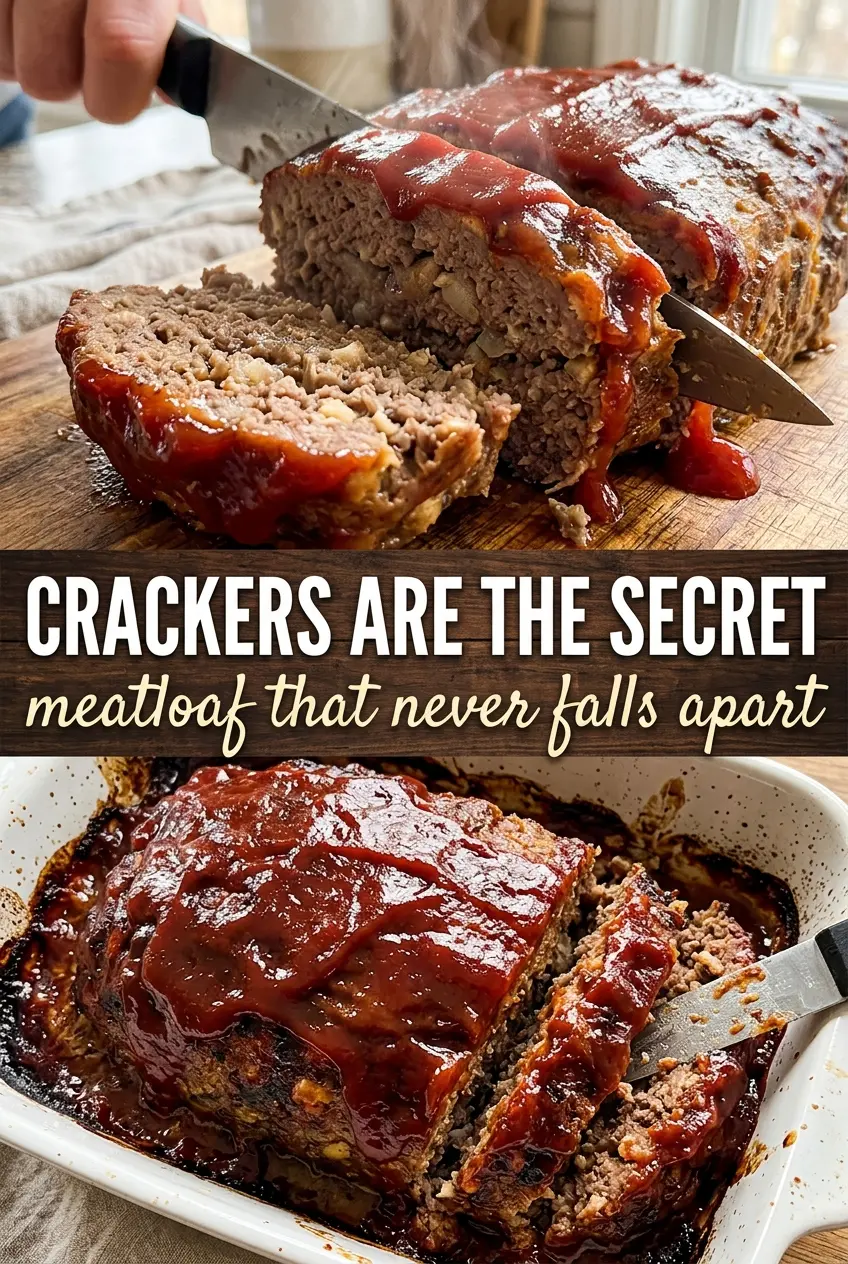
Cracker-bound meatloaf bakes up with a softer, more tender crumb than the dense loaf a lot of people grew up with. The crushed Ritz or saltines soak up the milk and hold onto moisture, so each slice stays juicy without falling apart when you cut into it. The ketchup glaze turns sticky and caramelized in the oven, which gives you that old-school meatloaf finish people go back for.
The trick here is letting the crackers sit in the milk before everything else goes in. That short soak keeps the loaf from feeling dry or grainy, and it helps the beef mixture come together without overmixing. Grated onion matters for the same reason: it disappears into the meat and seasons the whole loaf without leaving hard chunks behind.
Below, I’ve included the small details that keep this version dependable, plus a few swaps if you only have saltines, need to skip the dairy, or want to bake it ahead for an easier night.
The cracker mixture made the loaf stay tender all the way through, and the glaze thickened into that sticky top I was hoping for. I baked it in a loaf pan and it sliced cleanly after the rest.
Like this cracker meatloaf? Save it to Pinterest for a tender, old-fashioned loaf with a caramelized ketchup glaze.
The Crackers Keep This Meatloaf Tender Instead of Dense
The biggest mistake with meatloaf is treating the binder like filler. Crushed crackers do more than hold the loaf together. They absorb the milk, swell gently, and create a softer texture than plain breadcrumbs usually give. That’s why this version slices cleanly but still feels moist from edge to center.
Mixing matters here, too. Once the beef goes in, work the mixture just until everything is combined. If you knead it like bread, the proteins tighten up and the loaf turns firm and tight instead of tender. The grated onion helps keep the texture even because it melts into the mix instead of staying in little crunchy pieces.
What the Binder and Glaze Are Doing in This Loaf
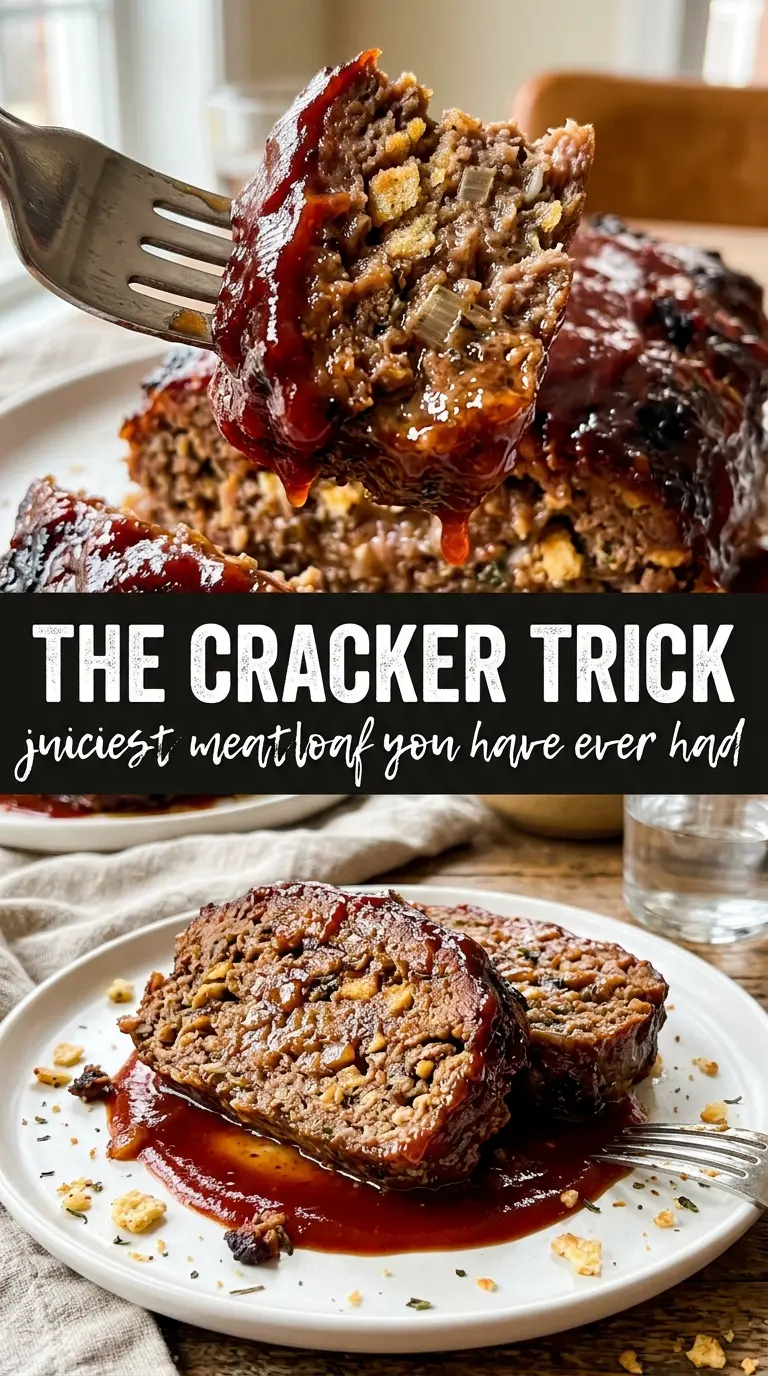
- Crushed Ritz or saltine crackers — Ritz bring a little extra richness and a softer crumb; saltines give you a more neutral, classic meatloaf flavor. Crush them finely so they soak evenly, but don’t turn them into dust.
- Whole milk — This softens the crackers before they hit the beef, which keeps the loaf from baking up dry. Low-fat milk works in a pinch, but whole milk gives you the best texture.
- Grated onion — Grating beats chopping here because it spreads the onion flavor through the meat without leaving uneven bits. If you use diced onion instead, it won’t melt in the same way and the loaf can feel a little rougher.
- Worcestershire sauce — This adds depth and a savory edge that keeps the loaf from tasting flat. There isn’t a great substitute that tastes identical, but soy sauce can stand in if that’s what you have.
- The glaze — Ketchup, brown sugar, and mustard build a sticky top that caramelizes as it bakes. Don’t skip the second glaze application; that late layer is what gives you the glossy finish.
Building the Loaf So It Stays Juicy and Slices Cleanly
Soak the Crackers First
Stir the crushed crackers with the milk and let them sit for a few minutes before adding anything else. They should look softened and pasty, not dry or crunchy. If you rush this, the crackers steal moisture from the meat instead of protecting it, and the loaf can bake up dry at the edges.
Mix the Meat Gently
Add the beef, eggs, onion, garlic, Worcestershire, garlic powder, salt, and pepper to the soaked crackers. Use your hands and stop as soon as the mixture looks uniform. Overmixing is the fastest way to get a tight, springy loaf instead of a tender one.
Glaze Before and During Baking
Press the mixture into a greased 9×5 loaf pan and smooth the top so it bakes evenly. Spread on half the glaze before the pan goes into the oven, then add the rest after about 40 minutes. That second coat keeps the sugar from burning too early and gives the top time to caramelize instead of harden.
Rest Before Slicing
Pull the loaf when the center reaches 160°F and let it sit for 10 minutes before you cut it. If you slice too soon, the juices run out and the loaf loses the tenderness you just baked in. The rest time gives the crumb a chance to settle so the slices hold together.
Three Ways to Make This Meatloaf Fit What You’ve Got
Use Saltines for a more classic pantry loaf
Saltines give you a lighter, more neutral flavor and a firmer crumb than Ritz. Crush them finely and follow the same milk soak; the texture stays tender, but the finish tastes a little more old-fashioned and less buttery.
Make it dairy-free without losing moisture
Swap the whole milk for unsweetened oat milk or plain almond milk. Oat milk is the closer match because it has a little body, while almond milk is thinner and can make the binder feel slightly less plush. The loaf still bakes up well as long as you keep the cracker soak in place.
Turn it into a mini loaf or muffin-pan version
Divide the mixture into smaller portions and bake them in a muffin tin or mini loaf pans. The texture stays the same, but the bake time drops a lot, and the glaze gets more edge on each piece. Start checking early so you don’t overbake the smaller portions.
Swap in a leaner beef blend
You can use a leaner ground beef, but expect a less rich loaf and watch the bake time closely. The crackers and milk help keep it from drying out, yet very lean meat still benefits from a little extra attention in the oven. Pull it as soon as it hits temperature, because overbaking is more noticeable with lean meat.
Storage and Reheating
- Refrigerator: Store leftovers in an airtight container for up to 4 days. The texture stays moist, and the glaze gets a little firmer after chilling.
- Freezer: This meatloaf freezes well. Slice it first or freeze the whole cooled loaf tightly wrapped, then thaw in the refrigerator overnight for the best texture.
- Reheating: Warm slices covered in a 300°F oven with a splash of water or a spoonful of extra ketchup over the top. Microwaving works in a pinch, but it can dry the edges out fast if you overdo it.