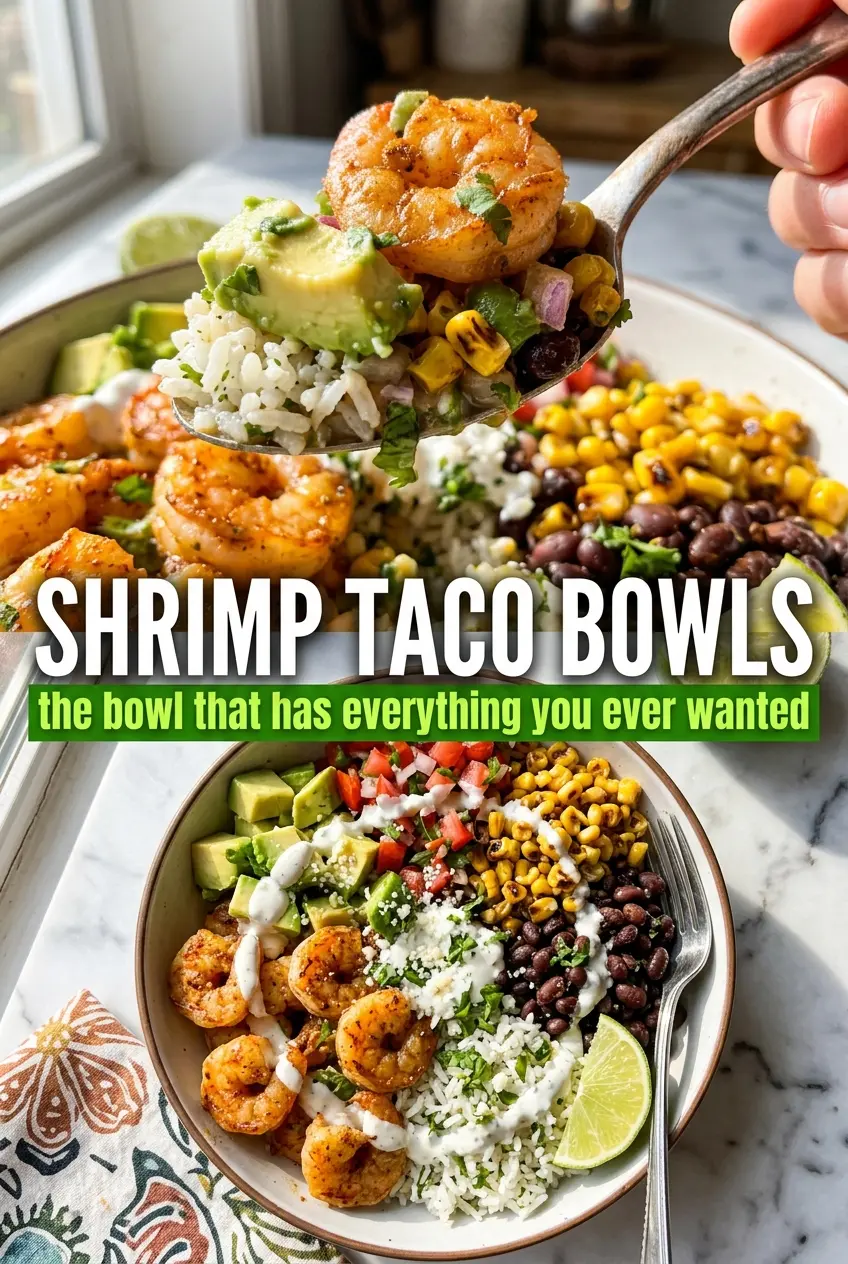
These shrimp taco bowls hit that sweet spot between fresh and filling. The shrimp stay juicy, the rice gives you a sturdy base, and the mix of black beans, corn, avocado, and cabbage keeps every bite varied instead of soft and one-note. A spoonful of crema and a hit of lime pull the whole bowl together without burying the shrimp.
What makes this version work is the fast, high-heat shrimp cook and the way the toppings are arranged. Shrimp need only a few minutes in a hot skillet before they turn plump and pink; leave them on too long and they go rubbery fast. The chili powder and lime go on before cooking, so the seasoning blooms in the pan and the shrimp keep their bright, taco-style edge. The toppings are layered around the bowl instead of dumped in a pile, which keeps the colors sharp and the textures clear.
Below, you’ll find the little details that keep the shrimp from overcooking, plus the best way to swap ingredients without losing the balance of the bowl. It’s the kind of meal that looks restaurant-worthy but still comes together on a regular weeknight.
The shrimp stayed tender and the lime-chili seasoning was spot on. I loved that the bowls still felt fresh after adding the crema, and the purple cabbage kept a nice crunch even after everything was assembled.
Love these colorful shrimp taco bowls? Save them to Pinterest for an easy dinner that looks bright, fresh, and put-together.
The Secret to Shrimp That Stay Tender Instead of Rubbery
Shrimp punish hesitation. The line between perfectly cooked and tough is short, and the pan needs to be hot before they ever go in. That high heat gives you fast color on the outside and keeps the center juicy, which is exactly what you want in a bowl where the shrimp are the main event.
The other trap is crowding the skillet. If the shrimp sit in a pile, they steam before they sear and the seasoning turns muddy instead of bright. Give them a single layer and a full 2 to 3 minutes per side, then pull them as soon as they’re opaque and curled into loose C-shapes.
- Chili powder — This does more than add heat. It brings the taco-style backbone here, and blooming it in the oil on the shrimp gives the seasoning a deeper, rounder taste than tossing it on at the end.
- Lime juice — Fresh lime keeps the shrimp tasting lively and cuts through the richness of avocado and crema. Bottled juice works in a pinch, but it doesn’t have the same clean edge.
- Cilantro lime rice — This is the anchor of the bowl. Plain rice works, but the herb-and-citrus version makes the whole dish taste finished instead of assembled.
- Crema or sour cream — Crema is a little looser and tangier, which drizzles more easily. Sour cream is a fine substitute; thin it with a teaspoon or two of water or lime juice if it won’t drizzle.
- Cotija cheese — Cotija brings salty crumble and a dry finish that parmesan can’t fully copy. Feta is the closest backup if that’s what you have.
Building Each Bowl So the Toppings Stay Bright
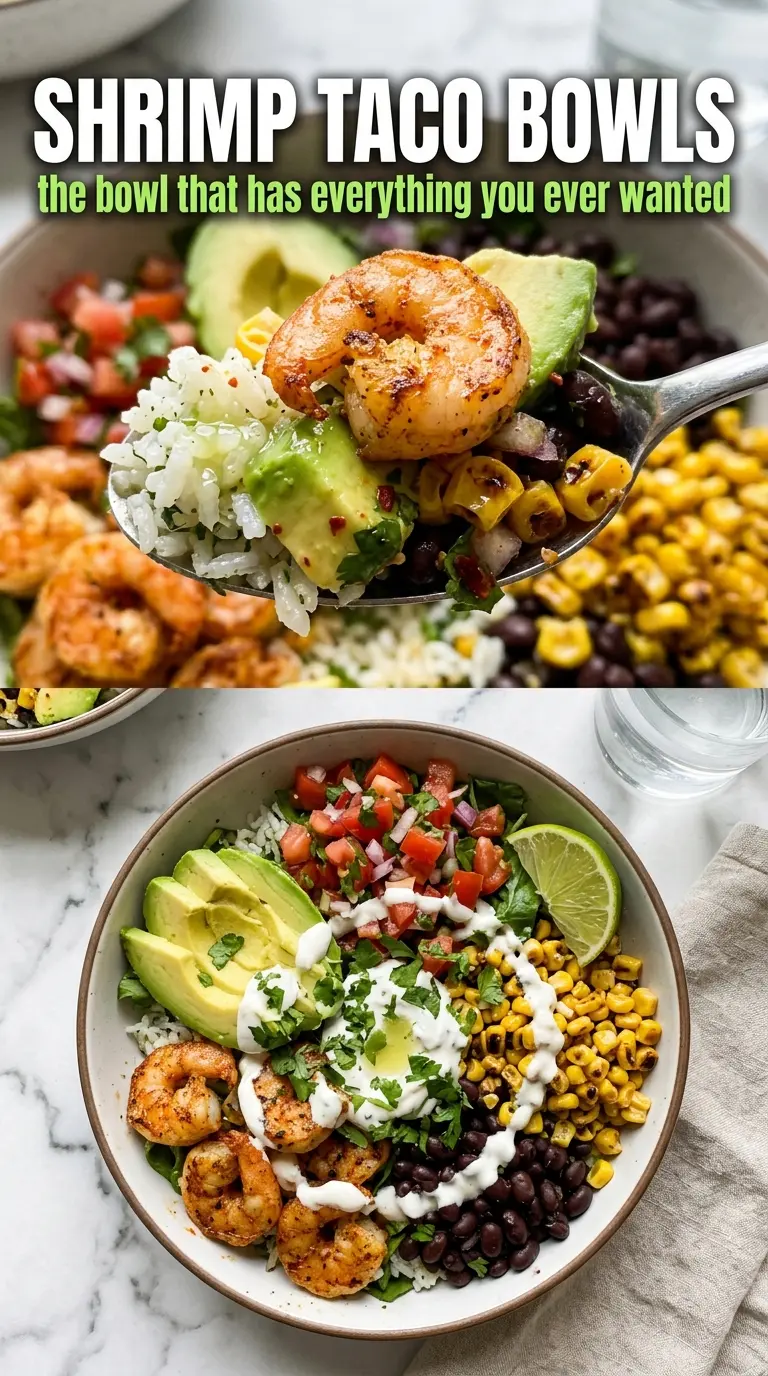
Start with warm cilantro lime rice. It holds the toppings in place and keeps the bowl from feeling scattered. Warm the black beans and corn too; cold toppings on hot rice make the shrimp cool down too fast, and the whole bowl tastes flatter.
Slice the avocado right before assembling so it stays clean and green. Shred the cabbage finely enough that it adds crunch without fighting the shrimp. If the cabbage pieces are too thick, they dominate the bite instead of supporting it.
Use a different base without losing structure
Cauliflower rice keeps this bowl lower in carbs, but it needs to be cooked until the moisture cooks off or the bowl turns watery. Quinoa works too and gives you a nuttier bite, though it won’t hold the lime-cilantro flavor quite as sharply as rice.
Make it dairy-free
Skip the cotija and use extra avocado, sliced radish, or a spoonful of dairy-free crema. The bowl still tastes complete because the shrimp, lime, and salsa carry plenty of flavor on their own.
Swap the shrimp for another protein
Diced chicken or salmon can work with the same seasoning, but both need longer cook times and a lower heat than shrimp. The tradeoff is a heavier bowl with less of that fast, fresh seafood finish.
Turn it into meal prep
Pack the rice, beans, corn, and shrimp separately from the avocado, cabbage, and crema. That keeps the shrimp from getting soggy and preserves the crunchy contrast when you reheat the base later.
Storage and Reheating
- Refrigerator: Store the shrimp and bowl components in separate containers for up to 3 days. The avocado is best added fresh, since it browns and softens quickly.
- Freezer: The shrimp, rice, beans, and corn freeze well for up to 2 months, but don’t freeze the avocado, crema, or cabbage. Thaw overnight in the refrigerator before reheating.
- Reheating: Warm the shrimp and rice gently in a skillet over medium-low heat or in short microwave bursts. High heat dries the shrimp out fast, which is the biggest mistake with leftovers.
Answers to the Questions Worth Asking
Shrimp Taco Bowls
Ingredients
Equipment
Method
- Toss the large shrimp with olive oil, chili powder, lime juice, salt, and pepper until evenly coated. The shrimp should look lightly speckled with chili powder.
- Heat a large skillet over high heat until hot, then add the shrimp in a single layer. Cook for 2-3 minutes per side, flipping once, until pink and cooked through with a slight char at the edges.
- Divide the cilantro lime rice among four bowls as the base. Each bowl should have a visible ring of rice.
- Arrange the warmed black beans and corn on the bowls, then add avocado slices and shredded purple cabbage around the rice. Keep the toppings colorful and spaced so each bite has multiple textures.
- Top each bowl with the cooked shrimp and sprinkle with fresh cilantro. Finish with a drizzle of crema or sour cream.
- Serve with salsa on the side and lime wedges nearby. The bowls should be ready for each diner to add salsa to taste.