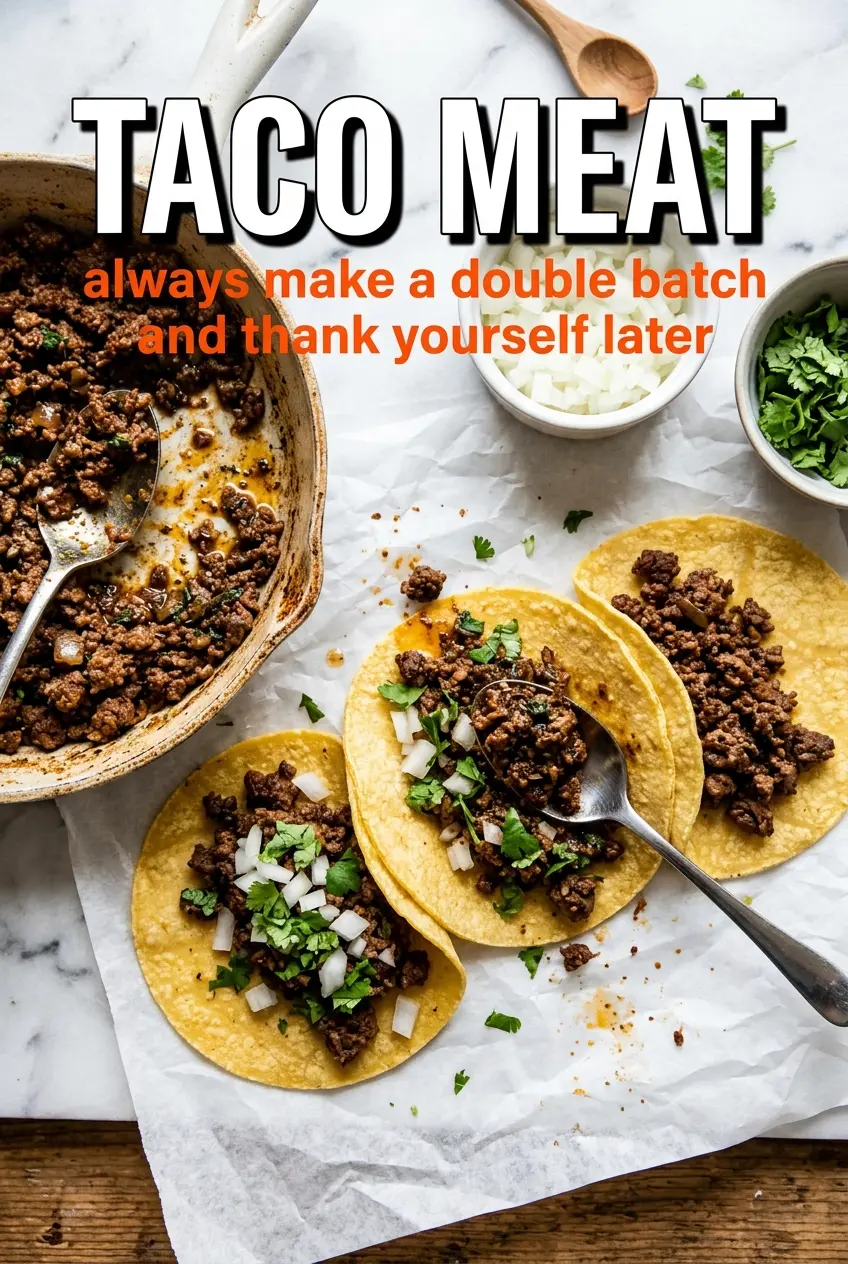
Taco meat earns its spot in the weeknight rotation because it hits that sweet spot between fast and useful: deeply seasoned, saucy enough to cling to a tortilla, and sturdy enough to turn into burritos, nachos, taco salads, or stuffed peppers the next day. The best versions aren’t dry and dusty. They stay juicy, with browned crumbles coated in a little spiced sauce that tastes like it had more than ten minutes of attention.
The trick is keeping just enough fat in the pan after browning the beef. Wipe it all out and the meat turns flat; leave too much and the seasoning can feel greasy. Tomato paste gives the sauce a little body and a deeper, rounder flavor than water and seasoning alone, while cumin and cayenne push it from basic to worth making again.
Below, I’ve included the detail that matters most for texture, plus the swaps that still work when you’re out of one ingredient or need to stretch the batch a little further.
The sauce thickened up beautifully and coated every little crumble instead of pooling at the bottom. I used it for tacos the first night and quesadillas the next, and it held up perfectly.
Save this taco meat for quick tacos, burritos, and quesadillas when you want bold seasoning and a saucy finish.
The Part That Keeps Taco Meat Juicy Instead of Dry
The biggest mistake with taco meat is treating it like a dry spice mix stirred into cooked beef. That leaves you with dusty crumbles that taste one-note and go chalky as soon as they cool. This version leans on a small amount of water and tomato paste to create a loose sauce first, then reduces it just enough to cling to the meat. That’s what gives the filling that glossy, spoonable texture you actually want inside a taco shell.
Another thing that matters: don’t drain every bit of fat away unless the beef is extremely greasy. A tablespoon or two left in the pan carries the seasoning and keeps the meat tasting full instead of lean and flat. If the mixture looks too wet after simmering, keep it on the heat for another minute or two. If it looks dry before the sauce tightens, add a splash of water and stir.
What Each Ingredient Is Actually Doing in the Pan
Ground beef does the heavy lifting here, but the lean-to-fat ratio changes the final texture. An 80/20 blend gives the richest result, while 85/15 still works well if you leave a little fat in the skillet. Very lean beef can work too, but it needs that reserved fat or a small splash of oil so the seasoning doesn’t taste thin.
- Taco seasoning — This gives the meat the main chili-spice backbone, but store-bought blends vary a lot in salt level. If yours is strong on salt, start with less added salt at the end and taste after simmering.
- Tomato paste — This deepens the color and gives the sauce body. It’s the ingredient that keeps the filling from tasting like seasoned beef instead of taco meat.
- Cumin — This adds that warm, earthy note that makes the dish taste rounder. If you’re using a seasoning packet that already leans heavily on cumin, keep the extra cumin modest.
- Cayenne pepper — This is for gentle heat, not fire. Use the full amount for a little kick, or cut it back if you’re cooking for kids or anyone sensitive to spice.
- Water — It may not look important, but it helps dissolve the paste and seasoning so they coat the beef evenly before reducing. Broth works too, but plain water keeps the flavor clean and centered on the seasoning.
Building the Sauce So It Clings to Every Crumble
Brown the Beef First
Cook the beef over medium-high heat until it loses its pink color and starts taking on some browned bits. Break it up into small crumbles as it cooks so the seasoning can coat more surface area later. If the pan is crowded or the heat is too low, the meat steams instead of browns, and you lose a lot of flavor right at the start.
Season and Simmer
Add the water, taco seasoning, tomato paste, cumin, garlic powder, and cayenne, then stir until the paste dissolves and the beef looks evenly coated. The mixture should bubble gently, not boil hard. That short simmer is what thickens the sauce; if you rush it, the seasoning stays watery and slips off the meat.
Finish to the Right Texture
Let it cook until the liquid reduces and the meat looks glossy, not soupy. You want a spoonable filling that leaves just a little sheen in the pan. Taste at the end and add salt or pepper only after the sauce thickens, because seasoning changes once the moisture cooks off.
How to Adapt This for Different Needs Without Losing the Good Part
Make It Milder for Kids
Skip the cayenne and use a taco seasoning that doesn’t list extra chili heat near the top of the ingredient list. You’ll still get plenty of flavor from cumin, garlic, and tomato paste, just without the sharp finish.
Use Ground Turkey or Chicken
Lean poultry works well, but it needs help because it doesn’t bring the same built-in richness as beef. Add a tablespoon of oil when browning and keep the tomato paste in the mix so the filling still feels saucy instead of dry.
Lower-Carb Serving Idea
Serve the taco meat in lettuce cups, over cauliflower rice, or over a chopped salad with salsa and avocado. The seasoning stays the same, but the saucy texture works especially well when there’s something crisp underneath it.
Storage and Reheating
- Refrigerator: Store in an airtight container for up to 4 days. The sauce will thicken as it chills, which helps the meat hold together for tacos and burritos.
- Freezer: It freezes well for up to 3 months. Cool it completely first, then pack it flat in a freezer-safe bag or container so it reheats evenly.
- Reheating: Warm it in a skillet over medium-low heat with a splash of water if needed. The common mistake is cranking the heat too high, which dries out the beef before the center is hot.
Answers to the Questions Worth Asking
Taco Meat
Ingredients
Equipment
Method
- Brown ground beef in a large skillet over medium-high heat, breaking it into small crumbles as it cooks for about 5-7 minutes, until no longer pink. Drain excess fat, leaving about 1-2 tablespoons.
- Add water, taco seasoning, tomato paste, cumin, garlic powder, and cayenne pepper to the skillet, then stir well to fully combine with the beef. Keep the heat at medium-high so the mixture loosens and mixes evenly, visually turning into a cohesive spiced base.
- Simmer the mixture for 3-5 minutes, stirring occasionally, until the sauce thickens and coats the meat. You should see a glossy, clingy coating on the crumbles rather than a watery sauce.
- Season with additional salt and pepper to taste, then stir and taste for balance. Use immediately over tacos, burritos, quesadillas, or other Mexican dishes, with the meat visibly saucy.
- Cool any leftovers to room temperature, then store in an airtight container in the refrigerator for up to 4 days. Reheat until hot and steaming before serving, with the sauce returning to a coated texture.