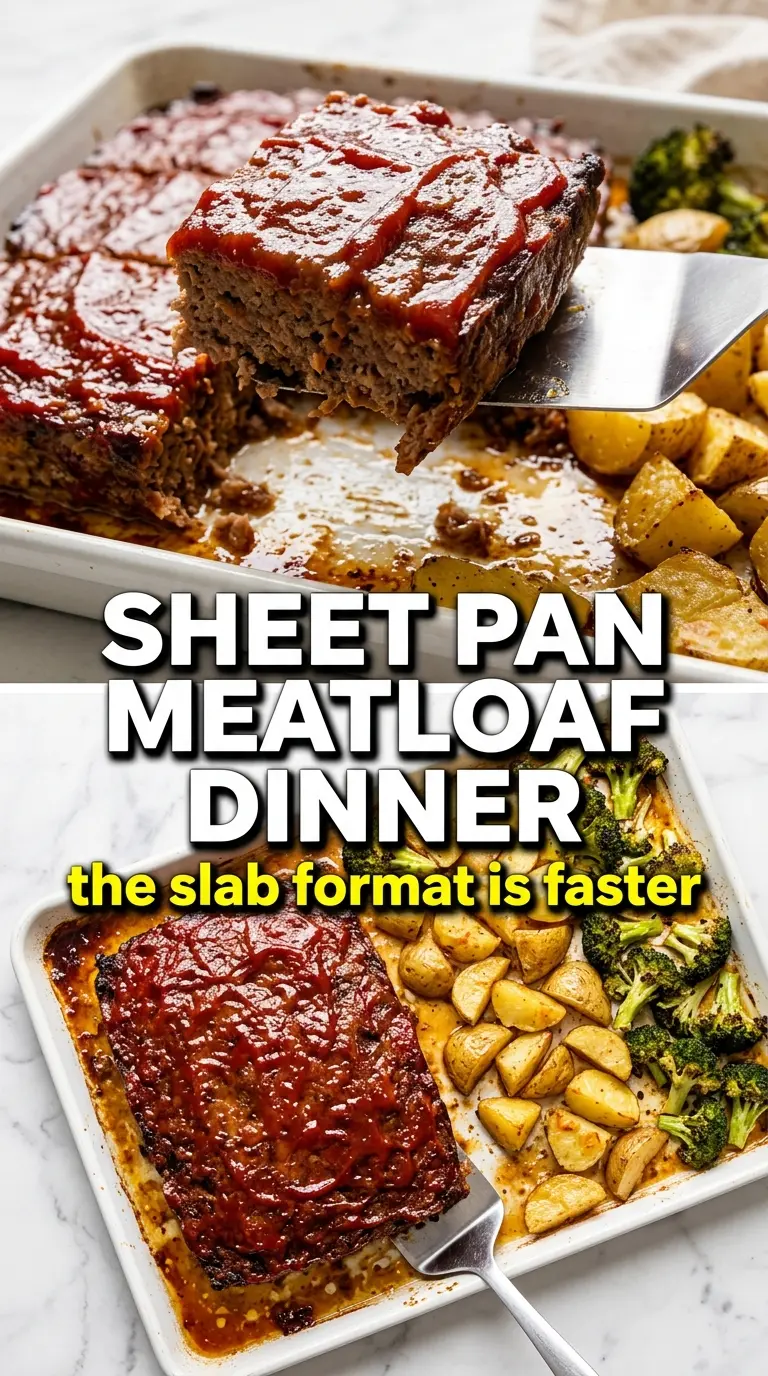
Sheet pan meatloaf gives you the parts everyone fights over: the browned edges, a sticky ketchup glaze, and slices that hold together without drying out. The flat shape cooks faster than a tall loaf, which means dinner lands on the table sooner and the vegetables on the same pan pick up plenty of savory drippings along the way.
The trick is spreading the meat mixture into a compact rectangle about an inch thick instead of packing it into a loaf pan. That extra surface area is where the flavor happens. A grated onion keeps the meatloaf juicy without leaving chunks behind, and the breadcrumbs with milk give the texture enough softness to stay tender even after a longer roast. The vegetables need a little space around them so they roast instead of steam, and the glaze goes on before baking so it caramelizes instead of just sitting on top.
Below, I’ll show you how to keep the meatloaf from cracking, how to get the vegetables browned at the same time, and how to adapt the pan for whatever you’ve got in the fridge.
The flat shape cooked evenly, and the glaze got caramelized on the edges without overcooking the center. My husband kept picking at the crispy corners before I even sliced it.
Like this sheet pan meatloaf? Save it for the nights when you want caramelized edges, tender slices, and roasted vegetables on one pan.
The Reason Sheet Pan Meatloaf Stays Juicy While It Cooks Faster
Traditional meatloaf dries out in the middle because the outside has to sit in the oven long enough to get the center cooked through. A sheet pan changes that. The meat is pressed into a thinner layer, so heat moves through it faster, and the edges still get the browned, savory crust people actually want.
The other win is space. When the vegetables aren’t crammed into a deep pan with the meat, they roast instead of steaming, which means you get browned potatoes and carrots instead of soft ones. The ketchup-brown sugar glaze benefits too, because it has direct heat on a broad surface and turns glossy instead of simply warming up.
What Each Ingredient Is Doing On the Pan
- Ground beef — Use beef with enough fat to stay tender, not extra-lean beef that turns crumbly and dry. An 80/20 or similar blend gives you the best balance of flavor and texture.
- Breadcrumbs, eggs, and milk — This trio holds the meatloaf together and keeps it soft inside. If you need a substitution, crushed saltines or panko both work, but the milk is what keeps the mixture from tightening up in the oven.
- Grated onion — This is one of the best tricks in the recipe. Grating the onion lets it melt into the meat so you get flavor and moisture without hard pieces or uneven pockets.
- Worcestershire sauce and garlic — Worcestershire brings the deep savory note that makes meatloaf taste like meatloaf, not just seasoned ground beef. Fresh garlic and garlic powder work together here: one gives sharpness, the other rounds it out in the background.
- Vegetables — Potatoes, carrots, and green beans all finish well at 400°F, but cut the carrots to a size that matches the potatoes so everything lands tender at the same time. If you swap in broccoli or zucchini, add them later because they cook much faster.
- Ketchup glaze — The sugar in the glaze helps it brown and cling to the top. If you skip the brown sugar, the topping tastes flatter and doesn’t caramelize as well.
How to Shape It So It Bakes Evenly
Mix the Meat Gently
Combine the meatloaf ingredients until everything is evenly distributed, then stop. Overmixing is what gives you a dense, springy loaf instead of tender slices. The mixture should hold together when you press it, but it shouldn’t look whipped or packed down.
Press It Into a Flat Rectangle
Form the meat into a rectangle about 1 inch thick on one side of the sheet pan. Keep the edges tidy so the loaf cooks in an even layer and doesn’t spread too thin in the middle. If the rectangle is much thicker than that, the center takes longer and the edges overcook before it’s done.
Give the Vegetables Their Own Space
Toss the vegetables with oil, salt, and pepper, then spread them on the other side of the pan in a single layer. Crowding is what turns roasted vegetables limp, so use a large enough pan that they can breathe. If your pan is too small, the potatoes are the first thing to steam instead of brown.
Glaze Before It Goes Into the Oven
Spread the ketchup mixture over the top before baking so it can set into a shiny crust. The glaze thickens as it heats, and by the time the meatloaf is done, it should look lacquered and a little sticky at the edges. If it slides right off, the layer underneath was too wet or the meatloaf was shaped too unevenly.
Ways to Adjust the Pan Without Losing What Makes It Work
Make it dairy-free
Swap the milk for unsweetened non-dairy milk or beef broth. Broth gives a slightly more savory result, while oat or almond milk keeps the same soft texture without adding a strong flavor of its own.
Use ground turkey instead of beef
Ground turkey works, but it needs the moisture from the onion and milk even more than beef does. Choose a mix that isn’t too lean, and pull it as soon as it reaches temperature because turkey dries out faster on a sheet pan.
Make it gluten-free
Use gluten-free breadcrumbs and check your Worcestershire sauce, since some brands contain wheat. The texture stays close to the original as long as the crumbs are fine and evenly mixed through the meat.
Change the vegetables with the season
Swap in Brussels sprouts, cauliflower, or broccoli for the green beans when you want a different mix. Denser vegetables can roast the full time, but quick-cooking ones like zucchini should go on the pan later so they don’t collapse.
Storage and Reheating
- Refrigerator: Store leftovers in an airtight container for up to 4 days. The vegetables soften a bit, but the meatloaf slices hold together well.
- Freezer: Freeze sliced meatloaf tightly wrapped or packed in a freezer container for up to 3 months. The vegetables don’t freeze as well, so it’s better to freeze the meatloaf on its own.
- Reheating: Warm slices in a covered skillet with a splash of water or broth over low heat, or reheat in a 300°F oven until heated through. High heat dries out the edges before the center warms, which is the quickest way to lose that tender texture.
Answers to the Questions Worth Asking
Sheet Pan Meatloaf
Ingredients
Equipment
Method
- Preheat the oven to 400°F and line a large sheet pan with foil, making sure it’s fully covered to help browning release easily.
- Mix ground beef, breadcrumbs, eggs, milk, onion, garlic, Worcestershire sauce, garlic powder, and salt and pepper until evenly combined.
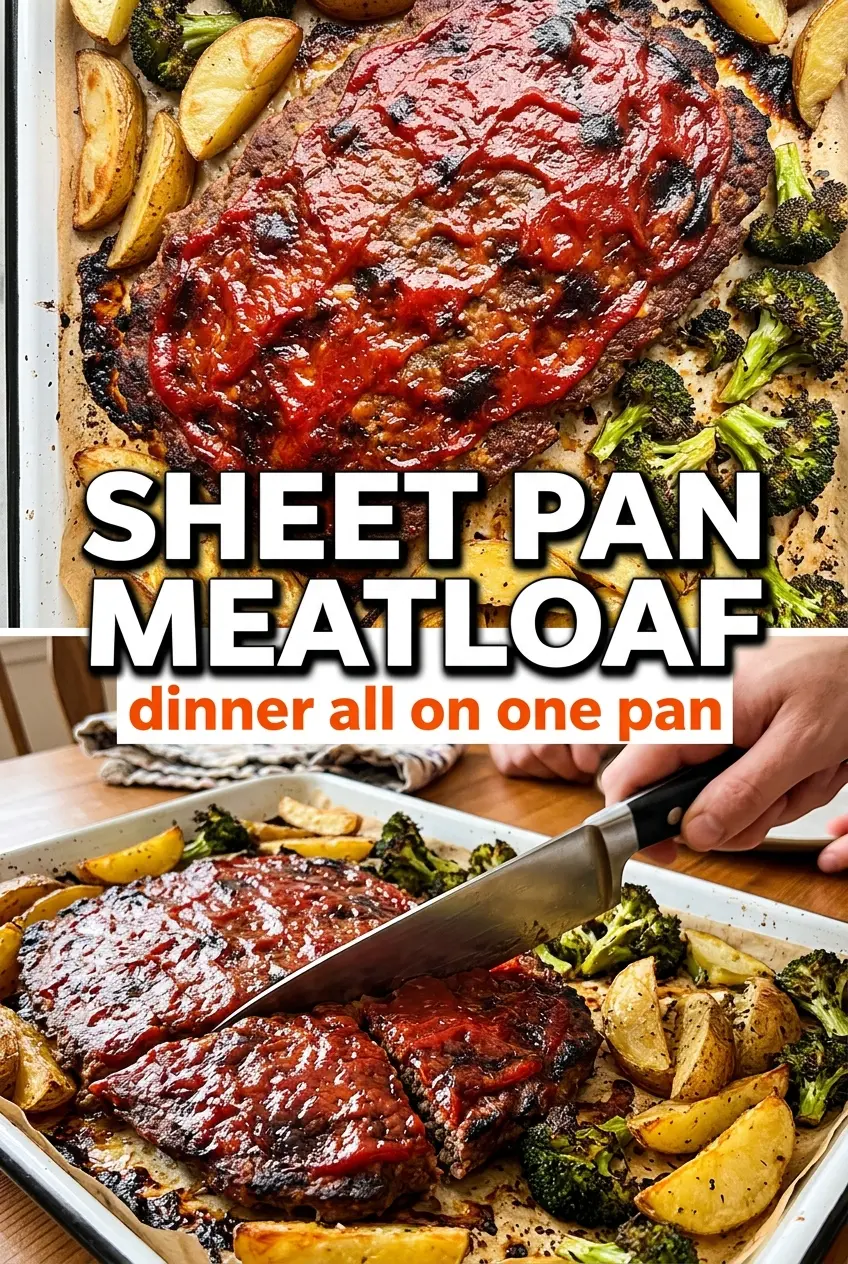
- Press the mixture into a flat rectangle (about 1 inch thick) on one side of the sheet pan so more surface area browns.
- Spread the ketchup glaze (ketchup and brown sugar) over the top of the meatloaf.
- Toss baby potatoes, green beans, large carrots, and olive oil with salt and pepper, then spread them on the other side of the sheet pan.
- Bake at 400°F for 35–40 minutes until the meatloaf reaches 160°F and the vegetables are golden and tender.
- Rest the sheet pan meatloaf for 10 minutes before slicing, using the flat shape to cut faster than a traditional loaf.