Scalloped sweet potatoes turn soft, silky, and deeply savory under a crackly Gruyere-parmesan top, with just enough maple and spice to keep every bite interesting. The sweet potatoes stay tender instead of collapsing into mush, and the cream bakes down into a spoonable sauce that clings to the layers instead of pooling at the bottom of the dish.
What makes this version work is the balance. Thin slices cook evenly, the foil keeps the first stage from drying out, and the cheese goes on late so the top browns instead of disappearing into the cream. A little garlic, thyme, cinnamon, and nutmeg give the dish warmth without pushing it into dessert territory. The maple syrup is subtle, but it rounds out the sharpness of the cheese and brings out the natural sweetness of the potatoes.
Below you’ll find the layering trick that keeps the slices tender all the way through, plus the one resting step that keeps the sauce from running everywhere when you serve it.
The potatoes baked up perfectly tender, and the maple-garlic cream actually stayed between the layers instead of turning watery. The Gruyere crust was the best part.
Save these scalloped sweet potatoes for the nights when you want a golden, cheesy side with soft layers and caramelized edges.
The Layering Trick That Keeps the Cream from Going Thin
The biggest mistake with scalloped sweet potatoes is treating them like a casserole that can just be stirred together and baked. The slices need to overlap in tight rows so the cream has somewhere to settle, and the potatoes can steam and soften evenly before the top browns. If the slices are cut too thick, the center stays firm while the edges overcook, and no amount of extra sauce fixes that. Use a sharp knife or mandoline and keep the slices close to 1/8 inch thick.
The other thing that matters is the two-stage bake. Covered baking gives the sweet potatoes time to turn tender without drying out the cream. Once the foil comes off, the top can brown and the sauce reduces a little more, which is what gives you that glossy finish instead of a soupy pan.
What Each Ingredient Is Actually Doing in This Dish
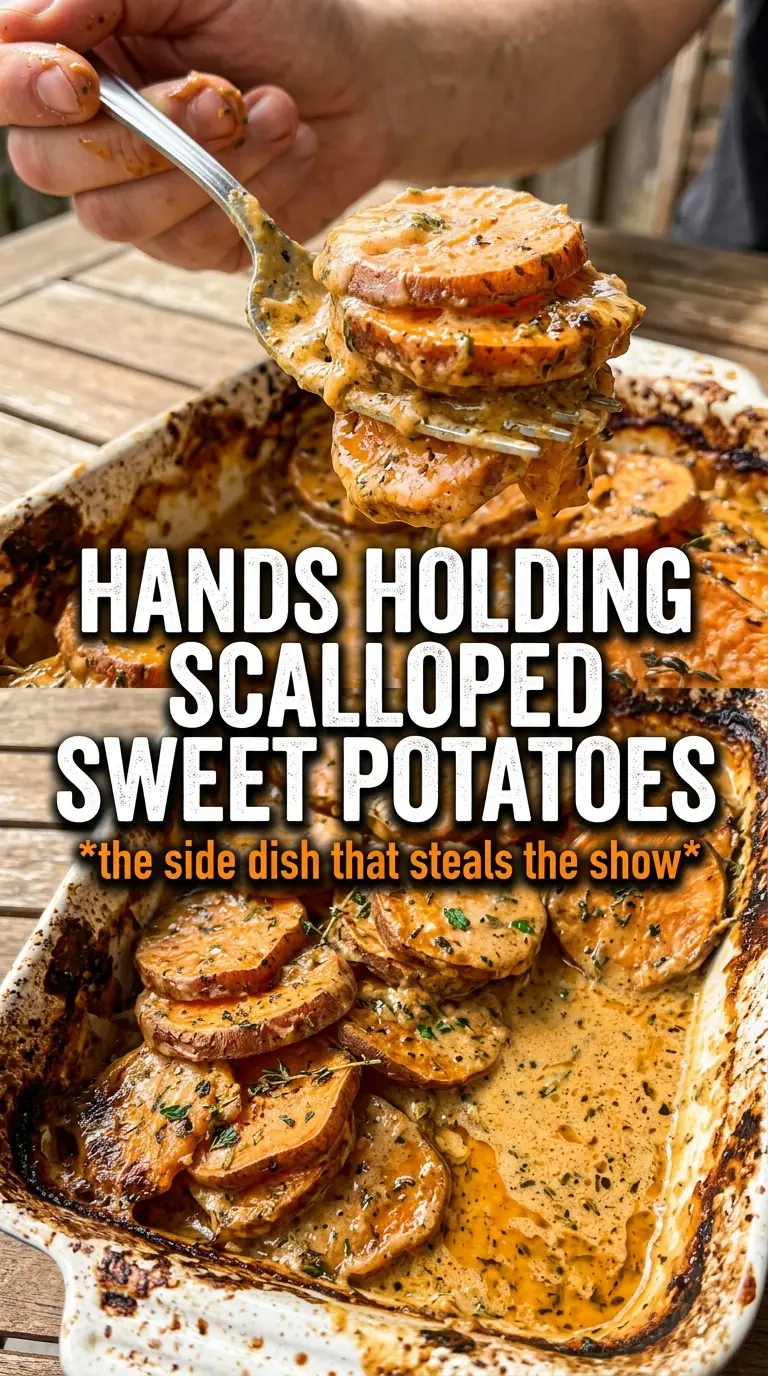
- Sweet potatoes — These are the body of the dish, so choose firm potatoes without soft spots. Orange-fleshed sweet potatoes give the best soft texture and natural sweetness; Japanese sweet potatoes stay a little drier and less silky here.
- Heavy cream and whole milk — Cream gives the sauce richness, while milk keeps it from feeling heavy. Don’t replace both with low-fat dairy unless you’re willing to lose the velvety texture that makes the layers spoon-tender.
- Gruyere — This is the cheese that gives you a nutty, almost savory finish. It melts smoothly and browns beautifully, which is why it’s worth using instead of a random pre-shredded blend.
- Parmesan — Parmesan sharpens the top layer and helps it bake into a better crust. Freshly grated works best because it melts and browns more cleanly than the sandy shelf-stable kind.
- Maple syrup, thyme, cinnamon, and nutmeg — These seasonings keep the dish balanced. The maple boosts the potatoes’ natural sweetness, thyme pulls the dish back toward savory, and the spices add warmth without making it taste like a dessert casserole.
- Garlic — Raw garlic in the cream infuses the whole dish as it bakes. Mince it finely so it disperses through the sauce instead of landing in sharp little pockets.
Building the Bake So the Top Browns and the Center Stays Tender
Whisk the cream mixture until it tastes seasoned
Combine the cream, milk, garlic, maple syrup, thyme, cinnamon, nutmeg, salt, and pepper in a bowl before anything touches the dish. This matters because the seasoning needs to be evenly distributed from the start, and garlic clumps or uneven spice pockets are hard to fix once the potatoes are layered. The mixture should taste a touch bold on its own; the potatoes will mute it as they bake.
Layer the slices tightly in overlapping rows
Butter the baking dish well, then lay the sweet potato slices in neat overlapping rows. Tight layers help the cream flow between the slices and keep the casserole from drying out at the edges. If you scatter the slices loosely, the top browns before the center has a chance to soften.
Cover first, then uncover for the finish
Pour the cream mixture over the potatoes evenly, cover the dish tightly with foil, and bake until the slices are almost tender. The foil traps steam, which is what finishes the inside without scorching the top. When you uncover the dish and add the cheeses, the exposed surface can finally turn golden and bubbly while the sauce reduces into something richer.
Let it rest before scooping
Pull the dish from the oven when the potatoes are completely tender and the top is browned, then give it a 10-minute rest. That pause lets the cream settle and thicken slightly, so the servings hold together instead of sliding apart. If you cut in too soon, the sauce will look looser than it really is.
Make It Dairy-Free Without Losing the Creamy Feel
Use full-fat coconut milk in place of the cream and milk, but expect a subtle coconut note and a softer set. Skip the Gruyere and parmesan and finish with a dairy-free cheese that melts well, or the top will stay pale and less cohesive.
Swap in Yukon Gold Potatoes for a More Savory Side
Yukon Golds give you a less sweet, more buttery dish with a firmer bite. The bake time stays close to the same, but you lose some of the maple-forward character that makes the sweet potato version stand out.
Gluten-Free by Default
This dish is naturally gluten-free as written, which is one less thing to worry about. Just check that your cheese and maple syrup are packaged without additives if you’re cooking for someone with a strict allergy.
How to Make It Ahead for a Holiday Table
Assemble the dish up to the point of baking, cover it tightly, and refrigerate it for up to a day. Let it sit at room temperature for 20 to 30 minutes before it goes into the oven, or the center will take longer to cook and the edges may overbrown before the middle softens.
Storage and Reheating
- Refrigerator: Store covered for up to 4 days. The sauce will thicken as it chills, and the top will soften a bit.
- Freezer: It freezes, but the dairy can separate a little after thawing. Freeze in portions once cooled, then thaw overnight in the refrigerator.
- Reheating: Reheat covered in a 350F oven until hot in the center, then uncover for the last few minutes to bring back the top. Microwaving works in a pinch, but it softens the texture and won’t revive the crust.
Questions I Get Asked About This Recipe
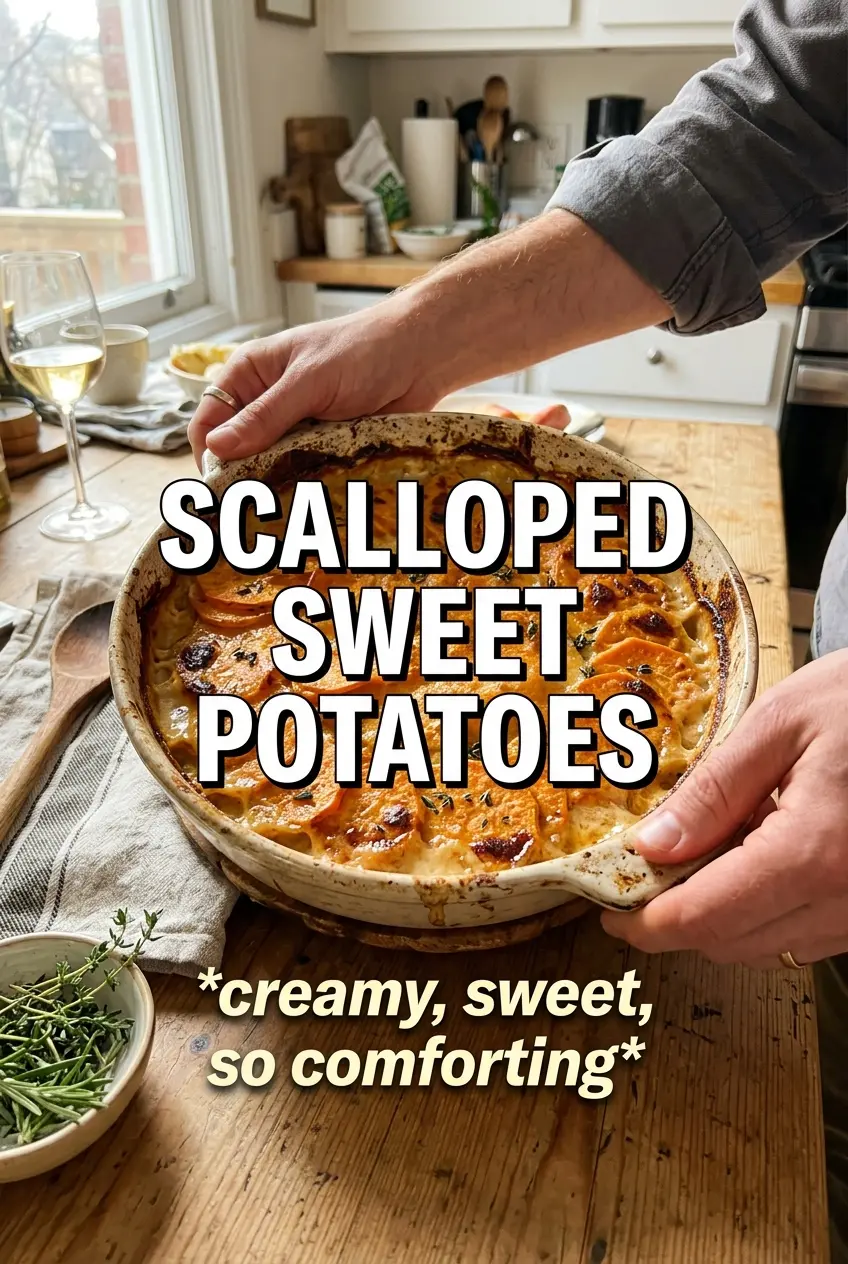
Scalloped Sweet Potatoes
Ingredients
Equipment
Method
- Preheat oven to 375°F and butter a 9x13 baking dish.
- In a bowl, whisk heavy cream, whole milk, garlic, maple syrup, fresh thyme, cinnamon, nutmeg, salt, and pepper until smooth.
- Layer sweet potato slices in overlapping rows in the buttered baking dish, then pour the cream mixture over evenly.
- Cover tightly with foil and bake for 40 minutes.
- Uncover and scatter Gruyere and parmesan over the top.
- Bake 20-25 more minutes until sweet potatoes are completely tender and the topping is golden and bubbly.
- Rest for 10 minutes before serving to help the layers set and the sauce thicken slightly.