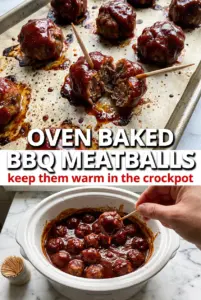
Sticky, smoky BBQ meatballs are one of those dishes that disappear fast because they hit every note people want at the table: browned edges, tender centers, and a glaze that clings instead of sliding off. Baking them on a sheet pan keeps the shape clean and gives you enough surface area for real caramelization, which is what turns a basic meatball into something worth repeating.
The trick is keeping the meat mixture loose and the glaze balanced. Breadcrumbs and milk keep the beef tender, while Worcestershire, smoked paprika, and garlic build depth before the sauce even goes on. The second bake matters just as much as the first because that’s where the BBQ glaze thickens, darkens, and gets sticky around the edges.
Below, I’ve included the small details that keep these from turning dense or dry, plus a few ways to adapt them for parties, meal prep, or a lighter version of the same recipe.
The glaze caramelized on the tray just like you said, and the meatballs stayed juicy all the way through. I served them with toothpicks for a party and the pan was wiped clean in minutes.
Like sticky oven baked BBQ meatballs? Save this recipe for the next game day, potluck, or easy dinner that needs a sweet-smoky finish.
The Part That Keeps BBQ Meatballs Tender Instead of Dense
Ground beef meatballs get tough when they’re mixed like bread dough. You only need to combine the ingredients until the breadcrumbs disappear and the seasonings are evenly distributed. Overworking the mixture packs the meat, and that’s what gives you a tight, springy texture instead of a soft bite.
Baking them on parchment helps in two ways: it keeps cleanup easy, and it lets the bottoms brown without sticking before the glaze goes on. The first bake sets the shape and cooks the meat through. The second bake, after brushing on the sauce, is what gives you that sticky lacquered finish instead of a thin coat that runs off the pan.
What Each Ingredient Is Doing Before the Glaze Ever Hits
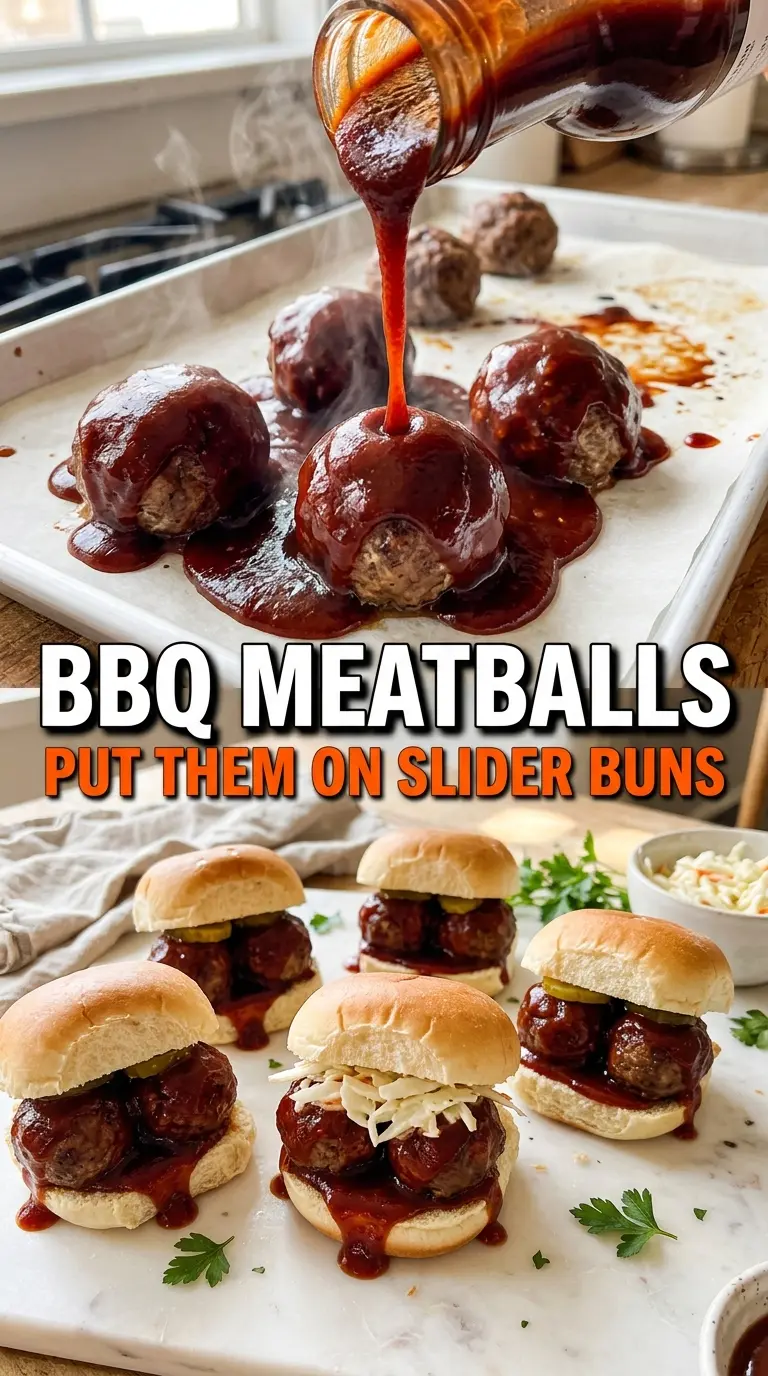
- Ground beef — A 80/20 blend gives you enough fat for juicy meatballs and enough structure to hold together. Leaner beef works, but the texture lands drier and less forgiving once the glaze goes back in the oven.
- Breadcrumbs and milk — This panade keeps the meatballs tender and helps the mixture hold moisture while baking. If you skip the milk, the crumbs won’t soften the same way and the centers can turn bouncy.
- Eggs — They bind the mixture without making it cakey. Two eggs are enough for 2 pounds of beef; more than that and the texture starts to feel heavy.
- Worcestershire, garlic, smoked paprika, and onion powder — These build savory depth so the meatballs taste seasoned all the way through, not just sauced on the outside. Smoked paprika matters here because it echoes the BBQ glaze and reinforces that grilled, smoky note.
- BBQ sauce, honey, and apple cider vinegar — The sauce brings body, the honey helps it caramelize, and the vinegar keeps the glaze from tasting flat or cloying. If your BBQ sauce is already very sweet, pull the honey back a little so the finish stays balanced.
Getting the Glaze to Stick and Caramelize in the Last Five Minutes
Mixing the Meat Without Packing It Down
Use your hands and stop as soon as the mixture looks even. The breadcrumbs should disappear into the beef, but the mixture should still feel soft, not paste-like. If it seems sticky, that’s normal; chilling isn’t necessary here as long as you roll them right away. The biggest mistake is squeezing the mixture into a tight mass, which leaves you with dense meatballs that bounce instead of bite.
Rolling and Baking for Even Browning
Shape the meatballs into 1.5-inch rounds and space them apart on the pan so the hot air can circulate around each one. Crowding traps steam, and steam is the enemy of browning. After 15 minutes, they should look set on the outside with browned bottoms and no pink raw spots showing through the cracks. If they’re all the same size, they’ll finish at the same time and the glaze can go on in one even layer.
Brushing on the BBQ Glaze
Stir the glaze until the honey disappears completely, then brush it over the tops and sides of each meatball. Don’t pour it all over the pan or the sauce will pool and burn before it has a chance to caramelize. The meatballs should go back into the oven just long enough for the glaze to look glossy, darker at the edges, and a little tacky when touched with a spoon.
Knowing When They’re Done
The safest cue is internal temperature, but the visual cue matters too: the glaze should look sticky and the meatballs should spring back lightly when pressed. If the sauce starts to scorch, the oven is too hot or the pan is too high up in the oven. Pull them once the glaze has thickened; the meatballs will stay juicy if you don’t leave them in long enough to dry out.
Three Ways to Make These Oven Baked BBQ Meatballs Work for Different Tables
Dairy-Free Version
Swap the whole milk for unsweetened dairy-free milk or even water in a pinch. You’ll lose a little richness, but the breadcrumbs still hydrate and the meatballs still stay tender. This is the easiest dietary swap because the glaze and seasoning already carry most of the flavor.
Gluten-Free Meatballs
Use certified gluten-free breadcrumbs and a gluten-free Worcestershire sauce. The texture stays close to the original as long as you don’t overmix, and the glaze doesn’t need any changes. This version works best when the crumbs are fine, not large and flaky.
Turkey Meatballs
Ground turkey makes a lighter version, but it needs the full amount of breadcrumbs and milk to keep it from drying out. I’d also keep the glaze generous, because turkey has a milder flavor and needs the smoky-sweet coating more than beef does.
Make Them Party-Size Small
Roll the mixture into 1-inch meatballs for appetizers and reduce the first bake a few minutes so they don’t overcook. Smaller meatballs get more glaze coverage and a higher ratio of sticky edges, which is exactly what you want for toothpick servings.
Storage and Reheating
- Refrigerator: Store in an airtight container for up to 4 days. The glaze will thicken and set as it chills.
- Freezer: These freeze well. Freeze the baked meatballs in a single layer, then transfer to a bag or container. For best results, freeze them before adding the final glaze if you want the finish to stay glossy.
- Reheating: Warm in a 325°F oven, covered loosely with foil, until heated through. If you microwave them, the glaze can split and the edges go rubbery, so the oven is the better choice for keeping the texture intact.
Questions I Get Asked About This Recipe
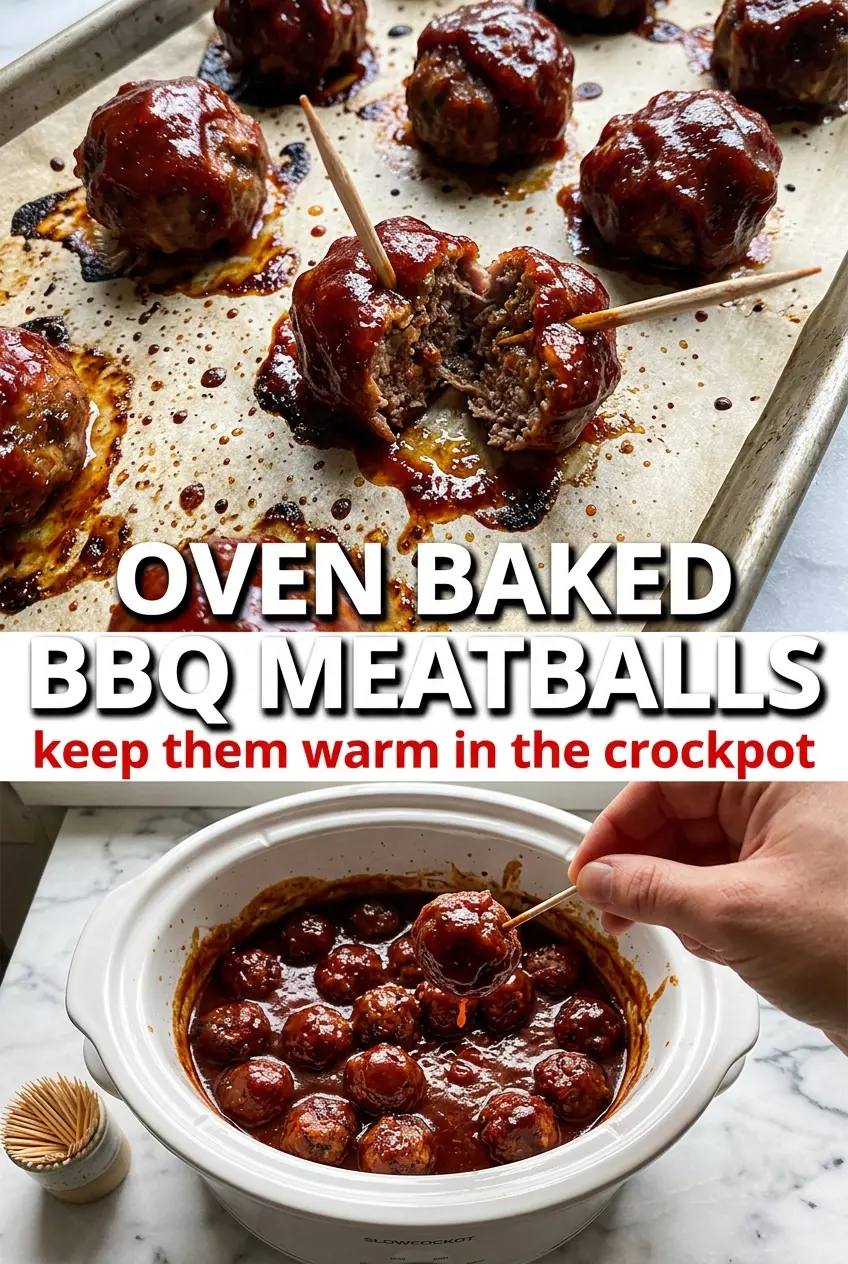
Oven Baked BBQ Meatballs
Ingredients
Equipment
Method
- Preheat the oven to 400°F and line a baking sheet with parchment.
- Move the pan into position so the meatballs can go in right after shaping.
- Combine ground beef, breadcrumbs, eggs, whole milk, minced garlic, Worcestershire sauce, smoked paprika, onion powder, salt, and pepper until just mixed.
- Roll the mixture into 1.5-inch balls and place them on the baking sheet with space between each one.
- Bake the meatballs for 15 minutes until browned and cooked through.
- Mix the BBQ glaze ingredients (BBQ sauce, honey, apple cider vinegar, and smoked paprika) until smooth.
- Brush generously with BBQ glaze over each meatball, making sure the surface is well coated.
- Return to the oven and bake 5 more minutes at 400°F until the glaze caramelizes and looks shiny on top.
- Serve immediately with extra BBQ sauce for dipping.
- Garnish with sesame seeds and green onions and serve hot.