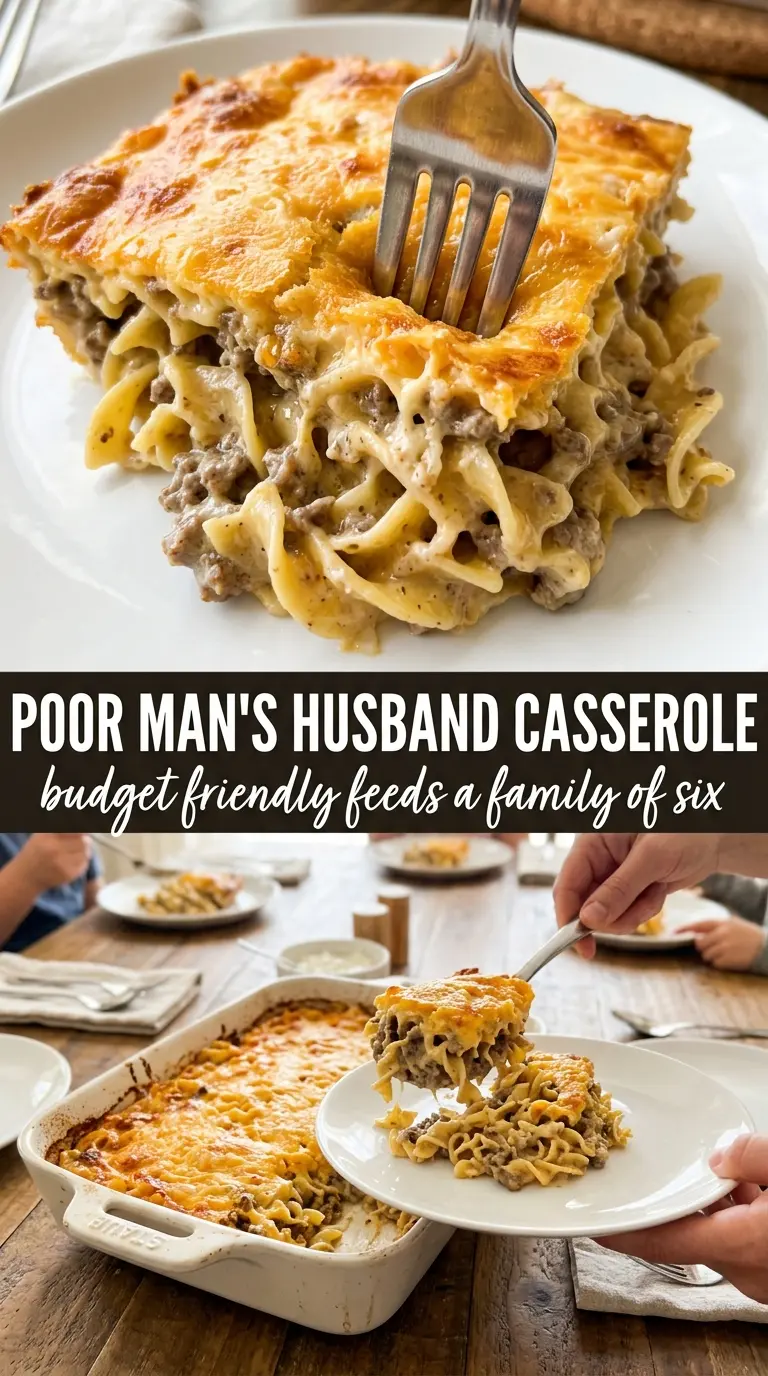
Poor Man’s Husband Casserole bakes up into the kind of dinner that gets scraped clean fast: saucy, creamy, cheesy, and sturdy enough to hold its shape when you scoop it. The noodles stay tender under a layer of seasoned beef and tomato sauce, and the cream cheese mixture melts into the middle like a built-in shortcut to comfort. It tastes like a full dinner without asking much from you or your grocery budget.
What makes this version work is the balance. The beef sauce needs to be thick, not watery, so it sits on top of the noodles instead of soaking everything into a soggy mess. The cream cheese and sour cream layer gets mixed smooth before it goes in, which keeps the middle from breaking into clumps after baking. A short rest at the end matters too, because it lets the casserole settle and slice better.
Below you’ll find the little details that keep the layers distinct, plus a few smart swaps for when you need to stretch the dish or use what you’ve got on hand.
The creamy layer stayed smooth and the casserole held together perfectly after resting for 5 minutes. My husband went back for seconds and asked if I could put this in the regular rotation.
Love a creamy noodle bake? Save this Poor Man’s Husband Casserole for the nights when you need a budget-friendly dinner with a golden cheese top and a cozy middle.
Why the Noodle Layer Needs to Stay Dry Enough to Hold
The biggest mistake in a casserole like this is treating it like a pasta bake that wants extra moisture. It doesn’t. The noodles already soften as they bake, and the beef sauce adds plenty of liquid on top, so the pasta needs to be cooked just to al dente and drained well. If the noodles are overcooked at the start, they turn soft and heavy by the time the casserole comes out of the oven.
The other thing that matters is thickness. Once the marinara goes into the browned beef, let it simmer long enough to lose that raw, loose texture. You want the sauce to mound on a spoon, not run across the pan. That keeps the layers visible and gives you those neat scoops instead of a slippery casserole that falls apart on the plate.
What Each Layer Is Doing in This Casserole
The ground beef carries the savory base. I use enough onion and garlic to keep it from tasting flat, but the marinara still does most of the heavy lifting, so a decent jar matters more here than a fancy one. If your sauce is thin, simmer it a few minutes longer before assembling.
Cream cheese and sour cream make the middle layer rich and tangy. Softened cream cheese mixes smoothly; cold cream cheese leaves little lumps that don’t fully melt out in the oven. Green onions add a mild bite that cuts through the richness, and mozzarella gives you the stretch and browned top that makes this casserole feel finished.
- Ground beef — Use 80/20 or 85/15 for the best flavor. If you use leaner beef, keep a little of the fat or the casserole can taste dry after baking.
- Cream cheese — This is what gives the casserole its creamy center. Soften it fully before mixing, or you’ll be fighting lumps the whole time.
- Sour cream — It loosens the cream cheese just enough to spread cleanly and adds a gentle tang that keeps the dish from tasting heavy.
- Mozzarella — Shredded mozzarella melts into that classic bubbling top. Pre-shredded works fine, but freshly shredded melts a little smoother.
- Spaghetti — Cook it just until tender, then drain it well. It finishes in the oven, so starting with soft pasta is what leads to mush.
Building the Layers So the Casserole Slices Cleanly
Brown the Beef Until the Pan Sounds Dry
Cook the beef and onion over medium heat until the meat is no longer pink and the onion has softened. If the pan looks greasy, drain off the excess fat before adding the garlic and seasoning. That step matters because too much fat on the bottom keeps the casserole from setting well and can make the noodles slide around when you serve it.
Mix the Cream Layer Until It Spreads Like Frosting
Stir the softened cream cheese, sour cream, and green onions until the mixture is completely smooth. You want it spreadable, not stiff. If it fights the spoon, the cream cheese wasn’t soft enough yet, and you’ll end up tearing the noodles when you try to layer it.
Assemble in the Right Order
Spread the noodles across the bottom of the greased dish first, then layer the cream mixture over them, then spoon the beef sauce on top. That order keeps the creamy layer tucked in the middle where it can melt without disappearing. Finish with mozzarella all the way to the edges so the top browns evenly instead of leaving bare spots that dry out.
Let It Rest Before You Scoop
When the casserole comes out, the center will still be bubbling. Leave it alone for 5 minutes. That short rest lets the cheese settle and the layers tighten up, which is the difference between a neat scoop and a casserole that runs all over the plate.
How to Stretch It, Lighten It, or Make It Work With What’s in the Fridge
Swap in ground turkey for a lighter bake
Ground turkey works well here if you want a lighter casserole, but it needs help from the seasoning and sauce. Add a little extra salt and let the marinara simmer a minute longer so the turkey doesn’t taste thin or bland.
Use gluten-free pasta without changing the rest
A sturdy gluten-free spaghetti works here as long as you cook it just to tender and drain it well. Some brands soften more during baking, so pull it from the pot a minute early if it already feels fragile.
Make it a little cheaper with cottage cheese
You can replace part or all of the cream cheese with small-curd cottage cheese for a thriftier version. The texture gets looser and a little less rich, so blend it first if you want a smoother middle layer.
Add vegetables without watering it down
Sautéed mushrooms, chopped spinach, or finely diced bell pepper can go into the beef mixture. Cook them first so they lose their extra moisture, or they’ll thin the sauce and make the casserole soft in the middle.
Storage and Reheating
- Refrigerator: Store covered for up to 4 days. The noodles soften a little more each day, but the flavor stays good.
- Freezer: This freezes well in portions. Cool completely, wrap tightly, and freeze for up to 2 months. Thaw overnight in the fridge before reheating.
- Reheating: Reheat covered in a 325°F oven until hot in the center, or warm individual portions in the microwave. Add a spoonful of sauce or a splash of water before reheating if the pasta looks dry, since covered casseroles lose moisture in the fridge.
Answers to the Questions Worth Asking

Poor Man's Husband Casserole
Ingredients
Equipment
Method
- Preheat the oven to 350°F and grease a 9x13 baking dish so the layers release easily.
- Brown the ground beef with the diced onion in a skillet over medium-high heat until the meat is no longer pink, then drain excess fat.
- Stir in the minced garlic, Italian seasoning, salt, and pepper, then cook 30–60 seconds until fragrant.
- Add the marinara sauce, bring to a simmer, and simmer for 5 minutes so the flavors meld.
- Mix the softened cream cheese, sour cream, and sliced green onions until smooth and spreadable.
- Layer the cooked spaghetti into the greased baking dish in an even layer.
- Spread the cream cheese mixture over the noodles to create a creamy layer.
- Top with the beef and marinara sauce, spreading it to cover the cream cheese.
- Scatter the shredded mozzarella cheese over the top for a browned crust.
- Bake uncovered at 350°F for 35–40 minutes until bubbly and golden on top.
- Let the casserole rest for 5 minutes before serving so the layers set.