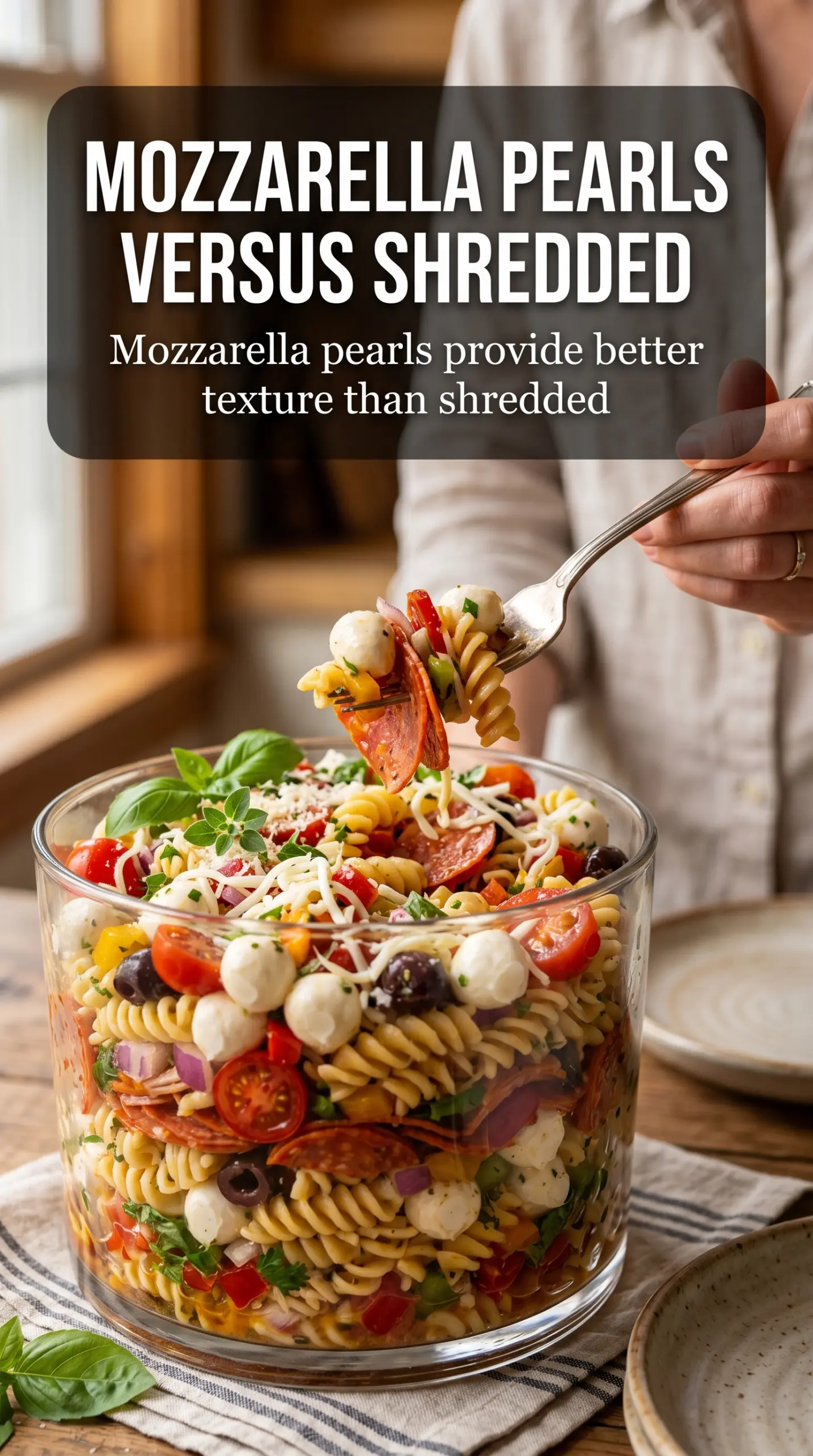
Pasta salad meets pizza in the best possible way here: cold, chewy rotini carrying pepperoni, mozzarella, peppers, olives, and a punchy Italian dressing in every bite. It tastes like the bowl that disappears first at a cookout, but it’s built with enough structure that it still eats like a real side dish, not a soggy afterthought.
The trick is keeping the pasta firm and rinsing it cold so it stops cooking right away. That keeps the dressing from turning muddy and gives the salad time to chill without collapsing into softness. The second piece that matters is layering in enough seasoning to echo pizza flavor without drowning the cheese and vegetables.
Below, I’ve included the little details that keep this salad crisp, the best way to make it ahead, and a few swaps that still keep the pizza vibe intact.
The pasta stayed springy after chilling, and the pepperoni and mozzarella made it taste like a pizza shop pasta salad. I made it the night before, and it tossed up perfectly before serving.
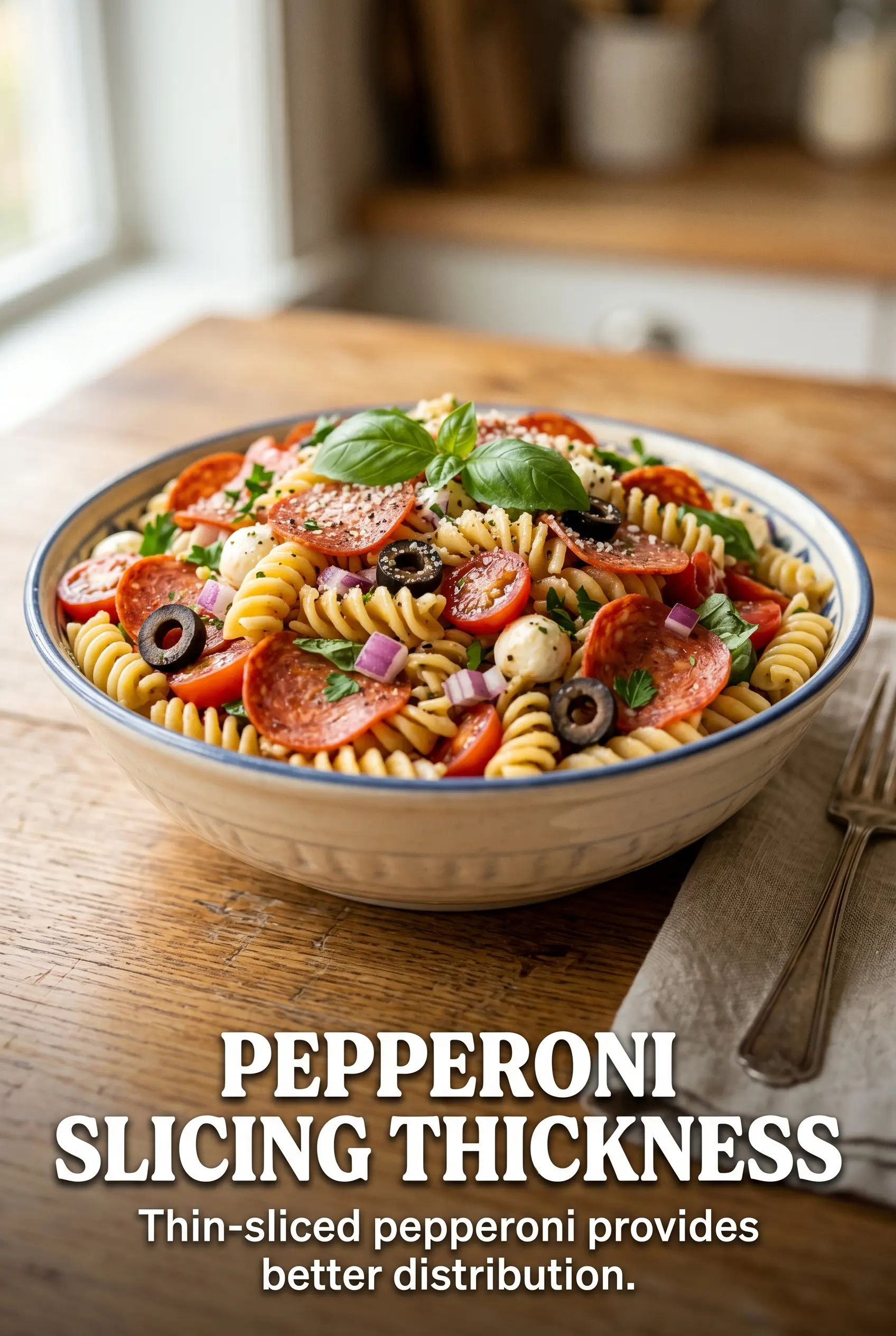
Pizza Pasta Salad brings pepperoni, mozzarella, and Italian dressing together in one chilled bowl that tastes like a slice and a side dish at the same time.
The Part That Keeps This Pizza Pasta Salad from Going Soft
The biggest mistake with a pasta salad like this is letting the noodles stay warm when the dressing goes in. Warm pasta drinks up the dressing fast, and what should taste bright and coated ends up heavy and flat by the time it hits the table. Rinsing the rotini under cold water stops the cooking and helps the pasta stay pleasantly firm after it chills.
The other thing that matters here is the shape. Rotini catches the dressing, bits of pepperoni, and little pieces of vegetables in the grooves, so every forkful tastes balanced. A smoother pasta works, but it won’t hold onto the pizza-style bits nearly as well.
- Rotini — The spirals trap the dressing and all the chopped toppings. That texture is a big part of why this salad eats like more than plain pasta. If you swap it, choose another short pasta with ridges or curves, like fusilli or shells.
- Pepperoni — Halving the slices makes the flavor spread through the bowl instead of sitting in full rounds. If you use turkey pepperoni, the salad gets a little leaner and less greasy, which some people prefer when it’s being served cold.
- Mozzarella — Cubed mozzarella gives you soft, milky pockets that feel more like pizza than shredded cheese would. Fresh mozzarella is great if it’s well drained, but standard block mozzarella holds its shape better after chilling.
- Italian dressing — This is the fast route to the tangy herb base that makes the whole bowl taste finished. A good bottled dressing works just fine here. If yours is sweet, add a splash of red wine vinegar to sharpen it up.
How to Keep the Dressing Bright After the Chill
- Italian dressing — The dressing does the heavy lifting, but the Parmesan and seasoning keep it from tasting one-note. Add the dressing while the pasta is fully cooled so it coats the noodles instead of sinking straight to the bottom of the bowl.
- Parmesan — This adds the salty, savory edge that makes the salad feel more like pizza than a basic pasta toss. Grated Parmesan blends in best; shredded Parmesan tends to clump in the dressing.
- Italian seasoning and garlic powder — These are the shortcut to a pizza-parlor flavor without needing a separate sauce. Garlic powder matters more than fresh garlic here because it spreads evenly and doesn’t get harsh in the cold dressing.
- Cherry tomatoes, bell pepper, red onion, and olives — These bring the crunch, color, and briny bite that keep each bite interesting. Dice them small enough to mix easily, because oversized pieces can throw off the balance and make the salad feel chopped instead of cohesive.
Building the Bowl So Every Bite Tastes Like Pizza
Cooking and Cooling the Pasta
Cook the rotini just until it’s al dente, then drain it and rinse it under cold water until the steam is gone. You want the pasta chilled all the way through before it meets the dressing, or it will absorb too much and lose that springy bite. If it feels sticky after draining, give it another quick rinse and toss it well to knock off extra starch.
Mixing in the Toppings
Add the pepperoni, mozzarella, tomatoes, bell pepper, olives, and red onion to a large bowl before the dressing goes in. That gives you a chance to see whether the mix looks balanced instead of dumping everything in and hoping for the best. If the onion is sharp, dice it finely so it blends in rather than taking over the bowl.
Seasoning and Tossing
Pour in the Italian dressing, Parmesan, Italian seasoning, and garlic powder, then toss until the pasta looks glossy and evenly coated. The salad should look dressed, not soupy; if there’s a puddle at the bottom, it means the pasta wasn’t cooled enough or the bowl was too small. Taste after tossing, because cold pasta dulls salt and herbs a little, and the final chill can soften the seasoning even more.
Chilling Before Serving
Cover the bowl and refrigerate it for at least 2 hours. That resting time is when the flavors settle into the pasta and the dressing tightens up around everything. Right before serving, toss it again so the dressing at the bottom gets lifted back through the salad and the pepperoni and cheese are evenly distributed.
Three Ways to Make This Work for a Different Table
Make It Gluten-Free Without Losing the Shape
Use a sturdy gluten-free rotini that holds up after chilling, and cook it just to the edge of done so it doesn’t break when tossed. Some gluten-free pasta softens faster than wheat pasta, so chill it promptly and serve it the same day for the best texture.
Swap in Turkey Pepperoni for a Lighter Bowl
Turkey pepperoni keeps the pizza flavor but cuts down on grease, which makes the salad a little cleaner and less oily after chilling. It won’t have the same rich, spicy bite as pork pepperoni, so a little extra Parmesan helps bring the flavor back up.
Turn It into a Vegetarian Pizza Pasta Salad
Skip the pepperoni and add more olives, diced roasted red peppers, or chopped mushrooms for a more savory finish. You’ll lose the smoky cured-meat edge, so lean harder on the Italian seasoning and Parmesan to keep the salad from tasting flat.
Storage and Reheating
- Refrigerator: Store covered for up to 3 days. The pasta will soften a little, but the flavor stays good and the dressing still clings nicely.
- Freezer: I don’t recommend freezing this salad. The mozzarella, tomatoes, and peppers lose their texture after thawing, and the dressing separates.
- Reheating: This salad is meant to be served cold. If it has been sitting in the fridge, let it stand for 10 to 15 minutes, then toss again; serving it straight from the coldest part of the fridge can mute the seasoning.
Answers to the Questions Worth Asking
Pizza Pasta Salad
Ingredients
Equipment
Method
- Cook rotini pasta according to package directions, then drain and rinse with cold water to stop the cooking and cool it down for mixing.
- Halve the pepperoni slices and cube the mozzarella so each bite gets a clear pepperoni-and-cheese hit.
- Halve the cherry tomatoes, dice the green bell pepper and red onion, and slice the black olives for even distribution in every scoop.
- Combine rotini pasta, pepperoni slices, mozzarella cheese, cherry tomatoes, green bell pepper, black olives, and red onion in a large bowl.
- Add Italian dressing, Parmesan cheese, Italian seasoning, and garlic powder, making sure the seasonings are added on top for even coating.
- Toss everything together until well coated, using steady turning so the dressing clings to the pasta and mozzarella stays distributed.
- Refrigerate the pizza pasta salad for at least 2 hours before serving so the flavors meld and the dressing thickens slightly.
- Toss again and serve chilled for a fresh, evenly coated texture after chilling.