Philly cheesesteak mac brings the best part of a cheesesteak into a skillet of creamy pasta: savory beef, sweet peppers and onions, and a provolone sauce that clings to every bite. It eats like comfort food, but it still has enough structure to feel like a real dinner instead of just a bowl of melted cheese.
What makes this version work is that the pasta cooks right in the broth and milk, so the starch thickens the sauce as it simmers. That means you get a glossy, cohesive finish without needing a separate roux. Browning the beef with the vegetables first also builds flavor early, and the Worcestershire gives the sauce that deeper, steakhouse-style edge that plain cheese sauce usually misses.
Below you’ll find the small details that matter most here: how to keep the sauce creamy instead of dry, when to add the cheese so it melts smoothly, and a few easy swaps if you want to change up the meat or make it a little lighter.
The sauce stayed creamy all the way through and the pasta cooked perfectly in the broth. My husband kept going back for “just one more bowl” because the peppers, onions, and provolone tasted like a real cheesesteak.
Save this Philly cheesesteak mac for the nights when you want one skillet, creamy provolone, and all the cheesesteak flavor without a sandwich roll.
The Step Most Cheesesteak Pastas Skip: Building Flavor Before the Liquid Goes In
The biggest mistake in a dish like this is dumping everything into the pan and hoping the cheese covers for it. It won’t. The beef needs to brown first, and the onions and peppers need enough time in the hot fat to soften and pick up color before the broth and milk go in. That’s where the savory base comes from.
Once the garlic and Worcestershire hit the pan, the mixture should smell deep and meaty, not raw or sharp. If you add the liquid too early, the vegetables steam instead of cooking down, and the finished mac tastes flat. Browned edges and a little fond on the bottom of the skillet are what give this pasta its cheesesteak character.
What Each Ingredient Is Actually Doing in This Recipe
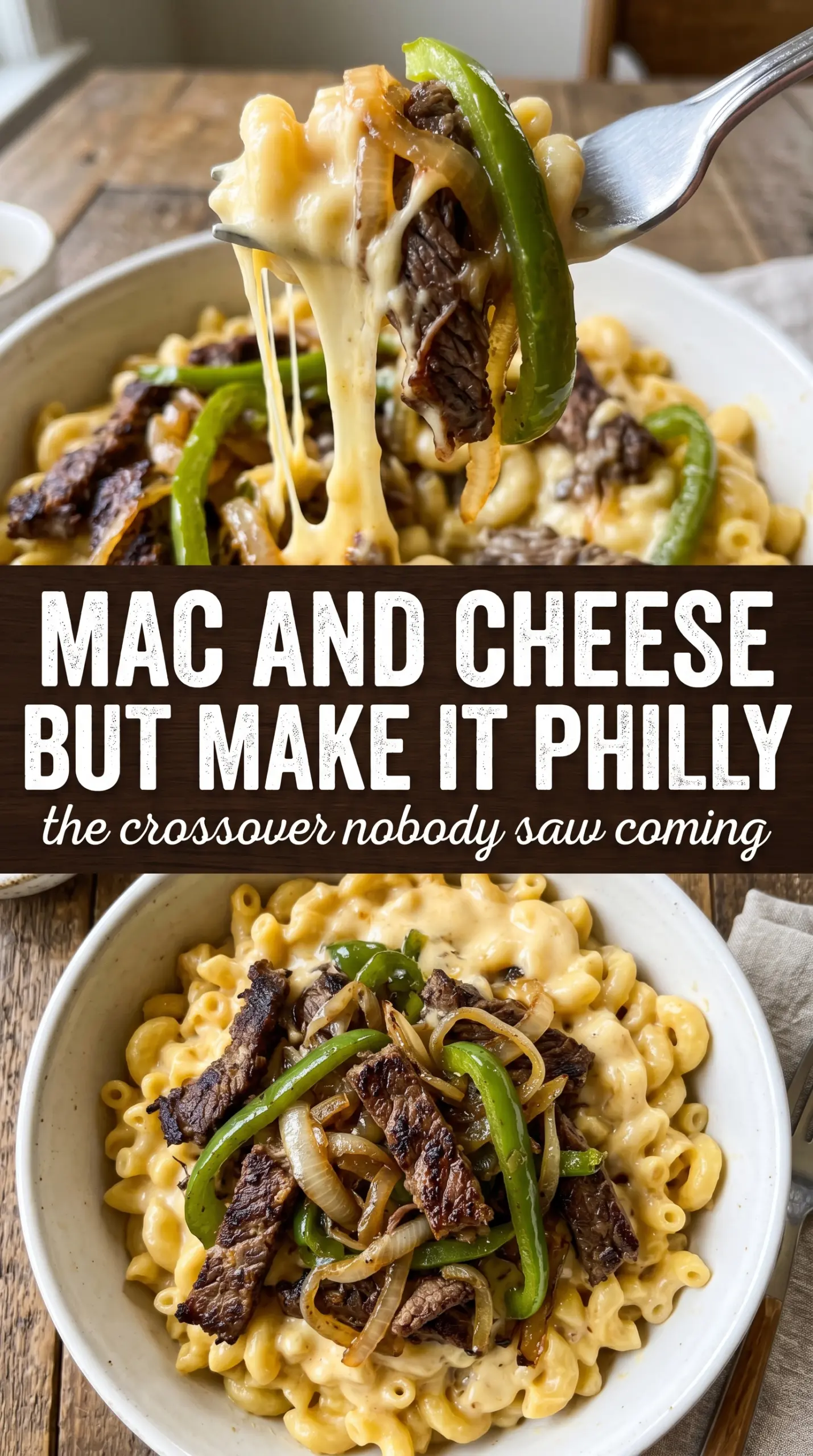
- Primary ingredient (the star) — Quality matters most. Choose the best you can find.
- Cooking medium (oil, butter, or broth) — This carries flavors and prevents dryness.
- Seasonings (salt, pepper, spices, herbs) — Layer flavors so nothing overpowers. Build depth gradually.
- Aromatics (garlic, onion, herbs) — Cook with fat to bloom flavors. Become the foundation.
- Supporting ingredients — Complement the main ingredient without overpowering it.
- Sauce or liquid (if applicable) — Brings flavors together. Balance richness with acid.
- Acid (lemon, vinegar, wine, or other) — Brightens and prevents flat-tasting results.
- Final finish (garnish, glaze, or sauce) — Prevents one-dimensional taste and adds visual appeal.
What the Cheese and Broth Are Doing Here
- Provolone — This is the flavor that makes the dish taste like a cheesesteak instead of generic beef pasta. Tear it into pieces so it melts faster and more evenly. Slices from the deli counter melt better than pre-shredded provolone, which can turn grainy.
- Beef broth — It seasons the pasta from the inside and carries the beefy flavor through the whole skillet. A good boxed broth is fine here. If yours tastes thin, a splash more Worcestershire can help deepen it without making the dish taste salty.
- Whole milk — The fat helps the sauce stay smooth once the provolone melts in. Lower-fat milk works in a pinch, but the sauce won’t feel as plush. Don’t swap in cream unless you want a much heavier finish.
- Elbow macaroni — This shape holds onto the sauce in all the right places and cooks evenly in the skillet. Another short pasta like shells or rotini will work, but long noodles won’t give you the same creamy, scoopable texture.
- Mozzarella — This goes on top for the stretchy finish. It’s not the main flavor here, just the final melt that gives the skillet that comforting, cheesy look when it hits the table.
How to Keep the Pasta Creamy Instead of Drying Out
Brown the Beef and Vegetables Together
Start with the ground beef, diced pepper, and onion in a large skillet over medium-high heat. Let the meat actually brown instead of just turning gray; that color is flavor. The vegetables should soften and lose their raw crunch, and if there’s a lot of fat in the pan, drain it before moving on so the finished sauce doesn’t feel greasy.
Cook the Macaroni Right in the Pan
Once the garlic and Worcestershire go in, add the uncooked macaroni, broth, and milk. Bring the mixture to a boil, then lower the heat and cover it so the pasta simmers evenly. If the heat stays too high, the liquid cooks off before the pasta is tender, and you’ll end up with dry spots and undercooked noodles.
Finish Off the Heat
When the pasta is tender and most of the liquid is absorbed, pull the skillet off the burner before stirring in the provolone. Cheese melts smoothly when the pan is hot, not screaming hot. After the provolone disappears into the sauce, add the mozzarella on top, cover for a minute, and serve while it’s still silky and loose.
How to Adapt This for Different Kitchens and Different Nights
Make It With Ground Turkey
Ground turkey works if you want a lighter skillet, but it needs a little help. Add an extra drizzle of oil at the start and keep the Worcestershire in place so the dish still tastes savory. You lose some beefiness, but the peppers, onions, and provolone carry the rest.
Make It Gluten-Free
Use a gluten-free elbow pasta and check that your Worcestershire sauce is gluten-free, since some brands contain malt vinegar. Keep an eye on the liquid as the pasta cooks, because gluten-free noodles can go from firm to soft faster than regular pasta.
Add Mushrooms for a Meatier-Feeing Skillet
Sliced mushrooms fit right into the cheesesteak idea and deepen the savory flavor. Cook them with the onion and pepper until they give up their moisture and start to brown, or they’ll water down the pan. This version feels earthier and a little richer without changing the structure of the dish.
Storage and Reheating
- Refrigerator: Store in an airtight container for up to 4 days. The pasta will absorb more sauce as it sits, so it firms up a bit.
- Freezer: It freezes, but the cheese sauce loses some of its creaminess after thawing. Freeze in portions if you want to use it anyway, then expect a softer, slightly less silky texture.
- Reheating: Warm gently on the stove or in the microwave with a splash of milk or broth. High heat is the fastest way to make the sauce look broken and the pasta dry.
Questions I Get Asked About This Recipe
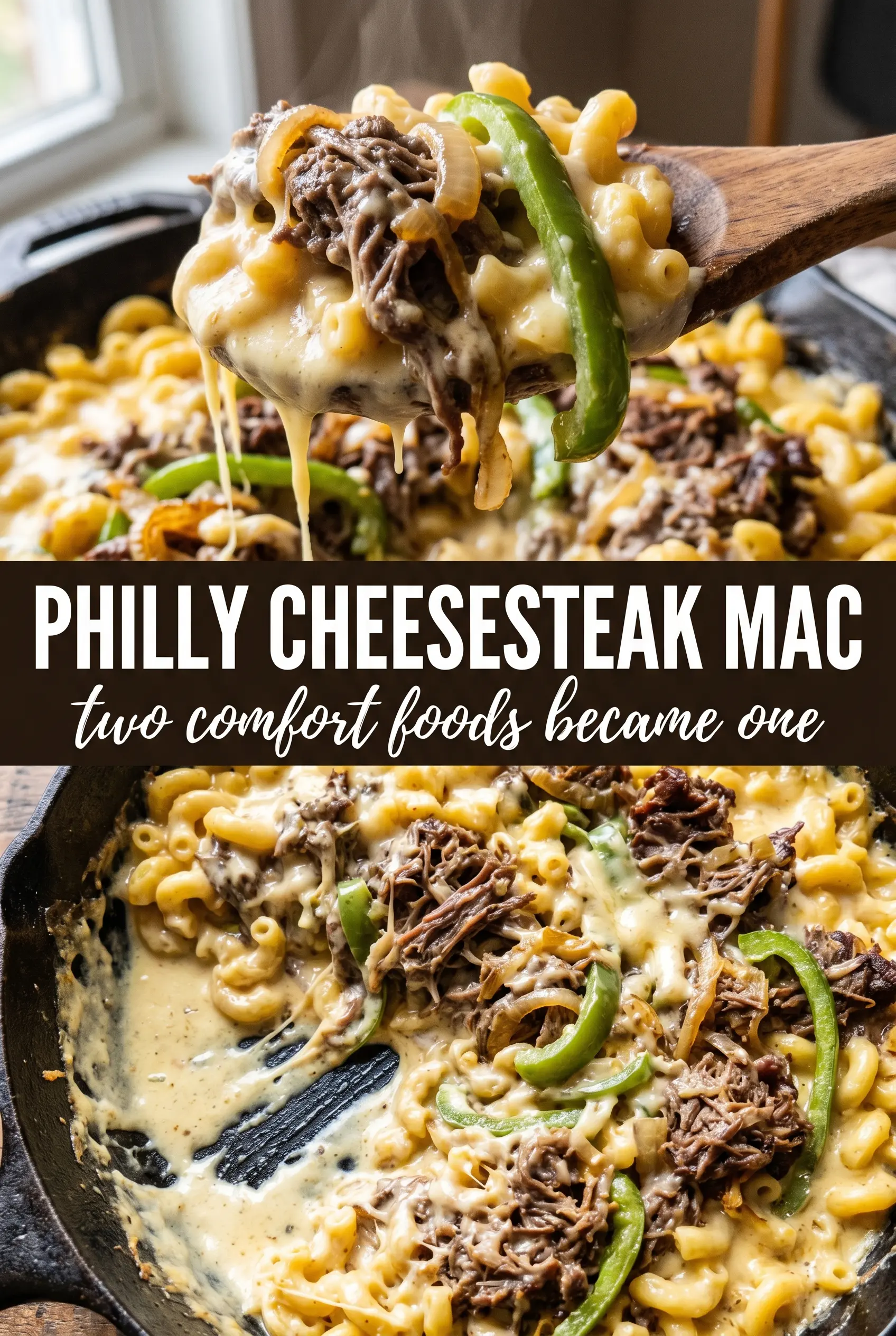
Philly Cheesesteak Mac
Ingredients
Equipment
Method
- Heat a large skillet over medium-high heat and brown the ground beef with diced green bell pepper and diced onion, stirring until browned. Drain excess fat, then add minced garlic, Worcestershire sauce, salt, and pepper and stir until fragrant.
- Add the elbow macaroni, beef broth, and whole milk to the skillet, stirring well so the pasta is evenly coated. Bring everything to a boil, then scrape the bottom to prevent sticking (visual cue: rolling bubbles across the surface).
- Reduce heat to medium, cover the skillet, and cook for 12–14 minutes, stirring once or twice during cooking. Cook until the pasta is tender and the liquid is mostly absorbed (visual cue: thickened, clinging sauce around the pasta).
- Remove from heat and stir in torn provolone cheese until melted and creamy. Keep stirring until the sauce looks smooth and glossy (visual cue: cheese fully incorporated with no dry cheese streaks).
- Top with shredded mozzarella, cover the skillet, and let it sit for 1 minute to melt the cheese. Serve immediately while the mozzarella is melted and pooled (visual cue: shiny cheese layer on top).