Pesto pasta salad tastes best when the pasta is still a little warm and thirsty for the sauce, because that’s when the basil clings instead of sliding off. The result is a bowl of glossy green noodles, sweet tomatoes, creamy mozzarella, and just enough lemon to keep every bite awake. It works as a side dish, but it’s also sturdy enough to stand on its own at lunch.
The trick is balancing temperature and texture. Warm pasta absorbs pesto better than fully cooled pasta, but it still needs a cold rinse so it doesn’t go gummy. From there, the mix-ins matter: cherry tomatoes bring juiciness, mozzarella pearls soften the edges, and toasted pine nuts add the crunch that keeps the salad from feeling one-note. A handful of Parmesan tightens the whole thing up without making it heavy.
Below, I’ve included the small details that make this salad hold up after chilling, plus a few swaps if you need to work with what’s in the fridge. The difference between a good pesto pasta salad and one people keep spooning onto their plates usually comes down to those little choices.
The pesto coated every piece of pasta, and after an hour in the fridge it still tasted bright instead of greasy. The lemon kept it from getting heavy, and the mozzarella pearls were the perfect creamy bite.
Pin this pesto pasta salad for a cold, basil-packed side dish that stays bright after chilling.
The Reason Pesto Pasta Salad Stays Bright After Chilling
The biggest mistake with pesto pasta salad is treating the pesto like a dressing that gets tossed in at the very end. Pesto is thicker than that, and it needs a little warmth from the pasta to spread evenly and cling to the ridges. If you wait until everything is fully cold, the pesto tends to sit in streaks and the salad tastes less cohesive.
Rinsing the pasta after boiling sounds counterintuitive, but it’s the right move here. You want to stop the cooking fast so the pasta stays springy, and you also want to wash away some surface starch so the salad doesn’t turn tacky in the fridge. The hour of chilling gives the basil, Parmesan, and lemon time to settle into the pasta instead of tasting separate.
What Each Ingredient Is Doing in the Bowl
- Fusilli or penne — These shapes hold pesto in all the grooves and corners. Long noodles don’t work as well here because they clump once chilled.
- Basil pesto — This is the backbone of the salad, so use the best one you can get. Homemade gives you the brightest basil flavor, but a good store-bought pesto works fine if it tastes fresh and garlicky, not oily or dull.
- Cherry tomatoes — Halving them matters. The cut side releases a little juice into the salad and balances the richness of the pesto and mozzarella.
- Fresh mozzarella pearls — Their soft, milky texture keeps the salad from feeling dry. If you only have a larger ball of mozzarella, cut it into small cubes so every bite gets some cheese.
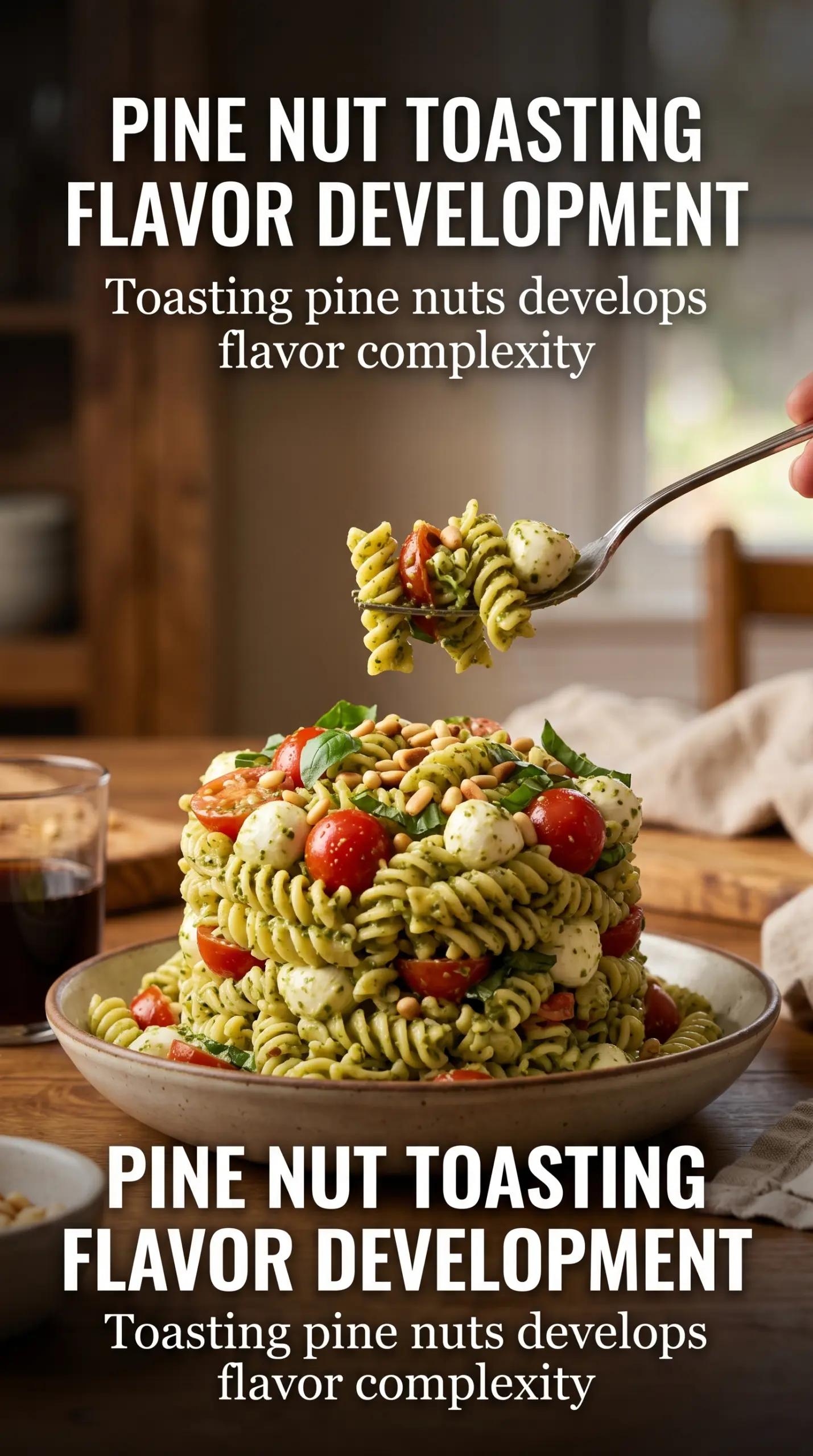
- Pine nuts — Toast them. Untoasted pine nuts can taste flat, but a quick toast brings out a buttery, nutty edge that makes the whole bowl taste more finished.
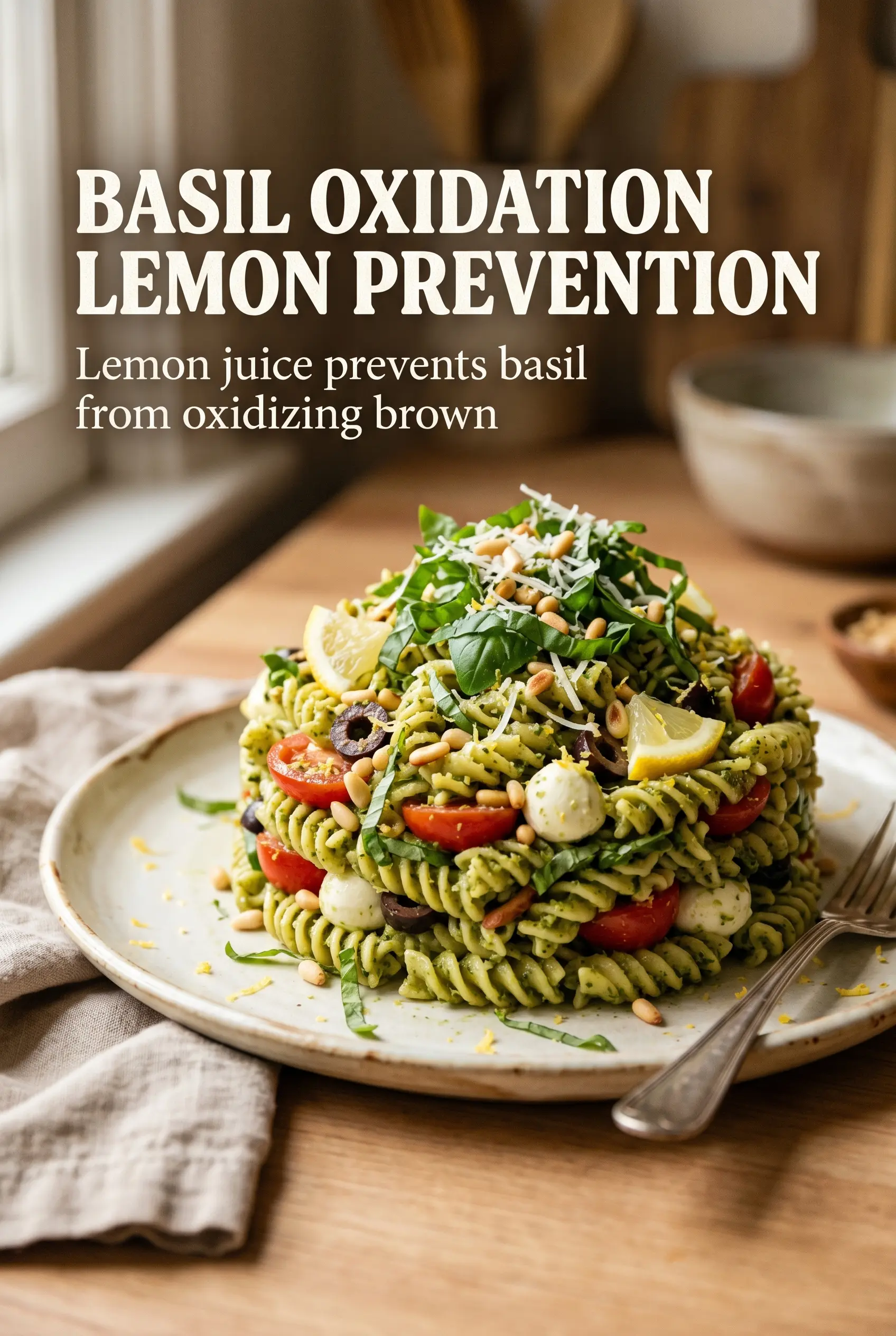
- Lemon juice — It wakes up the pesto and keeps the salad from tasting heavy after chilling. Bottled lemon juice works in a pinch, but fresh is cleaner and brighter.
- Parmesan — This adds salt and a little sharpness. If your pesto is already heavily salted, go lighter here and adjust at the end.
Building the Salad So the Pesto Clings, Not Clumps
Cook the Pasta Just Past Al Dente
Boil the pasta until it’s just tender with a firm bite in the center, then drain it and rinse it under cold water right away. That rinse stops the cooking and keeps the salad from turning sticky later. Drain it well after rinsing; extra water in the bowl will thin the pesto and leave you with pale, slippery pasta instead of a coated salad.
Toss the Pesto Into the Warm Pasta First
Put the pasta in a large bowl while it’s still slightly warm and add the pesto before anything else. Stir until every piece is coated and glossy. This is the moment that decides whether the salad tastes evenly seasoned or patchy, because the warm pasta helps the pesto spread into the ridges instead of sitting in green lumps.
Add the Fresh Ingredients Gently
Fold in the tomatoes, mozzarella pearls, pine nuts, Parmesan, and lemon juice after the pasta is coated. Use a light hand so the tomatoes don’t crush and stain the whole bowl pink. Season with salt and pepper at the end, because pesto and Parmesan already bring salt; if you season too early, it’s easy to overshoot.
Chill Before Serving
Let the salad rest in the refrigerator for at least an hour. That rest time is when the flavor comes together, and it also helps the pesto settle into the pasta. If it looks a little dry after chilling, add a spoonful of pesto or a drizzle of olive oil and toss again before serving.
How to Adapt This Bowl for Different Fridges and Different Crowds
Dairy-Free Version
Use a dairy-free pesto and skip the Parmesan and mozzarella, or replace them with a plant-based cheese you actually like eating cold. The salad will still be bright and herb-forward, but it’ll lean a little lighter and less creamy.
Gluten-Free Pasta Swap
Use a sturdy gluten-free fusilli or penne and cook it just to tender, not past it. Gluten-free pasta can go mushy fast once it sits, so rinse it well and toss it with the pesto as soon as it drains.
No Pine Nuts?
Use toasted slivered almonds or chopped walnuts. Almonds give a mild crunch, while walnuts bring a deeper, earthier note that plays nicely with basil.
Storage and Reheating
- Refrigerator: Keep covered for up to 3 days. The pasta absorbs a little pesto as it sits, so the salad may look thicker on day two.
- Freezer: I don’t recommend freezing this one. The tomatoes, mozzarella, and pesto all suffer after thawing, and the texture turns watery and dull.
- Reheating: This salad is meant to be served cold or at room temperature. If it’s been in the fridge, let it sit out for 15 to 20 minutes before serving and stir in a spoonful of pesto if it needs freshening up.
Answers to the Questions Worth Asking
Pesto Pasta Salad
Ingredients
Equipment
Method
- Cook fusilli or penne pasta according to the package directions until al dente, then drain.
- Rinse the drained pasta with cold water to cool it quickly and stop further cooking, then drain well.
- Toast pine nuts on a sheet pan at 350°F (175°C) for 5-7 minutes, stirring once, until fragrant and lightly golden.
- In a large bowl, toss the warm pasta with basil pesto until every piece looks evenly coated in green pesto.
- Add cherry tomatoes, mozzarella pearls, toasted pine nuts, Parmesan, and lemon juice, then toss gently to combine.
- Season with salt and pepper to taste, then toss gently again so the pesto and cheese distribute without breaking the pasta.
- Refrigerate the pesto pasta salad for at least 1 hour so the flavors develop and the tomatoes release their juices.
- Just before serving, garnish with fresh basil leaves for a bright, fresh finish.