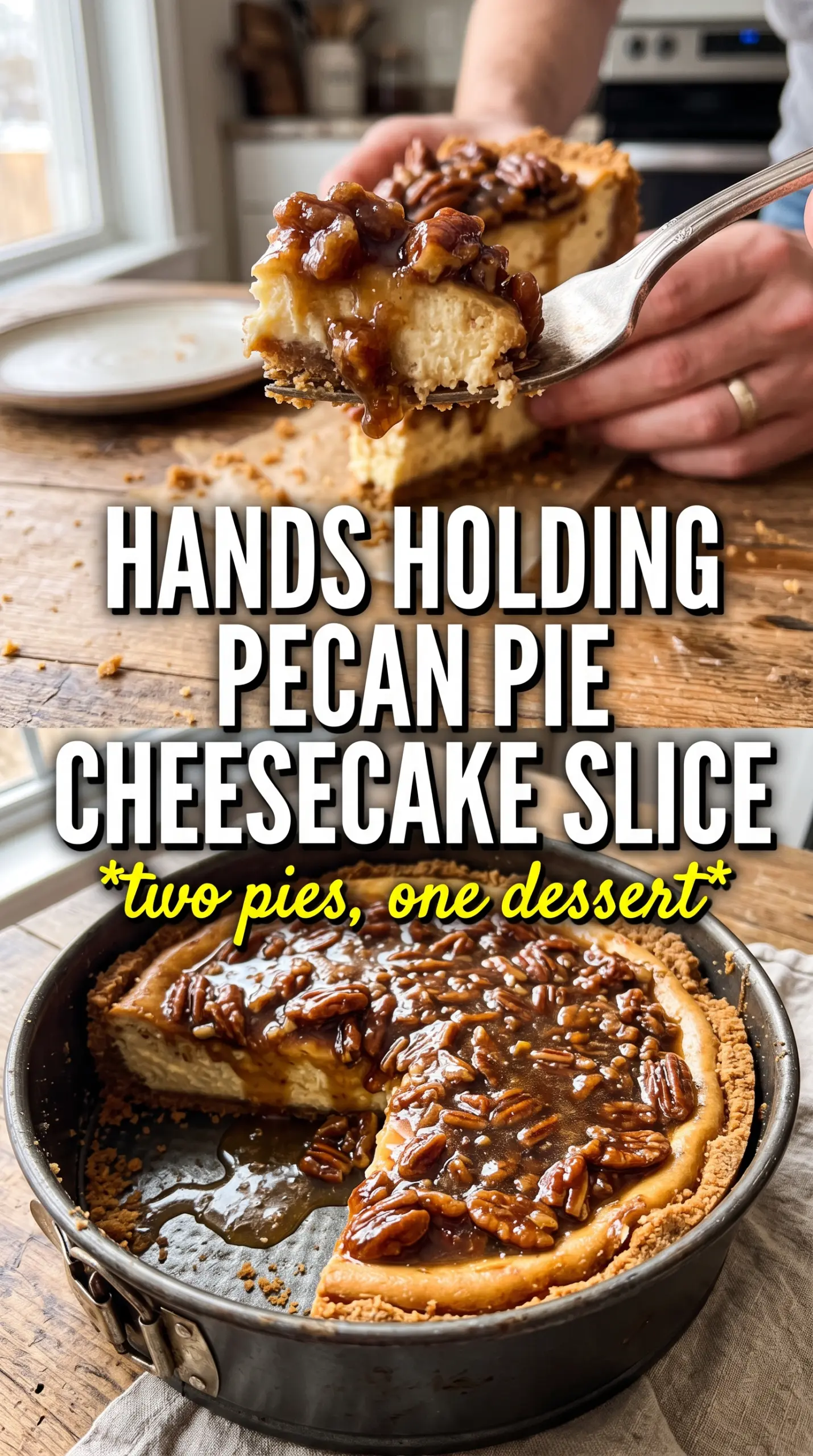
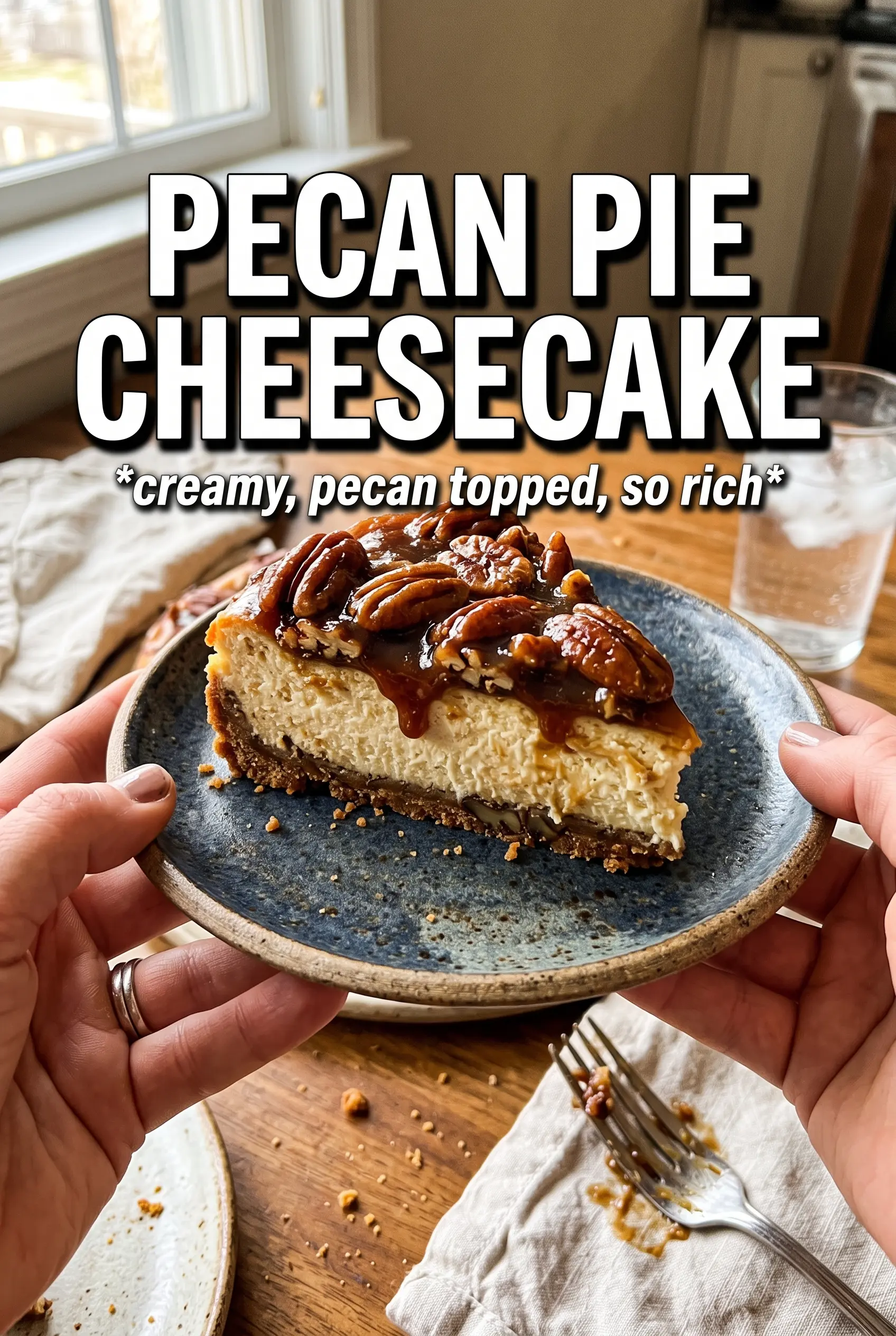
Pecan pie cheesecake delivers the best parts of two classics in one clean slice: a buttery graham cracker crust, a smooth tangy cheesecake layer, and a glossy pecan topping that sets up sticky and rich without turning grainy. The contrast is what makes people come back for another piece. You get crunch, creaminess, and that deep caramel-pecan finish all in the same bite.
The part that makes this version work is restraint. The cheesecake bakes until it’s just set, not puffed and dry, and the pecan topping is cooked separately so the nuts stay distinct instead of sinking into a heavy, overcooked syrup. A water bath also matters here because it keeps the filling even and helps prevent the cracks that can ruin a dessert this pretty. Let the cheesecake chill fully before adding the topping so the layers stay clean when you slice it.
Below, I’ve included the small timing details that keep the filling silky and the topping glossy, plus a few swaps and storage notes that make this dessert easier to plan around.
The cheesecake stayed perfectly smooth and the pecan topping thickened up into that glossy, sticky layer instead of running all over the plate. I made it the night before and the slices came out neat the next day.
Like this pecan pie cheesecake? Save it to Pinterest for the dessert table when you want a creamy cheesecake with a sticky pecan pie topping.
The Water Bath Is What Keeps the Center Creamy, Not Cracked
A cheesecake this rich needs gentle heat. The water bath buffers the oven so the edges don’t race ahead of the center, which is the main reason cheesecakes crack or turn dense before they’ve fully set. Without that steady moisture, the filling can overbake on the outside while the middle stays loose.
The other thing that matters is pulling it when the center still has a slight wobble. It should look set around the edges and just a little soft in the middle, like Jell-O that’s almost firm. If you wait until the top looks completely solid, it’s already too far along and the texture turns dry after chilling.
What Each Layer Is Actually Doing in This Dessert
- Graham cracker crumbs — These give the crust its classic buttery crunch and a little sweetness that supports the filling. Fine crumbs press more tightly and slice cleaner than coarse ones.
- Brown sugar — This shows up in all three layers for a reason. It brings molasses depth that plain white sugar can’t match, especially in the pecan topping.
- Cream cheese — Use full-fat blocks, not tub-style spreadable cream cheese. The block style is thicker and bakes into a stable, silky filling instead of something loose or grainy.
- Sour cream — This keeps the cheesecake tangy and softens the richness of the cream cheese. Greek yogurt can work in a pinch, but it adds a slightly sharper finish and isn’t quite as plush.
- Corn syrup — You only need a little, but it helps the pecan topping stay glossy and smooth instead of crystallizing. If you skip it, cook the topping a touch more carefully and stir only until the sugar dissolves.
- Whole pecans — Whole nuts make the topping look generous and keep the texture chunky. Halves are fine if that’s what you have, but chopped pecans lose some of the dramatic topping effect.
Building the Crust, Filling, and Topping in the Right Order
Pressing and Pre-Baking the Crust
Mix the crumbs, brown sugar, and melted butter until every crumb looks damp, then press the mixture firmly into the bottom of the springform pan. Use the bottom of a measuring cup to pack it evenly so it doesn’t crumble when sliced. Bake it for 10 minutes before adding the filling; that short bake sets the crust and keeps it from going soggy under the cheesecake.
Whipping the Filling Smooth
Beat the cream cheese and brown sugar until the mixture looks completely smooth with no lumps at the sides of the bowl. Add the eggs one at a time and stop mixing as soon as they disappear. Overbeating at this stage traps too much air, and that air expands in the oven and can cause cracks or a puffy top that collapses later.
Baking Low and Slow
Pour the filling over the crust, set the pan in the water bath, and bake until the edges are set but the center still jiggles slightly when you nudge the pan. Don’t wait for the middle to firm up in the oven; it finishes setting as it cools. Once it’s done, cool it completely at room temperature before refrigerating, or condensation can form and soften the top.
Cooking the Pecan Topping Until It Glosses Over
Melt the butter with the brown sugar, cream, and corn syrup over medium heat, then simmer for about 3 minutes. You’re looking for a syrup that thickens enough to coat the back of a spoon but still pours easily. Stir in the pecans, vanilla, and salt, then let the topping cool for 15 minutes so it thickens slightly before you spoon it over the chilled cheesecake.
Make It Without the Water Bath
You can bake it without the water bath if you’re careful, but the texture won’t be as even and the top is more likely to crack. Set a pan of hot water on the lower rack to add some moisture if you want a little extra insurance. It won’t work quite as well as a true bath, but it helps.
Gluten-Free Crust Swap
Use gluten-free graham-style crumbs in the same amount and keep the butter exactly the same. The crust will still bake up crisp and supportive, though some gluten-free crumbs taste a little sweeter, so the base may come across slightly more dessert-like.
Dairy-Free Version
Use dairy-free cream cheese, plant-based butter, and a thick dairy-free cream substitute for the topping. The cheesecake will still slice well, but it won’t have quite the same tang or richness, so chill it fully and expect a slightly softer finish.
Mini Cheesecakes for a Crowd
Divide the crust and filling among muffin tins lined with paper liners and bake for a much shorter time, just until the centers are barely set. Spoon the pecan topping over each one after chilling. You’ll get cleaner portions and less slicing stress, but the bake time drops fast, so start checking early.
Storage and Reheating
- Refrigerator: Store covered for up to 5 days. The topping stays glossy, though the pecans soften a little after the first day.
- Freezer: Freeze the cheesecake without the pecan topping for the best texture. Wrap tightly, freeze up to 2 months, and add the topping after thawing in the fridge.
- Reheating: This dessert is meant to be served cold or cool, not reheated. If a slice is too firm straight from the fridge, let it sit at room temperature for 15 to 20 minutes so the filling softens without losing its clean structure.
Answers to the Questions Worth Asking
Pecan Pie Cheesecake
Ingredients
Equipment
Method
- Preheat the oven to 325°F, then press the graham cracker crumbs, brown sugar, and melted butter into a 9-inch springform pan. Bake for 10 minutes.
- Beat the cream cheese and brown sugar smooth, then beat in the eggs one at a time. Stir in the sour cream, vanilla, and cinnamon until smooth.
- Pour the cheesecake batter over the baked crust. Bake in a water bath at 325°F for 60 to 65 minutes, until just set.
- Cool the cheesecake completely, then refrigerate for 6 hours to chill.
- Melt the unsalted butter with the brown sugar, heavy cream, and corn syrup over medium heat, then simmer for 3 minutes. Stir in the whole pecans, vanilla, and salt.
- Cool the pecan topping for 15 minutes, until thickened slightly.
- Pour the pecan pie topping over the chilled cheesecake just before serving.