Golden roast potatoes with softened feta are the kind of side dish that disappears fast because every bite hits a different note: crisp edges, creamy centers, salty cheese, sweet roasted tomatoes, and bright lemon at the end. The feta doesn’t melt into a puddle; it softens just enough to coat the potatoes in little rich pockets, which is exactly what makes this dish feel special without any extra fuss.
The trick is keeping everything in one baking dish and letting the oven do the heavy lifting. The potatoes roast in the olive oil around the feta block, so they pick up flavor as they brown, while the tomatoes burst and turn into a quick pan sauce with the garlic and herbs. A final hit of lemon juice and zest keeps the whole dish from feeling heavy and makes the feta taste even more vivid.
Below you’ll find the small details that matter here: how to get real caramelization instead of steamed potatoes, when to break up the feta, and a few useful ways to adapt this for different diets or whatever’s already in the kitchen.
The potatoes got those crisp, browned edges I was hoping for, and the feta softened just enough to coat everything without turning greasy. I used extra lemon at the end and it pulled the whole dish together.
Like these baked feta roast potatoes? Save them to Pinterest for a golden, lemony side dish with crisp edges and creamy feta.
The Roast Potato Mistake That Keeps the Feta From Getting Creamy
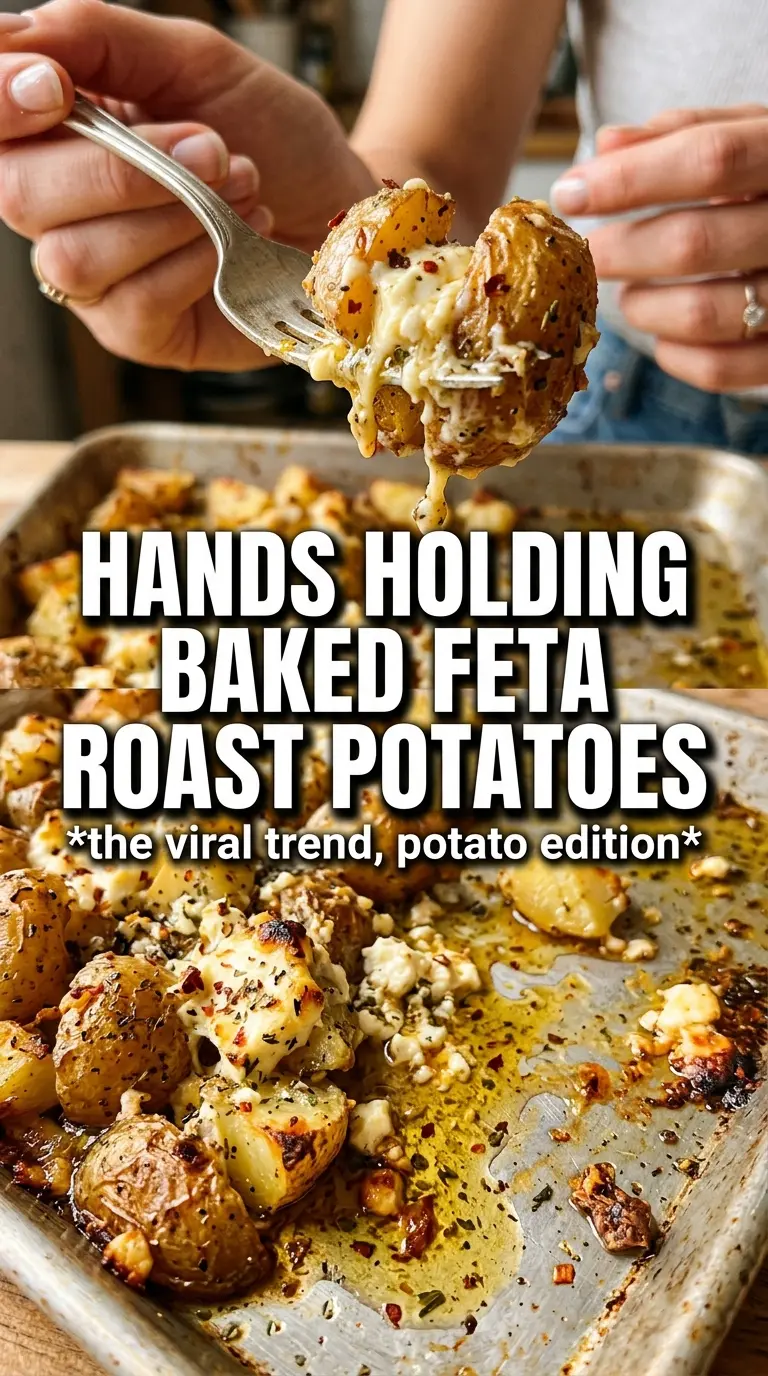
Most people worry about the feta melting too fast, but the bigger issue is the potatoes. If the pieces are too large or crowded too tightly, they steam instead of roast, and you end up with soft, pale potatoes that don’t have enough structure to catch the creamy cheese. Halving baby potatoes gives you more cut surface, which means more browning and more places for the feta to cling once you stir everything together.
The other mistake is treating the feta like a topping instead of part of the roast. It needs the same hot oven time as the potatoes so it softens at the edges and picks up a little color. When the tomatoes burst around it, they add just enough moisture to make a rough, glossy sauce without watering the dish down.
- Baby potatoes — Their small size means they cook through in the same window that gives you browned edges. If you’re using larger potatoes, cut them into even chunks so they finish at the same time as the feta.
- Block feta — Use a block, not crumbles. A block softens into creamy pieces; crumbles dry out and disappear before the potatoes are done.
- Cherry tomatoes — These bring sweetness and juiciness. Grape tomatoes work too, but avoid larger tomatoes unless you cut them down; too much liquid can keep the pan from browning.
- Olive oil — This isn’t just for coating. It carries the oregano, thyme, and garlic flavor across the whole dish and helps the potatoes brown instead of sticking.
What Each Ingredient Is Actually Doing in This Recipe
- Primary ingredient (the star) — Quality matters most. Choose the best you can find.
- Cooking medium (oil, butter, or broth) — This carries flavors and prevents dryness.
- Seasonings (salt, pepper, spices, herbs) — Layer flavors so nothing overpowers. Build depth gradually.
- Aromatics (garlic, onion, herbs) — Cook with fat to bloom flavors. Become the foundation.
- Supporting ingredients — Complement the main ingredient without overpowering it.
- Sauce or liquid (if applicable) — Brings flavors together. Balance richness with acid.
- Acid (lemon, vinegar, wine, or other) — Brightens and prevents flat-tasting results.
- Final finish (garnish, glaze, or sauce) — Prevents one-dimensional taste and adds visual appeal.
How to Roast Everything So the Potatoes Brown and the Feta Stays Soft
Build the Pan in Layers
Set the feta block in the center of a baking dish and arrange the potatoes, tomatoes, and smashed garlic around it. Keeping the feta in the middle lets the potatoes roast directly in the seasoned oil while the cheese warms more gently. If the dish is too crowded, the potatoes will trap steam, so use a baking dish large enough that everything sits in a single layer.
Season Before the Oven Does Its Work
Drizzle the olive oil over everything, then add oregano, thyme, red pepper flakes, salt, and pepper. Toss the potatoes lightly in the dish so the cut sides are coated, but leave the feta mostly undisturbed so it holds its shape while it softens. The garlic should be smashed, not minced, because larger pieces roast sweet and mellow instead of burning at the edges.
Roast Until the Edges Go Deep Gold
Bake at 400F for 40 to 45 minutes, until the potatoes are tender enough to pierce easily and the cut sides are deeply browned. The feta should look softened and slightly golden on top, and the tomatoes should be wrinkled and starting to collapse. If the potatoes are pale, they need more time; don’t pull the dish early just because the cheese looks ready.
Finish With Lemon and Herbs
Squeeze the lemon juice over the hot pan, then scatter the zest and fresh basil or parsley across the top. The acid wakes up the salty feta and keeps the potatoes from tasting flat after roasting. Break the feta into the potatoes and tomatoes while everything is still hot so it melts into the cracks and coats the whole dish instead of sitting in chunks on top.
How to Adapt These Feta Potatoes for Different Tables
Dairy-Free Version
Swap the feta for firm tofu or a dairy-free feta-style block that can hold up in the oven. You won’t get the same salty tang or creamy crumble, so lean harder on lemon zest, extra oregano, and a good pinch of salt at the end to replace that sharp finish.
Gluten-Free and Naturally Simple
This dish is already gluten-free as written, which is part of why it works so well for a mixed crowd. Serve it with grilled chicken, fish, or a simple green salad and it acts like a complete side without needing any extra adjustment.
Spicier, Brighter Finish
If you want more heat, increase the red pepper flakes or add a pinch of Aleppo pepper for a gentler, fruitier burn. For a sharper finish, use extra lemon zest right before serving instead of more juice, which keeps the potatoes from getting wet.
Making It Ahead for Dinner
You can halve the potatoes and smash the garlic a few hours ahead, then keep them covered in the fridge until you’re ready to roast. Don’t assemble the whole pan too early or the potatoes will start to oxidize and the salt will pull moisture out before they ever hit the oven.
Storage and Reheating
- Refrigerator: Store leftovers in an airtight container for up to 3 days. The potatoes soften a bit, but the flavor stays good.
- Freezer: Freezing isn’t ideal here. The potatoes turn mealy and the feta loses its creamy texture once thawed.
- Reheating: Reheat in a 375F oven for 10 to 15 minutes on a sheet pan or in a shallow dish until hot. Skip the microwave if you want any chance of keeping the edges from going limp.
Questions I Get Asked About This Recipe
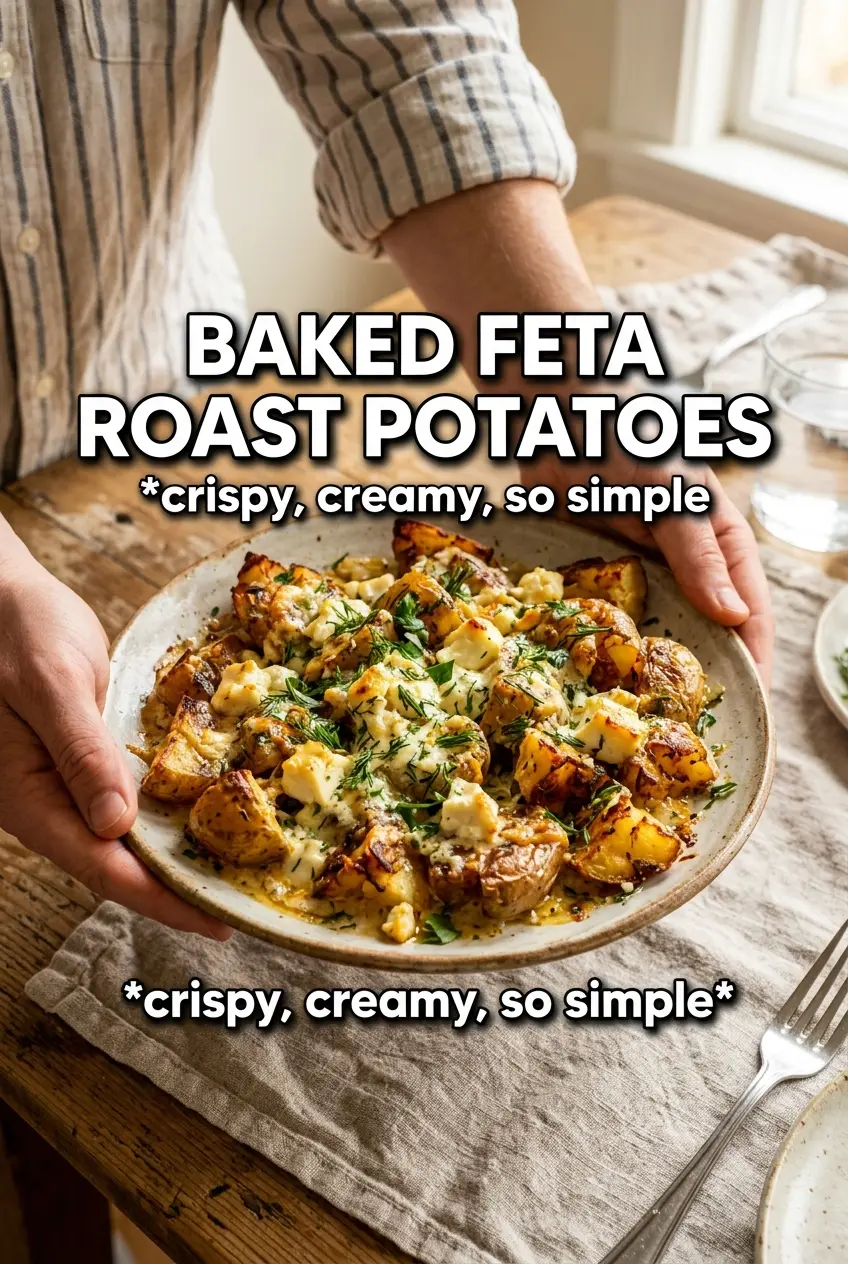
Baked Feta Roast Potatoes
Ingredients
Equipment
Method
- Preheat oven to 400F. Place the feta block in the center of a baking dish so it has space to soften and brown.
- Arrange halved baby potatoes, cherry tomatoes, and smashed garlic around the feta in the baking dish. Aim for a single layer so the potatoes roast rather than steam.
- Drizzle everything with olive oil, then sprinkle over dried oregano, fresh thyme, red pepper flakes, salt, and pepper. Make sure the potatoes are coated and the seasonings land on vegetables, not just the feta.
- Roast at 400F for 40-45 minutes, until potatoes are golden and tender and the feta is softened with golden edges. Watch for deep browning on the potato cut sides.
- Remove the dish from the oven and squeeze lemon juice over everything. Scatter lemon zest and fresh basil or parsley on top while the pan is still hot.
- Break feta into the potatoes and toss everything together. Keep tossing until the feta is distributed into a creamy, clinging coating.