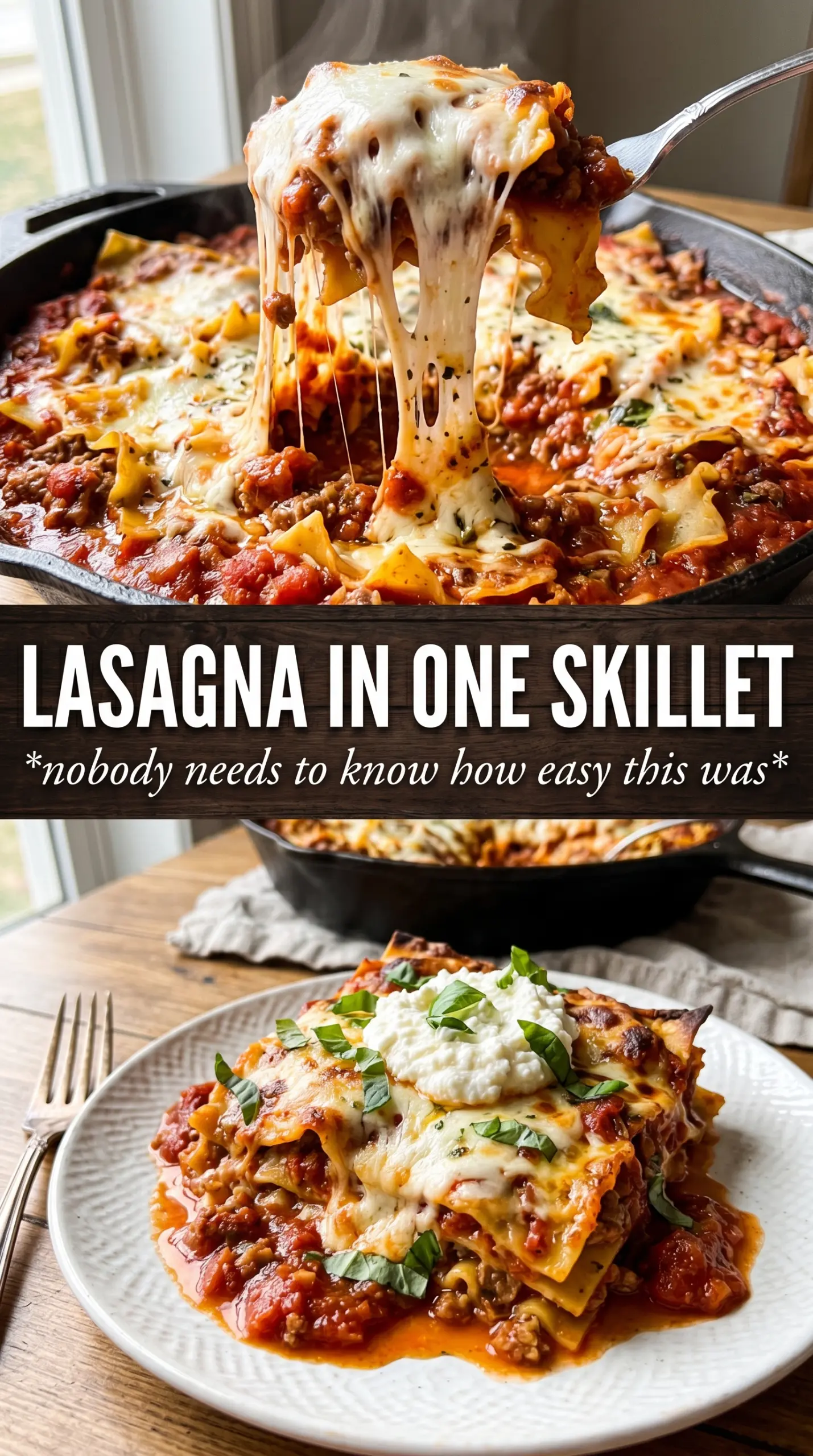
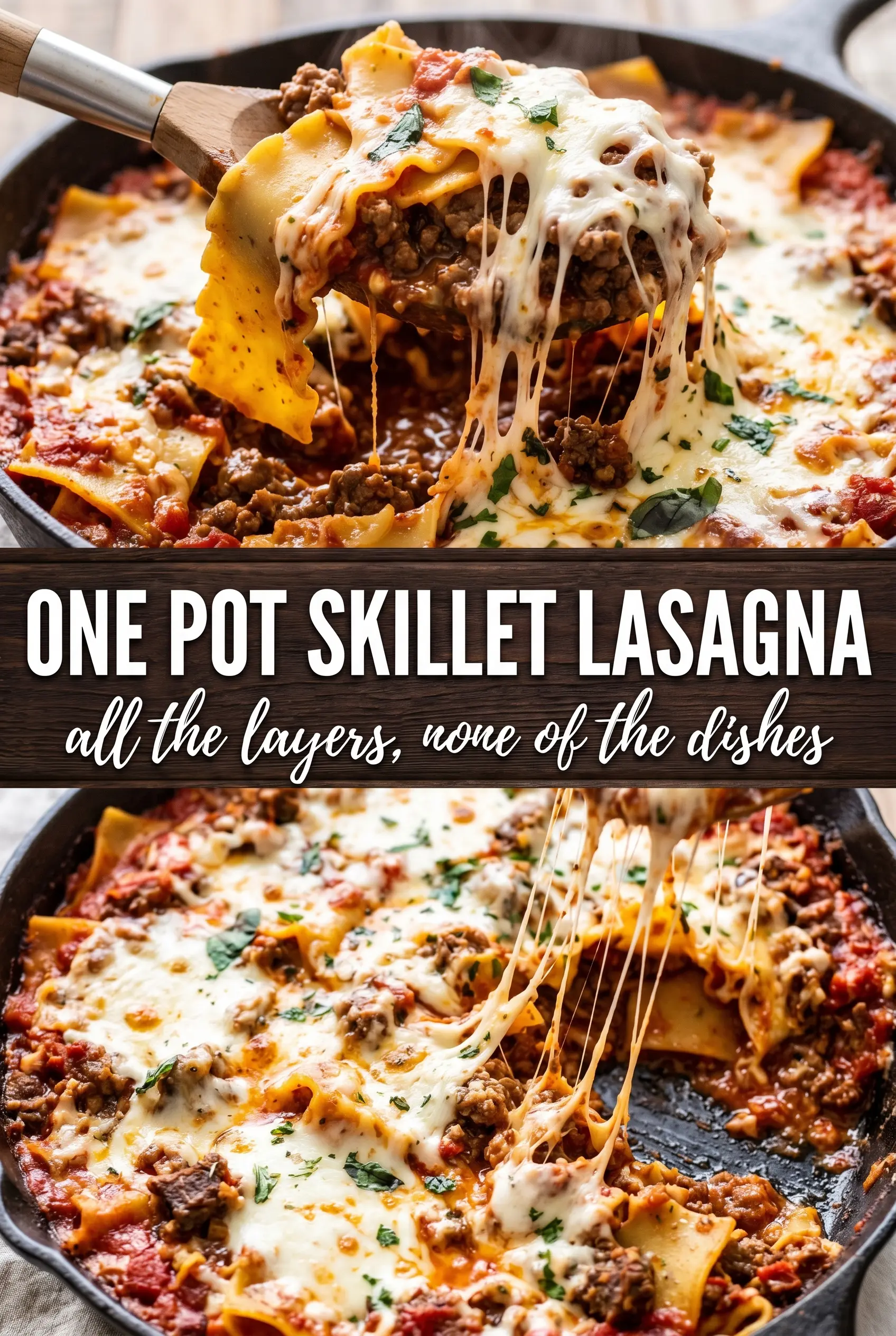
Broken lasagna noodles cooked right in a rich beefy marinara make this skillet lasagna taste like the classic layered version without the extra pans or the oven time. The noodles soak up the sauce as they soften, which gives every bite that sturdy, saucy texture you want from lasagna, and the ricotta, mozzarella, and parmesan finish it with the same creamy, cheesy top you’d expect from a baked pan.
What makes this version work is the liquid balance. The broth loosens the marinara enough for the noodles to cook evenly, but not so much that the sauce turns thin by the end. Browning the beef with the onion first builds the base, and stirring the noodles in while they’re fully submerged keeps the pieces from sticking or cooking unevenly. You get lasagna flavor on the stovetop, and the whole pan comes together in one pot with very little cleanup.
If you’ve ever had skillet pasta turn out watery or gummy, the process notes below will help. I’m also sharing the small changes that matter most if you want to make it lighter, meatless, or ahead for later.
The noodles cooked up perfectly in the sauce and the ricotta stayed creamy instead of disappearing. My husband said it tasted like I’d baked lasagna all afternoon.
Like this skillet lasagna? Save it to Pinterest for a one-pot dinner with tender noodles, beefy marinara, and a cheesy top.
The Noodle Timing That Keeps This From Turning Mushy
Skillet lasagna goes wrong when the noodles sit in too much liquid for too long. Broken lasagna pieces cook faster than full sheets, so the difference between tender and overcooked is only a few minutes once the pan comes to a simmer. Keeping the heat at a steady medium-low after the boil gives the noodles time to soften without breaking down into paste.
The other thing that matters is stirring only enough to keep the noodles from sticking. Over-stirring tears the pasta and clouds the sauce with starch, which makes the whole pan feel heavy. Let the sauce bubble gently, then check a noodle piece near the top and one from the center. If they’re both nearly tender at the same time, you’ve got the balance right.
What Each Ingredient Is Doing in the Skillet
- Ground beef — This gives the sauce its savory backbone. An 85/15 blend is a good middle ground because it has enough fat for flavor without leaving the skillet greasy. If you use a leaner beef, the sauce will taste a little lighter but still works.
- Marinara sauce — Use a jarred sauce you’d actually eat on pasta, because it carries most of the flavor here. A thicker marinara gives better body than a very watery one. If your sauce tastes sharp, the simmer will round it out.
- Beef broth — This is the liquid that cooks the noodles without diluting the beef flavor. Water will work in a pinch, but the finished pan won’t taste as deep. Add it before the noodles so the seasoning is distributed evenly.
- Ricotta, mozzarella, and parmesan — The ricotta gives those soft white pockets on top, mozzarella melts into the stretchy layer, and parmesan sharpens the whole dish. Whole-milk ricotta tastes best here because low-fat versions can turn grainy when heated. Spoon the ricotta on near the end so it stays distinct instead of melting away.
- Broken lasagna noodles — Standard dried noodles are the right choice because they hold their shape and thicken the sauce as they cook. Break them into thirds so they’re easy to eat and easier to submerge in the skillet. No-boil noodles aren’t necessary and can turn too soft in this style of recipe.
Building the Sauce Before the Cheese Goes On
Browning the Beef and Onion
Cook the beef and onion over medium-high heat until the meat loses its pink color and the onion softens and smells sweet. You want some browned bits on the bottom of the skillet, not a pale, steamed mixture, because that’s where the deeper flavor starts. Drain excess fat if the pan looks slick, then add the garlic for just 30 seconds so it turns fragrant without burning.
Starting the Sauce and Cooking the Pasta
Pour in the marinara and broth, then bring everything to a real boil before the noodles go in. The boil matters because it gets the noodles cooking right away instead of letting them sit and swell unevenly. Once the broken noodles are submerged, cover the pan and drop the heat to medium-low so the sauce simmers gently rather than slashing around the sides of the pan. Stir once in a while, especially around the edges, where noodles like to stick first.
Finishing With the Cheese Layer
When the noodles are tender but still have a little bite in the center, spoon the ricotta over the top in dollops. Don’t stir it through unless you want a creamier, less layered result. Sprinkle the mozzarella and parmesan over everything, cover the skillet, and let the residual heat melt the cheese until it looks glossy and pooled in spots. If the lid traps too much steam, the top can turn wet instead of melty, so only leave it covered until the cheese is softened.
Make It Spicier With a Better Finish
Add more red pepper flakes with the marinara if you want a sharper heat, or finish each bowl with crushed red pepper at the table. Building the heat early gives the whole sauce a warm background, while finishing at the end keeps the bite brighter and more noticeable.
Make It Gluten-Free Without Losing the Structure
Use gluten-free lasagna noodles and check the broth and marinara labels for hidden wheat. Gluten-free pasta can go from firm to soft fast, so start checking it a few minutes early and pull the pan as soon as the noodles are tender. The sauce may thicken a little less, so let it stand uncovered for a minute before serving.
Make It Meatless and Still Keep the Body
Swap the beef for a plant-based crumble or a mix of chopped mushrooms and lentils. Mushrooms give the sauce the best savory depth, while lentils add thickness that feels close to the original texture. If you use only vegetables, add a little extra salt and a splash more broth so the sauce doesn’t taste flat.
Storage and Reheating
- Refrigerator: Store leftovers in a sealed container for up to 4 days. The noodles will absorb more sauce as it sits, so expect a thicker texture the next day.
- Freezer: It freezes well, though the ricotta texture softens a bit after thawing. Cool completely, portion into airtight containers, and freeze for up to 2 months.
- Reheating: Reheat covered on the stove with a splash of broth or water over low heat, or warm in the microwave in short bursts. The common mistake is blasting it on high, which dries out the cheese and makes the noodles tough before the center is hot.
Questions I Get Asked About This Recipe
One Pot Skillet Lasagna
Ingredients
Equipment
Method
- Brown the ground beef with the diced onion in a large deep oven-safe skillet over medium-high heat, then drain excess fat and stir in the minced garlic for 30 seconds, until fragrant and sizzling.
- Pour in the marinara sauce and beef broth, then add Italian seasoning, red pepper flakes, salt, and pepper and bring the mixture to a boil, bubbling actively across the surface.
- Stir in the broken lasagna noodles and make sure they are fully submerged in the sauce.
- Cover and simmer on medium-low for 18–20 minutes, stirring occasionally, until the noodles are tender and the sauce thickens around the noodle pieces.
- Drop spoonfuls of ricotta over the top, then sprinkle mozzarella and parmesan evenly so they catch in the hot sauce.
- Cover for 3–5 minutes until the cheese melts and turns bubbly, then garnish with fresh basil and serve immediately.