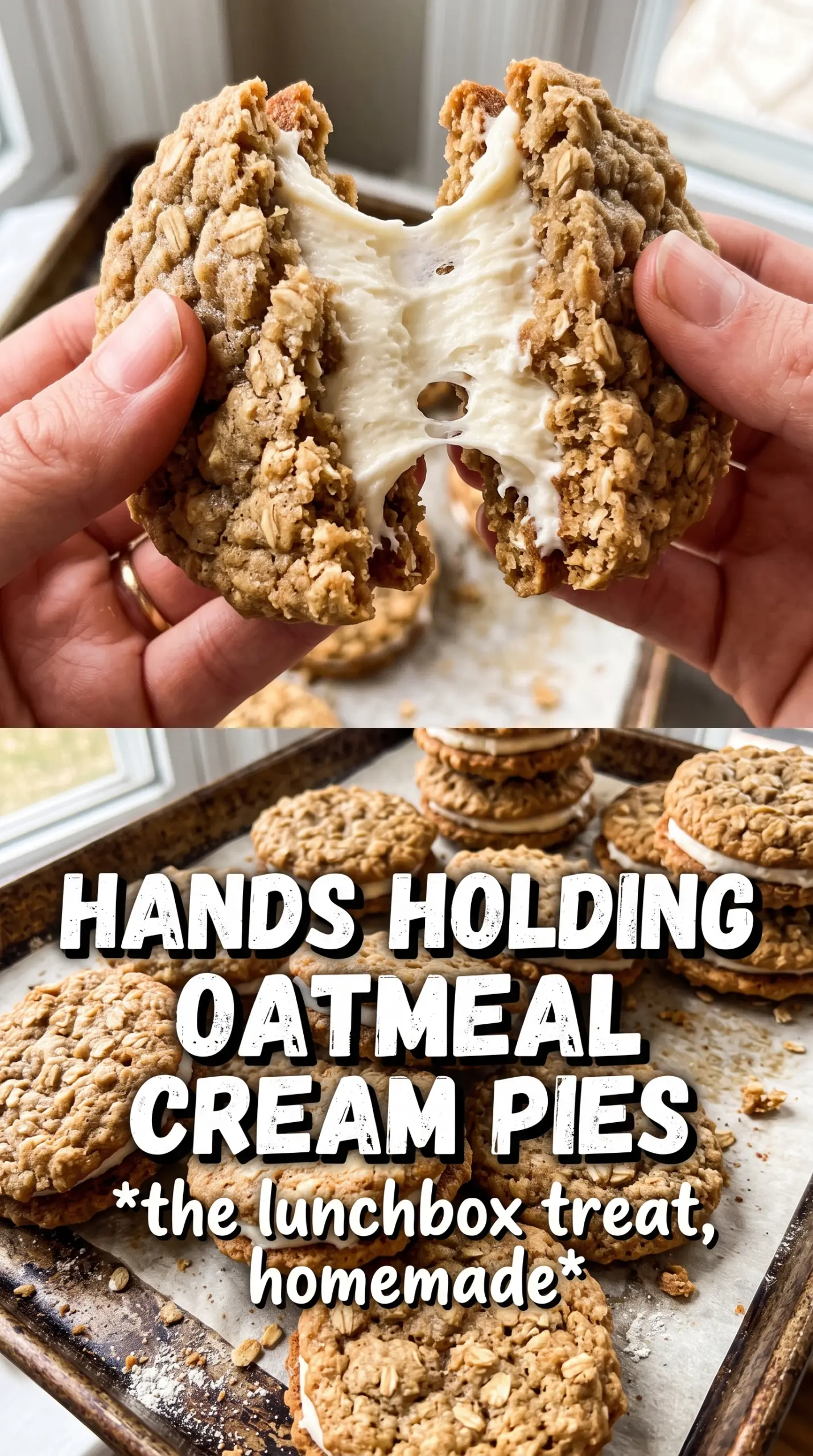
Soft oatmeal cookies sandwiched around a thick marshmallow cream filling hit the same sweet spot every time: chewy edges, a tender center, and just enough spice to keep each bite from tasting flat. The best homemade oatmeal cream pies don’t taste like a copycat trick. They taste like the version you wish the packaged kind had always been.
This version leans into old-fashioned rolled oats for that hearty chew and uses molasses plus brown sugar to give the cookies depth, not just sweetness. The filling stays smooth because the butter and cream cheese are beaten until light before the marshmallow creme goes in, which keeps it fluffy instead of dense. The cookies are baked just until set so they stay soft enough to bite through without squeezing all the filling out the sides.
Below, I’ve included the timing cue that matters most, plus a few swaps that keep the texture on track if you need to adjust the ingredients.
The cookies stayed soft for days, and the marshmallow filling was smooth instead of runny. I baked them 11 minutes and they came out just like the packaged ones, only better.
These oatmeal cream pies stay soft, chewy, and packed with marshmallow filling — save them for the cookie tin you keep sneaking from all week.
The Part That Keeps These Cookies Soft Instead of Dry
The biggest mistake with oatmeal cream pies is baking them like crisp cookies. These need to come out when the centers still look a little underdone and the edges are just set. They finish on the pan, and that carryover heat is what keeps the texture soft instead of turning them sandy and brittle.
Molasses matters here more than people expect. It doesn’t just add flavor; it helps the cookies stay moist and gives the filling something to balance against. If you skip it, the cookies still work, but they taste flatter and lose that classic brown-sugar warmth that makes the sandwich taste complete.
- Old-fashioned rolled oats — These hold their shape and give the cookies that chewy, hearty bite. Quick oats turn the texture softer and more uniform, which can work in a pinch, but the cookies won’t have the same chew.
- Brown sugar and molasses — Together they build softness and that deep caramel note. Light or dark brown sugar both work, but if you use only granulated sugar, the cookies spread more and taste thinner.
- Cream cheese in the filling — This is what keeps the filling from becoming pure sugar paste. It adds body and a little tang, which cuts through the sweetness and makes the sandwich taste more balanced.
What Each Ingredient Is Actually Doing in the Filling
- Butter — This gives the filling its richness and helps it whip into a lighter texture. It needs to be soft, not melted, or the filling will turn greasy and slack.
- Cream cheese — This adds structure and a slight tang that keeps the sweetness in check. Full-fat cream cheese gives the best body; reduced-fat versions tend to make the filling looser.
- Marshmallow creme — This is the flavor and texture shortcut that makes the filling taste like the packaged original. Don’t substitute melted marshmallows here; they don’t give the same smooth, spreadable filling.
- Powdered sugar — This thickens the filling without graininess. Add it gradually so the mixture stays fluffy instead of turning dense.
- Cinnamon — A small amount ties the filling back to the spiced cookies. It should stay in the background, not take over.
Building the Cookies So the Filling Sits Cleanly Between Them
Whipping the Butter and Sugars
Beat the butter, brown sugar, and granulated sugar until the mixture looks pale and fluffy, not just combined. That step traps air and helps the cookies bake up tender. If the butter is too cold, the mixture looks sandy; if it’s too soft, the dough spreads too much, so aim for butter that gives slightly when pressed.
Mixing in the Wet Ingredients
Add the eggs one at a time, then mix in the molasses and vanilla. The dough should look glossy and thick at this point. If it looks broken or curdled, keep mixing for a few more seconds before moving on; the flour will pull it together once it goes in.
Folding in the Oats and Spices
Stir in the flour, baking soda, cinnamon, nutmeg, salt, and oats just until no dry streaks remain. Overmixing here makes the cookies tough and can turn the oats gummy. The dough should be thick enough to scoop cleanly and hold its shape on the pan.
Baking to the Right Set
Scoop 2-tablespoon portions and bake at 350°F for 10 to 12 minutes. The edges should look set and the centers should still look soft and a little puffy. Pull them before they seem fully done; if you wait for them to look firm all over, they’ll bake up dry after cooling.
Making the Filling and Sandwiching
Beat the filling ingredients until the mixture is completely smooth and fluffy, with no streaks of cream cheese left behind. Spread a generous layer on the flat side of one cookie, then press the matching cookie on top just until the filling reaches the edges. If you press too hard, the filling squishes out and the cookies crack.
How to Adapt These Without Losing the Classic Cookie Sandwich Feel
Gluten-Free Version
Use a 1:1 gluten-free flour blend in place of the all-purpose flour and check that your oats are certified gluten-free. The cookies will still be chewy, though they may spread a little less and bake up a touch more delicate.
Dairy-Free Filling
Swap in a plant-based butter and dairy-free cream cheese. The filling won’t have quite the same tang, but it still whips into a spreadable sandwich filling if both substitutes are softened before mixing.
More Spiced, Less Sweet
Add an extra 1/4 teaspoon cinnamon to the cookies and keep the filling as written. That small shift makes the oatmeal flavor stand out more and reins in the sweetness without changing the texture.
Make Them Ahead
Bake the cookies a day ahead and store them unfrosted, then make the filling and assemble before serving. The cookies stay softer that way, and the filling keeps its best texture when it hasn’t had time to soak into the cookies too long.
Storage and Reheating
- Refrigerator: Store the assembled cookies in an airtight container for up to 5 days. They’ll firm up slightly in the fridge, but the centers stay soft.
- Freezer: Freeze assembled oatmeal cream pies individually wrapped, or freeze the cookies and filling separately for the best texture. Thaw in the refrigerator so the filling doesn’t turn watery.
- Reheating: These are best eaten at cool room temperature, not warm. If they’ve been chilled, let them sit out for 15 to 20 minutes so the filling softens again; microwaving can make the cookies greasy and the filling overly loose.
Questions I Get Asked About This Recipe
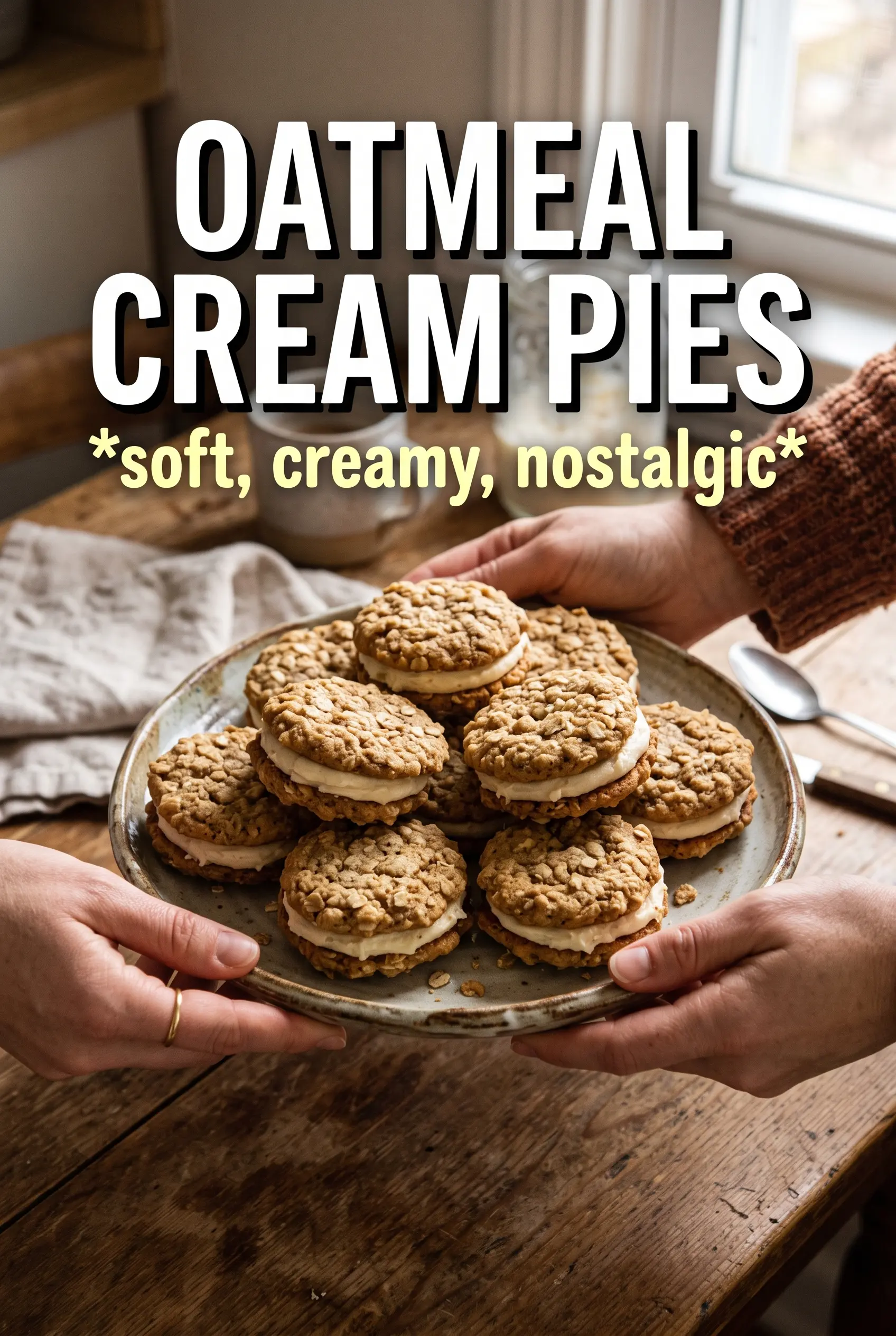
Oatmeal Cream Pies
Ingredients
Equipment
Method
- Beat the softened unsalted butter with the packed brown sugar and granulated sugar until fluffy, about 2 minutes.
- Add the eggs, molasses, and vanilla and beat just until smooth.
- Fold in the all-purpose flour, baking soda, cinnamon, nutmeg, salt, and rolled oats until a thick dough forms.
- Scoop 2-tablespoon ovals onto a sheet pan, spacing them apart, then bake at 350F for 10-12 minutes until the cookies are set.
- Cool the cookies completely before assembling to prevent the filling from melting.
- Beat the softened unsalted butter and softened cream cheese until smooth.
- Beat in the marshmallow creme, powdered sugar, vanilla, and cinnamon until very smooth and fluffy, scraping the bowl as needed.
- Pair the cookies by size so the tops and bottoms match.
- Spread a generous layer of marshmallow cream filling on one cookie, then press together with its paired cookie to form a sandwich.