Fragrant spiced ground beef, chickpeas, and olives turn into a skillet dinner that tastes like it took a lot more effort than it did. The beef gets deeply savory, the tomatoes burst into a quick sauce, and the chickpeas pick up just enough toastiness at the edges to make every bite feel complete. It’s the kind of pan meal that lands on the table fast but still feels layered and intentional.
What makes this version work is the order. The beef browns first so it can build flavor in the pan, then the spices hit the hot fat long enough to bloom without burning. Chickpeas go in before the tomatoes, which gives them a little texture instead of just softening into the mix, and the lemon at the end wakes up the whole skillet instead of getting lost in it.
Below, I’ll walk through the small details that keep the dish bold instead of muddy, plus a few smart swaps if you want to serve it a different way.
The chickpeas got those crisp little edges and the lemon at the end made the whole skillet taste bright instead of heavy. I served it with pita and my husband went back for seconds before I’d even sat down.
Like the bold cumin-and-cinnamon finish in this Mediterranean Ground Beef Stir Fry? Save it for the nights when you want a fast skillet dinner with chickpeas, tomatoes, and feta.
The Step That Keeps the Spices from Going Flat
The biggest mistake in a ground beef skillet like this is dumping the spices in too early or too late. If they go in before the onions have had a minute in the pan, they can scorch. If they go in after the tomatoes, they never really wake up. The sweet spot is after the onion softens and right before the moisture-heavy ingredients go in, when there’s enough heat and fat to carry the spices across the pan.
That quick minute of toasting matters. Cumin, coriander, paprika, and cinnamon need contact with hot oil and beef drippings to taste rounded instead of dusty. Once you smell them bloom, move on fast. You want the pan fragrant, not dark or dry.
- Ground beef — An 80/20 blend gives you the best flavor here because a little fat helps the spices bloom. If yours is leaner, don’t add more oil until you see whether the pan needs it after browning.
- Chickpeas — They add body and turn this from a loose skillet into an actual meal. Canned chickpeas work fine; just drain them well so they can pick up a little color instead of steaming.
- Kalamata olives — These bring the briny edge that makes the dish taste Mediterranean instead of just spiced beef. If you only have regular black olives, use them, but expect a softer, less punchy flavor.
- Lemon juice — Don’t skip the finish. It cuts through the richness of the beef and olives and keeps the whole pan from tasting heavy.
- Feta — Use a block if you can and crumble it yourself. Pre-crumbled feta is drier and doesn’t melt into the warm couscous quite as nicely.
What Each Ingredient Is Actually Doing in This Beef Dish
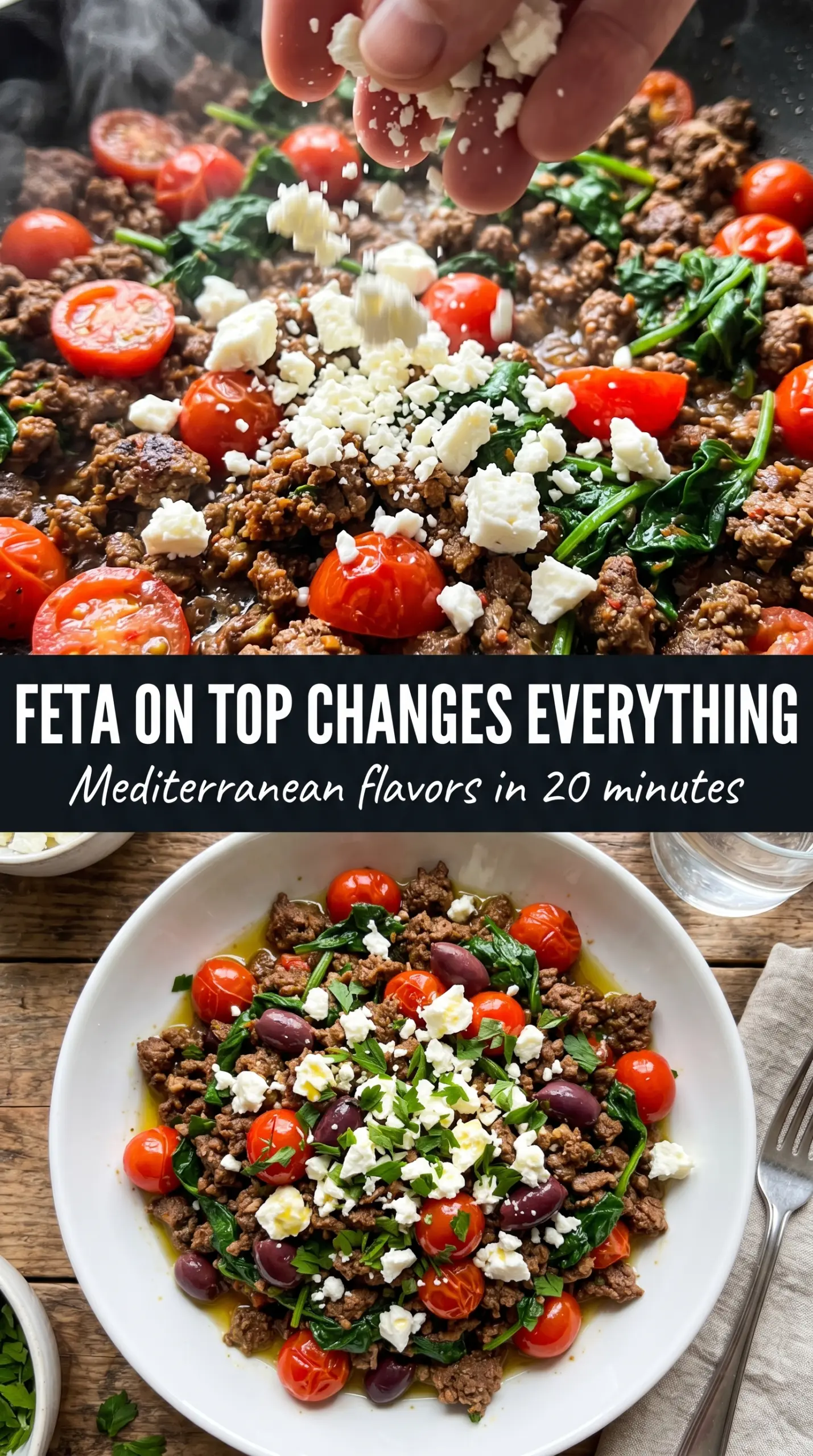
- Ground beef or beef pieces (proper cut) — Choose 80/20 for best flavor and texture. Pat dry so it browns.
- Oil (the browning medium) — High-heat oil essential for proper searing. Creates deep pan flavor.
- Seasonings (salt, pepper, spices) — Build flavor boldly. Beef carries the entire profile.
- Aromatics (garlic, onion, herbs) — Cook with oil to bloom flavors. Become the foundation.
- Sauce or braising liquid (broth, cream, or tomato) — This brings flavors together and adds richness. Balance with acid.
- Vegetables (rice, pasta, or fresh) — These add substance and prevent monotone texture.
- Acid (vinegar, wine, or tomato) — This brightens and prevents heavy beef flavor.
- Final garnish (herbs, cheese, or toppings) — These add color and fresh flavor. Add right before serving.
Building the Skillet So Every Bite Stays Bright
Browning the Beef First
Heat the olive oil in a large skillet over medium-high heat, then add the ground beef and break it up as it cooks. Let it sit long enough to brown before stirring it constantly; that browned bottom is where the flavor starts. If the meat looks pale and watery, the pan is too crowded or not hot enough, and you’ll end up with steamed beef instead of a savory base. Drain off excess fat once the beef is cooked, but leave a little behind so the spices have something to cling to.
Waking Up the Onion and Spices
Add the diced onion and cook until it softens and turns translucent at the edges, about 3 minutes. Stir in the garlic and spices and cook for just 1 minute, moving them around the pan so they don’t scorch. The smell should shift from raw onion to something warm and savory almost immediately. If the garlic starts to brown hard, the heat is too high and the next ingredients will taste bitter.
Letting the Chickpeas and Tomatoes Finish the Work
Stir in the chickpeas first and let them cook for a couple of minutes so they pick up a little crispness. Then add the cherry tomatoes and olives and cook until the tomatoes just begin to collapse and release their juices, which gives you a light sauce without turning the skillet soupy. Finish with lemon juice and taste again before serving; olives vary in saltiness, and this is where you adjust. Serve over couscous or with pita, then top with feta and parsley while the pan is still hot so the cheese softens slightly.
How to Adapt This Skillet for Different Nights
Serve It Dairy-Free
Skip the feta and finish with extra parsley and a drizzle of olive oil. You’ll lose the salty creaminess, so lean harder on the lemon and olives to keep the dish lively.
Make It Gluten-Free
The skillet itself is naturally gluten-free, so just serve it over rice, gluten-free couscous, or with certified gluten-free pita. This is one of those dinners where the base doesn’t need changing at all.
Swap in Ground Lamb
Ground lamb gives the dish a deeper, more classic Middle Eastern feel and works especially well with the cinnamon and cumin. Use the same method, but drain only if the pan looks greasy; lamb carries a different kind of richness and can handle a little more fat.
Stretch It for More People
Add another can of chickpeas and an extra cup of tomatoes to feed a bigger crowd without making the recipe feel thin. The flavors stay balanced, and the dish still feels like a proper skillet meal instead of a stretched-out ground beef mix.
Storage and Reheating
- Refrigerator: Store leftovers in an airtight container for up to 4 days. The flavors deepen overnight, though the tomatoes soften more.
- Freezer: It freezes well for up to 2 months, especially if you freeze the beef mixture without the feta. Thaw overnight in the fridge before reheating.
- Reheating: Warm gently in a skillet over medium-low heat with a splash of water or broth. Microwaving works, but the chickpeas and tomatoes stay nicer if you heat it slowly and stop as soon as it’s hot.
Questions I Get Asked About This Recipe
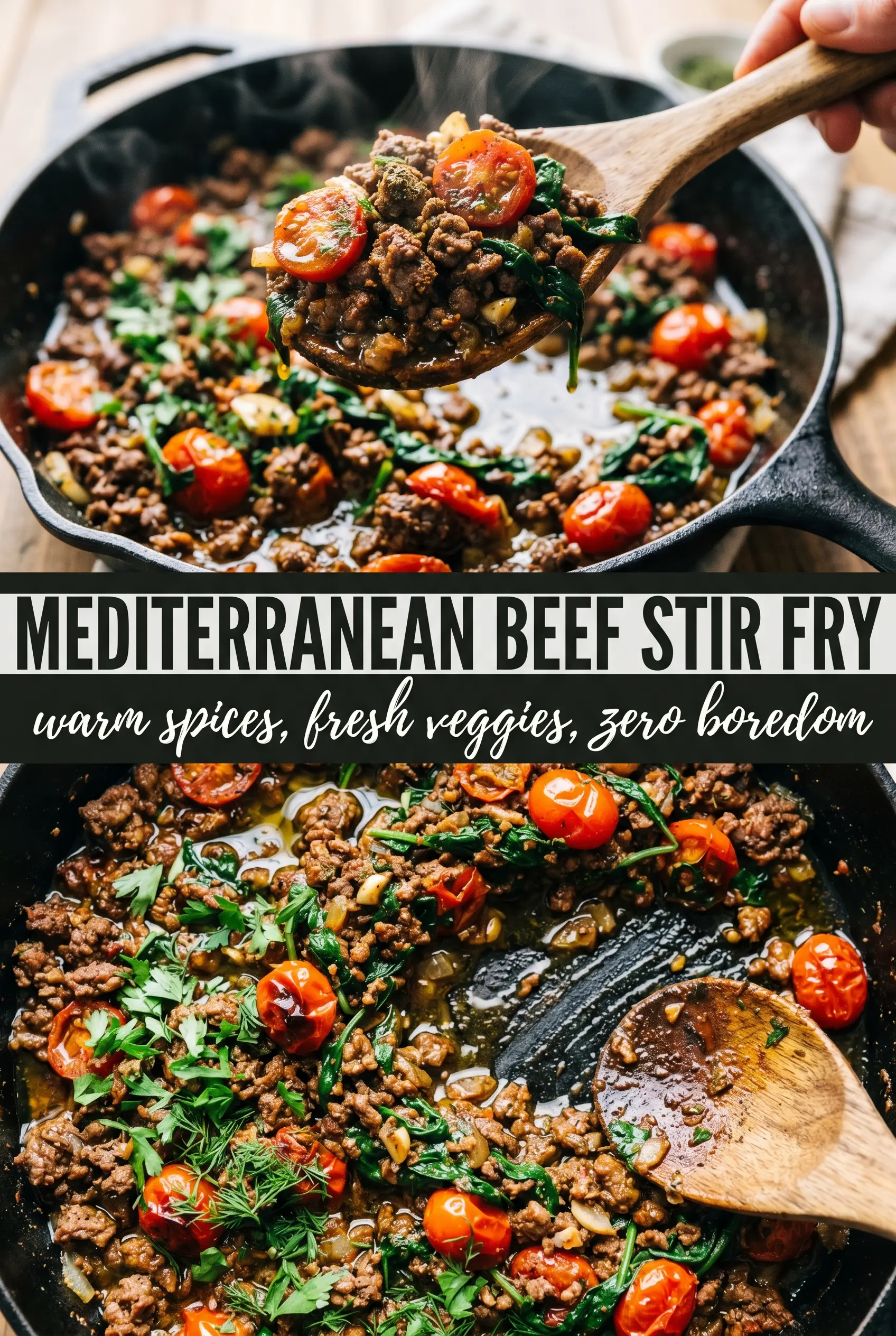
Mediterranean Ground Beef Stir Fry
Ingredients
Equipment
Method
- Heat olive oil in a large skillet over medium-high heat, then add ground beef and brown it while breaking apart until no longer pink; drain any excess fat.
- Add onion to the skillet and cook for 3 minutes, stirring until softened.
- Stir in garlic, cumin, coriander, smoked paprika, cinnamon, salt, and black pepper, then cook for 1 minute until fragrant.
- Add chickpeas and cook for 2 minutes, stirring until they look slightly crisp on the edges.
- Stir in cherry tomatoes and Kalamata olives, then cook for 3–4 minutes until the tomatoes soften.
- Squeeze lemon juice over the top and adjust seasoning to taste.
- Serve the spiced beef stir fry over couscous or pita, then top with crumbled feta and fresh parsley.