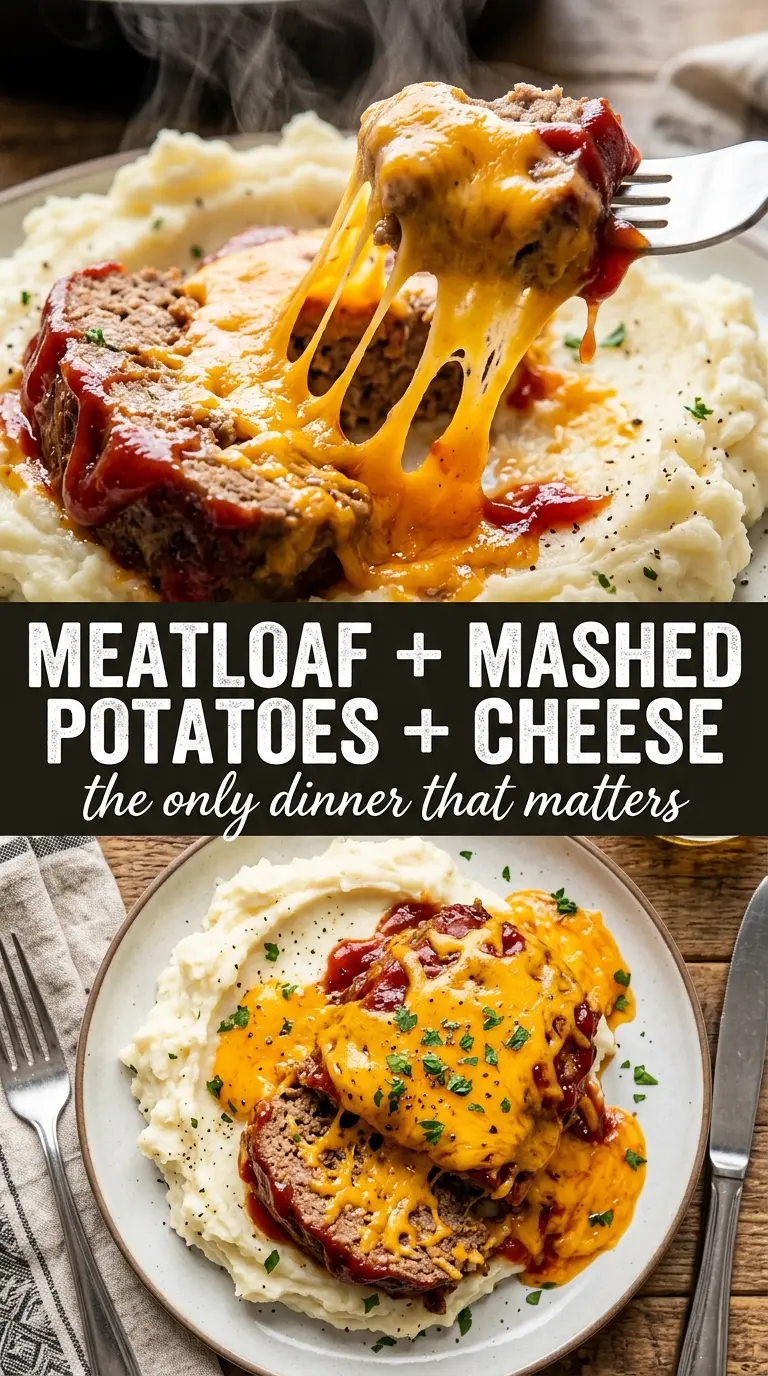
Meatloaf gets a lot more interesting when the mashed potatoes aren’t sitting on the side but spread thickly over the top and baked until the cheddar turns bubbly and gold. You get the sturdy, savory comfort of meatloaf underneath and a creamy potato layer on top that cuts cleanly when sliced, almost like a shepherd’s pie crossed with a diner-style Sunday dinner.
The key here is timing. The meatloaf bakes first so it can set up and release some of its fat before the potatoes go on, which keeps the topping from sinking or turning greasy. Using Yukon gold potatoes helps the topping stay smooth and rich without needing a lot of extra liquid, and warm cream keeps the mash from tightening up before it hits the oven.
Below, I’ll walk through the small details that keep the loaf firm, the potatoes fluffy, and the cheese browned without overbaking the beef. There’s also a storage note worth knowing, because leftovers reheat better than you’d expect.
The mashed potato topping held its shape beautifully and the cheddar browned right on cue. I loved that the meatloaf stayed juicy underneath instead of drying out while the potatoes finished.
Save this cheesy meatloaf with mashed potato topping for the kind of dinner that slices neatly and bakes up with bubbling cheddar on top.
The Trick to Keeping the Potato Topping from Sliding Off
The biggest mistake with a dish like this is rushing the topping onto a soft, underbaked loaf. If the meat mixture hasn’t had time to set, the potatoes sink into it and you lose that clean two-layer look when you cut into it. Baking the loaf first gives the proteins time to firm up, which also lets some of the rendered fat move to the edges instead of soaking the mash.
The second mistake is spreading loose, wet potatoes over a hot surface. You want the mash thick enough to hold a mound and smooth enough to spread without tearing the loaf underneath. If it feels slack, it needs a little more mixing or a minute to cool; if it’s stiff, a splash of warm cream brings it back without making it heavy.
- Ground beef — Use 80/20 if you can. Leaner beef can work, but it dries out faster during the first bake and won’t give you the same juicy slice.
- Grated onion — This melts into the meatloaf and seasons it from the inside. Grating matters here; chopped onion can leave hard bits and doesn’t distribute as evenly.
- Yukon gold potatoes — They mash into a creamy topping without turning gluey. Russets can be used, but they’re drier and usually need a touch more cream and butter to feel the same.
- Cheddar — Sharp cheddar brings the finish. Buy a block and shred it yourself if possible, since pre-shredded cheese doesn’t melt as cleanly on top.
What Each Ingredient Is Actually Doing in This Meatloaf or Meatballs
- Ground meat (the protein foundation) — Use 80/20 so it stays moist. Handle gently to keep texture tender instead of dense.
- Breadcrumbs or fillers (the binder) — These hold the meat together without making it dense. Soak in milk first so they add moisture.
- Egg (the structural binding agent) — This holds everything together during cooking. One egg per pound of meat is the right ratio.
- Onion and aromatics (the base flavor) — Mince finely so they distribute evenly. Raw onion softens as it cooks and becomes part of the texture.
- Seasonings (salt, pepper, Worcestershire, spices) — Build flavor boldly. The meat mixture carries the entire flavor profile.
- Milk or liquid (the moisture keeper) — This keeps the meatloaf tender instead of dense and dry. Don’t skip this step.
- Glaze or sauce (ketchup-based or other) — This adds sweetness, moisture, and flavor to the exterior. Apply strategically so it caramelizes.
- Resting time (the final step) — Let the meatloaf rest 10 minutes so it sets and slices cleanly. Cutting too soon makes it fall apart.
Building the Loaf, Then the Golden Potato Cap
Mixing the Meatloaf Base
Combine the beef, breadcrumbs, eggs, milk, grated onion, Worcestershire, salt, and pepper until everything looks evenly mixed, then stop. Overmixing compresses the meat and makes the loaf dense instead of tender. Press it into the baking dish in one even shape so it cooks at the same rate from end to end. If the surface looks ragged, smooth it with damp hands before it goes into the oven.
Par-Baking for Structure
Bake the meatloaf for about 45 minutes, until it’s nearly cooked through and the top has taken on a darker color. At this point, the loaf should feel set when you lightly press the center, but it won’t be fully finished yet. That partial bake is what keeps the topping from disappearing into the meat. If you skip it, the whole dish turns mushy in the middle.
Making the Mashed Potatoes
Mash the potatoes with butter, warm cream, and a cup of the cheddar until smooth, then season them generously. Warm cream matters because cold dairy cools the potatoes down too fast and can make the texture stiff before you spread it. The topping should look creamy but hold its shape when lifted with a spoon. If it seems wet, let it sit for a minute; the potatoes will tighten slightly as they cool.
Finishing Under the Cheese
Spread the mashed potatoes thickly over the partially baked meatloaf, then scatter the remaining cheddar over the top. Bake just until the cheese is bubbling and the edges of the potatoes are turning gold. That last bake is about finishing the topping, not cooking the beef from scratch. Let the dish rest for 10 minutes before slicing so the layers settle and the first slice doesn’t collapse.
How to Change This Without Losing the Comfort Factor
Make It a Little Lighter
Use ground turkey or a mix of turkey and beef, but add a tablespoon of olive oil or an extra splash of milk because lean meat dries out faster. The flavor will be milder, so keep the Worcestershire and onion in place to give the base enough depth.
Gluten-Free Version
Swap the breadcrumbs for certified gluten-free breadcrumbs or crushed gluten-free crackers. The texture stays the same as long as you keep the ratio close, and the loaf still slices cleanly after resting.
Extra Cheesy, More Casserole-Style
Fold a half cup of cheddar into the meatloaf mixture and add a little more cheese on top at the end. You’ll get a richer, more indulgent slice, but the loaf itself will be softer, so it needs the full rest time before serving.
Storage and Reheating
- Refrigerator: Store leftovers covered for up to 4 days. The potato topping firms up as it chills, but the flavor stays rich.
- Freezer: It freezes well in individual slices. Wrap tightly and freeze for up to 2 months; thaw overnight in the fridge before reheating.
- Reheating: Reheat covered in a 325°F oven until warmed through. The common mistake is blasting it in the microwave, which can make the potatoes grainy and dry out the meat before the center is hot.
Questions I Get Asked About This Recipe
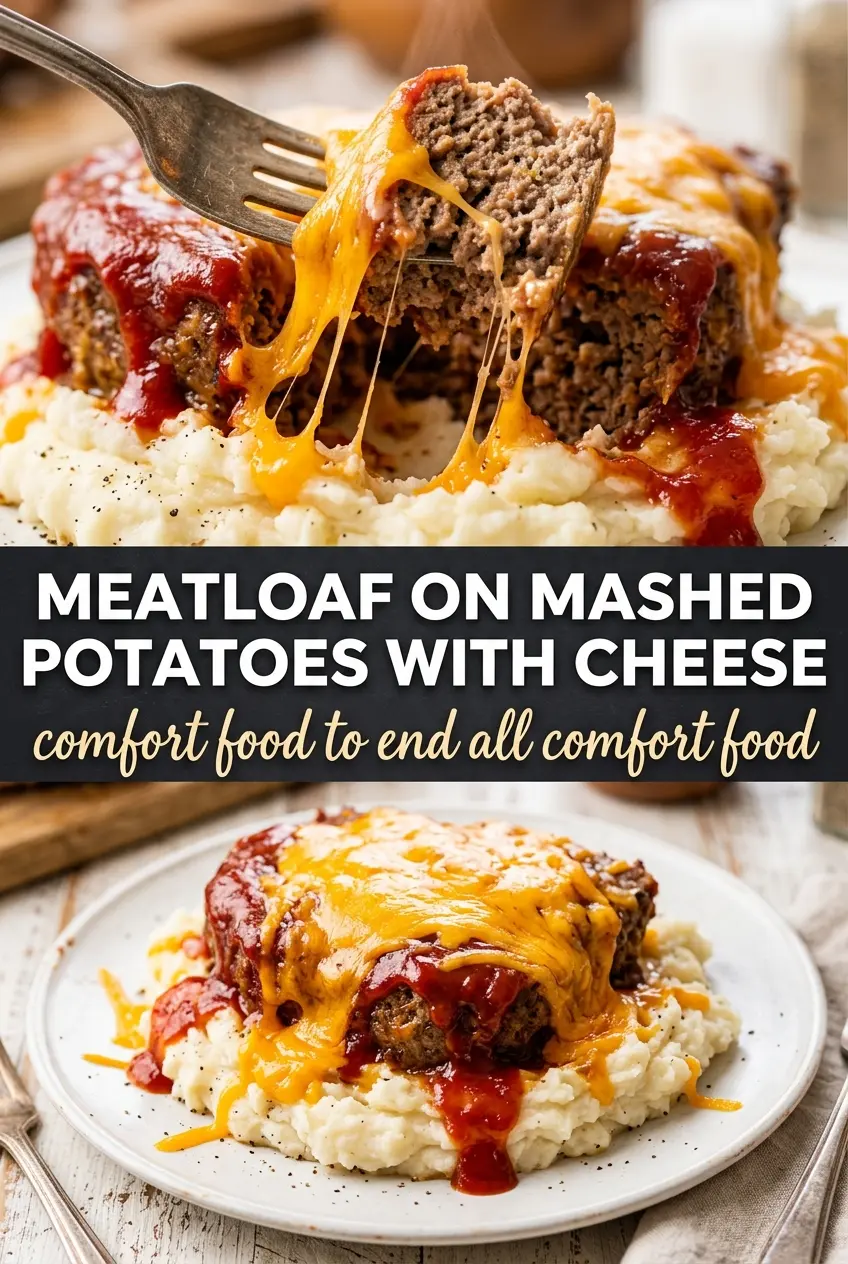
Meatloaf with Mashed Potatoes and Cheese
Ingredients
Equipment
Method
- Preheat the oven to 350°F and grease a 9x13 baking dish.
- Mix the ground beef, breadcrumbs, eggs, milk, grated onion, Worcestershire, and salt and pepper, then press into the baking dish to form a loaf shape.
- Bake for 45 minutes, until the meatloaf is nearly cooked through.
- Mash the boiled Yukon gold potatoes with butter, warm cream, 1 cup cheddar, salt, and pepper until smooth.
- Spread the mashed potatoes thickly over the meatloaf, then scatter the remaining cheddar over the potatoes.
- Bake for 15–20 more minutes at 350°F, until the potato topping is golden and the cheese is bubbling.
- Rest for 10 minutes before serving. (The topping will set slightly and slices will hold their shape.)