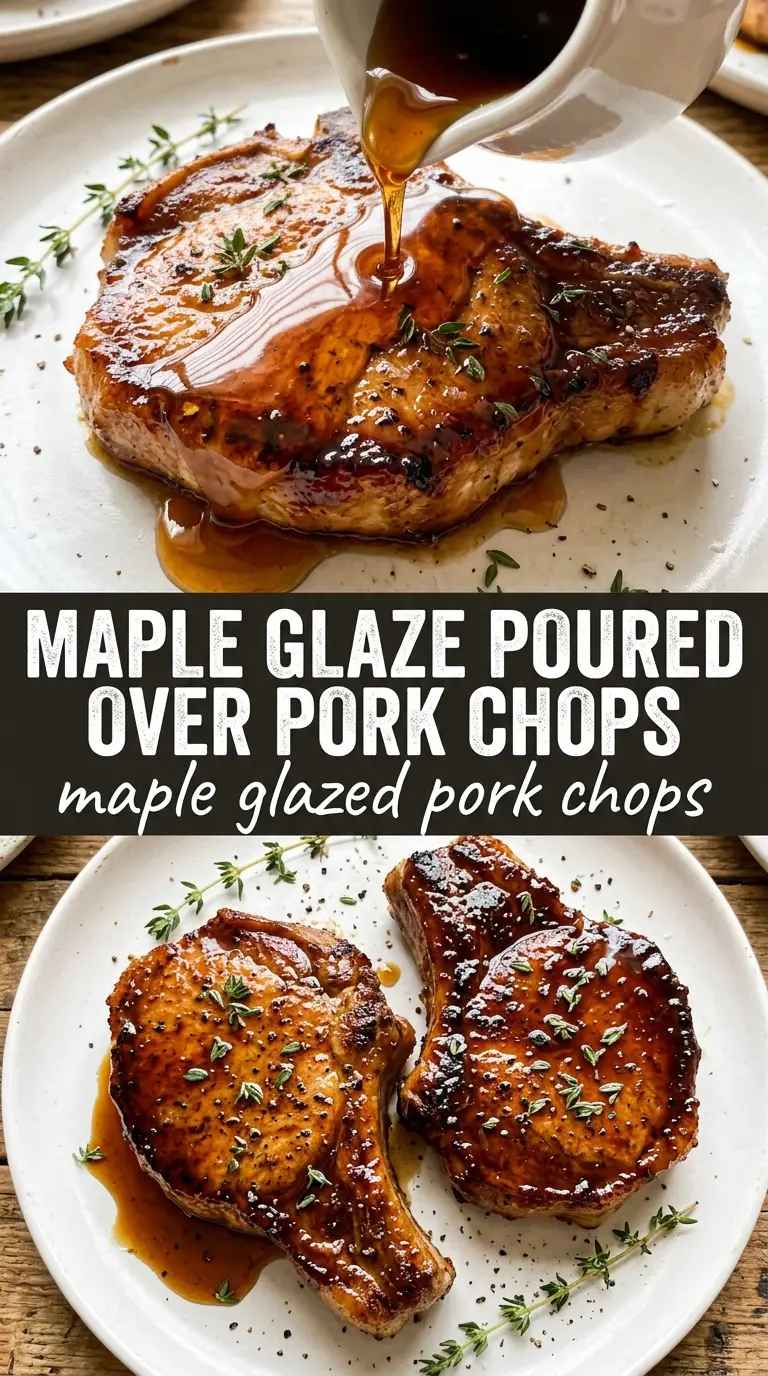
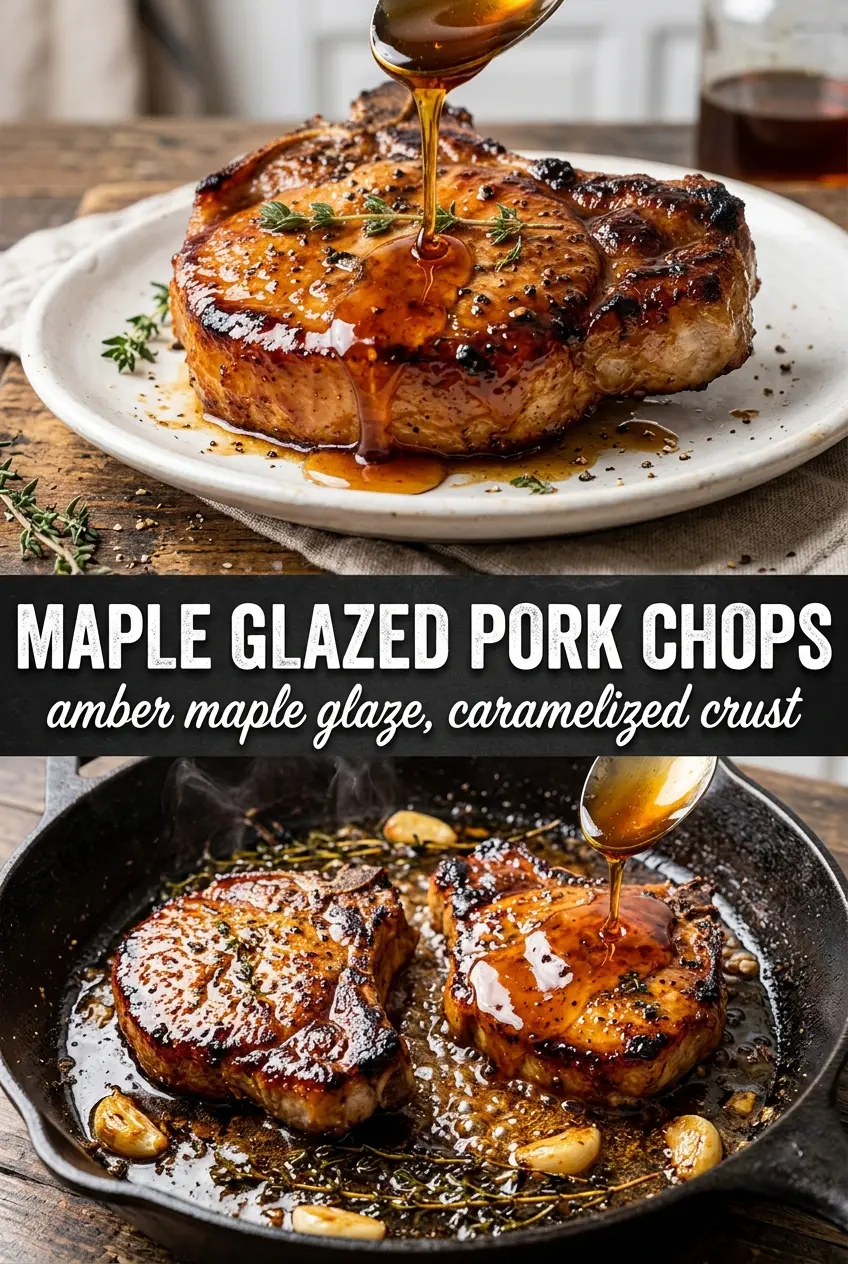
Sticky maple glazed pork chops hit that sweet-savory spot that makes people hover around the stove before dinner is even plated. The glaze turns glossy and amber in the pan, clinging to the meat instead of running off, and the chops stay juicy underneath that lacquered finish. It’s the kind of dinner that looks like you spent far more time on it than you did.
The trick is building flavor in layers: a hard sear first for a deep brown crust, then a quick simmer with maple syrup, Dijon, soy sauce, and garlic so the glaze reduces without burning. Boneless chops work well here because they cook fast and evenly, but they still need that first sear to keep the texture from going soft. Once the glaze goes back in the pan, the heat drops and the sauce thickens just enough to coat the pork instead of pooling beneath it.
Below, I’m walking through the exact cues that keep the glaze from turning bitter and the pork from drying out. If you’ve ever had pork chops that went from perfect to overcooked in a minute, this version solves that problem.
The glaze got thick and shiny fast, and the pork stayed juicy instead of drying out. I spooned it over the chops at the end and the rosemary made the whole skillet smell amazing.
Love the sticky maple glaze and golden sear? Save these pork chops for a fast skillet dinner with big flavor and almost no cleanup.
The Sear Is What Keeps the Maple Glaze Honest
The biggest mistake with glazed pork chops is rushing straight to the sauce. If the chops don’t get a proper sear first, the glaze tastes flat and the texture turns wet instead of caramelized. You want a deep golden crust on both sides before the glaze ever touches the pan.
That first browning step does two jobs. It builds flavor in the meat itself, and it leaves browned bits in the skillet for the glaze to pick up later. Those bits dissolve into the maple-Dijon mixture and give it that savory edge that keeps the sweetness from taking over.
- Pork chops — Boneless, 1-inch chops cook quickly and stay tender if you stop at 145°F. Thinner chops work, but they need less time in the pan and can overcook fast.
- Pure maple syrup — Use real maple syrup, not pancake syrup. It reduces into a cleaner, deeper glaze and won’t leave a candy-like aftertaste.
- Dijon mustard — This is the sharp, tangy backbone that keeps the glaze balanced. Yellow mustard won’t give you the same bite or emulsifying power.
- Soy sauce — A small amount adds salt and a dark, savory note that makes the maple taste richer. Low-sodium soy works fine if that’s what you keep on hand.
- Fresh rosemary — Fresh rosemary gives the glaze a piney, aromatic finish that dried rosemary can’t quite match. If you must substitute, use half as much dried rosemary and mince it very finely.
What Each Ingredient Is Actually Doing in This Recipe
- Primary ingredient (the star) — Quality matters most. Choose the best you can find.
- Cooking medium (oil, butter, or broth) — This carries flavors and prevents dryness.
- Seasonings (salt, pepper, spices, herbs) — Layer flavors so nothing overpowers. Build depth gradually.
- Aromatics (garlic, onion, herbs) — Cook with fat to bloom flavors. Become the foundation.
- Supporting ingredients — Complement the main ingredient without overpowering it.
- Sauce or liquid (if applicable) — Brings flavors together. Balance richness with acid.
- Acid (lemon, vinegar, wine, or other) — Brightens and prevents flat-tasting results.
- Final finish (garnish, glaze, or sauce) — Prevents one-dimensional taste and adds visual appeal.
How to Turn a Thin Sauce Into a Glossy Glaze
Seasoning and Searing the Pork
Pat the pork chops dry, then season them well with salt and pepper right before they hit the skillet. Add the olive oil and sear over medium-high heat until the surface is deeply golden and the chops release easily from the pan, about 4 minutes per side. If the chops stick hard, they’re not ready to turn yet. Pull them too early and you’ll tear the crust you worked for.
Making the Maple Mixture
Stir the maple syrup, Dijon, soy sauce, garlic, rosemary, and black pepper together before they go into the pan. That keeps the garlic and mustard from clumping and helps the glaze reduce evenly. The mixture should smell sharp, sweet, and herbaceous before it even heats up.
Reducing the Glaze
Pour the glaze into the same skillet and lower the heat to medium. Let it bubble for 1 to 2 minutes until it looks slightly thicker and starts to coat the back of a spoon. If it goes too far and starts looking sticky before the pork returns, pull the pan off the heat for a few seconds and swirl in a spoonful of water to loosen it.
Finishing the Chops
Return the pork to the skillet and spoon the glaze over the top as it cooks for another 2 to 3 minutes. This final basting builds that lacquered finish, but the heat has to stay moderate or the maple will scorch. Use an instant-read thermometer and stop at 145°F, then let the chops rest for a couple of minutes so the juices stay put.
How to Adapt These Pork Chops Without Losing the Sticky Finish
Dairy-Free and Naturally Gluten-Free
This recipe already skips dairy, and it can stay gluten-free if you use tamari instead of regular soy sauce. Tamari keeps the same salty depth without changing the glaze texture, so the finish still comes out glossy.
Bone-In Pork Chops
Bone-in chops work too, but they usually need a few extra minutes in the skillet or a short finish in the oven. The bone helps protect the meat from drying out, though you’ll need to watch the center temperature carefully because the glaze can darken before the chop is done.
No Rosemary on Hand
Thyme is the closest swap if rosemary isn’t in your kitchen. It gives a gentler herbal note, which makes the glaze a little less woodsy and a little more mellow. Don’t replace it with a dried Italian blend unless that’s all you have, because the extra herbs can muddy the maple flavor.
Storage and Reheating
- Refrigerator: Store leftovers in an airtight container for up to 3 days. The glaze will thicken as it chills, and the pork will stay best if it’s sliced before storing.
- Freezer: These freeze fine for up to 2 months, though the glaze may lose a little shine after thawing. Wrap the chops tightly and freeze with a little sauce to help protect the surface.
- Reheating: Warm gently in a covered skillet over low heat with a splash of water until just heated through. High heat will dry out the pork and can make the maple glaze taste burnt instead of sticky.
Questions I Get Asked About This Recipe
Maple Glazed Pork Chops
Ingredients
Equipment
Method
- Season the pork chops evenly with salt and pepper. Set aside while you heat the skillet.
- Heat the olive oil in a cast iron skillet over medium-high heat until shimmering, then sear the pork chops 4 minutes per side until golden. Transfer to a plate or set aside.
- Mix the maple glaze ingredients together until smooth: pure maple syrup, Dijon mustard, soy sauce, minced garlic, minced rosemary, and black pepper. Keep the mixture ready by the stove.
- Pour the glaze into the same pan over medium heat and simmer 1–2 minutes until slightly thickened. Stir so it turns glossy and amber-brown.
- Return the pork chops to the pan and cook 2–3 minutes, spooning the glaze over constantly, until lacquered. Cook until the pork reaches an internal temperature of 145°F.
- Garnish with fresh rosemary and serve immediately. Spoon any remaining glossy glaze from the pan over the top.