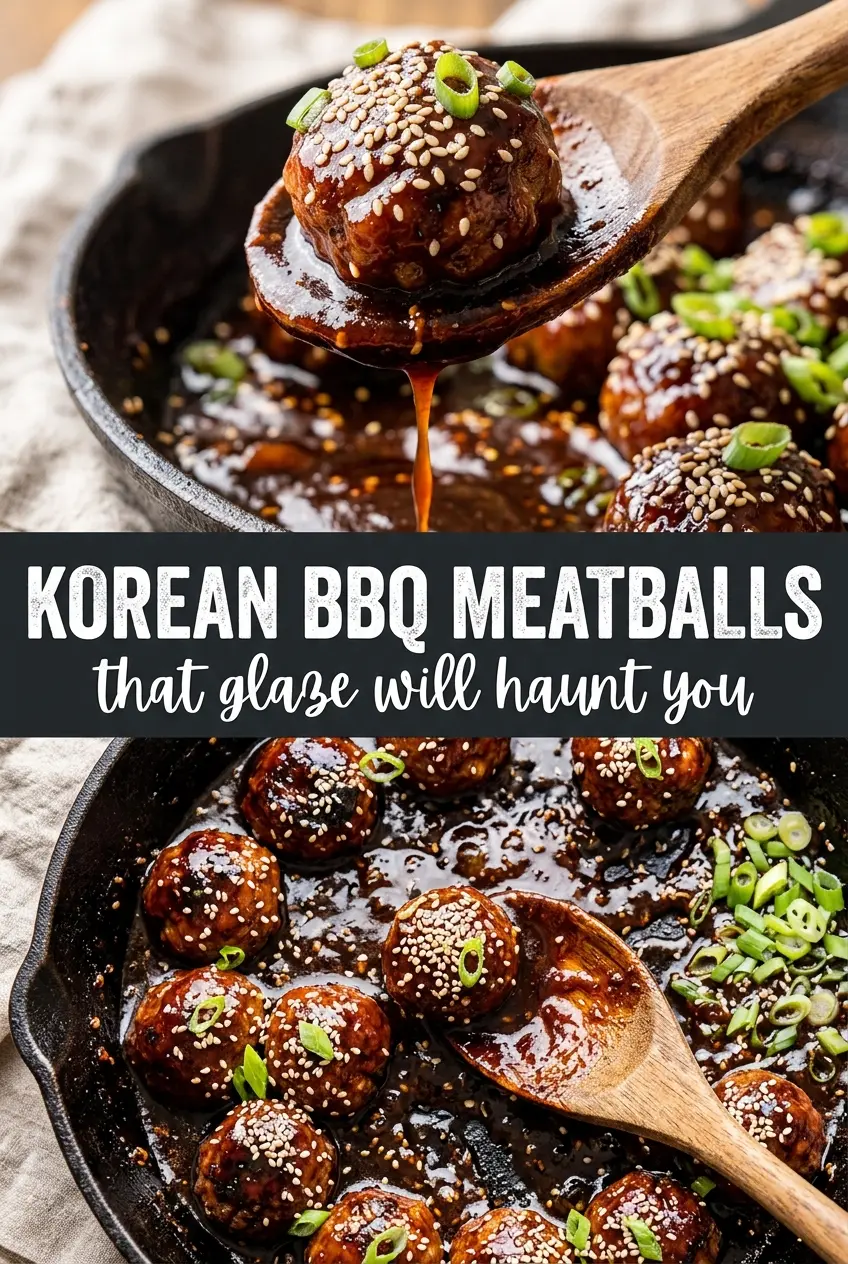
These Korean BBQ meatballs come out tender in the middle with a glossy, sticky glaze clinging to every edge, and that spicy mayo on the side gives each bite a cool, creamy finish. They hit that sweet spot between snacky and substantial, which is why they disappear fast at game days, potlucks, and even as a quick dinner over rice.
The trick is keeping the meat mixture light and the glaze fast-moving. Panko adds just enough structure without making the meatballs dense, and the egg holds everything together without turning the texture bouncy. The sauce gets a short simmer so the gochujang, soy, honey, and vinegar meld into something spoonable and shiny, not syrupy or burnt.
Below, I’ve laid out the one place people usually go wrong with glazed meatballs, plus a few smart swaps if you want to adjust the heat, make them gluten-free, or prep them ahead for a party.
The glaze clung to the meatballs instead of sliding off, and the spicy mayo cooled them down just enough. I baked them for 16 minutes and they were juicy all the way through.
Like these Korean BBQ meatballs? Save them for the nights when you want sticky gochujang glaze, juicy beef, and a spicy mayo dip with almost no cleanup.
The Step That Keeps These Meatballs Tender Instead of Tight
The biggest mistake with meatballs is overworking the mixture. Once the beef, panko, egg, and seasonings are combined, stop as soon as everything looks evenly distributed. If you keep squeezing and stirring, the meatballs bake up dense and springy instead of soft and juicy.
The other place people lose the texture is on the tray. Roll the meatballs loosely, then bake them with a little space between each one so the hot air can circulate. That helps them brown on the outside without steaming in their own juices. You’re looking for meatballs that are cooked through and still feel tender when you press the center lightly.
- Panko breadcrumbs — These keep the meatballs light. Regular breadcrumbs work in a pinch, but panko gives a cleaner, softer bite and doesn’t turn pasty.
- Gochujang — This is the backbone of the glaze. It brings heat, fermented depth, and a little sweetness that plain hot sauce can’t match.
- Sesame oil — A little goes a long way here. It adds that toasted, nutty finish that makes the glaze taste like more than just sweet and spicy sauce.
- Mayonnaise — Use a full-fat mayo for the dip if you can. It gives the sauce body and keeps the sriracha from tasting sharp or thin.
- Ground beef — An 80/20 blend gives the best balance of flavor and moisture. Leaner beef works, but the meatballs won’t be as plush.
What Each Ingredient Is Actually Doing in This Meatloaf or Meatballs

- Ground meat (the protein foundation) — Use 80/20 so it stays moist. Handle gently to keep texture tender instead of dense.
- Breadcrumbs or fillers (the binder) — These hold the meat together without making it dense. Soak in milk first so they add moisture.
- Egg (the structural binding agent) — This holds everything together during cooking. One egg per pound of meat is the right ratio.
- Onion and aromatics (the base flavor) — Mince finely so they distribute evenly. Raw onion softens as it cooks and becomes part of the texture.
- Seasonings (salt, pepper, Worcestershire, spices) — Build flavor boldly. The meat mixture carries the entire flavor profile.
- Milk or liquid (the moisture keeper) — This keeps the meatloaf tender instead of dense and dry. Don’t skip this step.
- Glaze or sauce (ketchup-based or other) — This adds sweetness, moisture, and flavor to the exterior. Apply strategically so it caramelizes.
- Resting time (the final step) — Let the meatloaf rest 10 minutes so it sets and slices cleanly. Cutting too soon makes it fall apart.
Building the Glaze and Finishing the Meatballs
Mixing the Meatball Base
Combine the beef, panko, egg, garlic, soy sauce, sesame oil, ginger, salt, and pepper until the mixture just comes together. It should feel cohesive but still soft, not packed like a paste. If the mixture seems sticky, wet your hands lightly before rolling. Forming them into 1.5-inch balls keeps the cook time even, and if they’re much larger, the centers take too long to finish before the outside dries out.
Baking to the Right Point
Place the meatballs on a parchment-lined sheet and bake at 400°F until cooked through, usually 15 to 18 minutes. You want them browned on the outside and just firm in the center, not hard. If your oven runs hot, start checking a minute or two early. Overbaking is the quickest way to lose the juiciness that makes these worth making.
Simmering the Sauce Until It Clings
Whisk the gochujang, soy sauce, honey, rice vinegar, sesame oil, and garlic together in a saucepan and simmer for 2 to 3 minutes. The goal is a glossy glaze that lightly coats a spoon, not a thick caramel. If it starts to bubble too hard, pull it back a little; high heat can make the honey taste burnt and push the sauce past the point where it coats evenly.
Tossing and Serving
Add the hot meatballs to the glaze and turn them gently until every side is lacquered. Do this while both are still warm so the sauce grabs on instead of pooling at the bottom of the bowl. Finish with sesame seeds and sliced green onions, then set out the spicy mayo for dipping. That creamy dip cools the heat and gives the whole dish a better balance.
How to Change the Heat, the Protein, or the Party Size
Make Them Gluten-Free
Swap the panko for gluten-free breadcrumbs and use a gluten-free soy sauce or tamari. The texture stays close to the original, though the crust may brown a little less deeply. The flavor stays right where it should be.
Turn Down the Heat Without Losing the Korean BBQ Flavor
Use 1 to 2 tablespoons of gochujang instead of 3, then add a little extra honey if you want the glaze softer and sweeter. You’ll lose some heat, but the fermented depth still comes through. That’s better than drowning the sauce in sugar, which makes it taste flat.
Use Ground Turkey or Chicken
Lean poultry works, but it needs the moisture help from the egg and panko, so don’t skip either one. Watch the bake time closely because turkey and chicken dry out faster than beef. The glaze helps a lot here, especially if you toss the meatballs while they’re still hot.
Storage and Reheating
- Refrigerator: Store leftovers in an airtight container for up to 4 days. The glaze will thicken as it chills, but the meatballs stay flavorful.
- Freezer: Freeze the baked, unglazed meatballs for up to 2 months. Thaw, warm, then toss with freshly made glaze for the best texture; glazed meatballs can be frozen, but the sauce softens a bit when reheated.
- Reheating: Warm gently in a skillet over low heat with a splash of water to loosen the sauce, or microwave in short bursts. High heat dries out the beef and makes the glaze seize on the pan instead of coating the meatballs.