
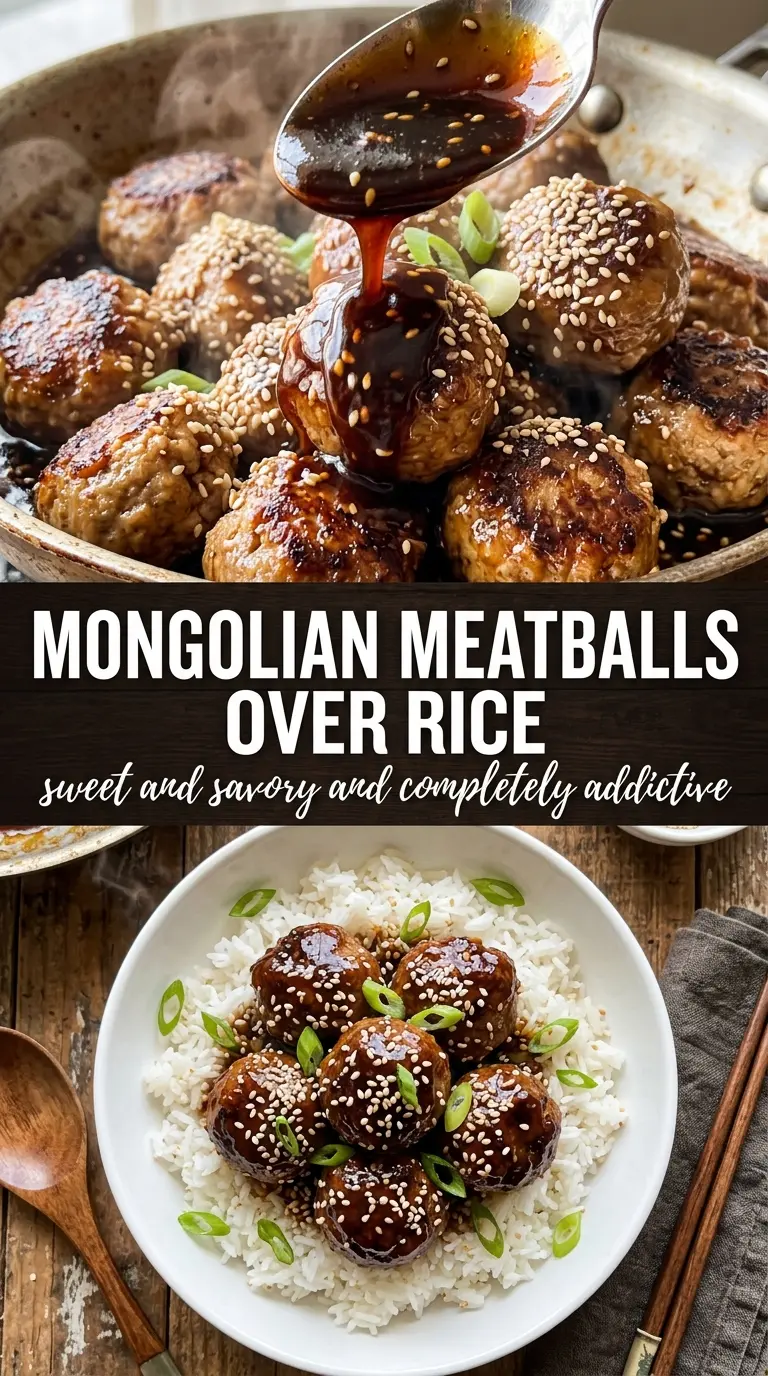
Sticky Mongolian beef meatballs earn their place in the weeknight rotation fast. The meatballs stay tender inside, browned on the outside, and the sauce clings in that glossy way that makes plain rice disappear underneath a spoonful or two. You get the sweet-salty pull of takeout-style Mongolian beef without having to slice a steak or babysit a wok.
The trick here is keeping the meat mixture light enough to stay juicy, then giving the sauce just enough cornstarch to turn lacquer-thick in the pan. Brown sugar and soy sauce do the heavy lifting, but the garlic, ginger, and sesame oil keep the glaze from tasting flat. Once the meatballs are seared, they finish right in the sauce, which means every surface picks up flavor instead of drying out in the oven.
Below, I’ll walk through the part that matters most: how to get a real sear before the glaze goes in, plus the small ingredient swaps that still keep this dinner weeknight-friendly.
The sauce thickened up right in the skillet and coated every meatball instead of pooling at the bottom. I served it over rice and my husband went back for seconds before I even sat down.
These sticky Mongolian beef meatballs are best when the glaze gets a chance to cling in the skillet, so they’re worth saving for the nights you want takeout-style dinner in 30 minutes.
The Step That Keeps the Meatballs Tender Before the Glaze Hits
The biggest mistake with meatballs like this is packing them too tightly or cooking them all the way through before the sauce goes in. Ground beef needs a light hand. Once you mix until the ingredients are just combined, the panko and egg hold everything together without turning the meatballs dense.
The other thing worth protecting is the sear. You want browning on the outside before the sauce is added, because that crust gives the finished dish depth and keeps the glaze from tasting one-note. If the pan is crowded, the meatballs steam instead of brown, and the sauce has less to grab onto.
- Panko breadcrumbs — These keep the meatballs loose and tender. Regular breadcrumbs work in a pinch, but panko gives a lighter texture that feels closer to a good restaurant meatball.
- Soy sauce in both the meatballs and the glaze — This seasons the beef from the inside and builds a deeper savory base in the sauce. Low-sodium soy sauce works well if you want more control over salt.
- Brown sugar — This is what gives the glaze that classic sticky sheen. You need the molasses notes here; white sugar won’t give the same roundness or color.
- Hoisin — It adds a little body and a second layer of sweetness that keeps the sauce from tasting thin. If you don’t have it, use a little extra brown sugar plus a splash more soy sauce, but the sauce will be simpler.
- Sesame oil — A small amount makes the whole pan smell finished. Don’t swap it for neutral oil; you’d lose the nutty note that makes Mongolian-style sauce recognizable.
What Each Ingredient Is Actually Doing in This Meatloaf or Meatballs
- Ground meat (the protein foundation) — Use 80/20 so it stays moist. Handle gently to keep texture tender instead of dense.
- Breadcrumbs or fillers (the binder) — These hold the meat together without making it dense. Soak in milk first so they add moisture.
- Egg (the structural binding agent) — This holds everything together during cooking. One egg per pound of meat is the right ratio.
- Onion and aromatics (the base flavor) — Mince finely so they distribute evenly. Raw onion softens as it cooks and becomes part of the texture.
- Seasonings (salt, pepper, Worcestershire, spices) — Build flavor boldly. The meat mixture carries the entire flavor profile.
- Milk or liquid (the moisture keeper) — This keeps the meatloaf tender instead of dense and dry. Don’t skip this step.
- Glaze or sauce (ketchup-based or other) — This adds sweetness, moisture, and flavor to the exterior. Apply strategically so it caramelizes.
- Resting time (the final step) — Let the meatloaf rest 10 minutes so it sets and slices cleanly. Cutting too soon makes it fall apart.
How to Get a Sticky Glaze Without Overcooking the Beef
Mix the meatballs just until the ingredients hold together
Combine the beef, panko, egg, garlic, ginger, soy sauce, salt, and pepper in a bowl and stop mixing as soon as the mixture looks even. If you keep going, the texture turns tight and bouncy instead of tender. Roll into 1.5-inch meatballs so they cook through fast without falling apart in the pan.
Sear in batches for real browning
Heat the oil until it shimmers, then add the meatballs with a little space between them. Let them sit long enough to develop a browned side before turning; if they stick at first, they usually release once the crust forms. Crowding the pan is the fastest way to lose color, and without color the finished sauce tastes flatter.
Let the sauce thicken in the same pan
Whisk the sauce ingredients together, pour them over the browned meatballs, and let the pan simmer until the glaze looks glossy and starts to cling. Turn the meatballs often so the sauce reduces evenly instead of burning in one spot. If the sauce looks thin after a few minutes, keep it at a lively simmer; cornstarch needs heat to thicken, but high heat can reduce the sauce too fast and leave it salty.
Finish when the sauce coats, not when it boils away
The meatballs are done when they’re cooked through and the glaze has tightened around them in a shiny layer. You’re looking for sauce that drapes off the spoon, not a syrup that dries in the pan. Add the green onions and sesame seeds at the end so they stay fresh and give you a little contrast against the sticky glaze.
What to Change When You Need a Different Version of This Dinner
Gluten-Free Meatballs and Sauce
Swap the panko for gluten-free breadcrumbs and use a gluten-free soy sauce or tamari. The texture stays close to the original, but tamari usually tastes a touch rounder and less sharp. Keep the rest of the method the same so the glaze still thickens properly.
Turkey Meatballs with a Lighter Finish
Ground turkey works if you want something lighter, but it needs the egg and panko to stay moist. Sear gently and don’t cook them as long before adding the sauce, since turkey dries out faster than beef. The flavor will be a little cleaner and less rich, but the glaze still carries the dish.
Extra-Sticky, Slightly Sweeter Sauce
Add another teaspoon of brown sugar and let the sauce simmer an extra minute if you want a thicker, more takeout-style glaze. The tradeoff is a sweeter finish, so this version works best when you’re serving it over plain rice or vegetables that can balance the richness.
Meal-Prep Friendly Leftovers
These meatballs reheat well because the sauce protects them from drying out. Store them with plenty of glaze so the meatballs stay glossy in the fridge instead of turning tacky and dry. If the sauce tightens too much after chilling, add a splash of water before reheating.
Storage and Reheating
- Refrigerator: Store in an airtight container for up to 4 days. The glaze thickens as it chills, so the sauce will look a little tighter the next day.
- Freezer: Freeze cooked meatballs and sauce together for up to 2 months. Thaw overnight in the fridge before reheating so the glaze doesn’t separate.
- Reheating: Warm gently in a skillet over medium-low heat with a splash of water to loosen the sauce. Microwaving works too, but use short bursts and stir between them so the sauce doesn’t overreduce and the meatballs stay juicy.