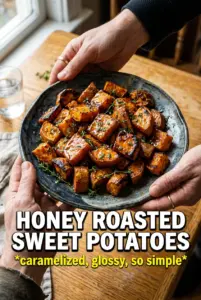
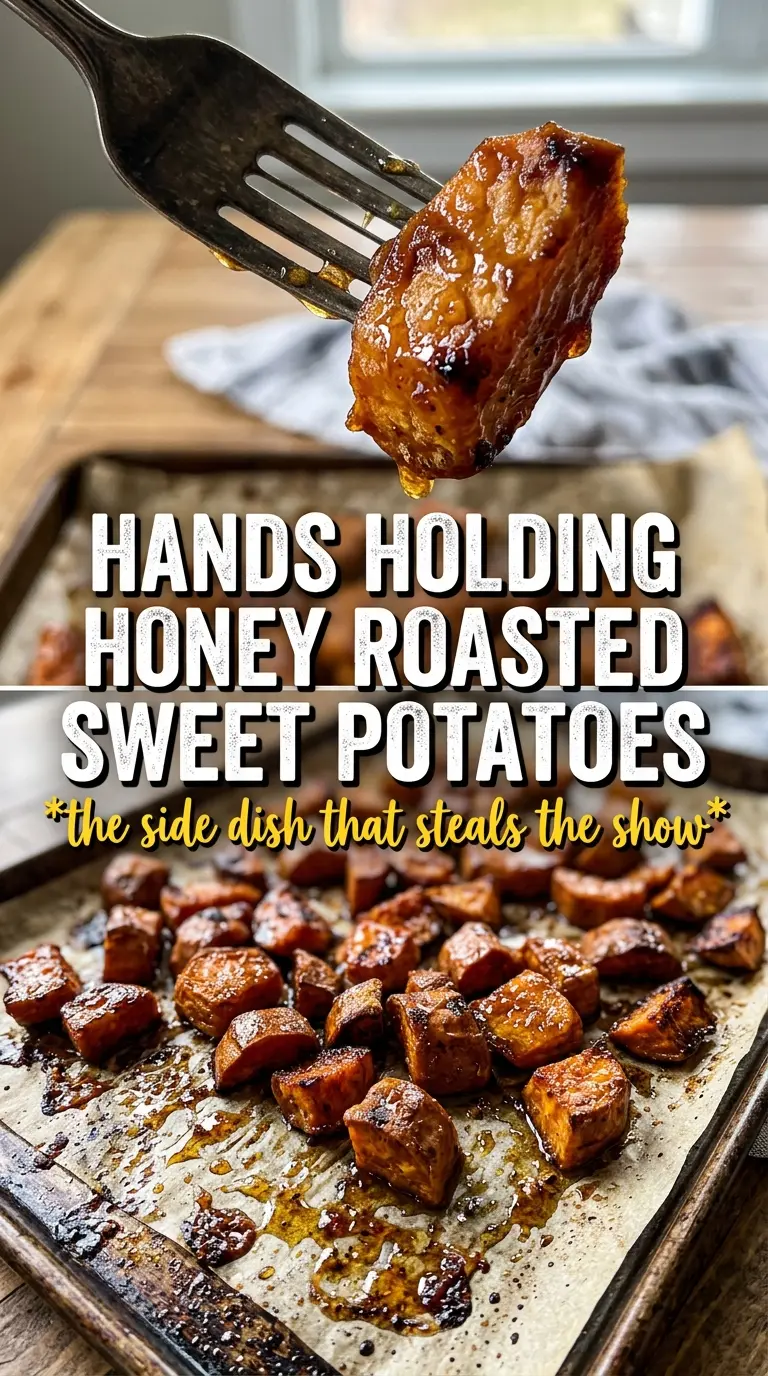
Honey roasted sweet potatoes turn deeply caramelized at the edges while staying soft and custardy inside, with enough sweetness to feel special and enough salt, smoke, and rosemary to keep them from leaning dessert-heavy. The glossy coating clings to every cube, and when the pan comes out right, you get those sticky browned corners that disappear fast off the serving platter.
The trick is in the balance. Honey and brown sugar help the potatoes brown, but olive oil keeps the sugars from burning before the centers are tender. A hot oven and a single layer on the pan matter more than anything else here; if the cubes are crowded, they steam instead of roast and you lose the crisp edges that make this side dish worth repeating. A little smoked paprika adds depth, and just enough cayenne gives the sweetness some backbone without making the dish taste hot.
Below, I’ve included the timing and pan tips that keep the cubes from turning soggy, plus a few smart swaps if you want to lean more savory, skip the butter, or make them ahead for a busy dinner.
The edges caramelized beautifully and the centers stayed soft instead of turning mushy. I tossed them halfway through and the honey glaze stayed on the potatoes instead of pooling on the pan.
Like these honey roasted sweet potatoes? Save the caramelized edges and rosemary-honey glaze for your next easy side dish.
The Reason They Brown Instead of Going Soft
Sweet potatoes have a lot of moisture, which is why they so often end up limp before they ever get those burnished edges. The fix is a hot oven, enough fat to coat the cubes, and a pan that isn’t overcrowded. Honey helps with color, but if you add too much sweetness without enough oil, the sugars can scorch before the potatoes are tender.
Cutting the sweet potatoes into even cubes matters more than it sounds. Bigger chunks lag behind and smaller ones dry out, so aim for pieces that are all close to the same size. Tossing halfway through gives you fresh surface contact with the hot pan, which is what keeps the bottom sides from staying pale and sticky.
What Each Ingredient Is Actually Doing Here
- Sweet potatoes — These are the backbone of the dish, and their natural starches are what turn creamy in the center while the edges caramelize. Peel them if you want a cleaner texture and more even browning.
- Honey — This gives the sticky glaze and helps the potatoes take on that lacquered finish. Maple syrup will work in a pinch, but it tastes a little deeper and less floral.
- Butter and olive oil — Butter brings richness and helps the spices cling, while olive oil keeps the coating stable at high heat. You can use all olive oil for a dairy-free version, but the flavor will be a little less round.
- Brown sugar — This pushes the caramelization and reinforces the honey without making the dish taste candy-sweet. Don’t skip it if you want those browned edges.
- Cinnamon, smoked paprika, and cayenne — Cinnamon gives warmth, paprika adds a subtle smoky note, and cayenne cuts through the sweetness. If you want a more classic side dish flavor, leave the cayenne out and keep the paprika.
- Rosemary and thyme — Rosemary goes into the roast for an herbal backbone, and thyme at the end keeps the finish fresh. Fresh herbs matter here because dried rosemary can read woody if it’s the only herb in the pan.
The 35 Minutes That Matter in the Oven
Coating the Cubes Evenly
Toss the sweet potatoes until every cut surface looks glossy, not patchy. If the honey sits in puddles on the bowl bottom, it’s not evenly distributed and those spots will darken too fast in the oven. The goal is a thin, clingy coating, not a syrupy marinade.
Roasting on a Hot, Open Pan
Spread the potatoes in a single layer on a lined baking sheet with space between the pieces. If they’re piled up, the steam trapped in the center softens the edges and you lose the roast. At 425°F, you want to hear a faint sizzle when the pan goes in and see browning develop before the potatoes start collapsing.
Tossing at the Midpoint
Halfway through cooking, use a spatula to turn the potatoes and scrape up any caramelized bits that are starting to stick. This exposes new sides to the heat and keeps the glaze from burning on just one face of the cube. If the pan looks dry, that’s normal; the sugars are tightening into a glaze.
Finishing With Salt After Roasting
Flaky salt and fresh thyme go on after the potatoes come out of the oven. Salt added too early can mute the sweetness and pull extra moisture to the surface, which works against browning. The final sprinkle wakes everything up and gives the glaze a clean finish instead of a flat sugary one.
How to Change the Flavor Without Losing the Texture
Dairy-Free Version
Swap the butter for another tablespoon of olive oil or use melted vegan butter. You’ll still get browning from the honey and sugar, but the flavor will be a little less rich and the glaze a touch lighter.
More Savory, Less Sweet
Cut the brown sugar in half and add an extra pinch of smoked paprika. The potatoes will still caramelize, but the finished dish will lean more toward a Thanksgiving-style side than a glazed vegetable.
No Cayenne Heat
Leave out the cayenne if you want a gentler, kid-friendly version. The dish will still have depth from the paprika and rosemary, just without that tiny tickle of heat at the end.
Make-Ahead and Reheat
Roast them until just tender, then cool and refrigerate. Reheat on a sheet pan in a hot oven so the glaze tightens back up; the microwave will soften the edges and turn the coating slack.
Storage and Reheating
- Refrigerator: Store in an airtight container for up to 4 days. The glaze will firm up and the edges soften a bit, but the flavor holds well.
- Freezer: They freeze, but the texture gets softer after thawing, so I only freeze them if I plan to use them in a mash or grain bowl later. Freeze in a single layer first, then transfer to a bag.
- Reheating: Warm on a baking sheet at 400°F until hot and the edges start to crisp again, about 10 to 15 minutes. Don’t crowd the pan or they’ll steam and lose the caramelized coating.
Answers to the Questions Worth Asking
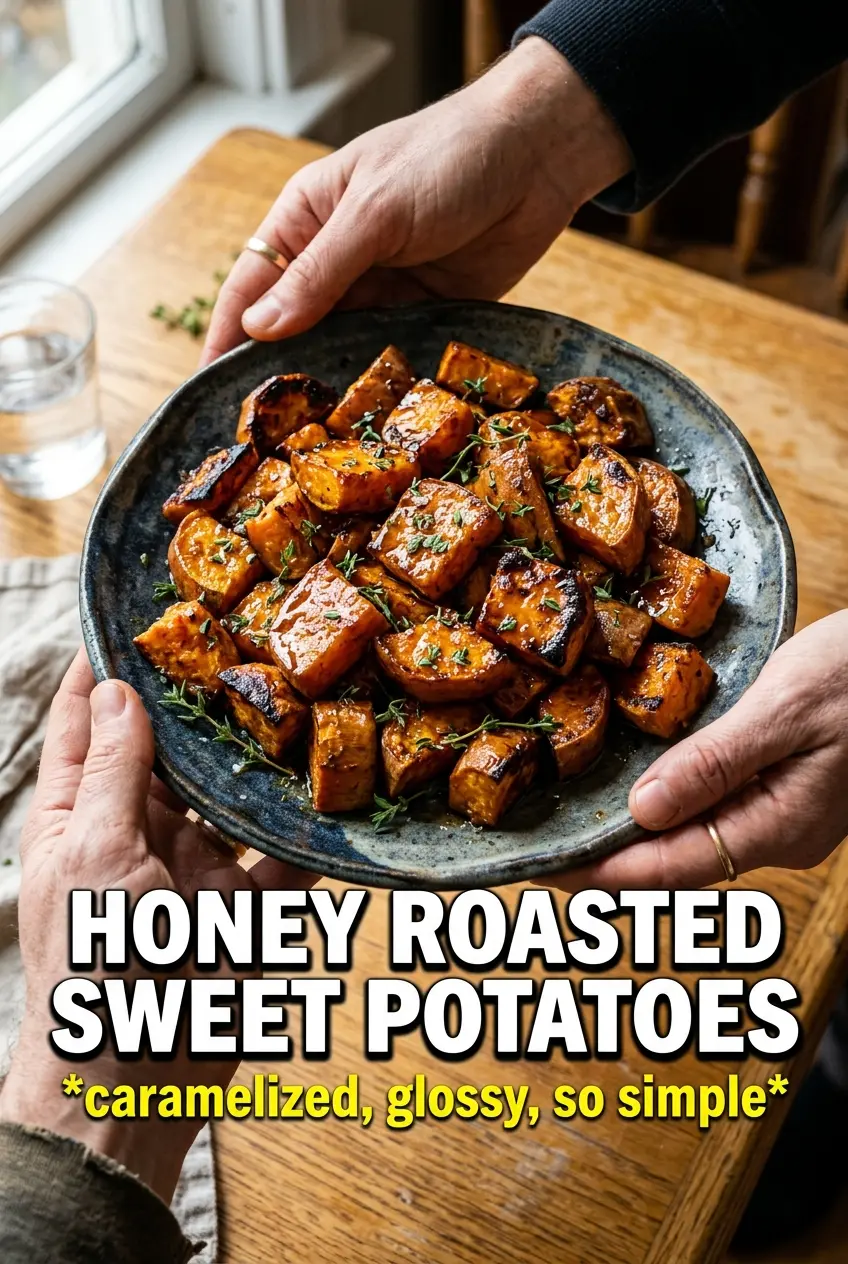
Honey Roasted Sweet Potatoes
Ingredients
Equipment
Method
- Preheat oven to 425F and line a baking sheet. The oven should come up to temperature fully before you roast.
- Toss sweet potato cubes with honey, melted butter, olive oil, brown sugar, cinnamon, smoked paprika, cayenne, rosemary, salt, and pepper. Coat every cube so the spices cling and the surfaces look glossy.
- Spread the sweet potatoes in a single layer on the baking sheet. Leave space between cubes so they caramelize instead of steaming.
- Roast for 30-35 minutes, tossing halfway, until caramelized and golden at the edges. After about 15-18 minutes, toss so the browned sides rotate to the top.
- Finish by sprinkling flaky sea salt and fresh thyme over the hot sweet potatoes. Add right away so the herbs smell fresh and the salt highlights the sweetness.