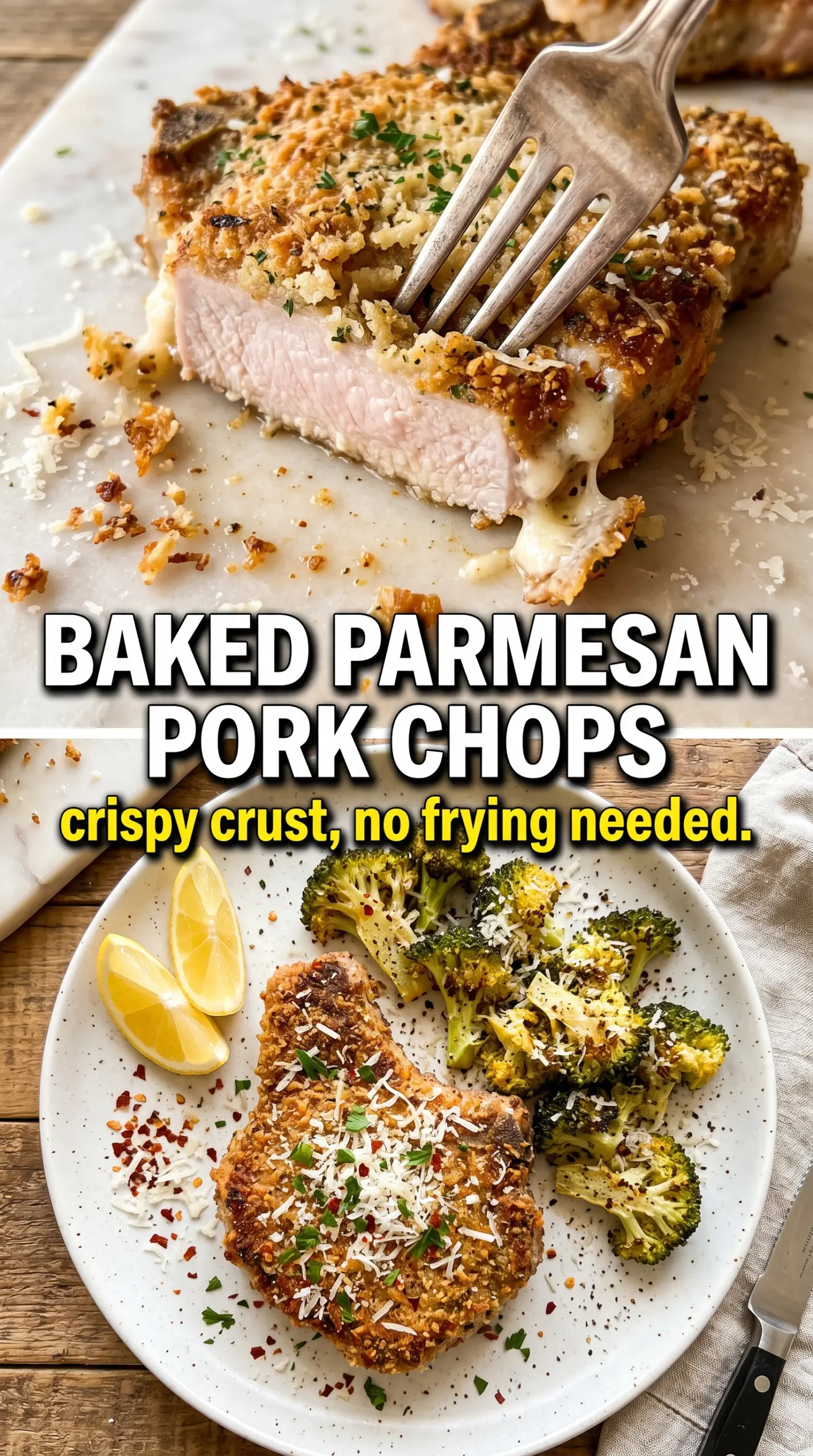
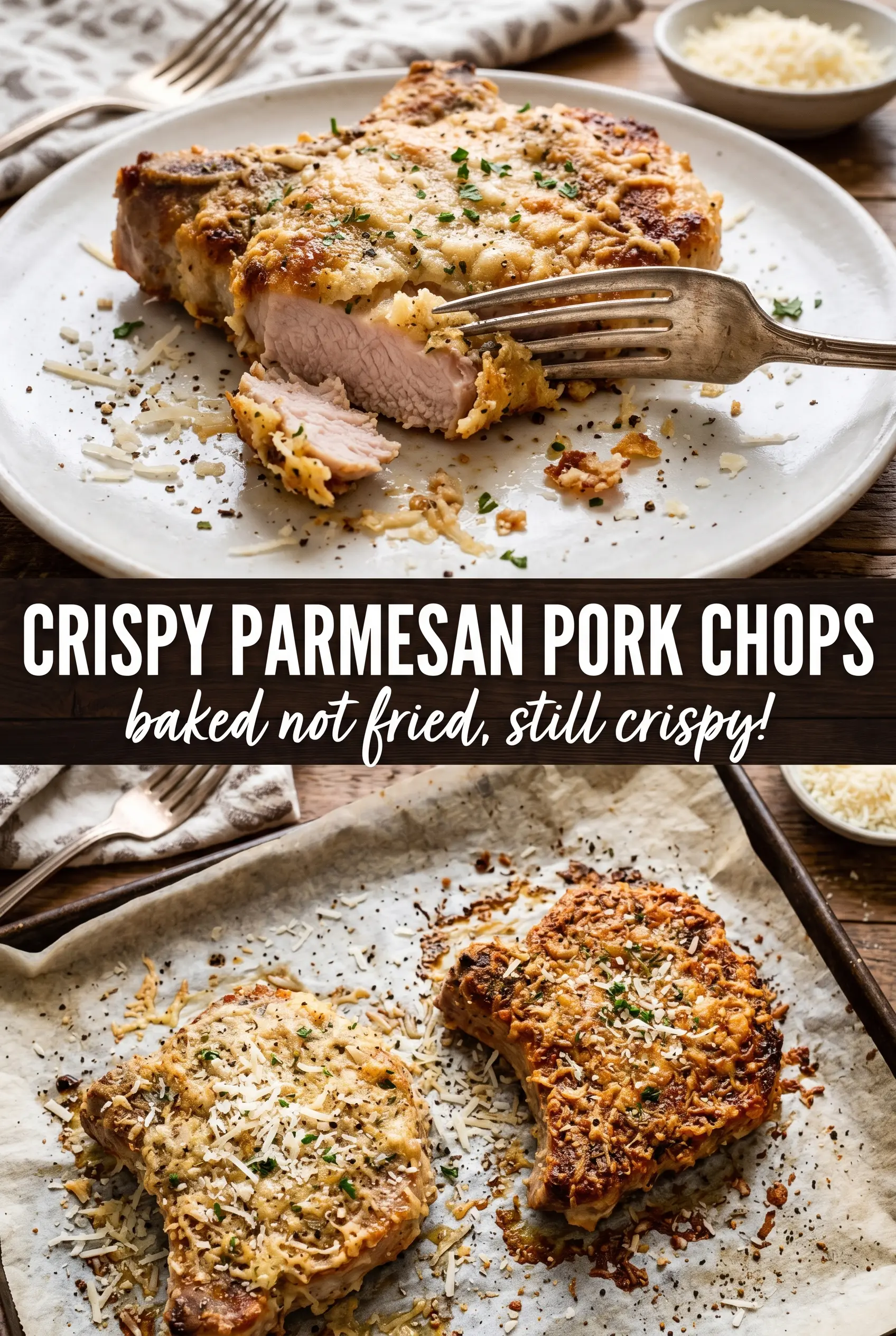
Crispy baked parmesan pork chops deliver the kind of crunch that makes you pause at the first bite. The crust turns deeply golden in the oven, the panko stays light instead of heavy, and the pork underneath stays juicy as long as you stop cooking at the right moment. This is the kind of weeknight main dish that tastes like you spent more effort than you actually did.
The trick is in the coating. Dijon and mayonnaise give the crumbs something sticky to cling to, while parmesan adds salt and a nutty edge that browns beautifully at high heat. Panko is the key to that shattery crust; regular breadcrumbs get denser and don’t give the same crisp finish. A quick spray of oil on top helps everything color evenly without frying.
Below, I’ll walk through the one detail that keeps the crust from sliding off, plus a few ways to adapt these chops if you need a different breadcrumb or dairy-free option.
The crust came out super crisp in the oven and stayed on the pork chops instead of falling off when I sliced them. The Dijon-mayo coating sounded unusual, but it gave the breading the perfect tacky layer and the chops stayed juicy.
Save these crispy baked parmesan pork chops for the nights when you want a golden crust and juicy center without pan-frying.
The Coating Trick That Keeps the Crust Where It Belongs
The biggest mistake with baked breaded pork chops is trying to use dry crumbs on dry meat. They slide, patchy spots show through, and the coating tends to burn in places before the pork is done. The mustard-mayo layer fixes that by acting like glue and adding just enough fat to help the crust brown in the oven instead of drying out.
Press the panko mixture on firmly, especially around the edges. That matters more than people think. If you just dust the chops lightly, the crust falls off the first time you turn or slice them. A firm press gives you that thick, crackly shell that holds together when you cut into the pork.
- Boneless pork chops — Three-quarter-inch chops cook evenly in the short oven time here. Thicker chops need a longer bake, which can dry out the coating before the meat is done.
- Dijon mustard — This gives the coating tang and helps it stick. Yellow mustard works in a pinch, but Dijon brings a sharper, more balanced flavor.
- Mayonnaise — You won’t taste mayo once the chops are baked. What it does is keep the surface from drying out and help the crust brown evenly.
- Panko breadcrumbs — Panko is what gives you the crisp, airy crunch. Regular breadcrumbs make a tighter crust that feels heavier.
- Parmesan cheese — Grated parmesan adds salt and a nutty edge that browns well. Use finely grated parmesan here, not big shreds, so it blends into the crumbs instead of clumping.
What Each Ingredient Is Actually Doing in This Pork Dish
- Pork (cut properly for the method) — Pat dry so it browns instead of steams. Even thickness ensures uniform cooking.
- Oil or butter (the browning medium) — High-heat oil essential for proper searing. Creates pan flavor.
- Seasonings (salt, pepper, spices) — Build flavor boldly. Pork carries the entire profile.
- Aromatics (garlic, onion, herbs) — Cook with fat to bloom flavors. Become the foundation.
- Sauce or liquid (broth, cream, or glaze) — This keeps lean pork from drying. Balance richness with acid.
- Vegetables (if using) — Layer by cooking time so everything finishes together.
- Acid (vinegar, wine, or citrus) — This brightens sauce and prevents heavy flavor.
- Proper doneness (145°F with slight pink center) — Pork is safe here and stays juicy. Higher temps dry it out.
Building the Crust Without Soggy Spots
Mix the Sticky Layer First
Stir the Dijon and mayonnaise together until the mixture is smooth and even. That keeps the coating from going on in streaks, which is where you get bare patches after baking. Spread it over both sides of the pork chops in a thin, even layer; too much and the crust can turn gummy under the crumbs.
Press, Don’t Sprinkle
Combine the panko, parmesan, garlic powder, Italian seasoning, salt, and pepper in a shallow bowl, then press each chop into the mixture firmly on both sides. Use your hand to pack the crumbs onto the surface, especially along the edges. If the coating looks loose and dusty, it won’t crisp into a full crust.
Bake Hot Enough to Brown
A 425°F oven gives the panko enough heat to color before the pork dries out. Line the pan with parchment so the crust doesn’t weld itself to the tray, then spray the tops lightly with olive oil. Pull the chops when the crust is deep golden and the center reaches 145°F; if you wait for them to look fully firm in the middle, they’ll overcook by the time you rest them.
Let the Juices Settle
Give the chops a 3-minute rest before serving. That short pause keeps the juices from running out the second you cut into them. Finish with lemon wedges and parsley, which brighten the parmesan and cut through the richness of the crust.
How to Adapt These Pork Chops Without Losing the Crunch
Gluten-Free Crunch
Use gluten-free panko in place of regular panko. The texture stays light and crisp, which is what you want here; almond flour won’t give the same shattering crust and tends to bake up denser.
Dairy-Free Version
Swap the parmesan for a dairy-free parmesan-style topping or extra seasoned breadcrumbs. You’ll lose some of the nutty, salty depth, but the crust still turns crisp if you keep the coating thin and bake at the same high heat.
Extra Herb Crust
Add a tablespoon of chopped fresh parsley or a half teaspoon of dried rosemary to the crumb mixture. Fresh herbs add a brighter finish, but use them sparingly so they don’t burn before the pork is done.
For Thicker Pork Chops
If your chops are closer to 1 inch thick, add a few extra minutes and start checking early with an instant-read thermometer. The coating will darken at about the same pace, so the goal is to pull them as soon as they hit 145°F rather than waiting for the crust to look darker.
Storage and Reheating
- Refrigerator: Store leftovers in an airtight container for up to 3 days. The crust softens a little, but it still reheats well.
- Freezer: These freeze best after baking. Cool completely, wrap tightly, and freeze for up to 2 months. The crust won’t be as crisp after thawing, but the flavor holds up.
- Reheating: Reheat on a wire rack in a 375°F oven until hot. Skip the microwave if you want any crunch left; it steams the breading and turns the coating soggy fast.
Questions I Get Asked About This Recipe
Crispy Baked Parmesan Pork Chops
Ingredients
Equipment
Method
- Preheat oven to 425°F and line a baking sheet with parchment. Keep the sheet ready so the crust goes on right before baking.
- Mix Dijon mustard and mayonnaise in a bowl. Stir until smooth and spreadable so it adheres evenly.
- Combine panko, parmesan, garlic powder, Italian seasoning, salt, and pepper in another bowl. Toss until the crumbs are evenly colored.
- Season pork chops with salt and pepper. Make sure both sides are lightly but evenly seasoned.
- Spread the mustard-mayo mixture over both sides of each pork chop. Coat generously so the crust sticks when pressed.
- Press the panko-parmesan mixture firmly onto both sides of the pork chops. Press with your palm so the crust looks thick and well packed.
- Place pork chops on the baking sheet and spray lightly with olive oil. Arrange with space between them for crisping.
- Bake 18–20 minutes at 425°F until the crust is deep golden and pork reaches 145°F. Watch for a crisp, shatter-ready top with no pale patches.
- Rest the pork chops 3 minutes after baking. The juices settle and the crust stays crisp rather than softening immediately.
- Serve with lemon wedges and fresh parsley. Finish with a squeeze of lemon for brightness against the crunchy parmesan crust.