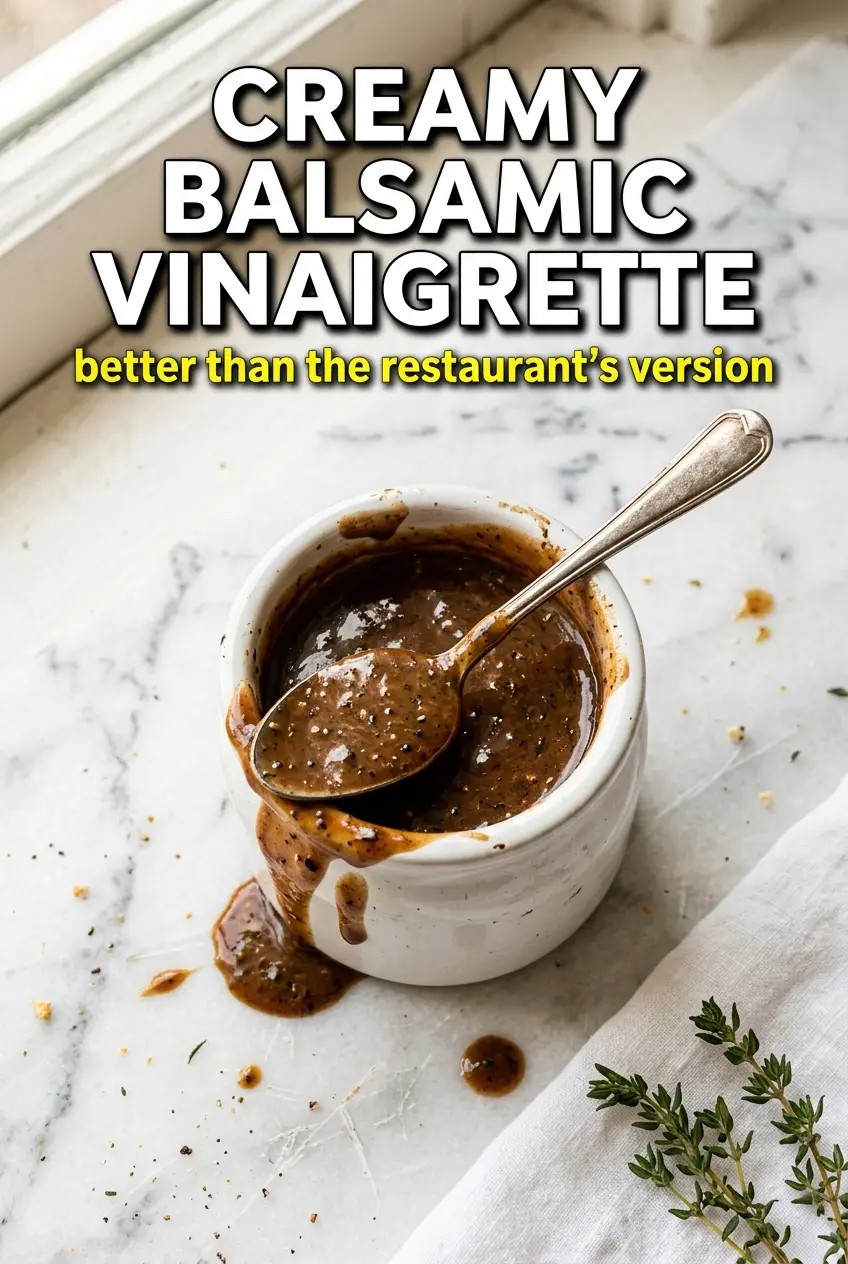
Silky, tangy, and glossy enough to cling to every leaf, creamy balsamic vinaigrette turns a plain bowl of greens into something that actually gets finished. The balance matters here: enough balsamic to bring depth, enough Dijon to keep the dressing emulsified, and just enough honey and dairy to round off the sharp edges without making it taste heavy.
The trick is building the emulsion in stages. The mustard helps the oil and vinegar stay together, and the sour cream or Greek yogurt adds body after the base is stable, not before. If you dump everything in at once, the dressing can turn thin or separate faster in the fridge. Whisking the olive oil in slowly gives you that smooth, mahogany-colored finish that pours cleanly and coats instead of puddling.
Below, I’ve included the small details that keep this dressing balanced, plus a few swaps that work when you want it a little lighter, a little richer, or dairy-free.
The dressing came together fast, and the yogurt made it creamy without turning it heavy. I shook it again after chilling, and it coated the greens beautifully instead of sliding off the bowl.
Save this creamy balsamic vinaigrette for salads that need a glossy, tangy dressing with just enough richness to cling to every bite.
The Emulsion Breaks When You Rush the Olive Oil
Most balsamic dressings split because the oil goes in too fast. The vinegar and mustard need time to bind before the fat is added, and that slow whisking is what gives you a dressing that stays unified instead of turning cloudy and thin. If you’ve ever made a vinaigrette that looked perfect for five minutes and then separated in the jar, the problem was usually speed, not ingredients.
This version stays stable because Dijon does more than flavor the dressing. It acts like the bridge between the acid and the oil, helping everything hold together long enough for the sour cream or yogurt to add creaminess. The final texture should look glossy and lightly thickened, not mayonnaise-thick and not watery.
- DiJon mustard — This is the stabilizer. Yellow mustard won’t give the same sharp flavor or emulsifying power, so stick with Dijon if you want the dressing to stay cohesive.
- Balsamic vinegar — Use a balsamic you’d actually enjoy tasting. A harsh bottle will read even sharper once the dressing is mixed, while a rounder, slightly sweet vinegar gives better balance.
- Olive oil — A good everyday extra-virgin olive oil is enough here. You don’t need your most expensive bottle, but avoid one that tastes peppery or bitter if you want a smoother finish.
- Sour cream or Greek yogurt — Sour cream gives a softer, richer finish; Greek yogurt makes it tangier and a little lighter. Both work, but add them after the vinaigrette has emulsified so the base doesn’t thin out.
Whisking the Dressing Until It Turns Silky
Start With the Acid Base
Whisk the balsamic vinegar, Dijon, honey, and minced garlic until the honey disappears and the mixture looks fully blended. The garlic should be evenly dispersed, not clumped in one corner of the bowl. If the honey sits in streaks, the dressing won’t taste balanced from the first spoonful to the last.
Drizzle in the Oil Slowly
Add the olive oil in a thin stream while whisking constantly. This is the point where the dressing turns from sharp and broken-looking to smooth and glossy. If you pour too quickly, the emulsion can collapse and you’ll end up with oil floating on top instead of a creamy finish.
Finish With the Dairy
Stir in the sour cream or Greek yogurt until the dressing looks evenly colored and thick enough to coat a spoon. Don’t whisk it in aggressively at this stage or the texture can loosen; a steady stir is enough. Taste before salting, because the mustard and balsamic already carry plenty of punch and the dairy softens the edges.
Adjust and Store Properly
Season with salt and pepper, then let the dressing sit for a few minutes before tasting again. Garlic and balsamic both mellow a little after resting, so the flavor you want is one notch brighter than the final salad should taste. Store it in a jar and shake hard before each use, since even a well-made dressing will settle in the fridge.
How to Bend This Dressing to Fit What’s in Your Fridge
Greek Yogurt for a Lighter Finish
Use plain Greek yogurt instead of sour cream if you want a tangier, slightly leaner dressing. It thickens the vinaigrette a bit more and gives it a cleaner finish, but the flavor will be sharper, so you may want an extra teaspoon of honey to keep the balance round.
Dairy-Free Version
Swap the sour cream or yogurt for a spoonful of tahini or a dairy-free plain yogurt. Tahini gives the dressing a deeper, nuttier taste and a thicker body, while dairy-free yogurt keeps the flavor closer to the original but can be a little looser, so whisk it in slowly and chill briefly before serving.
Less Sweet, More Tangy
Cut the honey back to 1 teaspoon if you like your vinaigrette sharper. The dressing will still emulsify, but the balsamic and Dijon will come forward more, which works well on bitter greens like arugula or radicchio.
Storage and Reheating
- Refrigerator: Store in a sealed jar for up to 1 week. It may thicken slightly and separate a bit as it chills, which is normal.
- Freezer: Don’t freeze this dressing. The dairy and emulsion both suffer after thawing, and the texture usually turns grainy or broken.
- Reheating: No reheating needed. Let it sit at room temperature for 10 to 15 minutes, then shake or whisk until smooth before serving. Cold dressing clings poorly and tastes muted, so this small step matters.
Questions I Get Asked About This Recipe
Creamy Balsamic Vinaigrette
Ingredients
Method
- Whisk balsamic vinegar, Dijon mustard, honey, and minced garlic together until evenly combined and glossy. No heat is needed; keep whisking until the garlic is fully dispersed.
- Slowly whisk in olive oil in a thin stream to emulsify, starting with a few drops and then increasing the pace. Continue whisking until the mixture looks slightly thicker and cohesive.
- Stir in sour cream or Greek yogurt until smooth and creamy, with no streaks remaining. Stop as soon as the dressing becomes uniform.
- Season with salt and pepper to taste, whisking briefly after each addition. Adjust until the flavor is balanced for coating greens.
- Transfer the vinaigrette to a jar and screw on the lid tightly. Shake well before each use so the creamy emulsion stays smooth and glossy.