Kielbasa and cabbage belong together in a skillet because the sausage brings salt, smoke, and enough fat to season the whole pan, while the cabbage softens into silky ribbons with browned edges where it touches the heat. When it’s done right, you get a dish that tastes rustic and complete, not like a quick throw-together meal.
The trick is giving the kielbasa a real sear before the cabbage goes in. That browning leaves behind seasoned bits in the pan, and those bits do most of the work once the onion, garlic, broth, and cabbage start cooking together. Caraway seeds are the other quiet advantage here; they cut through the richness and give the cabbage that classic Polish-style backbone without making the dish heavy.
Below, I’ll walk through the detail that keeps the cabbage from steaming into sadness, plus the small ingredient choices that make this skillet taste like more than the sum of its parts.
The kielbasa browned up beautifully and the cabbage turned sweet and tender without getting mushy. I loved how the caraway and broth made the whole skillet taste like it had been simmering much longer than 20 minutes.
Save this kielbasa and cabbage skillet for a fast one-pan dinner with browned sausage, tender cabbage, and caraway.
The Browned Sausage Is What Gives This Skillet Its Depth
Most cabbage-and-sausage skillets taste flat because everything gets tossed together too quickly and starts steaming before anything can brown. That’s the mistake to avoid here. Browning the kielbasa first builds flavor in the pan and gives the finished dish the savory edge that makes you want another forkful.
The second piece is controlling the cabbage’s water. Once the broth goes in, the pan should stay covered just long enough to soften the cabbage, not long enough to turn it limp and gray. You want tender shreds with a little structure left, and that happens when the heat stays at a steady medium instead of racing the liquid to a hard boil.
- Kielbasa — Smoked kielbasa gives the dish its backbone. Pork or beef both work, but fully cooked sausage is the easiest path because you’re building flavor, not cooking it from raw. Slice it thick enough to hold its shape so the edges can brown.
- Green cabbage — Green cabbage holds up better than red or savoy here. It softens into a sweet, silky texture without disappearing. If you cut it into larger pieces, give it the full cooking time so the center loses its raw crunch.
- Caraway seeds — These are the one ingredient that makes the skillet taste distinctly Polish. Toasting them briefly in the pan releases their oil and keeps them from tasting dusty or harsh.
- Vegetable broth — Broth helps steam the cabbage and carries the browned bits into the whole dish. Water works in a pinch, but the flavor is thinner. If you use chicken broth instead, the result is a little richer and less neutral.
- Butter — Butter gives the onions a rounder taste and helps the kielbasa take on better color. You can swap in oil if needed, but the finished skillet will taste a little less plush.
Building the Skillet in the Right Order
Getting Color on the Kielbasa
Melt the butter over medium-high heat and add the sliced kielbasa in a single layer. Let it sit long enough to brown before stirring, because constant movement keeps it pale. You want deep golden edges and a little fond on the bottom of the pan, not a gray sausage that just warmed through. If the pan looks crowded, brown the sausage in two batches so it can actually sear instead of steam.
Softening the Onion and Garlic
Once the kielbasa is out, add the onion to the same skillet and cook until it turns translucent and sweet around the edges. The onion should pick up some of the sausage fat and brown bits while it softens. Stir in the garlic for just a minute; if it goes in too early, it can burn while the onion is still trying to soften. Burnt garlic will take over the whole dish, and there’s no fixing that later.
Covering the Cabbage at the Right Moment
Return the kielbasa to the pan, add the cabbage, broth, and caraway seeds, then stir until everything is coated. Cover the skillet and let the cabbage cook over medium heat until it’s tender but still has some body. If the pan is boiling hard, turn the heat down; that kind of heat drives off the broth too fast and leaves the cabbage unevenly cooked. Taste at the end and season with salt and pepper only after the sausage and broth have done their work.
How to Adapt This Skillet Without Losing What Makes It Work
Make It Dairy-Free
Swap the butter for olive oil or another neutral cooking oil. You’ll lose a little richness, but the sausage still brings enough fat to keep the skillet satisfying, and the cabbage will still brown around the edges if the heat is high enough at the start.
Make It Lower-Carb and Heavier on the Vegetables
This recipe already leans low-carb, but you can stretch it with sliced mushrooms or a handful of shredded kale near the end. Mushrooms add more savory depth, while kale gives the skillet a firmer texture and a slightly earthier finish.
Use Chicken Sausage Instead
Chicken sausage works if that’s what you have, but it won’t leave behind quite as much fond or smoky depth. You may want to add an extra pinch of salt and a little more caraway to keep the skillet tasting full.
Stretch It for a Bigger Crowd
Add another half head of cabbage and a splash more broth if you need more servings. Use the biggest skillet you own, or the cabbage will pile up too high and steam instead of softening evenly.
Storage and Reheating
- Refrigerator: Store in an airtight container for up to 4 days. The cabbage softens a little more as it sits, but the flavor holds up well.
- Freezer: It freezes, but the cabbage will be softer after thawing. If you freeze it, cool it completely first and pack it tightly in freezer-safe containers for up to 2 months.
- Reheating: Reheat in a skillet over medium-low heat with a splash of broth or water, covered at first so the cabbage warms without drying out. The common mistake is blasting it in the microwave until the sausage turns rubbery and the cabbage goes watery.
Questions I Get Asked About This Recipe
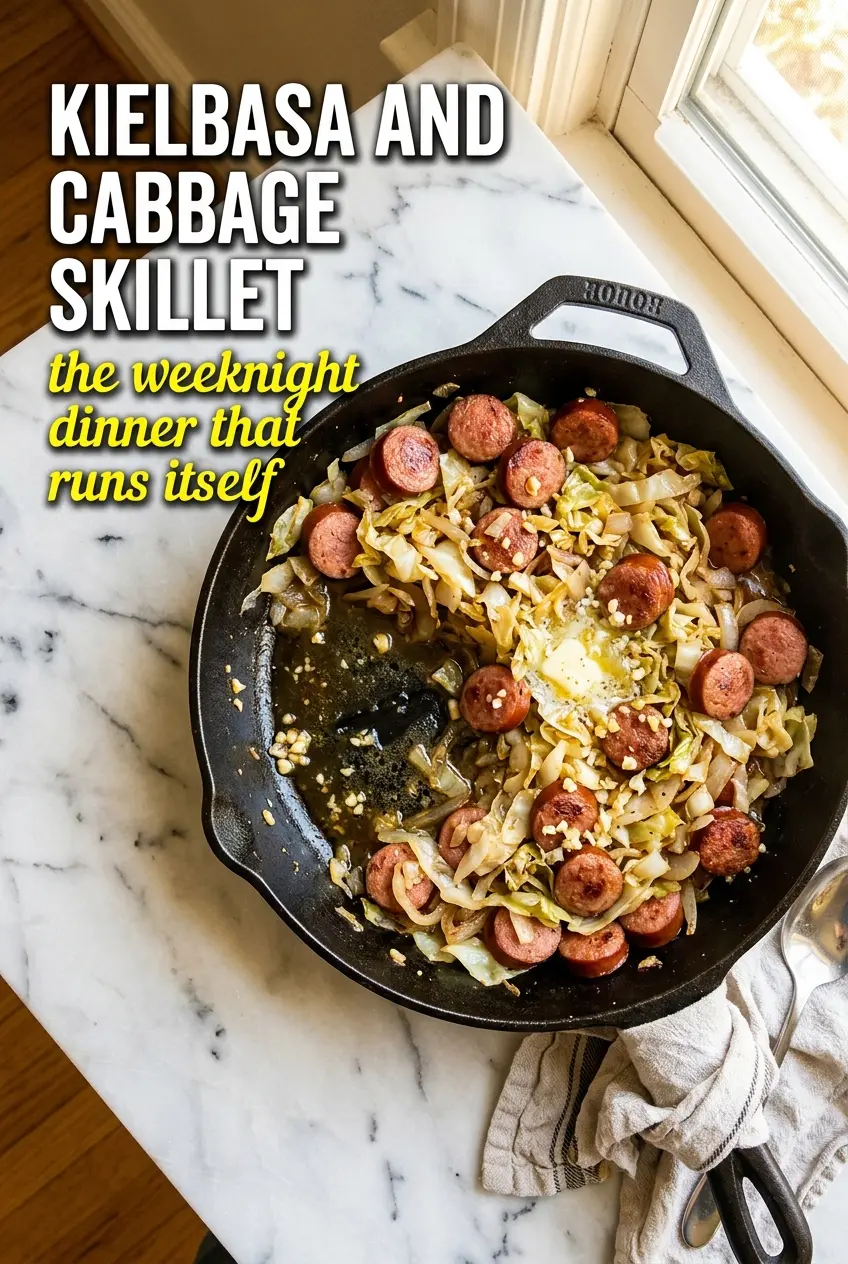
Kielbasa and Cabbage Skillet
Ingredients
Equipment
Method
- Melt the butter in a large skillet over medium-high heat. Add the sliced kielbasa and cook until browned, about 5 minutes, using a spatula to keep contact for deeper color.
- Remove the kielbasa with a slotted spoon and set aside so the pan can brown the next layer.
- Add the diced onion to the same skillet and cook until softened, about 4 minutes. Scrape up any browned bits as you stir for more flavor.
- Stir in the minced garlic and cook for 1 minute, until fragrant and lightly sizzling.
- Return the kielbasa to the skillet and add the chopped cabbage, vegetable broth, and caraway seeds. Stir to combine so the cabbage is evenly coated.
- Cover and cook over medium heat for 12-15 minutes, until the cabbage is tender. Lift the lid briefly to check tenderness and keep the liquid at a gentle simmer.
- Season with salt and pepper, garnish with fresh thyme, and serve. Finish with visible thyme flecks on top for a fresh aroma cue.