Golden rye bread, a juicy beef patty, sweet caramelized onions, and melted Swiss cheese turn a patty melt into one of those diner-style sandwiches that earns its place in the regular rotation fast. The best version has a crisp, buttery crust that gives way to a savory center with just enough onion sweetness to balance the beef. When it’s built right, the cheese melts into the onions instead of sliding out the sides, and every bite tastes like it came off a flattop grill.
The trick is patience in the skillet. The onions need time to turn soft, sweet, and deeply browned before they ever meet the bread. The patties should be thinner than a burger and shaped to match the bread so nothing feels bulky or awkward once the sandwich is pressed. Rye bread matters here, too, because its sturdier texture and tang hold up better than soft sandwich bread against all that filling.
Below, you’ll find the small decisions that make the difference between a greasy sandwich and a properly crisp patty melt, plus a few swaps if you need to work with what’s already in your kitchen.
The onions took a little longer than I expected, but that was worth it — they turned jammy and sweet, and the bread got perfectly crisp without falling apart. My husband said it tasted like the best diner sandwich he’s had at home.
Save this classic patty melt for the nights when you want a diner-style sandwich with crisp rye, caramelized onions, and melty Swiss cheese.
The Part Everyone Rushes: Caramelizing the Onions Without Steaming Them
The onions are the quiet anchor of this sandwich, and they need color, not just softness. If you crowd the pan or start them over too much heat, they’ll collapse and steam before they ever turn sweet. That leaves you with pale onions and a flat-tasting sandwich.
Use medium-low heat and give them time. Stir often enough to keep the edges from scorching, but not so often that they never sit long enough to brown. Once they look deep amber and jammy, take them out of the skillet so the patties can cook in the same pan and pick up the leftover flavor.
What the Beef, Bread, and Cheese Are Each Doing Here
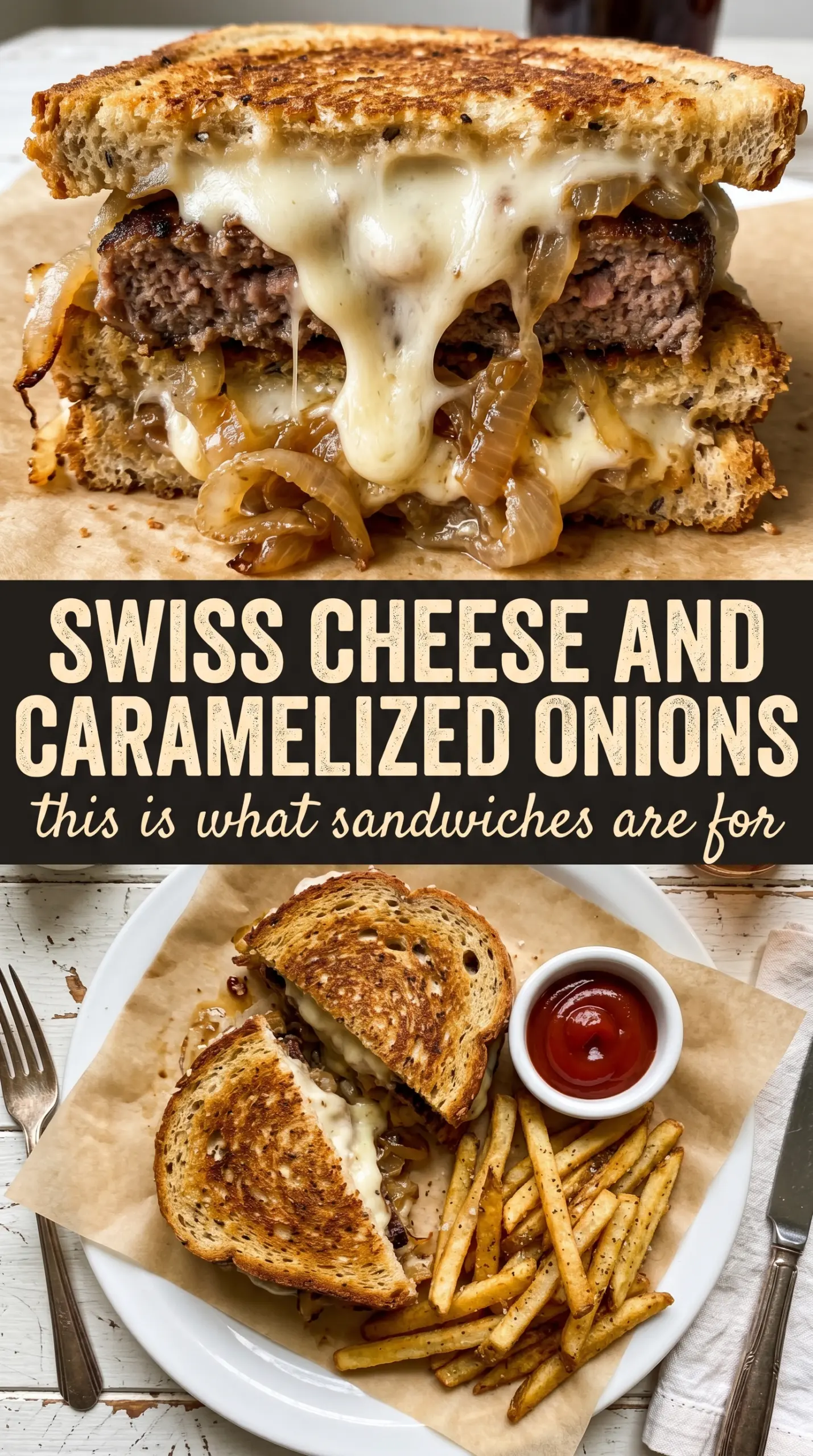
- Ground beef (80/20) — That fat content keeps the patties juicy enough to stand up to pressing in the skillet. Leaner beef works, but it dries out faster and tastes more like a standard burger than a true patty melt.
- Rye bread — Rye gives the sandwich structure and a little tang, which matters because this is a heavy, cheesy filling. Marble rye is a good swap if that’s what you have, and it looks nice on the plate too.
- Swiss cheese — Swiss melts cleanly and has enough nuttiness to balance the onions. American cheese melts even smoother if you want a more diner-style, extra-gooey center.
- Worcestershire sauce — This adds depth fast. You don’t need much, but it keeps the beef from tasting one-note.
- Butter and olive oil — The oil keeps the butter from burning while the bread grills, and the butter gives the crust that rich, toasted finish. Don’t skip the butter on the outside of the bread; it’s what creates that crisp, even browning.
Building the Sandwich So the Bread Stays Crisp and the Cheese Stays Put
Cooking the Onions First
Melt part of the butter with the olive oil, then add the sliced onions and a pinch of salt. The salt pulls moisture out at the start, which helps the onions soften before they color. Cook them until they’re deeply golden and reduced, not just translucent. If they start catching too fast, lower the heat and give them another minute; burnt onion turns bitter and will dominate the whole sandwich.
Shaping and Searing the Patties
Season the beef and form it into thin ovals that match the bread shape as closely as you can. Thin patties cook quickly and sit neatly inside the sandwich instead of bulging out. Sear them in the same skillet over medium-high heat until browned and cooked through. If you press them hard while they cook, you’ll squeeze out the juices, so let the pan do the work.
Assembling for the Best Melt
Butter one side of each bread slice, then build the sandwich with the unbuttered sides facing in. Start with cheese against the bread, then the patty, then onions, then more cheese before closing it up. That cheese-on-bread layer helps glue everything together and protects the bread from getting soggy. If you skip the top layer of cheese, the onions can slide around and the sandwich is harder to hold together once it’s cut.
Grilling Until the Crust Turns Deep Gold
Cook the assembled sandwich over medium heat and press it gently with a spatula. You want the bread to turn a deep golden brown and the cheese to melt all the way through before the crust gets too dark. If the bread is browning before the cheese melts, lower the heat and give it more time. A patty melt should sound faintly crisp as it comes out of the pan, not greasy or soft.
How to Adapt This When You Need a Different Cheese, Bread, or Leftover Plan
American Cheese for Extra Melt
Swap some or all of the Swiss for American if you want a softer, more classic diner melt. You lose a little nuttiness, but you gain a smoother, almost stretchy texture that holds the filling together beautifully.
Gluten-Free Version
Use a sturdy gluten-free sandwich bread that can handle pressing in the skillet. Softer loaves tend to fall apart, so pick one with a tighter crumb and toast the outside a little longer over moderate heat.
Thousand Island for a Reuben-Style Edge
A thin swipe of Thousand Island gives the sandwich a little tang and sweetness, but keep it light. Too much sauce softens the bread fast and fights with the caramelized onions instead of supporting them.
Make-Ahead Components
The onions can be cooked a day or two ahead and stored in the fridge, which cuts the active time down a lot. Reheat them gently before assembling so they don’t cool the sandwich too much in the center.
Storage and Reheating
- Refrigerator: Store cooked patty melts in an airtight container for up to 3 days. The bread softens a bit, but the flavor holds up well.
- Freezer: The assembled sandwich doesn’t freeze well after grilling because the bread gets soggy when thawed. You can freeze the cooked patties separately if needed, then thaw and assemble fresh.
- Reheating: Reheat in a skillet over low to medium-low heat with a lid for a few minutes so the center warms before the crust burns. The biggest mistake is using the microwave, which makes the bread limp and the cheese greasy.
Questions I Get Asked About This Recipe
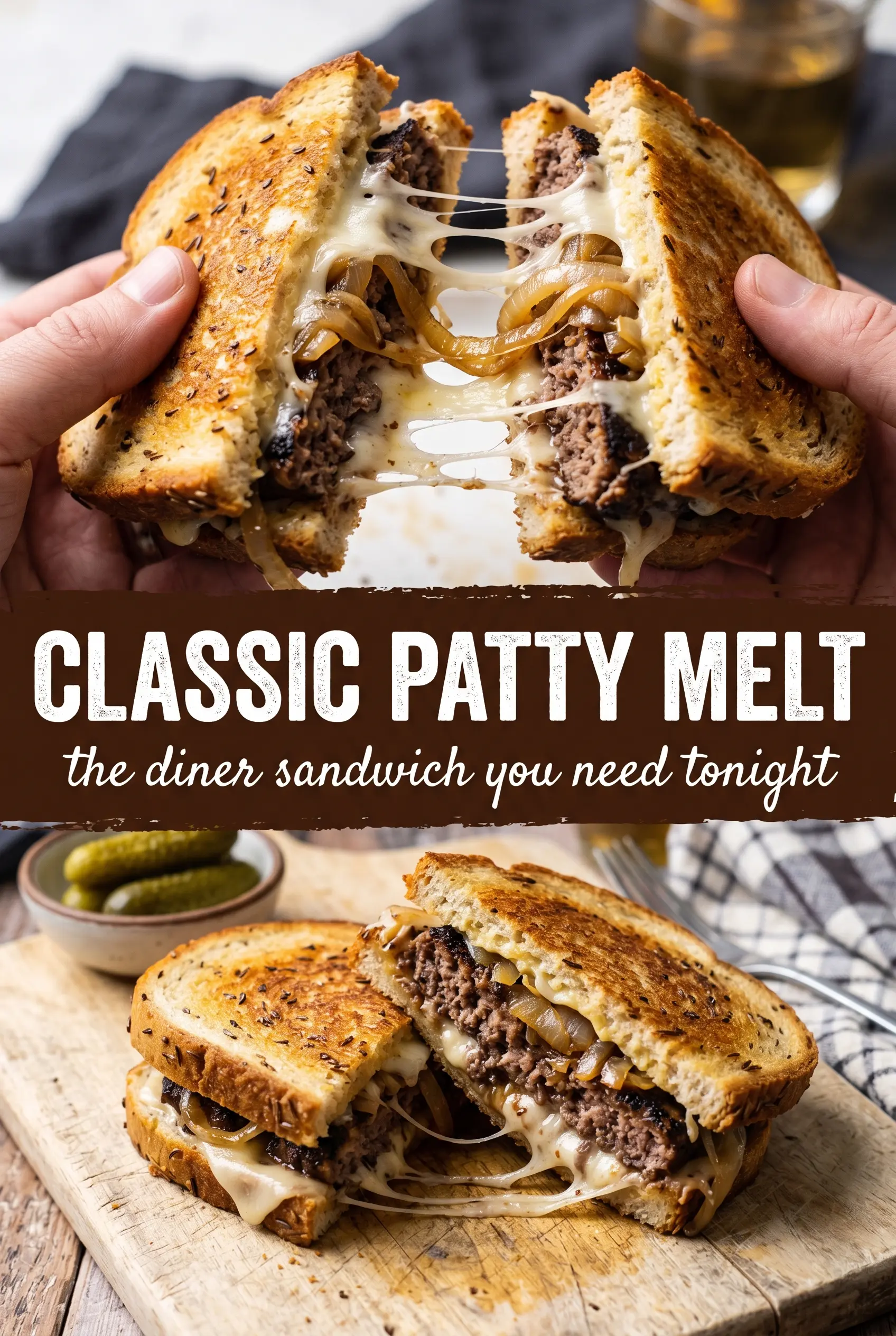
Classic Patty Melt
Ingredients
Equipment
Method
- Melt 1.5 tablespoons butter with olive oil in a skillet over medium-low heat, then add thinly sliced onions with a pinch of salt. Cook, stirring often, for 20–25 minutes until deeply caramelized, then set aside.
- Season the ground beef with salt, black pepper, and Worcestershire sauce, then form into 4 thin oval patties matching the bread shape. Keep patties ready for skillet cooking.
- Cook the patties in the same skillet over medium-high heat for 3–4 minutes per side until cooked through, then set aside.
- Butter one side of each bread slice, then build sandwiches with unbuttered side down. Layer Swiss cheese, patty, caramelized onions, and more cheese, then top with the remaining bread slices unbuttered side up.
- Grill the sandwiches on medium heat for 2–3 minutes per side, pressing gently, until the bread is golden and the cheese is fully melted.