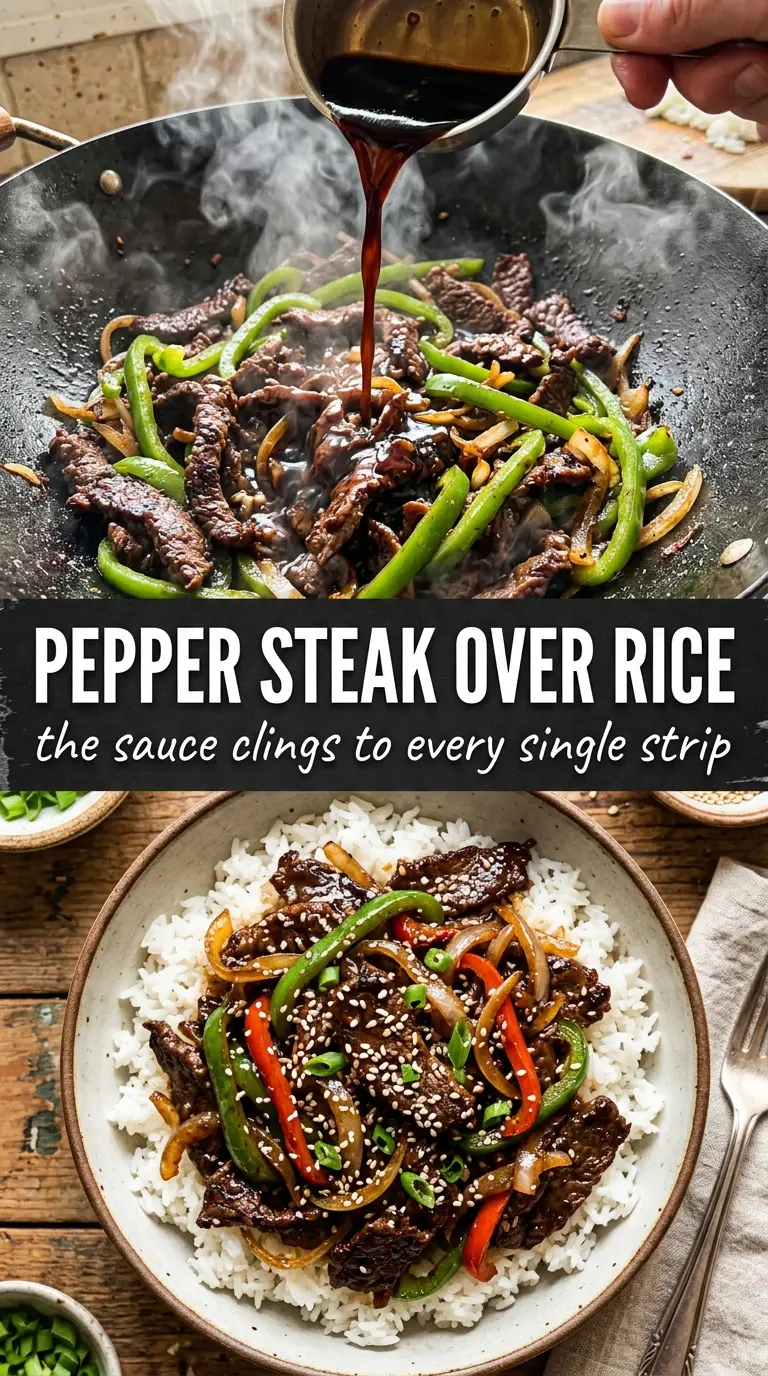
Tender beef, crisp-edged peppers, and onions coated in a glossy soy-oyster sauce make this Chinese pepper steak with onions the kind of dinner that disappears fast once it hits the table. The sauce clings instead of pooling, the vegetables stay a little sharp, and every bite has that salty-sweet, garlicky finish that makes a plain bowl of rice feel like the right move.
What sets this version apart is the way the beef is handled before it ever touches the pan. A short marinade with cornstarch gives the meat a light coating that helps it brown and keeps the sauce from turning thin later. The wok needs to be hot enough to char the peppers at the edges without softening them into mush, and that quick high-heat cook gives the dish its takeout-style depth.
Below you’ll find the timing that keeps the sauce glossy, not gluey, plus a few practical swaps if you’re using flank steak instead of ground beef or want to adjust the dish around what you already have on hand.
The beef stayed tender and the sauce thickened right at the end instead of turning watery. I used flank steak and the peppers still had a little bite, which made it taste just like our favorite takeout spot.
Save this Chinese Pepper Steak with Onions for the nights when you want glossy takeout-style beef, crisp peppers, and a fast stir fry over rice.
The Marinade That Keeps the Beef Tender Instead of Chewy
The mistake with pepper steak is usually rushing the beef straight into a screaming-hot pan with no protection. That works against you. The cornstarch in the marinade forms a thin coating around the meat, which helps it brown faster and gives the sauce something to cling to instead of sliding off into the pan.
This matters even more if you’re using flank steak. Slice it thinly against the grain and let it sit for the full 20 minutes so the soy sauce seasons the meat all the way through. If you skip the rest, the beef still cooks, but it tastes flatter and the texture lands somewhere between dry and firm.
What Each Ingredient Is Actually Doing in This Recipe
- Primary ingredient (the star) — Quality matters most. Choose the best you can find.
- Cooking medium (oil, butter, or broth) — This carries flavors and prevents dryness.
- Seasonings (salt, pepper, spices, herbs) — Layer flavors so nothing overpowers. Build depth gradually.
- Aromatics (garlic, onion, herbs) — Cook with fat to bloom flavors. Become the foundation.
- Supporting ingredients — Complement the main ingredient without overpowering it.
- Sauce or liquid (if applicable) — Brings flavors together. Balance richness with acid.
- Acid (lemon, vinegar, wine, or other) — Brightens and prevents flat-tasting results.
- Final finish (garnish, glaze, or sauce) — Prevents one-dimensional taste and adds visual appeal.
What Each Ingredient Is Actually Doing in This Stir Fry
- Ground beef or flank steak — Ground beef gives you a looser, weeknight version that cooks fast and soaks up sauce easily. Flank steak gives you the more classic pepper steak texture, as long as you slice it thinly against the grain so it stays tender.
- Bell peppers and onion — These aren’t just filler. The peppers bring sweetness and color, while the onion softens into the sauce and gives the dish its base note. Keep them in bigger strips so they stay visible and don’t disappear into the stir fry.
- Soy sauce, oyster sauce, and hoisin — Soy sauce brings salt and depth, oyster sauce gives body and that dark glossy finish, and hoisin adds a little sweetness and rounded spice. If you skip oyster sauce, the dish loses a lot of its takeout-style richness.
- Cornstarch — Used twice here, once in the marinade and once in the sauce. That double hit is what keeps the final stir fry glossy instead of watery. Mix it thoroughly into cold liquid first or you’ll get little lumps that never fully dissolve.
- Ginger and garlic — Add them at the end of the stir-fry stage so they bloom in the oil for just a few seconds without burning. Burnt garlic turns bitter fast in a high-heat dish like this.
Building the Sauce and Keeping the Vegetables Crisp
Coating the Beef First
Mix the beef with soy sauce, cornstarch, and sesame oil, then let it rest for 20 minutes. The meat should look lightly sticky, not wet, before it goes into the wok. If there’s a puddle of marinade sitting in the bowl, the beef will steam instead of sear, so keep the coating thin and even.
Browning Without Crowding the Pan
Heat the oil until it shimmers, then cook the beef over high heat and break it up as it browns. You want browned bits, not gray crumbles. If your pan looks crowded, cook the beef in two batches; otherwise the juices collect and the meat goes soft before it ever gets color.
Quick-Charring the Peppers and Onion
Use the same wok and keep the heat high when the peppers and onions go in. Stir them just until the edges pick up color and the onion turns glossy, usually 3 to 4 minutes. They should still have some bite left, because they’ll soften a little more once the sauce goes back in.
Finishing the Sauce
Add the garlic and ginger for just 30 seconds, then return the beef and pour in the mixed sauce. Stir constantly as it bubbles; the cornstarch needs that heat to thicken properly. The sauce is done when it turns shiny and lightly coats the back of a spoon. If it gets too thick, splash in a little broth or water instead of letting it reduce past the point of silkiness.
Flank Steak Version
Use thinly sliced flank steak instead of ground beef if you want a more classic pepper steak texture. Cut it across the grain and don’t skip the marinade, because the cornstarch and soy sauce work together to keep the slices tender and help the sauce cling.
Ground Beef Shortcut
Ground beef makes this faster and a little more weeknight-friendly. You lose the neat sliced-steak look, but you gain speed and a sauce that coats every bit of the meat without any knife work beyond slicing the vegetables.
Gluten-Free Adjustment
Swap in gluten-free soy sauce or tamari and check that your oyster sauce and hoisin are labeled gluten-free. The texture stays the same, but you keep the deep savory-sweet balance that makes the sauce worth making.
Make It Dairy-Free as Written
This dish is already naturally dairy-free, so no changes are needed there. Serve it over rice and keep the sauce ingredients as written for the cleanest, most balanced result.
Storage and Reheating
- Refrigerator: Store leftovers in an airtight container for up to 4 days. The peppers soften a bit, but the flavor stays strong.
- Freezer: It freezes well for up to 2 months, especially if you use ground beef. Freeze it without the rice for the best texture.
- Reheating: Warm it in a skillet over medium-low heat with a splash of broth or water. The common mistake is blasting it on high heat, which tightens the beef and makes the sauce separate.
Questions I Get Asked About This Recipe
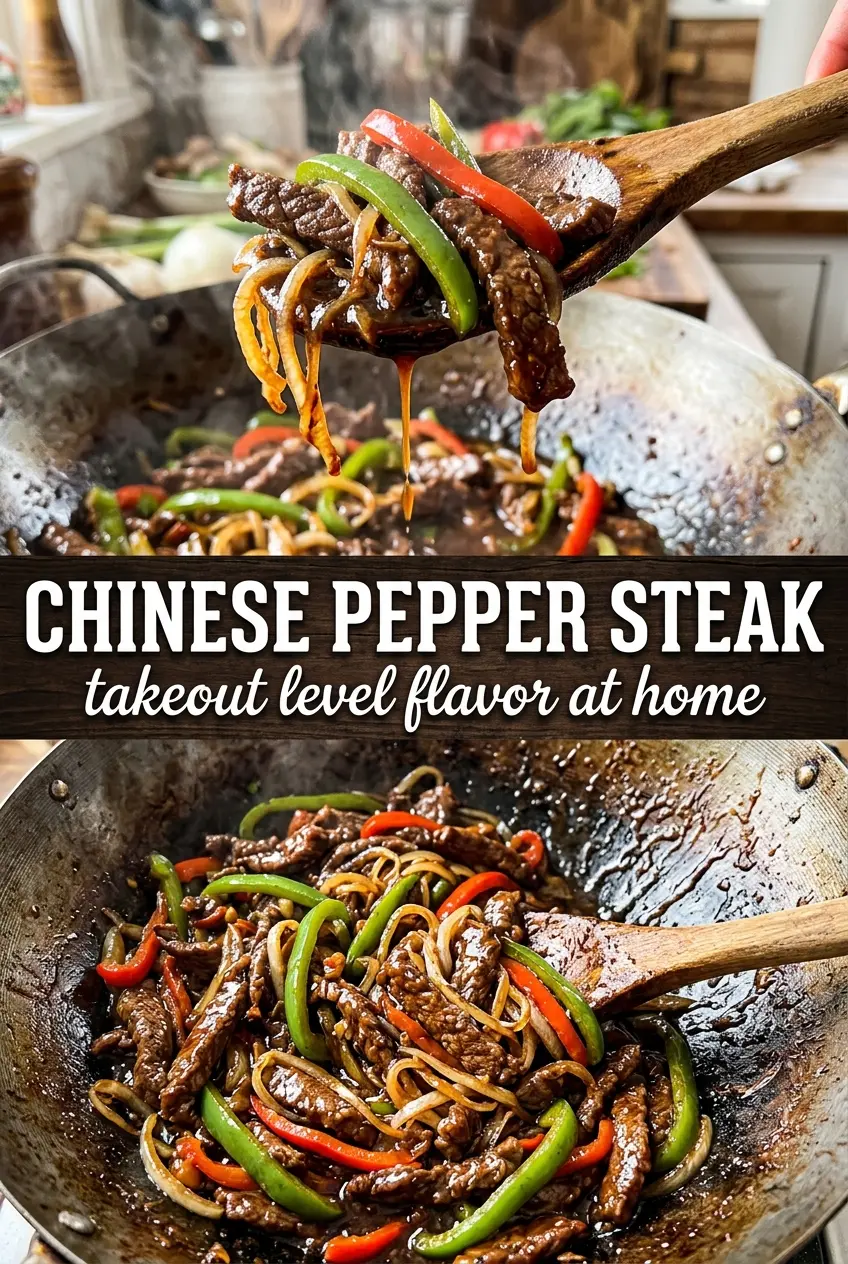
Chinese Pepper Steak with Onions
Ingredients
Equipment
Method
- Mix the soy sauce, cornstarch, and sesame oil with the beef and let it sit at room temperature for 20 minutes. The mixture should look slightly thick and cling to the beef.
- Whisk together the soy sauce, oyster sauce, hoisin, brown sugar, beef broth, and cornstarch until smooth, then set aside. It should appear evenly combined with no visible cornstarch lumps.
- Heat the oil in a wok over high heat until shimmering, then cook the beef, breaking it apart, until browned and cooked through, about 5–7 minutes. You should see browned bits on the meat and no pink remaining.
- Stir-fry the bell peppers and onion in the same wok over high heat for 3–4 minutes until slightly charred and crisp-tender. The edges should look browned while the centers stay bright.
- Add the garlic and ginger and cook for 30 seconds, stirring constantly. The aroma should turn fragrant quickly without burning.
- Return the beef to the wok, then pour the sauce over everything and toss to coat. The beef and vegetables should be fully lacquered in the sauce.
- Cook for 2 minutes over high heat, tossing, until the sauce thickens and looks glossy. The sauce should cling to the bell peppers and beef when you stir.
- Serve the pepper steak over steamed rice right away. The sauce should pool slightly on the rice instead of staying runny.