Taco pasta hits the table with the kind of saucy, cheesy comfort that disappears fast. The pasta cooks right in a smoky tomato broth, so every bite picks up the taco seasoning instead of tasting like plain noodles stirred into seasoned meat at the end. That one detail makes the sauce cling, and it’s why this dish feels bigger than the short ingredient list suggests.
The cream cheese goes in after the pasta is tender, not before. That keeps the sauce smooth instead of muddy and lets the cheddar melt into a thick, spoon-coating finish. Rotel brings heat and acidity, while the diced tomatoes and beef broth build enough body to cook the pasta without draining off flavor.
Below, I’ll show you the small timing choices that keep the pasta from going mushy, plus a few easy swaps if you want to stretch the dish, lighten it up, or make it work with what’s already in the pantry.
The pasta came out perfectly coated and the sauce thickened up instead of turning watery. I used the tortilla chips on top and my husband kept going back for one more bowl.
Love the creamy taco sauce and crispy toppings? Save this Taco Pasta for an easy one-pot Tex-Mex dinner that actually tastes bold enough to repeat.
The Trick to Keeping Taco Pasta Saucy Instead of Starchy
The biggest mistake with pasta skillet dinners is treating them like a normal sauce-and-noodles meal. Here, the pasta cooks directly in the seasoned liquid, so the starch thickens the sauce as it simmers. If you start with too little liquid, the noodles grab onto it too fast and end up chalky before they’re tender. If you add too much and don’t simmer uncovered for the last minute or two, you get a thin, soupy pan instead of a creamy one.
The other thing that matters is when you stop the simmer. Pull the pot off the heat when the pasta is just tender and a little liquid is still visible around the edges. That last bit gets absorbed as the cheese melts in, and it gives you a glossy sauce instead of a dry skillet of beef and noodles.
What Each Ingredient Is Actually Doing in This Dish
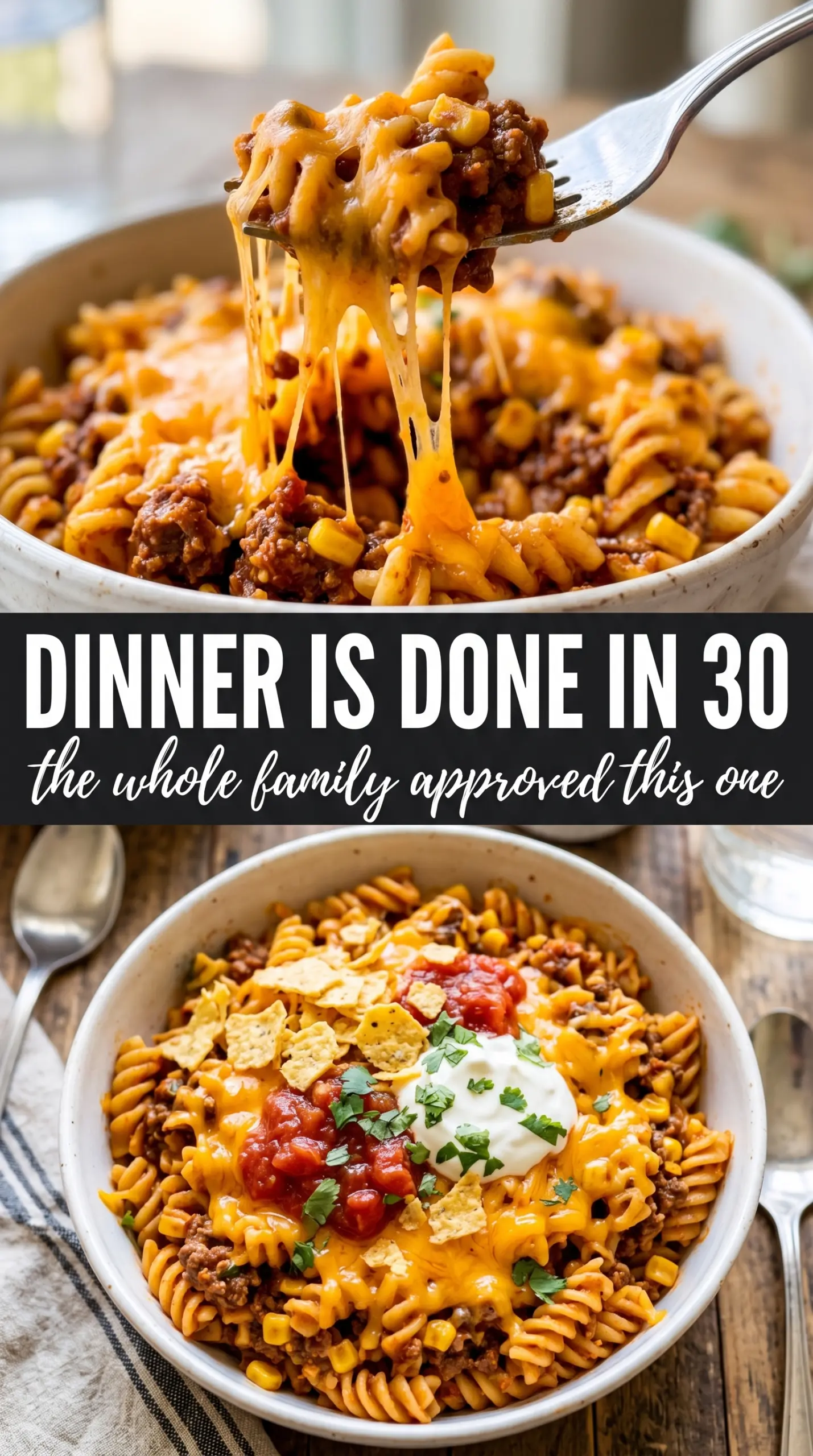
- Ground beef — This is the backbone of the dish, giving it that taco-night flavor and enough fat to carry the seasoning. If you use a very lean beef, leave a spoonful of fat in the pot after browning; the sauce tastes fuller. Ground turkey works, but it needs a little more salt and a splash of oil so it doesn’t taste flat.
- Taco seasoning — A packet gives you the right mix of cumin, chili, garlic, and paprika without having to measure six spices. If you have a low-sodium blend, that’s fine, but taste at the end and add salt if needed. Blooming it in the hot beef for a minute before adding liquid makes the spices taste rounder.
- Rotel and diced tomatoes — This combo gives the dish both texture and brightness. Rotel brings heat and tang, while the plain diced tomatoes keep the sauce from turning one-note. If you only have regular diced tomatoes, add a pinch of cayenne or a spoonful of diced green chiles.
- Cream cheese — This is what turns the broth into a creamy sauce without needing flour or a separate roux. Cube it first so it melts quickly and evenly. If you drop in a cold block, it takes longer to melt and you’re more likely to overcook the pasta while waiting.
- Cheddar cheese — Sharp cheddar gives the best payoff here because it stands up to the tomato and taco seasoning. Pre-shredded cheese works, but freshly shredded melts smoother and doesn’t get as grainy. Add it at the very end so it stays stretchy instead of turning oily.
- Rotini or penne — Short pasta with ridges grabs the sauce better than spaghetti ever could. Rotini catches the beef in the spirals, and penne holds sauce inside the tubes. Keep an eye on the simmer; small shapes go from tender to soft faster than people expect.
Building the Taco Pasta So the Sauce Stays Creamy
Brown the Beef and Wake Up the Seasoning
Cook the ground beef with the diced onion over medium-high heat until the meat has browned and the onion looks soft and translucent. Drain off excess fat if there’s a lot in the pan, but leave a little behind for flavor. Stir in the garlic and taco seasoning for a full minute so the spices hit the hot fat and smell fragrant. If the garlic goes in too early, it can scorch and turn bitter by the time the pasta is done.
Cook the Pasta Right in the Sauce
Add the uncooked pasta, tomatoes, Rotel, beef broth, and water, then stir well and bring it to a boil. Once it’s boiling, lower the heat and cover the pot so the pasta can simmer evenly. Stir once or twice during cooking to keep the noodles from sticking on the bottom, especially near the end when the sauce thickens. If the pot starts looking dry before the pasta is tender, add a small splash of water or broth.
Finish with Cream Cheese and Cheddar
When the pasta is tender and most of the liquid has been absorbed, stir in the cream cheese until the sauce turns smooth and creamy. The heat already in the pot is enough to melt it; you don’t need to boil at this stage. Add the cheddar, cover the pot for a minute, then lift the lid when it’s melted and glossy. If the cheese looks greasy, the heat was too high, so pull the pot off the burner before stirring it in.
Top It Like Taco Night
Sour cream cools down the spice and makes each bowl feel richer, while jalapeños and cilantro sharpen everything up. Crushed tortilla chips add the crunch that keeps the dish from feeling soft all the way through. Add the toppings right before serving so the chips stay crisp and the cheese on top doesn’t get buried under moisture.
How to Adapt This Taco Pasta for Different Kitchens and Different Nights
Make It with Ground Turkey
Ground turkey works well if you want a lighter version, but it needs a little help to taste as full as beef. Add a teaspoon of oil when browning and keep the taco seasoning generous, since turkey gives you less richness on its own. The finished dish will be a touch cleaner and less savory, but still creamy and satisfying.
Make It Gluten-Free Without Losing the Texture
Use your favorite gluten-free short pasta, but check it a little earlier than the package says because it can soften fast in a one-pot dish. You may need an extra splash of broth near the end if the pasta drinks the liquid before it’s fully tender. Keep the simmer gentle so the noodles hold their shape.
Make It Spicier or Milder
For more heat, add diced jalapeños with the onion or use hot Rotel. For a milder pan, use mild Rotel and swap half the broth for water so the tomato flavor stays in front of the spice. The cream cheese will soften the heat either way, so the topping choices matter almost as much as the pot itself.
Storage and Reheating
- Refrigerator: Store leftovers for up to 4 days. The pasta will absorb more sauce as it sits, so expect it to look thicker the next day.
- Freezer: It freezes, but the texture softens a bit after thawing. If you plan to freeze it, stop the pasta at just-tender and cool it quickly before packing it into airtight containers.
- Reheating: Warm it gently on the stove or in the microwave with a splash of broth or water. The biggest mistake is blasting it over high heat, which can make the cheese oily and push the pasta past tender.
Answers to the Questions Worth Asking
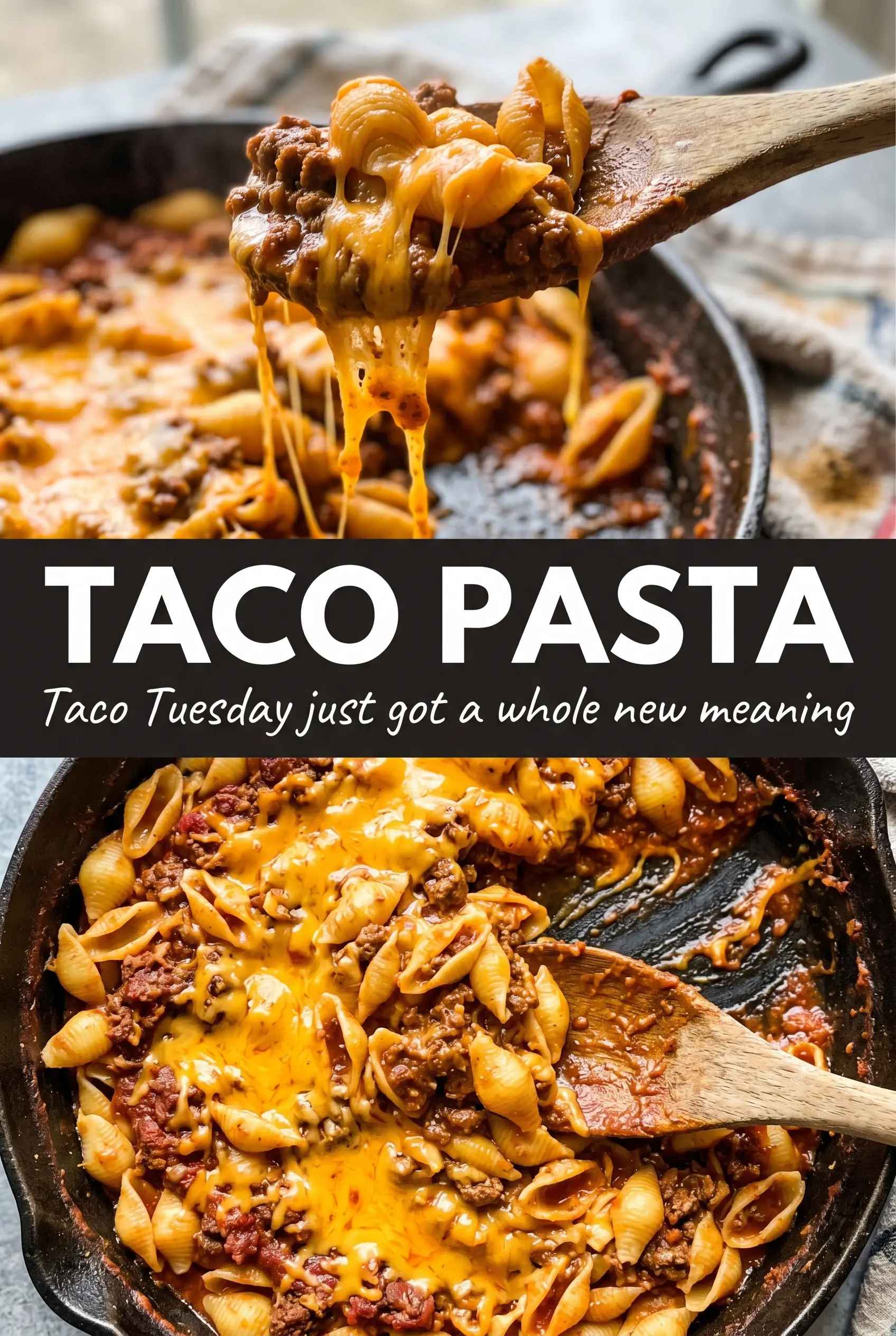
Taco Pasta
Ingredients
Equipment
Method
- Brown the ground beef with the diced onion in a large pot over medium-high heat, then drain the fat. Cook until the beef is browned, then stir in the minced garlic and taco seasoning and cook for 1 minute.
- Add the uncooked rotini or penne, diced tomatoes, Rotel tomatoes, beef broth, and water to the pot, then stir to combine and bring to a boil. Boil briefly, then reduce heat, cover, and simmer 12–14 minutes until the pasta is tender and most of the liquid is absorbed.
- Stir in the cubed cream cheese until fully melted and the sauce is creamy. Scrape the bottom and sides to ensure smooth melting.
- Sprinkle the shredded cheddar cheese over the top, cover the pot, and heat for 1 minute until melted. Let it sit covered for a moment so the cheese fully adheres to the pasta.
- Serve the taco pasta hot and top each bowl with sour cream, jalapeños, cilantro, and crushed tortilla chips. Finish right before eating so the chips stay crunchy.