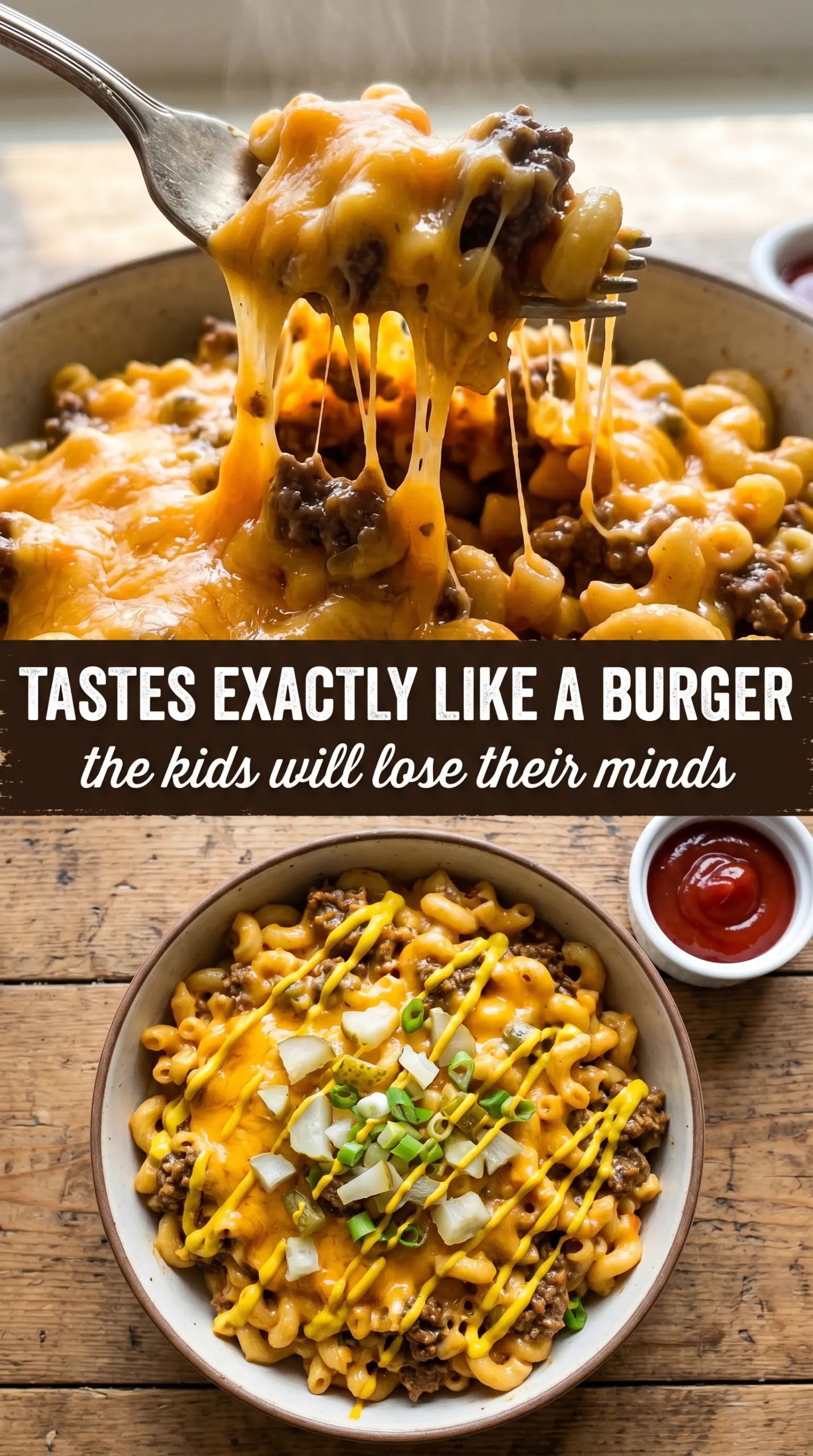
Cheeseburger pasta lands in that sweet spot between nostalgic and practical: it tastes like a diner burger turned into a creamy skillet dinner, but it cooks in one pan and eats like a proper weeknight meal. The ground beef stays savory, the pasta soaks up the seasoned broth, and the cheese melts into a sauce that clings instead of pooling at the bottom of the skillet. The pickle chips and ketchup drizzle on top aren’t decoration. They pull the whole dish back toward burger territory in a way that makes the first bite feel familiar.
The trick is building the sauce from the same pan you brown the beef in, then letting the pasta simmer right in that flavored liquid. That means the noodles absorb the beefy base instead of getting boiled separately and tossed in later, which is what keeps this from tasting flat. A little ketchup, mustard, and Worcestershire go a long way here. They don’t make the dish taste like condiments; they round out the savory notes and give the cheese sauce the same tangy edge you expect from a cheeseburger.
Below, I’ve included the small details that matter most: which cheese gives the smoothest finish, why the pasta needs occasional stirring, and how to keep the sauce creamy instead of gluey. Those are the things that turn a decent skillet dinner into one you’ll actually make again.
The pasta cooked right in the sauce and soaked up all that beefy flavor. I was worried it would be too much ketchup, but it tasted just like a cheeseburger in skillet form and the sauce stayed creamy after sitting a few minutes.
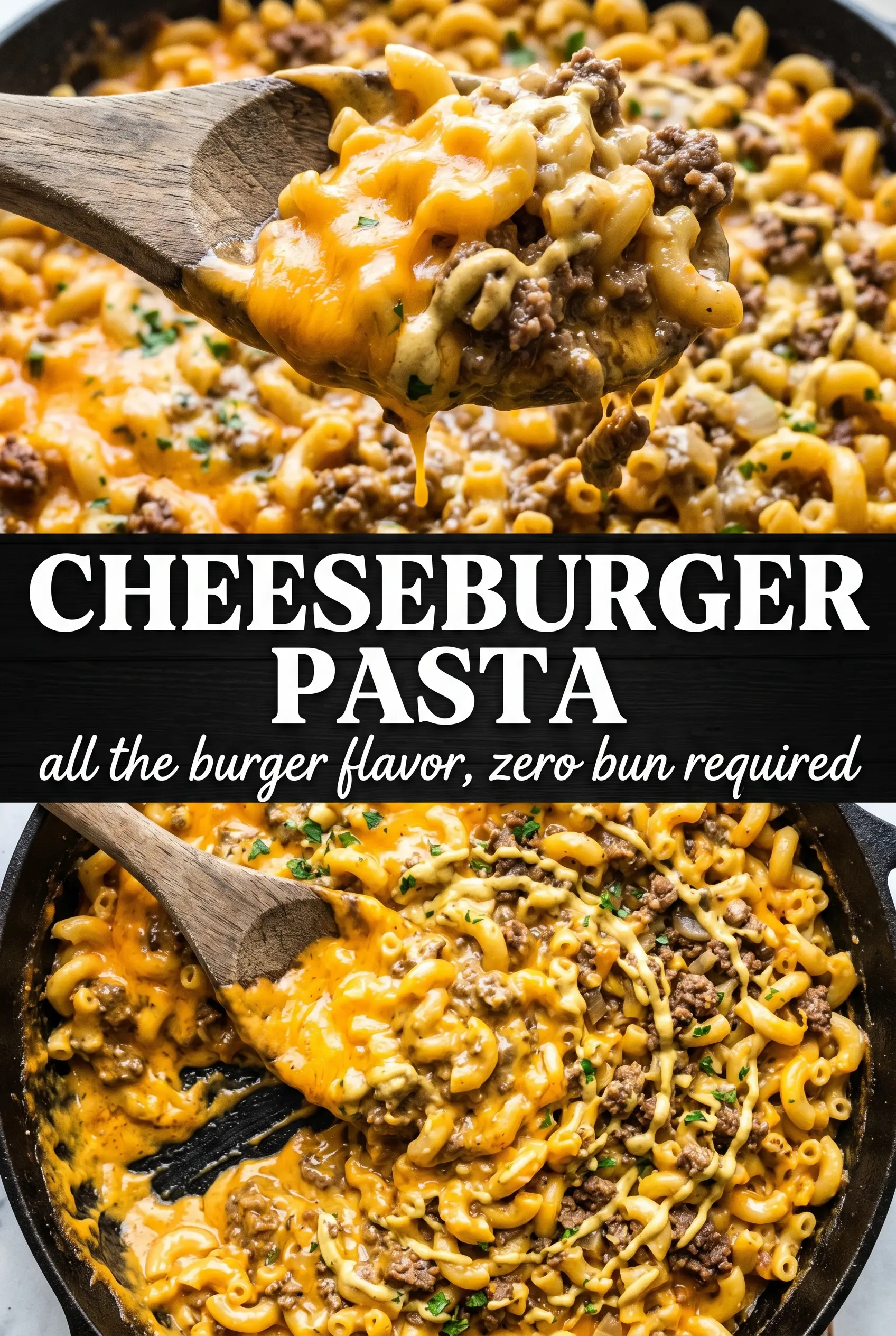
Cheeseburger pasta brings the burger night flavors into one creamy skillet with pickles and ketchup on top.
The Burger Sauce Problem: Why This One Stays Creamy
The sauce in cheeseburger pasta breaks when the heat stays too high after the dairy goes in or when the pasta cooks in too little liquid. This version avoids both problems by simmering the noodles in enough broth and milk to keep everything moving, then pulling the pan off the heat before the cheese gets stirred in. That gives the cheddar and American cheese time to melt smoothly instead of seizing into little grains.
The other thing that matters is balance. The ketchup, mustard, and Worcestershire sauce need to be in the pot early enough to season the liquid, not dumped in at the end like a topping. Once the pasta has cooked and the liquid has reduced, those ingredients sit underneath the cheese sauce and give it the savory-tangy backbone that makes this taste like a cheeseburger instead of plain beefy pasta.
- Cook the pasta in the sauce. It picks up more flavor that way and helps thicken the skillet naturally as the starch releases.
- Take the pan off the heat before adding cheese. Residual heat melts it gently, which is the easiest way to keep the sauce smooth.
- Don’t rush the simmer. If the liquid is still loose when the pasta is tender, let it cook uncovered for a minute or two so the sauce can tighten up.
What Each Ingredient Is Actually Doing in This Skillet
- Ground beef — This is the main savory base, so a beef with enough fat to brown well gives you better flavor. If you use very lean beef, expect less richness and add a touch more oil if the pan looks dry.
- Onion and garlic — They build the background flavor that makes the dish taste cooked, not just mixed. Let the onion soften before the garlic goes in so the garlic doesn’t scorch in the hot pan.
- Beef broth and whole milk — The broth seasons the pasta from the inside, and the milk gives the sauce body. Whole milk matters here because lower-fat milk can leave the finished sauce thinner and less satisfying.
- Ketchup, yellow mustard, and Worcestershire — These are the burger notes. Ketchup adds sweetness and tomato depth, mustard gives sharpness, and Worcestershire adds that savory edge that keeps the cheese from tasting flat.
- Sharp cheddar and American cheese — Cheddar brings the cheddar flavor you want, but American cheese is what makes the sauce silky. If you skip the American cheese, the sauce still works, but it won’t have the same smooth, diner-style finish.
- Dill pickles — They’re the final burst of acid and crunch. Chop them if you want a bite in every forkful, or leave them in chips for a more classic burger look.
Getting the Pasta Tender Without Turning the Sauce Grainy
Brown the Beef Until It Develops Real Color
Cook the ground beef and onion over medium-high heat until the meat loses its pink color and starts to pick up browned bits on the bottom of the skillet. That browning is flavor you can’t fake later. If there’s a lot of fat in the pan, drain it before you move on, but leave enough behind that the onion and garlic can cook without sticking. Add the garlic only for the last 30 seconds so it perfumes the pan without turning bitter.
Simmer the Pasta in the Seasoned Liquid
Once the broth, milk, ketchup, mustard, Worcestershire, salt, and pepper go in, bring the pan to a real boil, then lower it to a steady medium simmer. Cover the skillet and stir occasionally so the pasta doesn’t glue itself to the bottom. If the liquid looks too low before the noodles are tender, add a splash more broth or water; if it looks too soupy when the pasta is done, uncover the pan and let it cook another minute or two.
Melt the Cheese Off the Heat
When the pasta is tender, pull the skillet off the burner before adding the cheddar and American cheese. Stir slowly until the sauce turns smooth and glossy. If you keep it over direct heat at this stage, the cheese can tighten and go grainy. The finished sauce should coat the noodles in a thick sheen, not sit like heavy cream at the bottom of the pan.
Finish Like a Cheeseburger
Add the pickle chips and a small drizzle of ketchup right before serving so they stay bright and distinct. A little mustard on top works too if you want the burger flavor to read more clearly. This final step matters because the garnish isn’t just for looks here — it brings back the sharp, salty, tangy contrast that makes the dish taste like the name says.
How to Adapt This Cheeseburger Pasta for Your Table
Gluten-Free Pasta Swap
Use a gluten-free short pasta that holds its shape, then keep a close eye on the simmer because those noodles can go from firm to soft fast. The sauce itself is naturally gluten-free as long as your Worcestershire sauce is labeled that way.
Dairy-Light Version
You can use reduced-fat milk, but the sauce won’t be as plush and it will need a little extra attention at the end. Keep the heat low and add the cheese gradually so the thinner dairy doesn’t separate.
Turkey Cheeseburger Pasta
Ground turkey works if you want something a little lighter, but it needs help because it doesn’t bring the same deep beefy flavor. Add a little extra Worcestershire and don’t skip the onion, since that extra seasoning matters more with turkey.
Make It Spicier
A pinch of cayenne, a few chopped pickled jalapeños, or a dash of hot sauce gives the skillet more bite without changing the base recipe. Add heat in the simmering liquid so it spreads through the whole pan instead of landing in one hot spot.
Storage and Reheating
- Refrigerator: Store leftovers in an airtight container for up to 4 days. The pasta will absorb more sauce as it sits, so expect it to look thicker the next day.
- Freezer: It freezes, but the sauce may turn a little grainy after thawing because of the cheese. If you freeze it, cool it completely first and reheat it gently.
- Reheating: Warm it on the stove over low heat with a splash of milk or broth, stirring often. The mistake people make is blasting it in a hot pan or microwave until the cheese breaks and the pasta dries out.
Questions I Get Asked About This Recipe
Cheeseburger Pasta
Ingredients
Equipment
Method
- Brown the ground beef and diced onion in a large skillet over medium-high heat, stirring until the beef is browned. Drain excess fat, then add the minced garlic and cook for 30 seconds, stirring until fragrant.
- Stir in the uncooked elbow macaroni or rotini, beef broth, whole milk, ketchup, yellow mustard, and Worcestershire sauce, then add salt and pepper to taste. Bring everything to a boil over medium-high heat.
- Reduce heat to medium, cover the skillet, and cook for 12–14 minutes, stirring occasionally, until the pasta is tender.
- Remove the skillet from the heat, then stir in the shredded sharp cheddar and cubed American cheese until fully melted. Continue stirring until the sauce is creamy and smooth.
- Top with dill pickle chips and drizzle with extra ketchup and mustard before serving.