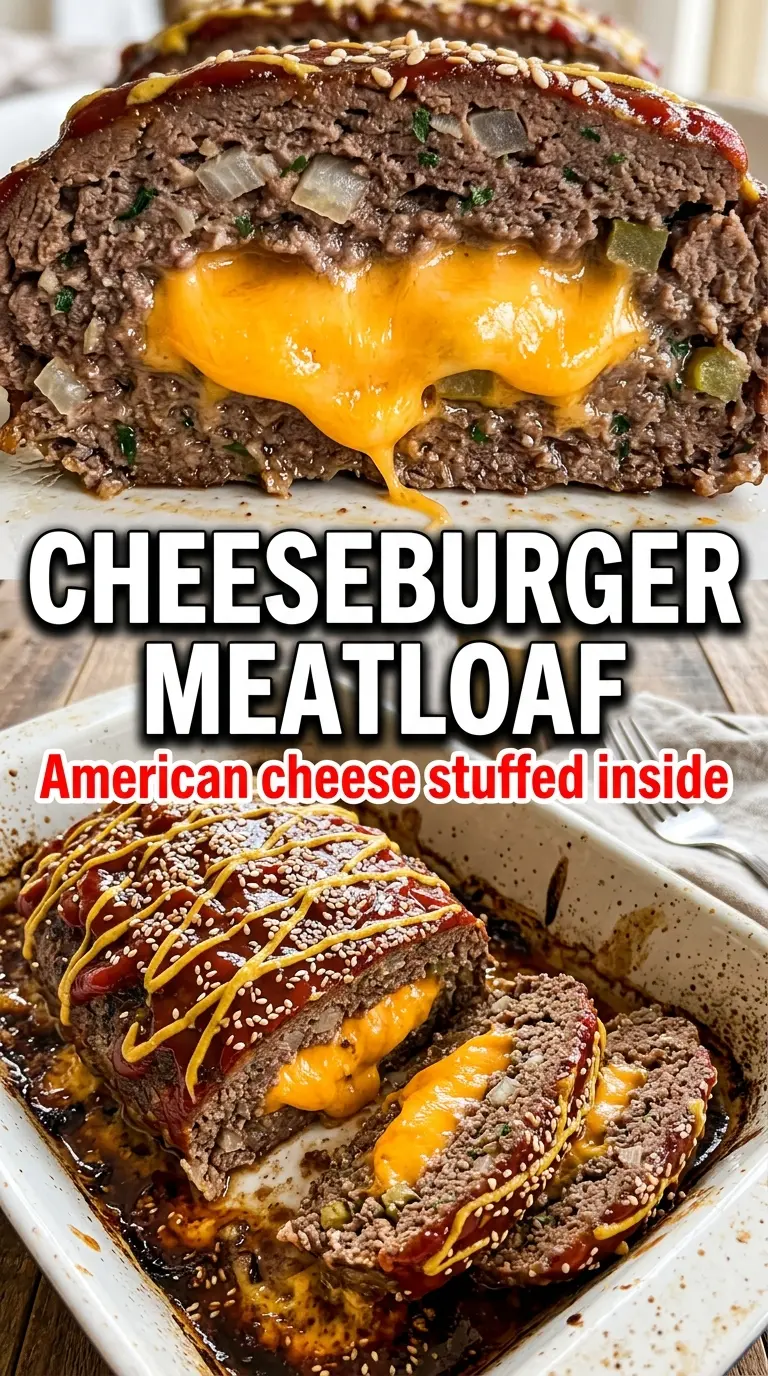
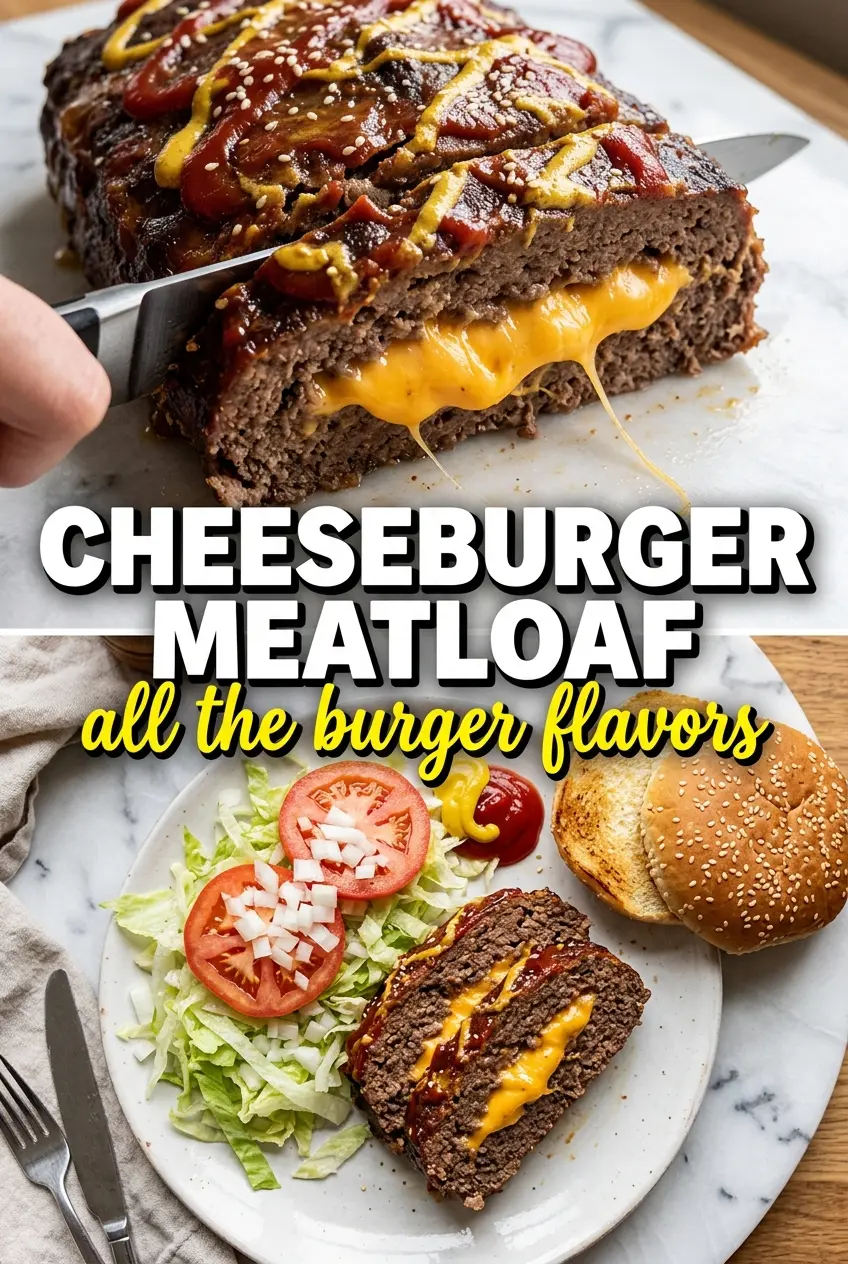
Cheeseburger meatloaf brings the best parts of a diner burger into a dinner that slices cleanly and holds together on the plate. The beef stays juicy, the center turns gooey with melted cheese, and the ketchup-mustard glaze bakes into a sticky top that tastes familiar in the best way. Served with dill pickles, it lands right between comfort food and weeknight practicality.
The trick is treating the loaf like a stuffed burger, not just seasoned ground beef in a pan. Finely grated onion disappears into the meat so the loaf stays tender without falling apart, breadcrumbs and milk keep the texture soft, and the cheese goes into the middle where it can melt without leaking out into the pan. The glaze is built with ketchup, mustard, and a little brown sugar, which gives you that burger-stand sweetness and tang without needing a separate sauce.
Below, I’ll walk through the one step that keeps the cheese sealed inside, plus a few ways to change the loaf for what’s in your fridge. If you’ve ever had meatloaf turn dry or crumbly, this version fixes both problems without adding extra fuss.
The cheese stayed in the middle instead of leaking out, and the ketchup-mustard topping turned sticky and caramelized just like a burger from the grill. My kids asked for pickles on every slice.
Cheeseburger meatloaf with melty cheese and a sticky ketchup-mustard glaze is worth pinning for an easy dinner that tastes like a burger night.
The Cheese Goes Inside, Not Just on Top
Most stuffed meatloaves fail for one simple reason: the filling gets too close to the edges, melts, and runs out before the loaf finishes cooking. The fix is to press in half the meat, add the cheese in a tight center line, and then cover it completely with the remaining meat so every slice has a sealed pocket of melted cheese instead of a greasy pan bottom.
Another thing that matters here is the mix. Ground beef with some fat gives you the juicy burger flavor you want, but the breadcrumbs, milk, and egg are what keep the loaf from turning dense. If the mixture looks wet at first, give it a minute; the breadcrumbs need a short soak before the texture settles into something you can shape.
- 80/20 ground beef — This gives you enough fat for a juicy meatloaf without making it greasy. Leaner beef can work, but the loaf will eat drier unless you add a little more milk or reduce the bake time carefully.
- Finely grated onion — Grating the onion is the easiest way to get burger flavor without crunchy bits or uneven pockets. A chopped onion works in a pinch, but grated onion melts into the meat and helps keep the texture softer.
- American or cheddar cheese — American melts smoothest and gives you that classic cheeseburger pull. Cheddar brings a sharper flavor, but use slices or thick pieces rather than shreds so they stay in the middle instead of disappearing into the meat.
- Breadcrumbs and milk — This is the binder that keeps the loaf tender. If you need a swap, use crushed crackers or panko, but keep the milk so the loaf doesn’t bake up dry.
What Each Ingredient Is Actually Doing in This Recipe
- Primary ingredient (the star) — Quality matters most. Choose the best you can find.
- Cooking medium (oil, butter, or broth) — This carries flavors and prevents dryness.
- Seasonings (salt, pepper, spices, herbs) — Layer flavors so nothing overpowers. Build depth gradually.
- Aromatics (garlic, onion, herbs) — Cook with fat to bloom flavors. Become the foundation.
- Supporting ingredients — Complement the main ingredient without overpowering it.
- Sauce or liquid (if applicable) — Brings flavors together. Balance richness with acid.
- Acid (lemon, vinegar, wine, or other) — Brightens and prevents flat-tasting results.
- Final finish (garnish, glaze, or sauce) — Prevents one-dimensional taste and adds visual appeal.
Building the Loaf So the Cheese Stays Put
Mix the Meat Without Overworking It
Combine the beef, breadcrumbs, eggs, milk, onion, ketchup, mustard, Worcestershire, salt, and pepper just until everything looks evenly mixed. If you keep kneading, the loaf tightens up and turns bouncy instead of tender. The mixture should hold together when pressed, but it shouldn’t feel paste-like.
Press, Layer, and Seal the Center
Press half the meat into the greased loaf pan and flatten it into an even layer, getting the corners filled without packing it down hard. Add the cheese in a centered row, leaving a border around the edges so the top layer can seal cleanly. Cover with the remaining meat and press the seams together well; any thin spot is where the cheese will leak out.
Glaze Before the Oven Does Its Work
Stir the ketchup, mustard, and brown sugar together until smooth, then spread it over the top in an even layer. The sugar helps the glaze darken and cling, while the mustard keeps it tasting like a cheeseburger instead of plain sweet ketchup. Bake until the center reaches 160°F; if the top darkens too quickly, lay a loose piece of foil over it near the end instead of lowering the heat.
Let the Loaf Rest Before Slicing
Give the meatloaf 10 minutes out of the oven before cutting it. That rest lets the cheese settle back in place and keeps the juices from running out the second the knife goes in. If you slice too soon, the middle can look loose even when the loaf is cooked perfectly.
Small Changes That Still Taste Like a Cheeseburger
Dairy-Free Version
Swap the cheese slices for a dairy-free meltable slice and use an unsweetened plant milk in the meat mixture. The loaf still stays tender, but choose a cheese alternative that melts smoothly; firmer dairy-free cheeses often stay rubbery instead of giving you that center pull.
Gluten-Free Meatloaf
Use certified gluten-free breadcrumbs or crushed gluten-free crackers in the same amount. The structure stays the same, but gluten-free crumbs can absorb a little differently, so let the mixture sit for 5 minutes before shaping to see if it firms up.
Swap the Cheese Flavor
Cheddar gives the strongest burger-shop flavor, but Monterey Jack or provolone will melt a little softer and milder. If you want a more classic fast-food taste, keep the American cheese; if you want more bite, use sharp cheddar and expect a slightly firmer melt.
Make It Ahead for an Easier Night
Shape the loaf and add the glaze up to a day ahead, then cover and refrigerate it in the pan. Let it sit at room temperature while the oven preheats so it doesn’t go in ice-cold, which can leave the center undercooked while the top overbrowns.
Storage and Reheating
- Refrigerator: Store slices in an airtight container for up to 4 days. The cheese will firm up, but the flavor gets even more burger-like after a night in the fridge.
- Freezer: Freeze cooked slices tightly wrapped and sealed for up to 2 months. Thaw overnight in the fridge before reheating so the cheese doesn’t separate.
- Reheating: Warm slices covered in the oven at 325°F with a spoonful of water or extra glaze over the top. The most common mistake is blasting it in the microwave until the edges dry out and the cheese turns chewy.
Questions I Get Asked About This Recipe
Cheeseburger Meatloaf
Ingredients
Equipment
Method
- Preheat the oven to 350°F and grease a 9x5 loaf pan for easy release.
- Combine ground beef, breadcrumbs, eggs, whole milk, onion, ketchup, yellow mustard, Worcestershire sauce, salt, and pepper in a mixing bowl.
- Press half of the meat mixture into the greased pan, then layer the cheese slices across the center.
- Press the remaining meat mixture over the cheese to seal the loaf completely.
- Mix the glaze (ketchup, mustard, and brown sugar) and spread it evenly over the top.
- Bake for 60–70 minutes at 350°F until the internal temperature reaches 160°F and the glaze is caramelized.
- Rest the meatloaf for 10 minutes, slice, and serve with dill pickle slices on top.