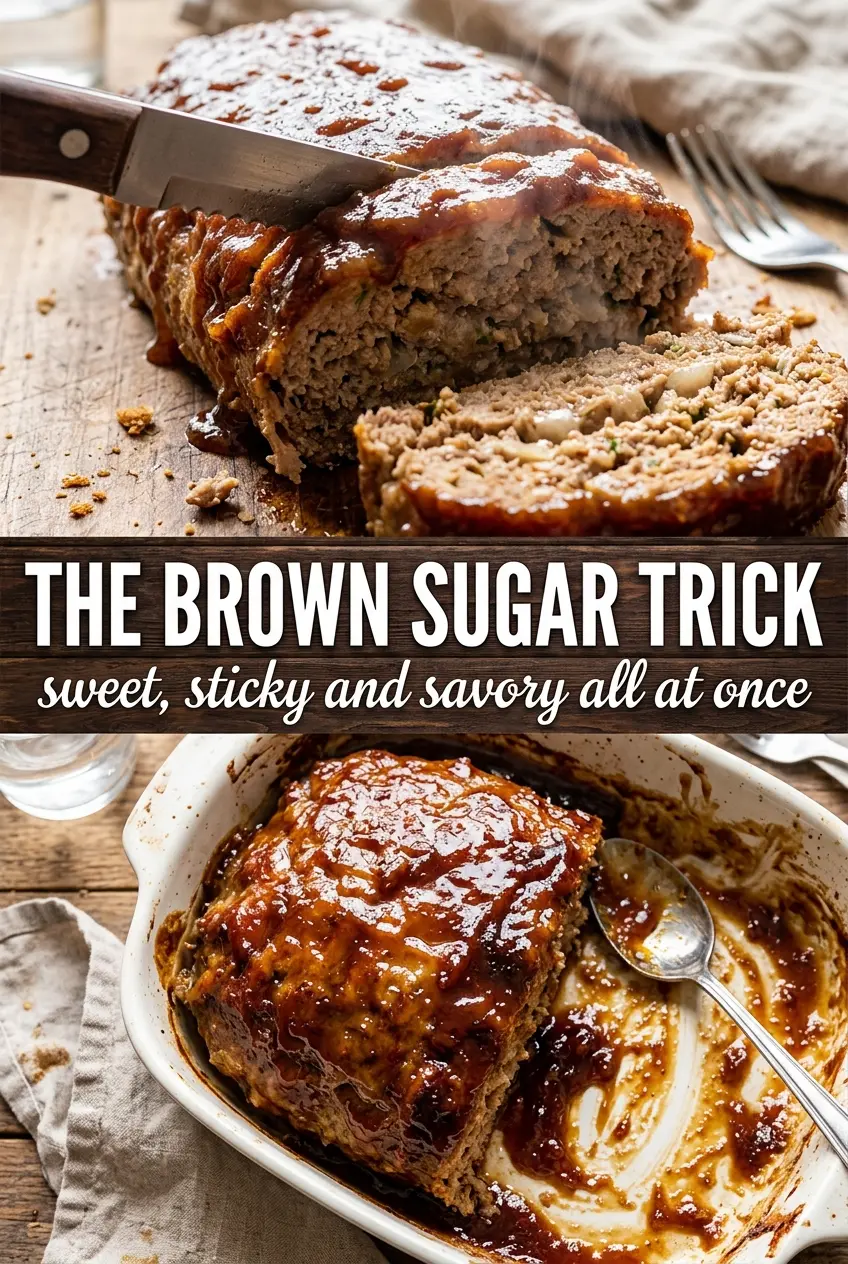
Brown sugar meatloaf earns its place in the rotation when the top bakes into a sticky, crackled glaze and the inside stays tender instead of dense. The balance is what gets people: savory beef, a little tang from the ketchup and mustard, and that dark amber sweetness on top that caramelizes at the edges of each slice.
The difference comes from two places. First, grated onion melts into the meat mixture and keeps the loaf from eating like a brick, while breadcrumbs and milk hold onto moisture without making it mushy. Second, the glaze goes on in two stages. Half before baking gives it time to set and caramelize; the rest goes on later so it stays shiny, sweet, and thick instead of burning before the center is cooked.
If you’ve had dry meatloaf or a glaze that slid off the pan, the notes below will help. I’ve included the small details that keep the loaf sliceable, the glaze sticky, and the leftovers just as good the next day.
The glaze thickened up into that sticky, caramelized layer instead of running off, and the loaf sliced cleanly after resting. My husband went back for seconds before I even sat down.
Save this brown sugar meatloaf for the nights when you want a sticky glaze, a tender slice, and classic comfort food without fuss.
The Step That Keeps Meatloaf Tender Instead of Tight
Meatloaf goes wrong when the mixture gets packed like a meatball. Ground beef needs a light hand, because once the proteins are compressed too much, the loaf bakes up dense and crumbly at the same time. The grated onion matters here because it disappears into the mixture and adds moisture without leaving hard chunks behind.
The other thing that helps is the milk and breadcrumbs working together before baking. Breadcrumbs soak up the liquid, then release it slowly in the oven, which gives the loaf a softer texture. If the mixture looks loose at first, let it sit for a minute before shaping; that short rest gives the breadcrumbs time to hydrate.
- Ground beef — Use an 80/20 blend if you can. Leaner beef can work, but the loaf will be drier and the glaze won’t have the same rich contrast against the meat.
- Breadcrumbs — Plain breadcrumbs are ideal. Italian-style crumbs add extra herbs and salt, which can push the seasoning too far.
- Grated onion — Grating instead of chopping gives the loaf moisture and flavor without obvious onion pieces. If you only have a small onion, use the fine side of a box grater and catch the juice too.
- Worcestershire sauce — This is the quiet savory note that keeps the loaf from tasting flat. There isn’t a perfect substitute, but soy sauce works in a pinch if you use a little less salt elsewhere.
Building the Glaze So It Caramelizes, Not Burns
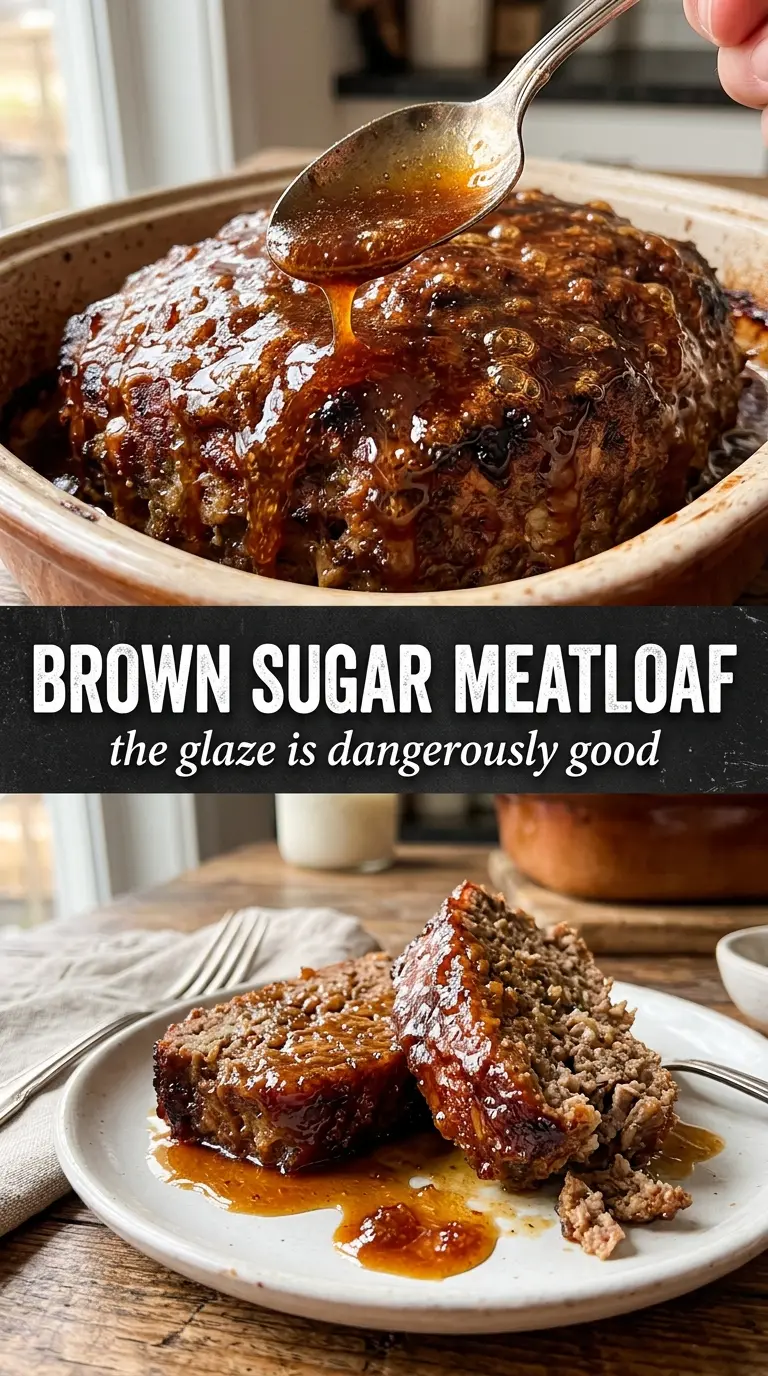
- Brown sugar — Packed brown sugar gives the glaze its thick, glossy finish. Light or dark both work, but dark brown sugar brings a deeper molasses note.
- Ketchup — This is the base of the glaze, and its acidity keeps the sweetness in check. Use a ketchup you like the taste of on its own, because it carries the whole top layer.
- Dijon mustard — Dijon sharpens the glaze so it doesn’t taste candy-sweet. Yellow mustard will work, but the flavor is flatter and less polished.
- Apple cider vinegar — A small splash keeps the glaze bright. Without it, the topping can taste heavy after the second slice.
How to Bake It So the Center Stays Juicy
Mixing the Meat Without Overworking It
Combine everything until the ingredients are evenly distributed, then stop. If you knead the mixture, the loaf gets springy and tight instead of tender. The texture should hold together when you press it, but it shouldn’t look pasty. Hands work best here because you can feel when the mixture is cohesive without going too far.
Shaping and Glazing the Loaf
Press the mixture into the loaf pan and smooth the top so the glaze has a flat surface to cling to. Spread on half the glaze before baking, and don’t skip this first layer; it bakes into the meat and starts that dark, sticky crust. If you pile it on too thick all at once, the sugars can scorch before the center reaches temperature.
Finishing the Bake and Resting
Bake until the internal temperature hits 160°F and the glaze looks deeply caramelized around the edges. Add the remaining glaze near the end so it stays glossy and tacky instead of drying out. Let the loaf rest for 10 minutes before slicing or the juices will run straight onto the cutting board and the slices will fall apart.
Make It Gluten-Free
Use gluten-free breadcrumbs in the meat mixture and check your Worcestershire sauce label, since some brands contain wheat. The texture stays close to the original, though very coarse gluten-free crumbs can make the loaf a little more rustic.
Make It Dairy-Free
Swap the milk for an unsweetened dairy-free milk with a neutral flavor, like almond or oat. The loaf still stays tender because the breadcrumbs do the heavy lifting; just avoid strongly flavored plant milks that can show up in the finished dish.
Use Ground Turkey Instead
Ground turkey works, but it needs the moisture from the onion and milk, so don’t cut those back. Expect a lighter flavor and a slightly firmer slice, and pull it from the oven as soon as it reaches temperature because turkey dries out faster than beef.
Storage and Reheating
- Refrigerator: Store sliced or whole for up to 4 days. The glaze firms up in the fridge, but the flavor gets even better by day two.
- Freezer: Freezes well. Wrap slices tightly or freeze the whole loaf in portions for up to 3 months, then thaw overnight in the fridge.
- Reheating: Warm covered in a 325°F oven with a splash of water or beef broth in the pan. The biggest mistake is blasting it in the microwave until the edges turn tough and the glaze dries out.
Questions I Get Asked About This Recipe
Brown Sugar Meatloaf
Ingredients
Equipment
Method
- Preheat the oven to 350°F and grease a loaf pan so the meatloaf releases cleanly after baking.
- In a large mixing bowl, combine ground beef, breadcrumbs, eggs, whole milk, grated onion, minced garlic, Worcestershire sauce, dried thyme, and salt and pepper until evenly blended.
- Press the mixture into the loaf pan and smooth the top for even cooking and an attractive glaze surface.
- Stir ketchup, packed brown sugar, Dijon mustard, and apple cider vinegar until smooth and glossy.
- Spread half of the glaze over the top of the meatloaf so it begins caramelizing immediately in the oven.
- Bake at 350°F for 50 minutes, until the loaf is set and the glaze looks thicker and starting to caramelize.
- Spread the remaining glaze over the meatloaf, then bake 15–20 more minutes until the internal temperature reaches 160°F and the glaze turns deep amber and caramelized.
- Rest the meatloaf for 10 minutes before slicing so the juices settle and the slices hold their shape.