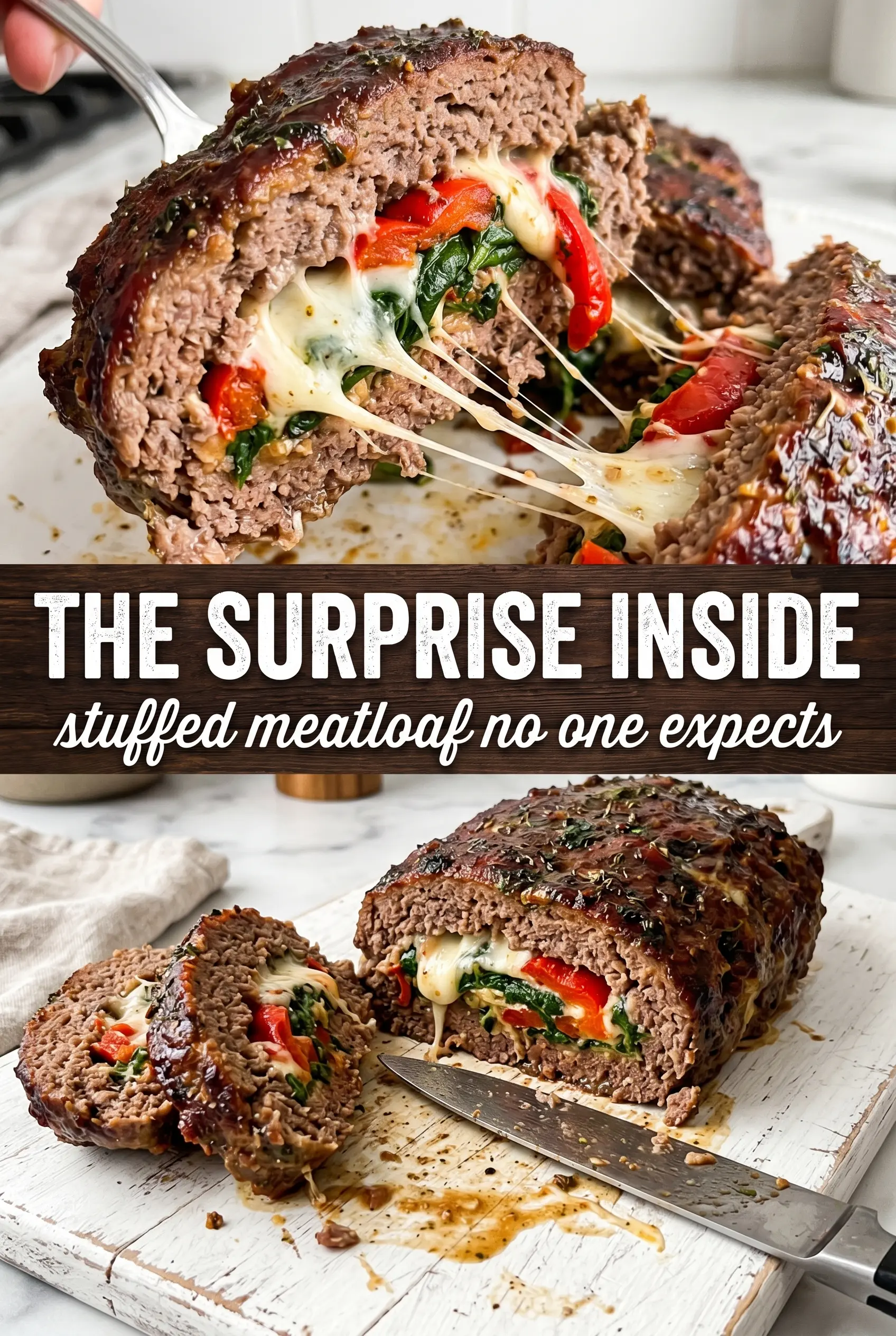
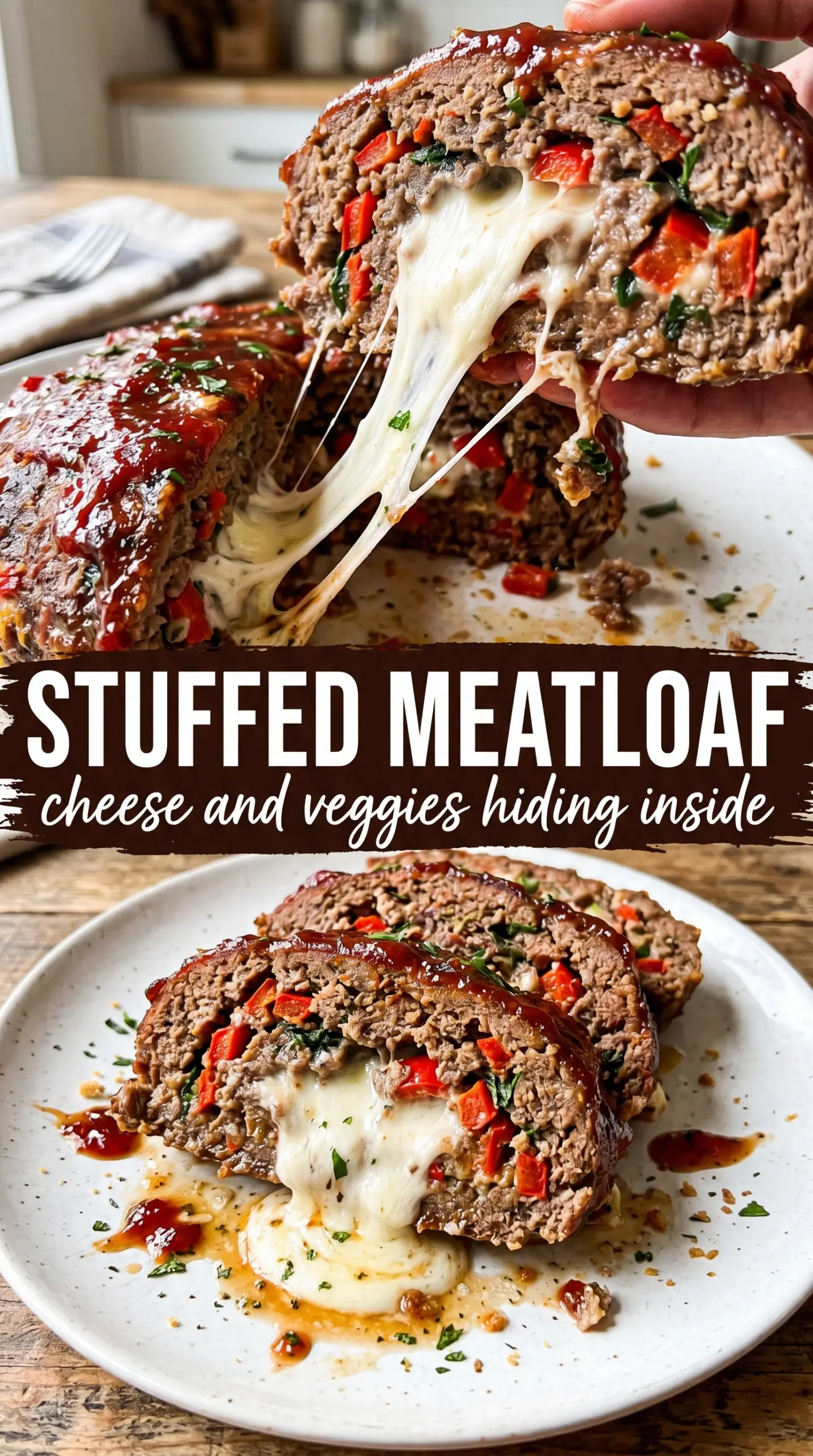
A stuffed meatloaf slices cleanly into a dramatic spiral when the loaf is mixed just enough to hold together and rolled with a filling that stays put. The beef stays tender, the mozzarella melts into the spinach and roasted red peppers, and the glaze on top turns sticky and savory-sweet in the oven. It’s the kind of dinner that looks like you worked harder than you did.
The trick is keeping the filling dry and the meat mixture cohesive without overworking it. Grated onion spreads its flavor through the loaf without leaving crunchy bits, while squeezed-dry spinach and patted-dry peppers keep the center from turning watery. A tight roll and a short rest after baking are what give you those neat slices instead of a collapse on the cutting board.
Below, I’ll walk you through the part that matters most: how to roll the loaf so the filling stays centered and the meat cooks through evenly. I’ve also included a few smart swaps and the storage details that matter when you’re planning leftovers.
The spinach and peppers stayed right in the center and the cheese melted into a perfect spiral. I followed the resting time and the slices held together beautifully instead of falling apart.
Save this stuffed meatloaf with spinach, roasted red peppers, and mozzarella for the night you want a neat spiral slice and a glaze that bakes up sticky on top.
The Tight Roll That Keeps the Filling From Leaking Out
The filling in a stuffed meatloaf fails for one of two reasons: the vegetables hold too much moisture, or the loaf gets rolled loosely and splits while it bakes. This version avoids both problems by drying the spinach and peppers first, then pressing the meat into a rectangle that can actually be rolled with some tension. That tight shape helps the loaf bake into neat slices instead of a cratered mess.
The other detail that matters is the border. Leaving a clean edge around the filling gives the meat a place to seal, which keeps the mozzarella from escaping before it melts. If you’ve ever cut into a stuffed loaf and found half the filling in the pan, this is the fix.
- Ground beef — Use an 80/20 blend if you can. Leaner beef works, but it dries out faster in a loaf this size.
- Breadcrumbs and eggs — These are the structure. The breadcrumbs absorb juices and the eggs help the loaf hold its shape without turning dense.
- Grated onion — Grating the onion instead of chopping it gives you flavor without chunks that can tear the meat mixture apart.
- Spinach, roasted red peppers, and mozzarella — These make the spiral. Pat the peppers dry and squeeze the spinach until it stops dripping, or the filling will slide when you roll it.
What Each Ingredient Is Actually Doing in This Meatloaf or Meatballs
- Ground meat (the protein foundation) — Use 80/20 so it stays moist. Handle gently to keep texture tender instead of dense.
- Breadcrumbs or fillers (the binder) — These hold the meat together without making it dense. Soak in milk first so they add moisture.
- Egg (the structural binding agent) — This holds everything together during cooking. One egg per pound of meat is the right ratio.
- Onion and aromatics (the base flavor) — Mince finely so they distribute evenly. Raw onion softens as it cooks and becomes part of the texture.
- Seasonings (salt, pepper, Worcestershire, spices) — Build flavor boldly. The meat mixture carries the entire flavor profile.
- Milk or liquid (the moisture keeper) — This keeps the meatloaf tender instead of dense and dry. Don’t skip this step.
- Glaze or sauce (ketchup-based or other) — This adds sweetness, moisture, and flavor to the exterior. Apply strategically so it caramelizes.
- Resting time (the final step) — Let the meatloaf rest 10 minutes so it sets and slices cleanly. Cutting too soon makes it fall apart.
Building the Spiral From the Inside Out
Mixing the Meat Without Making It Dense
Combine the beef, breadcrumbs, eggs, milk, onion, garlic, Worcestershire, Italian seasoning, salt, and pepper just until everything is evenly distributed. The mixture should hold together when you press it, but it shouldn’t look compacted. If you keep mixing after that point, the finished loaf turns springy and tight instead of tender.
Rolling It So the Seam Stays Put
Press the meat into a 10×12-inch rectangle on parchment or plastic wrap, then layer the filling evenly, leaving that 1-inch border clean. Use the wrap to lift and roll the meat into a log, tucking as you go so the filling stays centered. Seal the ends with your hands and place the loaf seam-side down in the pan; if you rush this part, the seam can open in the oven and spill the cheese.
Glazing and Baking to 160°F
Spread the ketchup and brown sugar glaze over the top before baking so it can caramelize as the loaf cooks. Bake until the center reaches 160°F, not just until the top looks done, because the middle of a stuffed loaf cooks more slowly than the exterior. Let it rest for 10 minutes before slicing so the juices settle and the spiral holds its shape.
Swap the Mozzarella for Provolone
Provolone melts a little less stretchy than mozzarella but brings a deeper savory edge. If you want a sharper filling and don’t mind a slightly firmer melt, it’s an easy swap that still slices cleanly.
Make It Gluten-Free
Use certified gluten-free breadcrumbs and check your Worcestershire sauce label, since some brands contain malt vinegar or other gluten sources. The loaf still binds the same way, so you won’t lose that classic meatloaf texture.
Make It with Ground Turkey
Ground turkey works, but it needs the full amount of binder and benefits from a slightly gentler hand because it can tighten up faster than beef. Expect a lighter flavor and a leaner slice; the filling becomes even more important for keeping the loaf interesting.
Storage and Reheating
- Refrigerator: Store slices in an airtight container for up to 4 days. The loaf firms up a little after chilling, which actually makes neat reheated slices easier.
- Freezer: Freeze wrapped slices or the whole cooled loaf for up to 2 months. Wrap tightly first in parchment or plastic, then foil, so the filling doesn’t pick up freezer odors.
- Reheating: Warm slices covered in a 325°F oven with a splash of water in the pan, or microwave gently at medium power. High heat dries out the beef and can make the cheese separate.