Golden on the outside and blush-pink in the center, baked pork tenderloin is one of those dinners that looks more impressive than the effort it takes. The outside gets a savory herb crust from the quick sear, while the oven finishes the pork gently enough to keep the middle juicy instead of dry. Slice it across the grain and you get tender pieces with clean edges and a little sheen from the resting juices.
The key is treating pork tenderloin like the lean cut it is. It doesn’t need a long roast or a heavy sauce to taste good; it needs heat, seasoning, and a short rest at the end. Searing first builds flavor fast, and the oven does the rest before the meat has time to overcook. Pulling it at 145°F gives you pork that’s fully cooked but still moist.
Below, I’ve included the small timing details that keep this recipe reliable, plus a few variations if you want to change the seasoning or cook it with what you already have.
The seasoning rubbed on beautifully and the pork stayed juicy after the 5-minute rest. I used a thermometer and hit 145°F right on time — no guesswork, no dry slices.
Save this baked pork tenderloin for a fast dinner with a golden herb crust and juicy center.
The Sear Is Doing More Than Browning the Outside
With pork tenderloin, the oven alone can cook the meat through, but you miss the best part: that thin, seasoned crust that gives each slice contrast. The quick sear in a hot skillet is what locks in the herby coating and gives the surface enough color to taste roasted, not steamed. Skip that step and the pork still cooks, but it tastes flatter and looks pale.
The other mistake is crowding or rushing the pan. If the skillet isn’t hot before the pork goes in, the seasoning can smear instead of crusting, and the meat starts releasing juice before it browns. You want a loud sizzle as soon as the tenderloins hit the pan and a golden surface after about 2 minutes per side.
What Each Seasoning Is Actually Doing Here
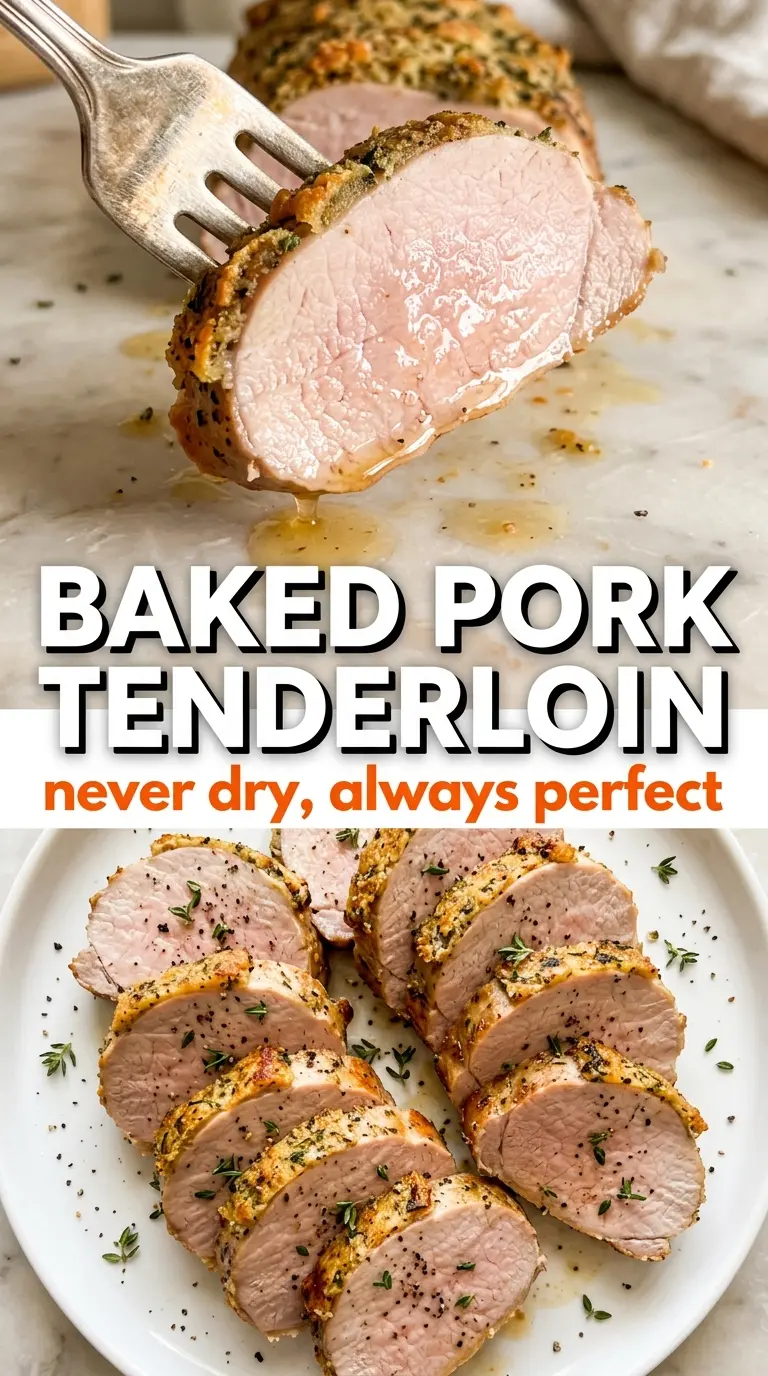
- Pork tenderloins — These are lean and cook fast, which is why this recipe works in under 30 minutes. They’re not the same as pork loin; tenderloin is thinner, more delicate, and needs a hot start plus a short oven finish to stay juicy.
- Olive oil — It helps the spices cling and promotes browning during the sear. A neutral oil works too, but olive oil adds a little richness that suits the garlic and herbs.
- Garlic, smoked paprika, thyme, rosemary, and onion powder — This mix gives the pork a savory crust without needing a marinade. Fresh garlic brings punch, while smoked paprika adds depth and the dried herbs hold up better than fresh ones in high heat.
- Fresh rosemary for garnish — This is mostly for aroma and presentation, but a sprig or two on the sliced pork makes the whole dish smell like it just came out of a roast dinner. It’s garnish, not decoration only; the scent lands as soon as you bring the plate to the table.
Getting the Pork Off the Heat at the Right Moment
Dry the Surface First
Pat the tenderloins dry before seasoning them. Moisture on the surface fights browning, and pork tenderloin has enough lean meat on its own without extra steam from the package. Once dry, rub on the oil and seasoning mixture until the whole outside looks evenly coated. If the spice paste slides around or pools, the pork wasn’t dry enough.
Sear for Color, Not for Doneness
Heat the oven-safe skillet over medium-high until it’s hot enough that the pork sizzles immediately. Sear each side for about 2 minutes, just until you get a deep golden crust; the meat should still be undercooked in the center at this stage. If the skillet smokes hard or the garlic starts to burn, the heat is too high. Browned seasoning tastes great, blackened seasoning tastes bitter.
Roast Until the Thermometer Says Stop
Move the skillet straight to the oven and roast until the thickest part of the tenderloin reaches 145°F, usually 18 to 22 minutes. Don’t wait for the pork to look fully firm in the oven, because carryover heat finishes the last few degrees after it comes out. If you overcook it to 160°F in the oven, the slices turn dry before they ever reach the plate.
Rest Before Slicing
Let the pork rest for 5 minutes before cutting into it. That short pause keeps the juices in the meat instead of spilling out onto the board. Slice it into medallions once the outside has settled and the center stays pink and juicy. If juice runs everywhere the second you cut, it needed a longer rest.
Three Ways to Work This Pork Into Your Routine
Dairy-Free and Naturally Gluten-Free
This recipe already fits both without any changes. That’s one reason it’s such a practical weeknight dinner: the crust comes from oil, garlic, and herbs instead of butter or breadcrumbs, so you get a clean, savory finish without extra ingredients.
Swap the Herb Blend
If you’re out of rosemary or thyme, use Italian seasoning in the same total amount. The flavor will be a little softer and less piney, but the pork still browns well and keeps that roasted-herb character.
Make It Spicier
Add 1/4 to 1/2 teaspoon cayenne or crushed red pepper to the seasoning rub. That gives you a little heat without changing the roast time, though the spice will taste sharper if you push the paprika too far and scorch it in the pan.
Cooking for Leftovers on Purpose
If you want leftovers for sandwiches or grain bowls, pull the pork right at 145°F and chill it after slicing. Sliced tenderloin reheats more evenly than a whole roast, and it stays juicier when you warm only what you need.
Storage and Reheating
- Refrigerator: Store sliced pork tenderloin in an airtight container for up to 3 to 4 days. It stays moist if you leave a little of the pan juice with it.
- Freezer: It freezes well for up to 2 months if wrapped tightly and sealed in a freezer bag. Freeze in slices or whole; sliced portions thaw faster and reheat more evenly.
- Reheating: Reheat gently in a covered skillet with a splash of broth or water over low heat, or warm it in a 300°F oven until just heated through. High heat dries tenderloin out fast, so stop as soon as the center is warm.
Answers to the Questions Worth Asking

Baked Pork Tenderloin
Ingredients
Equipment
Method
- Preheat the oven to 425°F so it’s fully hot before roasting.
- Pat the pork tenderloins dry, then mix olive oil with garlic, smoked paprika, dried thyme, dried rosemary, onion powder, salt, and black pepper.
- Rub the herb mixture all over both tenderloins until evenly coated.
- Heat an oven-safe skillet over medium-high heat and sear the tenderloins for 2 minutes per side until golden all over, visible through the browned crust.
- Transfer the skillet to the oven and roast for 18–22 minutes, until the internal temperature reaches 145°F at the thickest part.
- Rest the tenderloins for 5 minutes so the juices settle before slicing.
- Slice and serve, garnishing with fresh rosemary and displaying the blush-pink, juicy interior alongside the golden crust.