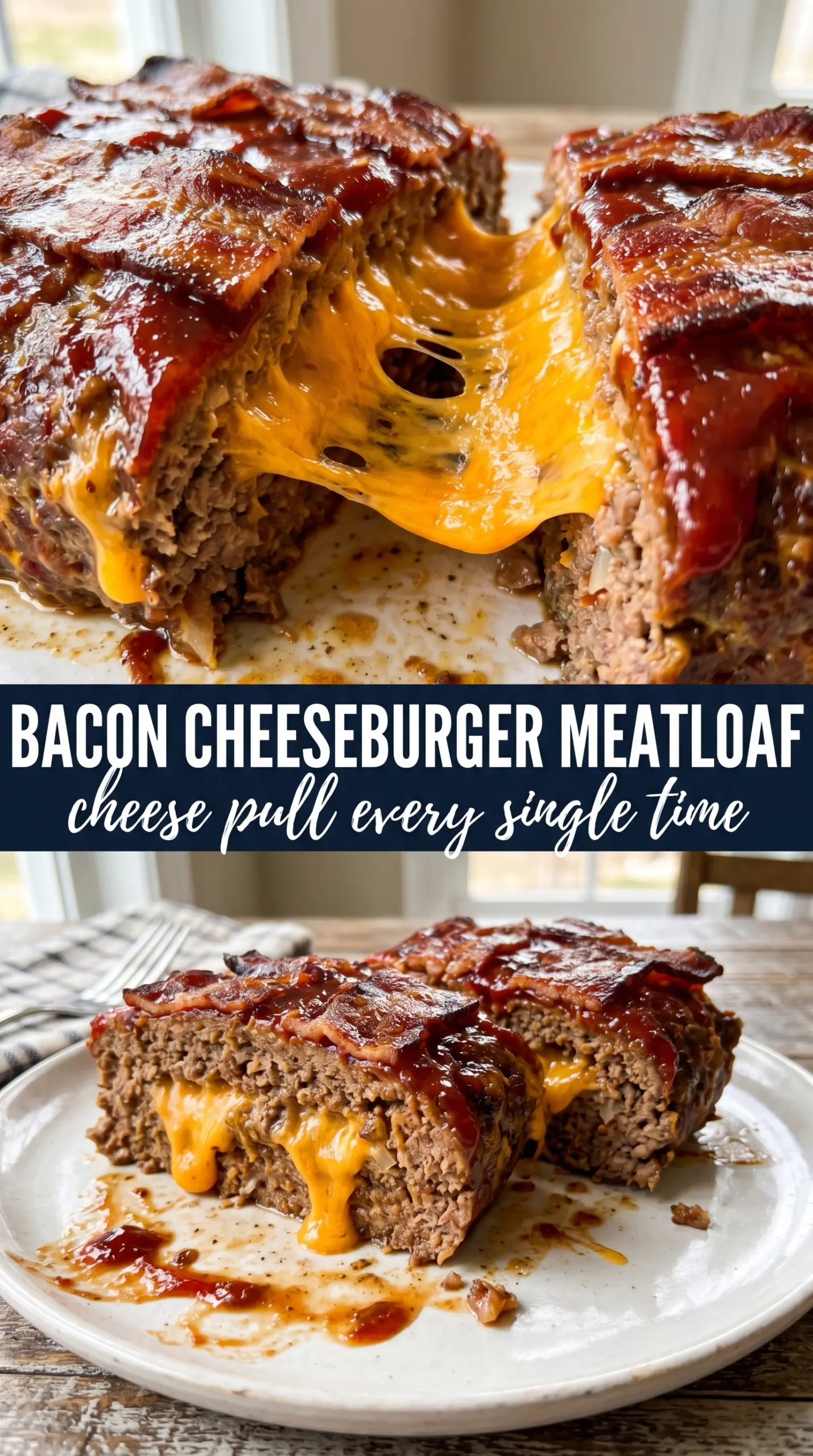
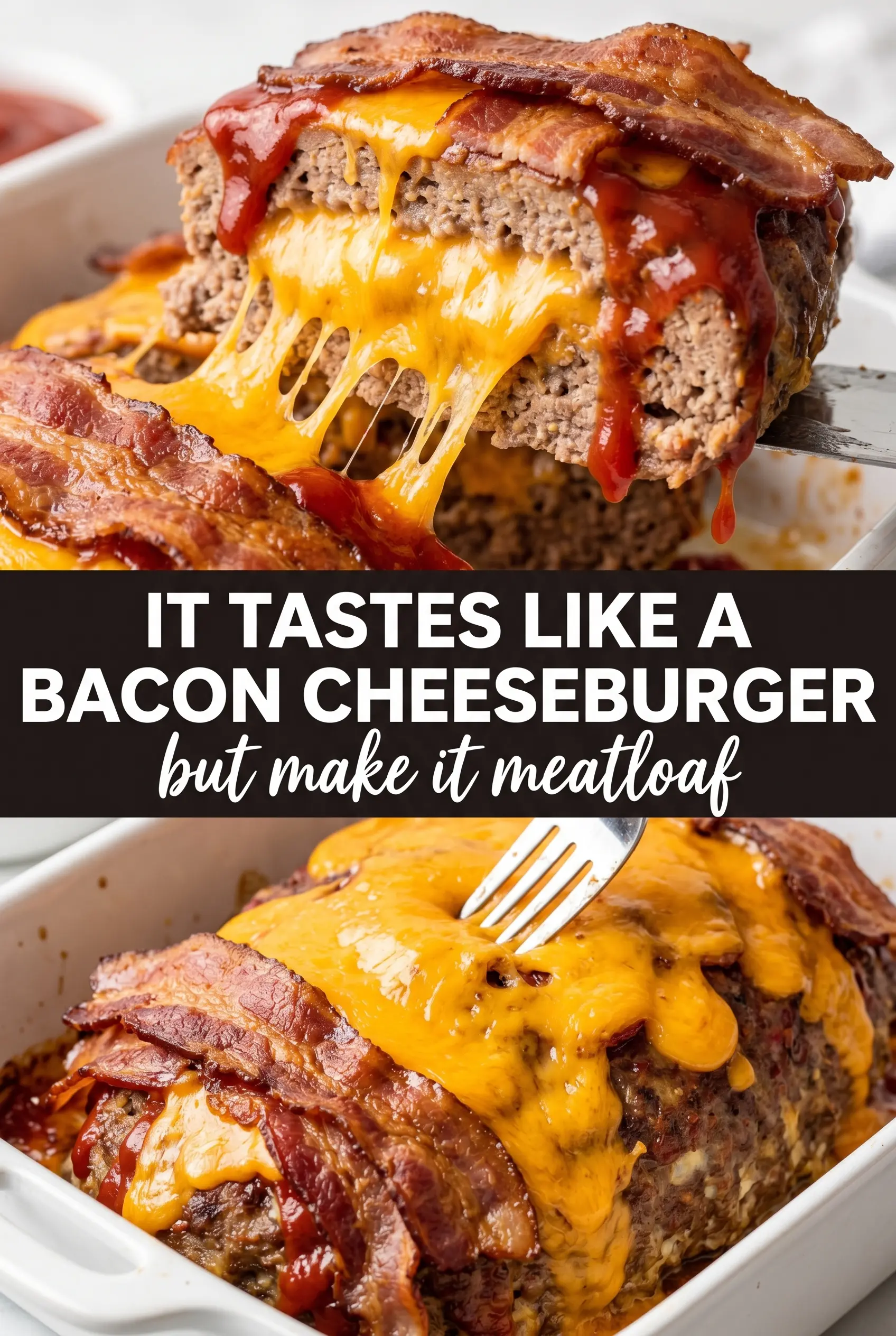
Bacon cheeseburger meatloaf brings the best parts of a diner burger into one sliceable dinner: beef that stays juicy, melted cheddar tucked through the middle, crispy bacon in every bite, and a ketchup-mustard glaze that bakes into a sticky top. It’s hearty in the right way, with enough familiar burger flavor to keep everyone at the table interested all the way to the last slice.
The trick is treating the loaf like a stuffed burger, not a plain meatloaf with toppings thrown on at the end. Grated onion keeps the meat tender without leaving big chunks behind, while breadcrumbs and milk hold everything together so the loaf cuts cleanly after it rests. Layering half the mixture, then the cheese and bacon, then the rest of the meat gives you that dramatic center without the filling leaking out as it bakes.
Below, I’ve included the exact point where people usually lose the cheese, the ingredient swap I use when I want a sharper cheddar bite, and the reheating method that keeps leftover slices from drying out.
The cheddar stayed melted in the middle and the bacon added just enough smoky salt. I used the foil-lined pan and the slices came out clean after resting.
Like this bacon cheeseburger meatloaf? Save it for the nights when you want a cheesy, bacon-stuffed dinner with a burger-style glaze.
The Layer That Keeps the Cheese Inside Instead of on the Pan
Most stuffed meatloaves fail at the seam. The filling melts, the loaf splits, and you end up with cheese burned onto the foil instead of tucked through the center. The fix is simple: press the bottom layer in firmly, spread the bacon and cheddar in an even middle strip, then cap it with the remaining meat and seal the edges like you’re closing a thick burger patty.
Foil in the pan matters here because it gives you something to lift with after the loaf rests. Resting is non-negotiable. If you slice too early, the cheese runs and the juices flood out, and the whole loaf looks messy even if the flavor is there.
- Ground beef — An 80/20 blend gives you the best balance of juiciness and structure. Leaner beef can work, but the loaf eats drier unless you add a touch more milk or cheese.
- Breadcrumbs and milk — This is the binder that keeps the loaf tender instead of dense. Plain breadcrumbs are fine; panko works too, but the texture ends up a little looser.
- Grated onion — Grating the onion dissolves it into the mixture so you get flavor without crunchy bits that can break the loaf apart. A food processor works if you don’t want to grate by hand.
- Cheddar and bacon — Sharp cheddar gives the strongest burger-style flavor, while mild cheddar melts a little smoother. Cook the bacon first and crumble it well; thick pieces make the center harder to seal.
What Each Ingredient Is Actually Doing in This Meatloaf or Meatballs
- Ground meat (the protein foundation) — Use 80/20 so it stays moist. Handle gently to keep texture tender instead of dense.
- Breadcrumbs or fillers (the binder) — These hold the meat together without making it dense. Soak in milk first so they add moisture.
- Egg (the structural binding agent) — This holds everything together during cooking. One egg per pound of meat is the right ratio.
- Onion and aromatics (the base flavor) — Mince finely so they distribute evenly. Raw onion softens as it cooks and becomes part of the texture.
- Seasonings (salt, pepper, Worcestershire, spices) — Build flavor boldly. The meat mixture carries the entire flavor profile.
- Milk or liquid (the moisture keeper) — This keeps the meatloaf tender instead of dense and dry. Don’t skip this step.
- Glaze or sauce (ketchup-based or other) — This adds sweetness, moisture, and flavor to the exterior. Apply strategically so it caramelizes.
- Resting time (the final step) — Let the meatloaf rest 10 minutes so it sets and slices cleanly. Cutting too soon makes it fall apart.
Building the Burger Flavor in the Pan, Not Just on Top
Mixing Without Packing the Meat Tight
Combine the beef, breadcrumbs, eggs, milk, onion, ketchup, mustard, Worcestershire, half the bacon, half the cheddar, salt, and pepper just until everything looks evenly mixed. Overworking the meat makes the loaf tight and bouncy instead of tender. Use your hands, but stop as soon as the streaks disappear.
Layering the Filling So It Stays Put
Press half the mixture into the foil-lined pan in an even layer, then add the remaining cheddar and bacon down the center. Leave a small border around the edges so the cheese doesn’t immediately hit the pan and run out. Top with the remaining meat mixture and press gently at the seams; too much pressure squeezes the filling upward.
Glazing and Baking to the Right Temperature
Mix the ketchup, mustard, and brown sugar into a smooth glaze and spread it over the top before baking. The glaze should look thin and glossy going in, then turn sticky and darker as the loaf cooks. Bake until the center reaches 160°F, not just until the top looks set, because meatloaf can brown before it’s actually done.
The Rest That Makes the Slices Clean
Let the loaf rest for 10 minutes before lifting and slicing. That short pause gives the cheese a chance to settle and the juices a chance to redistribute. If you cut right away, the filling spills out and the slices slump.
How to Tweak This Loaf for Different Tables and Leftovers
Swap in turkey for a lighter loaf
Ground turkey works, but it needs help staying moist. Use the same method, keep the onion and milk, and don’t skip the cheese layer because the fattier filling helps the leaner meat feel satisfying. Expect a milder flavor, so a little extra mustard in the mix helps bring it back toward burger territory.
Make it gluten-free without losing structure
Use certified gluten-free breadcrumbs or crushed gluten-free crackers in the same amount. The loaf still needs a binder, so don’t leave them out entirely. The texture stays close to the original, though crackers give it a slightly richer, saltier edge.
Use pepper jack for more bite
Swap some or all of the cheddar for pepper jack if you want more heat and a little tang. It melts well, but it’s softer, so keep the bacon crumbled fine and the loaf well sealed. The result tastes more like a spicy cheeseburger than a classic deli-style meatloaf.
Storage and Reheating
- Refrigerator: Store sliced meatloaf in an airtight container for up to 4 days. The cheese stays a little firmer after chilling, but the flavor holds up well.
- Freezer: This freezes well. Wrap individual slices tightly and freeze for up to 2 months so you can reheat only what you need.
- Reheating: Warm slices covered in a 300°F oven with a splash of water or beef broth, or microwave gently at medium power. High heat dries out the beef and can make the cheese separate.
Questions I Get Asked About This Recipe
Bacon Cheeseburger Meatloaf
Ingredients
Equipment
Method
- Preheat the oven to 350°F and line a loaf pan with foil for easy release.
- Combine ground beef, breadcrumbs, eggs, milk, grated onion, ketchup, yellow mustard, Worcestershire sauce, half the bacon, half the cheddar, salt, and pepper in a mixing bowl.
- Press half the meat mixture into the loaf pan and create a layer with the remaining cheddar and bacon.
- Top with the remaining meat mixture and press to seal so the cheese stays inside.
- Mix the glaze (ketchup, mustard, and brown sugar) and spread it evenly over the top.
- Bake at 350°F for 60–70 minutes, until the internal temperature reaches 160°F.
- Rest the meatloaf for 10 minutes before slicing so the layers set.
- Top with dill pickle chips and slice to reveal the cheesy cheddar-and-bacon filling.